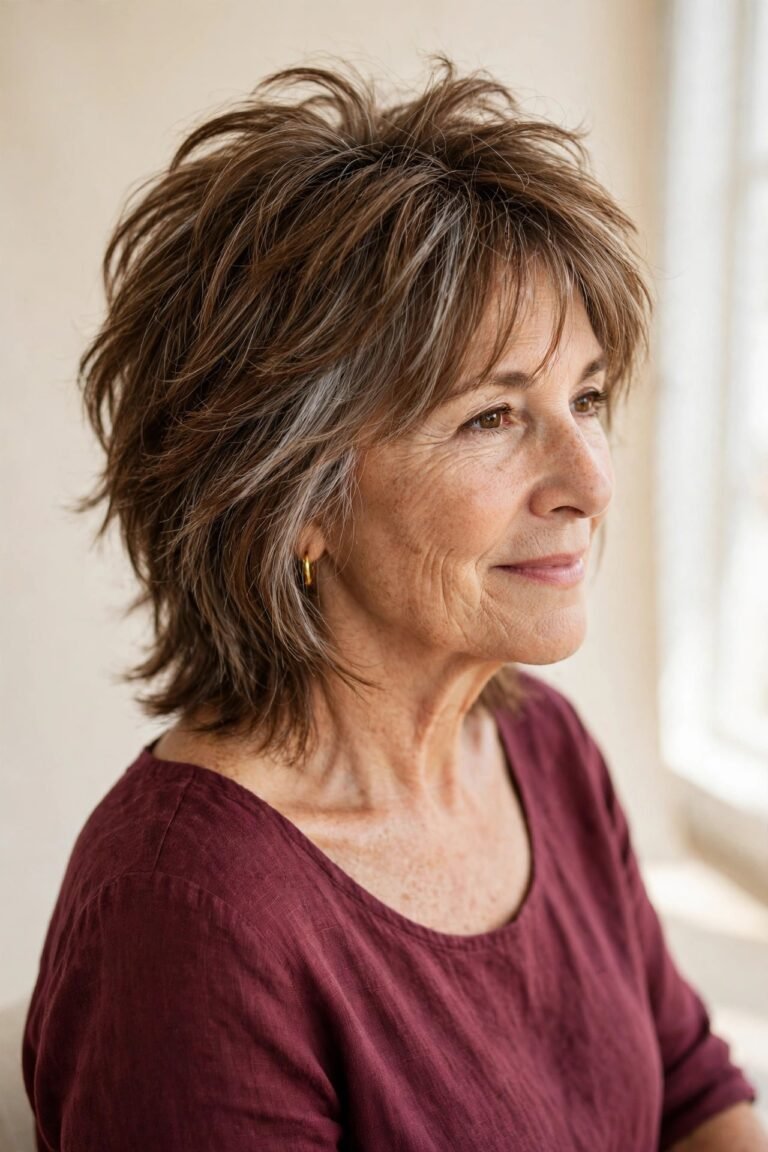
23 Wash-and-Go Haircuts Over 50 for Women Who Hate Styling
The wish is simple. Step out of the shower, towel off, shake your head, and get on with your day while your hair already looks done.
Most cuts fight that wish. Layers that need a round brush, fringes that split by noon, ends that only behave after heat. The problem is rarely your hair. It is the shape it was cut into. A true wash-and-go cut does the work at the salon, in the cutting, so your bathroom routine stays short.
These wash-and-go haircuts over 50 were picked with one test: the cut has to fall into place as it dries, with fingers and air doing the styling. A little leave-in cream or a scrunch of mousse is fair game. A twenty minute blow dry routine is not.
Every cut below names who it suits, what to ask for, and the one small habit that keeps it tidy between trims.
1. The One-Length Blunt Bob That Dries in a Clean Line

Layers are the reason many bobs misbehave. Each layer dries at its own speed, flips its own way, and begs for a brush.
A one-length blunt bob removes the argument. Every strand ends on the same line, so the weight of the hair pulls it straight as it dries. Ask for the hemline cut blunt at chin or jaw length, with no texturizing shears taken to the ends.
- Works best on straight to slightly wavy hair
- Fine hair that needs thicker looking ends
- Anyone who parts in the middle or just off centre
One honest note: the line grows out clean for about six to eight weeks, then it needs a tidy.
2. Feathered Pixie With a Soft, Sweepy Fringe
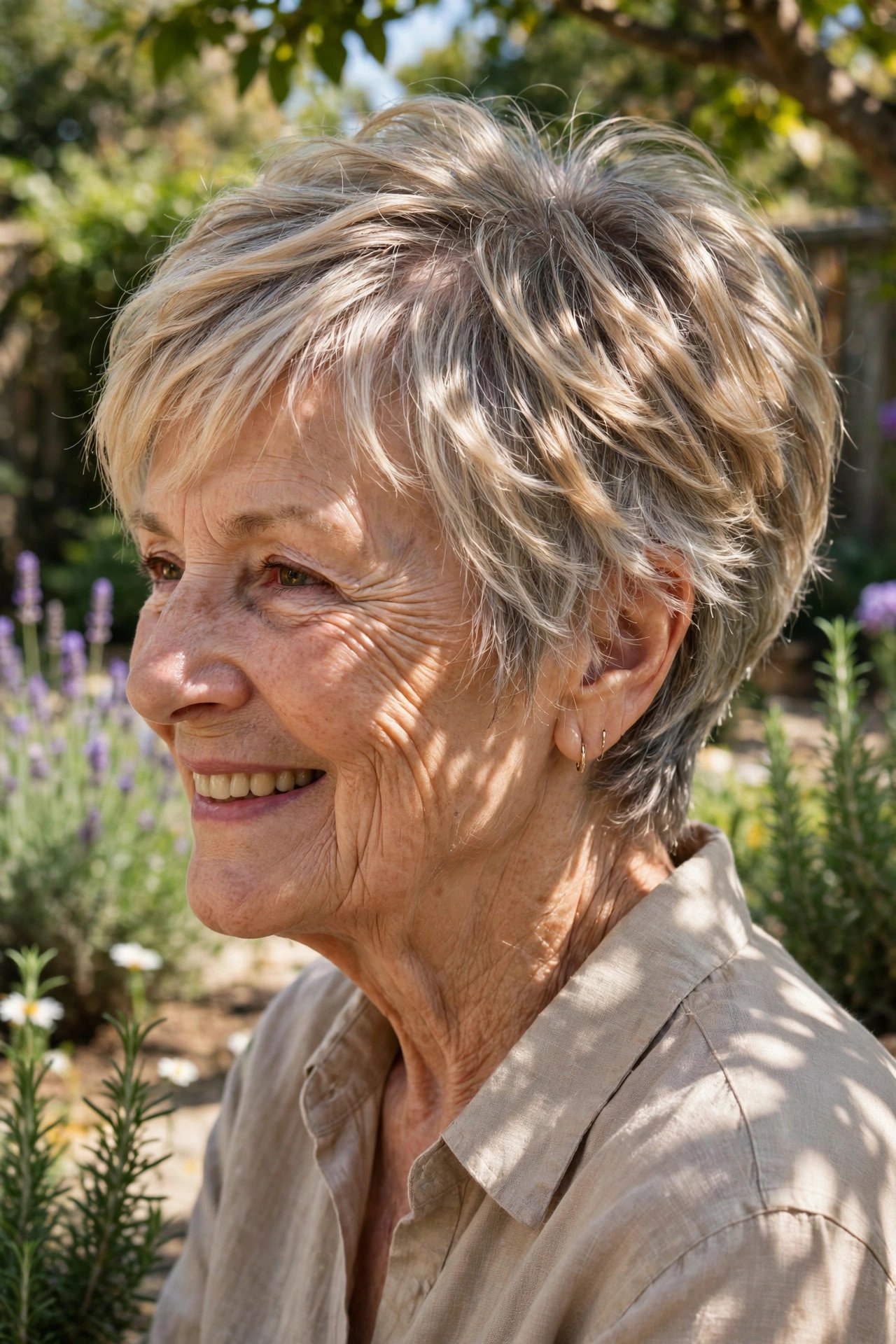
This is the pixie for women who like softness around the face.
The layers are feathered, meaning the ends are tapered into fine points instead of cut blunt. Wet, it looks like nothing much. Dry, those points separate into light texture that frames the eyes and cheekbones with no work from you.
Rub a pea size amount of light cream between your palms, push the top forward, then pinch two or three pieces at the front. That is the whole routine, even on a rushed morning when the kettle is already on.
💡 Quick Tip
Feathered ends turn straggly if they grow too long. Book the trim at about five weeks and the softness stays. Leave it to eight and the shape starts to look tired.
3. The Curly Shag That Lets Curls Stack Themselves

The shape gives it away: shorter layers through the crown, longer pieces curling past the jaw, every curl sitting on the one below it like steps.
That stacking is the whole trick. A good curly shag is cut dry, curl by curl, so the stylist sees the real pattern instead of guessing where wet hair will land. At home, you rake through leave-in conditioner, scrunch upward with a cotton T-shirt, and walk away.
Hands off while it dries. Touching wet curls is what makes frizz, not the air.
4. Textured Crop, Short at the Back, Longer on Top

Short back and sides, longer textured length on top. The contrast sounds bold, but the daily routine is the shortest on this list.
The top is point cut into small pieces that fall forward on their own. After washing, towel dry, then push the top forward with your fingers and let it settle. If one piece sticks up, wet just that piece and press it down.
- Towel dry gently, no rubbing
- Push the top forward with flat fingers
- Leave it alone for ten minutes
Best on straight to wavy hair with some natural body.
Second day hair standing up at the crown? Mist it with water, only the top.
Press the top forward and down with flat palms and hold for five seconds.
Let it dry while you make tea. It resets into the cut shape on its own.
5. Collarbone Lob With Blunt Ends and Zero Layers

Rule one for this cut: the ends stay blunt, all the way around, no exceptions.
A lob that ends at the collarbone has enough length to weigh itself down, which is why it dries smooth without a brush. Layers would lighten the ends and invite flip. Blunt ends keep the swing heavy and tidy, and the length tucks behind ears or into a low ponytail on busy days.
Ask for a single length with the front corners left slightly longer. Wear it tucked behind one ear on day two and it still reads polished.
Length is the styling tool here. The weight of the collarbone cut does the work a dryer used to do.
6. The French Bob That Loves Natural Wave

Coffee on the balcony, hair still damp from the shower, and it already looks intentional. That is the French bob at work.
It sits at the jaw, curves slightly under at the ends, and usually carries a short, soft fringe. The undercurve is cut in, not styled in, so air drying keeps the shape. Natural wave is a gift here. It fills the curve and gives the ends their swing.
Straighter hair gets the same shape, just sleeker, and may want a drop of smoothing cream worked through the ends.
Say this at the salon
7. Wavy Shag With Curtain Bangs That Part Themselves

People assume bangs mean daily styling. Curtain bangs are the exception, because they are cut to split.
The fringe is longest at the sides and shortest in the middle, so as hair dries it falls open into two soft wings. The shag layers around it do the same job, breaking up the weight so waves form in loose bends instead of one heavy sheet that pulls everything flat.
Scrunch a little mousse into damp lengths, part it with your fingers, and let the middle fall where it wants.
Part the fringe with your fingers while it is still damp.
Scrunch the lengths once, then stop and let the air work.
Blowing the fringe forward and flat, which fights its natural split.
Re-scrunching every ten minutes while it dries. That is how frizz starts.
8. Stacked Bob With a Lifted Back Built In
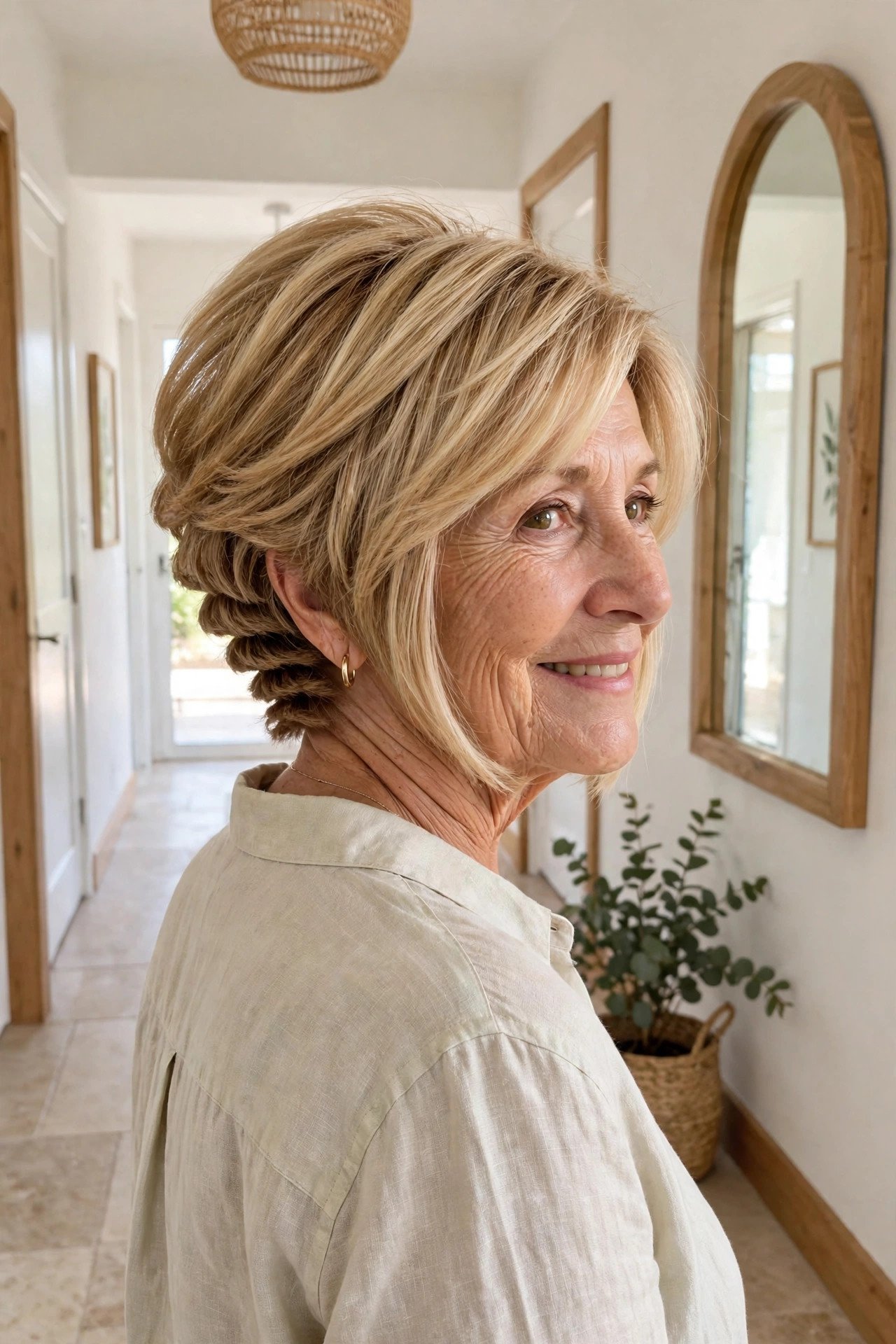
Flat hair at the back of the head is the complaint this cut answers.
The back is graduated, meaning short stacked layers at the nape that build a shelf of volume right into the shape. The front stays longer, reaching the chin, so the outline reads like a classic bob from the front and a lifted curve from behind.
- A shake after washing, head upside down for two seconds
- A finger lift at the roots while the back is still damp
- Nothing else, honestly
The stack grows out fast, so plan on a trim every five to six weeks to keep the lift.
- ▸Back: the graduated stack builds the lift, so your hands do not have to
- ▸Front: chin length keeps the outline classic and soft on the jaw
- ▸Grows out: fastest of all the bobs here, so keep the trim booked ahead
9. Short Curly Pixie, Cropped Close and Defined
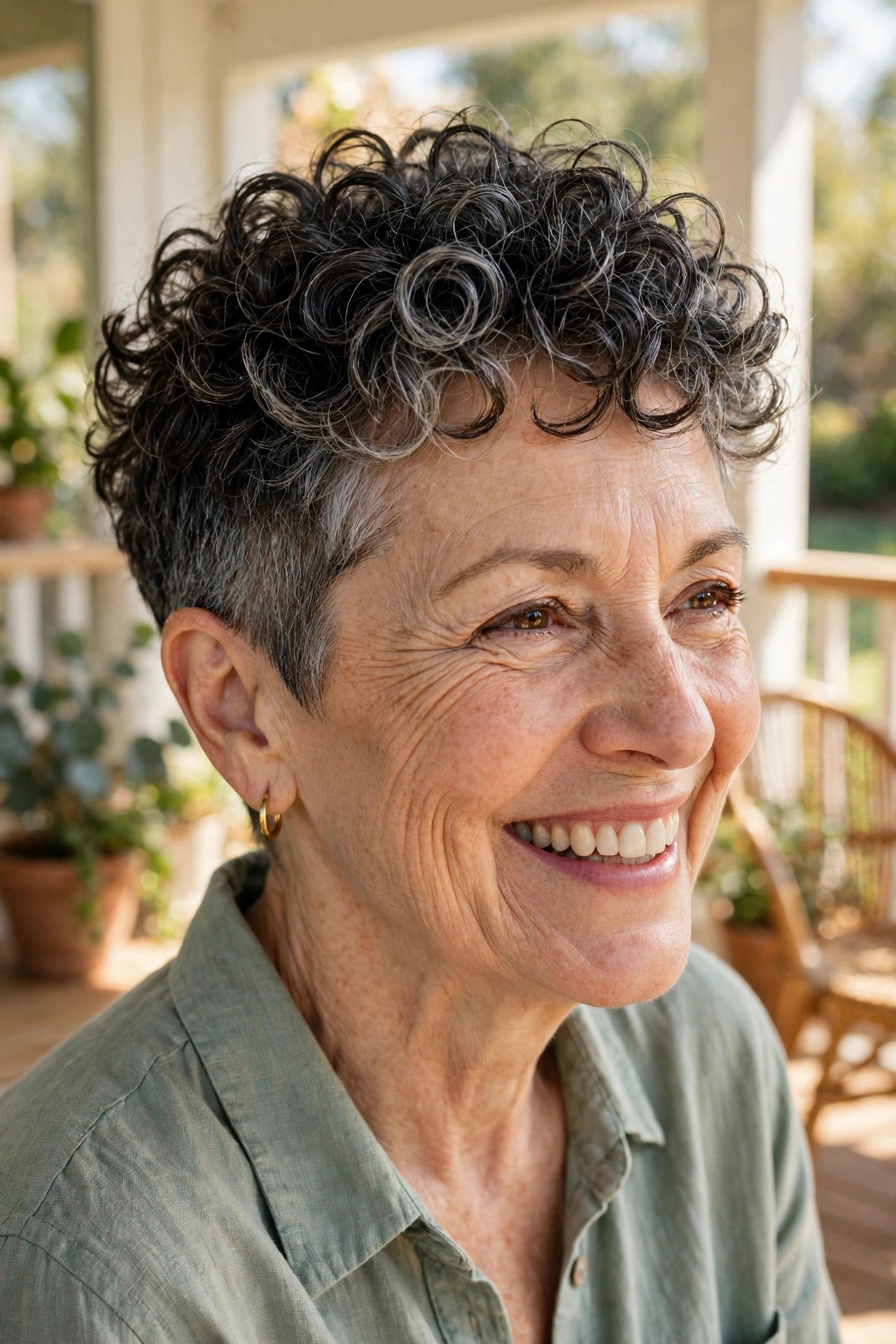
Short curls dry faster, frizz less, and show their pattern at its best.
Cut close at the sides and back with a cap of curl left on top, this pixie keeps the fun part of curly hair and drops the long routine. The top curls spring into place as they dry because nothing heavy is dragging them down, and the close sides always look neat, even on day three.
Work a small amount of curl cream through wet hair, twist three or four top curls around a finger, and leave everything alone until dry.
10. The Asymmetric Bob With One Longer Side
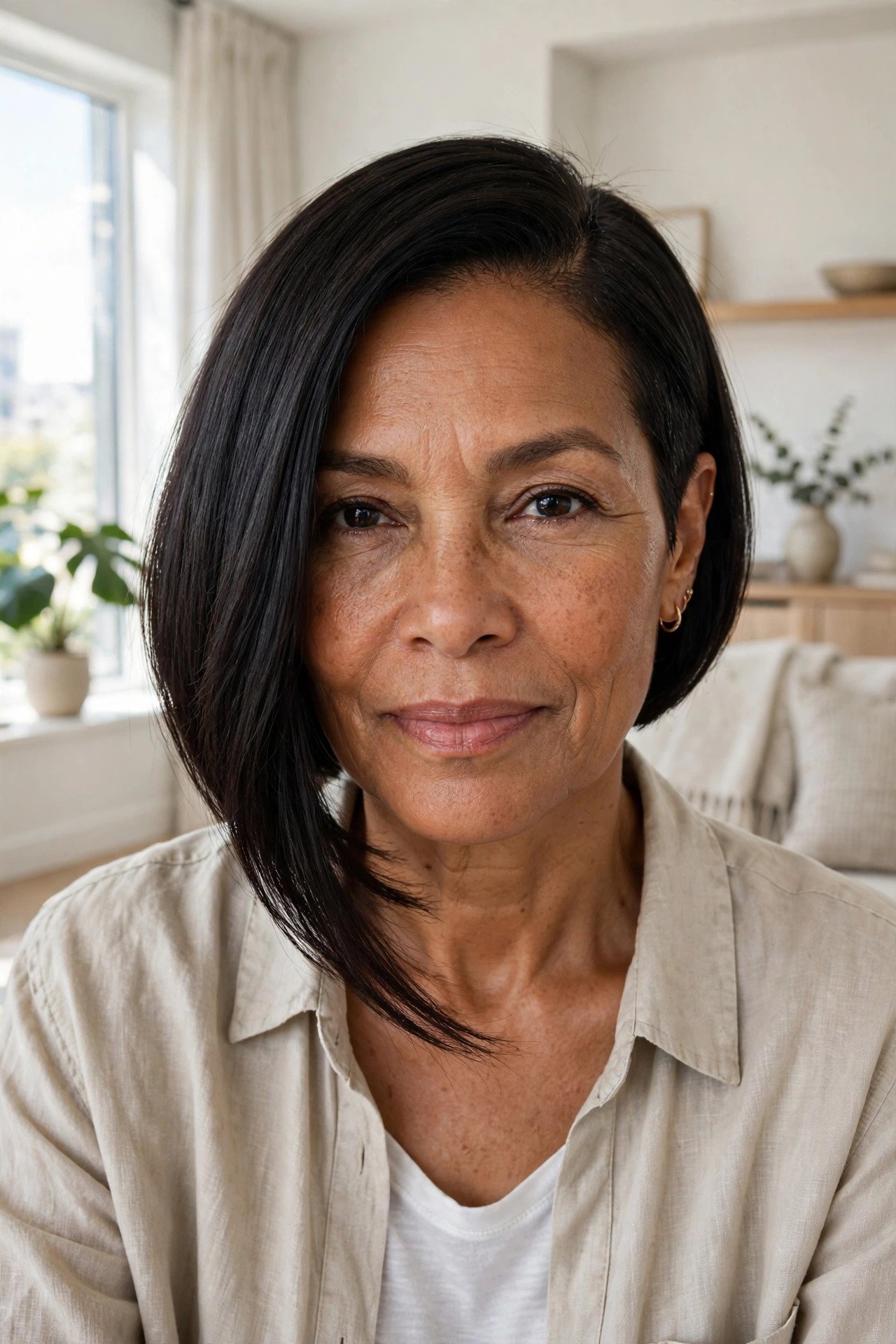
One side sits at the jaw. The other side sweeps down past the chin. The difference is small on paper and striking in the mirror.
Because the shape is cut in, it does not need heat to read as styled. A deep side part is part of the design, so after washing you place the part with a comb, tuck the short side behind your ear, and the long side does the showing off.
Pick the long side to face the room when you talk. It frames the face you show the world.
| The Short Side | The Long Side |
|---|---|
| Ends at jaw level, neat against the face | Sweeps below the chin in one longer panel |
| Its job: keeps the cut modern and tidy | Its job: softens the jaw and frames your face |
| Daily care: tuck it behind your ear and forget it | Daily care: leave it loose, it is the feature |
11. Tapered Shape Cut for Coily Hair

Coily hair often looks its best when the shape is decided by the cut, not by daily pulling and smoothing.
A tapered cut takes the back and sides in close and leaves fullness on top, where the coils can round out into a clean silhouette. Cut on dry hair in its natural state, it dries back into the same shape wash after wash, with no shrinking surprises.
Moisture is the one real job. A leave-in worked through after washing, and a light oil on the ends twice a week, keeps the shape soft.
12. Shoulder Length With Layers Only at the Ends

The trick is where the layers live. All of them sit in the bottom third of the hair, and none near the crown.
That keeps the top smooth and heavy, so it lies flat as it dries, while the ends get just enough layering to move and swing instead of hanging in one solid block. Ask your stylist to layer only the last few inches and to keep the outline blunt.
It suits medium to thick hair that feels too heavy at one length and too flyaway when it is layered all through.
📌 Good To Know
If the ends start flipping outward as the cut grows, the layers have crept too high. At the next trim, say the words bottom third only, and point to where the layering should stop.
13. The Bixie, Half Bob and Half Pixie
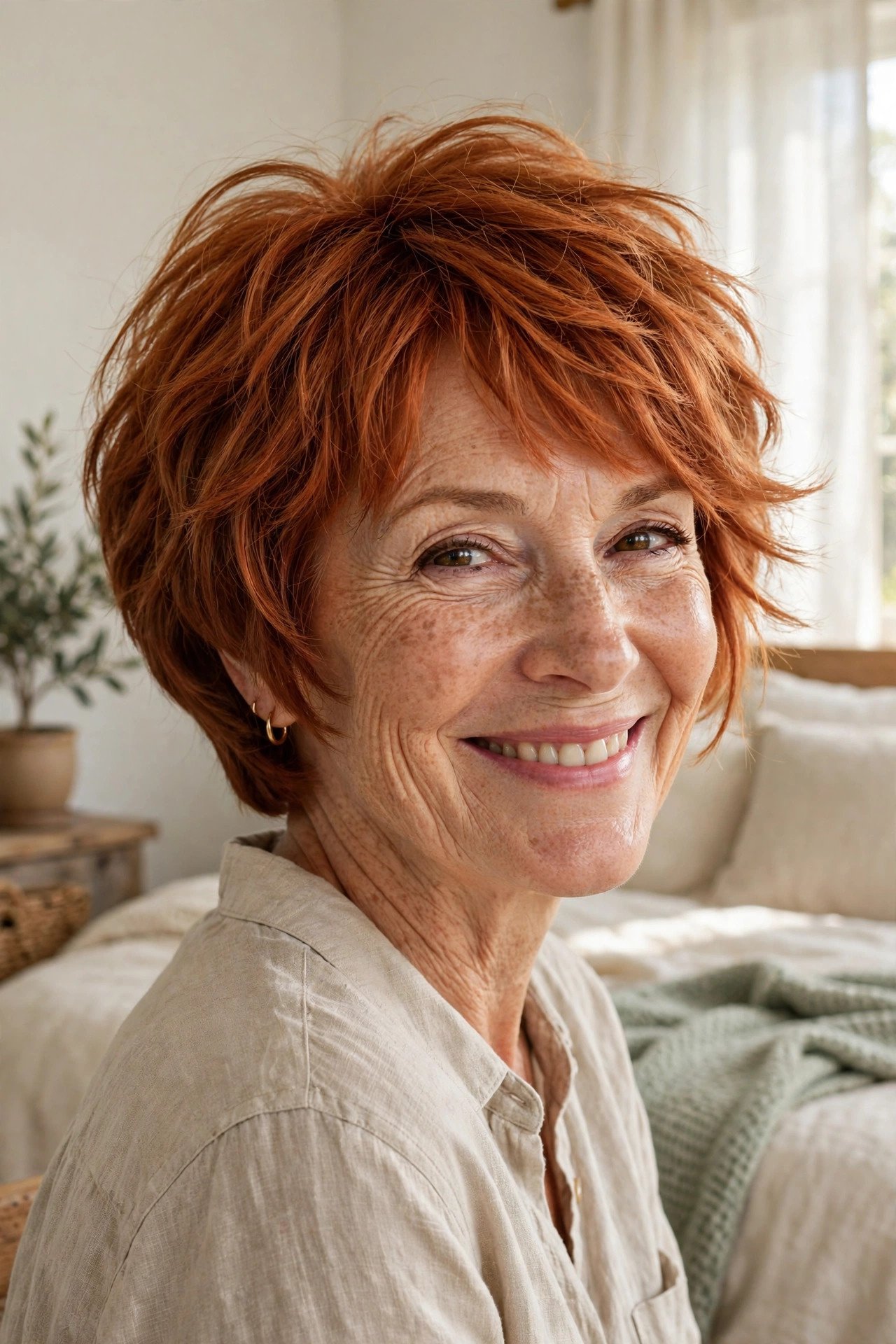
Look at the back and it reads as a bob. Turn around and the choppy pixie texture framing the face gives it away.
The bixie keeps a bob outline at the nape and sides, then cuts short piecey layers through the top and fringe area. That mix is why it air dries so well. The outline keeps it tidy, the texture keeps it from looking flat or severe, and the short top dries long before the rest.
Push the front pieces around with your fingers while the hair is damp and the shape sets itself.
A grown out bob that sits flat and heavy by mid morning, with ends that need a brush to behave.
The bob outline stays, the top gains piecey lift, and the whole morning routine becomes fingers and air.
14. Caesar Crop With a Tiny Forward Fringe

The shortest cut on this list, and the most honest about its routine: there barely is one.
Hair is cut to one short length all over, with a tiny straight fringe brushed forward at the hairline. Nothing hangs, nothing flips, nothing needs arranging. It dries in minutes, with so little hair to dry, and it never has a bad weather day.
- Wash
- Towel dry
- Brush the front forward once, and you are done
White and silver hair wear this beautifully. The clean shape lets the colour be the feature.
On day two, mist the top lightly with water from a spray bottle.
Palm the top flat, brushing the little fringe forward as you go.
Give it two minutes to dry while you dress. Out the door.
15. Air-Dry Lob With Face-Framing Pieces
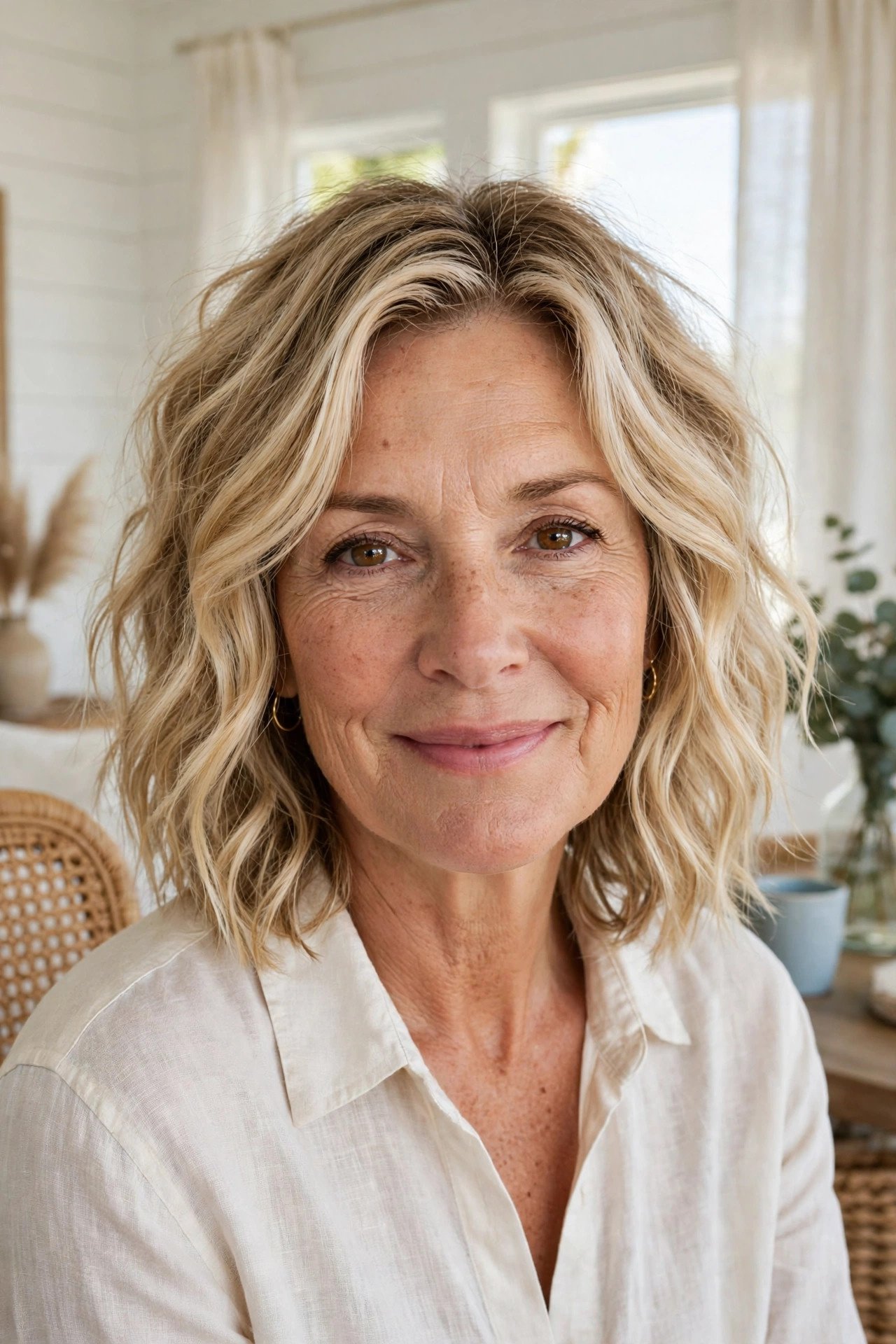
Out the door with damp hair, and by the time you are home from your walk it has dried into soft waves.
The face framing layers are the engine. Cut shorter than the rest, they dry faster, bend more, and give the whole cut its shape while the back stays one simple length. On wavy hair the effect is strong. On straighter hair it reads as a gentle curve at the front, which is still plenty.
Ask for the shortest piece to land at the cheekbone. That is the spot that does the most for the face.
Twist the two front pieces away from your face while they are damp.
Let the back dry untouched, in its own loose wave.
Tucking wet hair behind your ears for hours. It dries with a hard dent.
Brushing the waves out once dry. That trades waves for frizz.
16. Ghost Layers That Hide Under a Smooth Surface
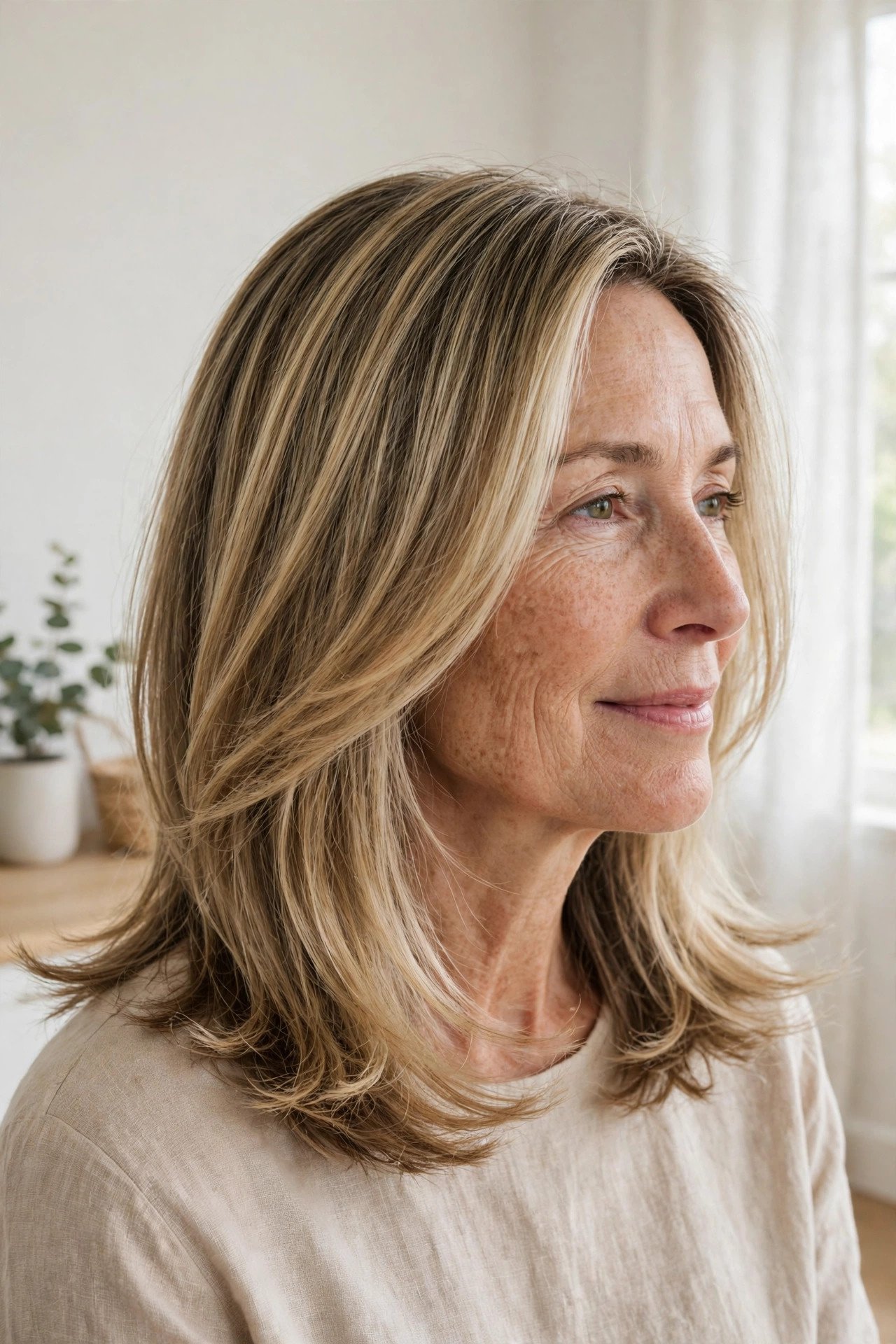
Layers do not have to show to work. The most useful ones in this cut are hidden inside it.
Ghost layers are cut into the interior of the hair, shorter underneath and longer on the surface. The top sheet stays smooth and unbroken, so the cut looks one length, while the hidden layers remove bulk and let the ends swing instead of sitting stiff.
It is a kind cut for hair that gets puffy at the sides. The width leaves from inside, and air drying stays calm.
This cut suits you if
17. The Soft Wolf Cut With Wispy Ends

All the fun of a shag, softened at every edge.
A wolf cut mixes shaggy crown layers with longer tapered lengths. The soft version keeps the layers wispy instead of choppy and the ends feathered instead of thin, so it reads relaxed rather than wild. Air drying suits it because the shape is meant to look a little undone.
Scrunch the crown while damp to wake up the layers, then let the lengths fall. Grey growing in at the roots blends into the texture instead of showing as a hard line.
The soft wolf is the rare cut that looks better slightly messy than perfectly neat. Let it be.
18. Low Taper Pixie for Thick Hair That Dries Fast

Thick hair has one main wash day problem: it takes forever to dry, and it dries big.
The low taper answers both. Hair is taken in close at the nape and around the ears, which removes the bulk where thick hair piles up, while the top keeps its soft fullness. Less hair at the bottom means faster drying and a shape that sits close to the head instead of puffing out sideways.
Ask for the taper kept low and soft. A high, harsh line is a different cut and a much harder grow out.
- ▸The bulk leaves at the nape and around the ears, where thick hair piles up
- ▸The top keeps its fullness, so the cut never looks skimpy
- ▸Dry time drops because far less hair is left holding water
19. Long Pixie With a Side-Swept Top
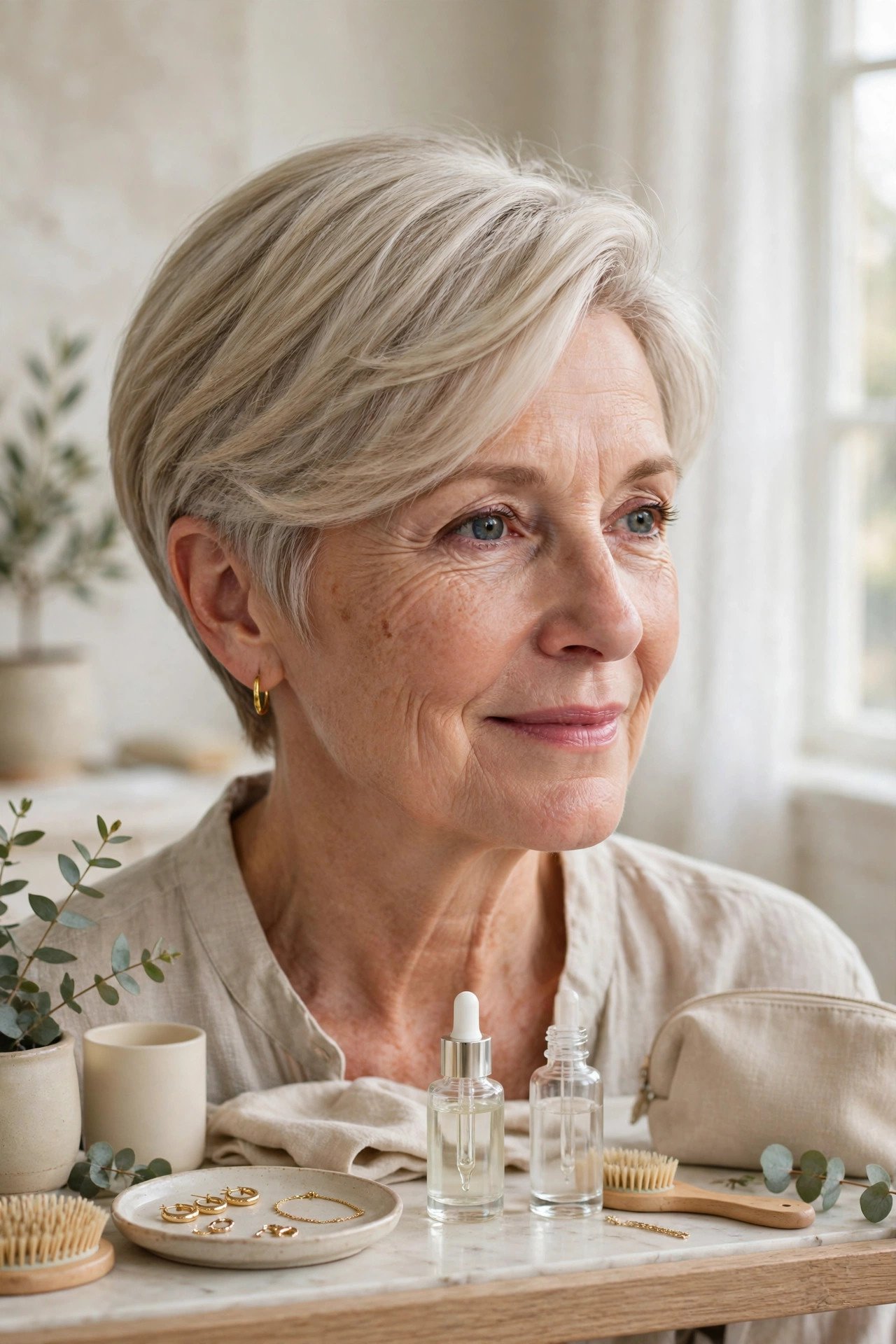
The sweep is the style: a long top section that falls across the forehead in one smooth diagonal.
Underneath, the sides and back are cut short and neat, so the shape holds without pins or spray. After washing, comb the top over to its side while the hair is wet and press it flat with your palm for a few seconds. It dries where you put it.
Fine hair loves this one. The long top gives the eye length to follow, and the short sides keep everything crisp.
20. The Rounded Curly Bob at Chin Length

Think of it as the tidy sister of the curly shag. Same spring, neater outline.
Curls are cut to one rounded length that ends at the chin all the way around, with just enough layering inside to stop the sides sticking out. The round shape is the style, so as the hair dries the curls settle into a soft halo that needs no arranging.
Rake leave-in through soaking wet hair, shake your head once, and let it dry untouched. The less you separate the curls, the cleaner the shape.
| Curly Shag | Rounded Curly Bob |
|---|---|
| Outline: layered, loose and shaggy | Outline: one smooth, round halo |
| Fringe: often cut in | Fringe: usually none, the forehead stays clear |
| Daily work: scrunch and go | Daily work: shake once and go |
21. Boyish Crop With a Longer Crown
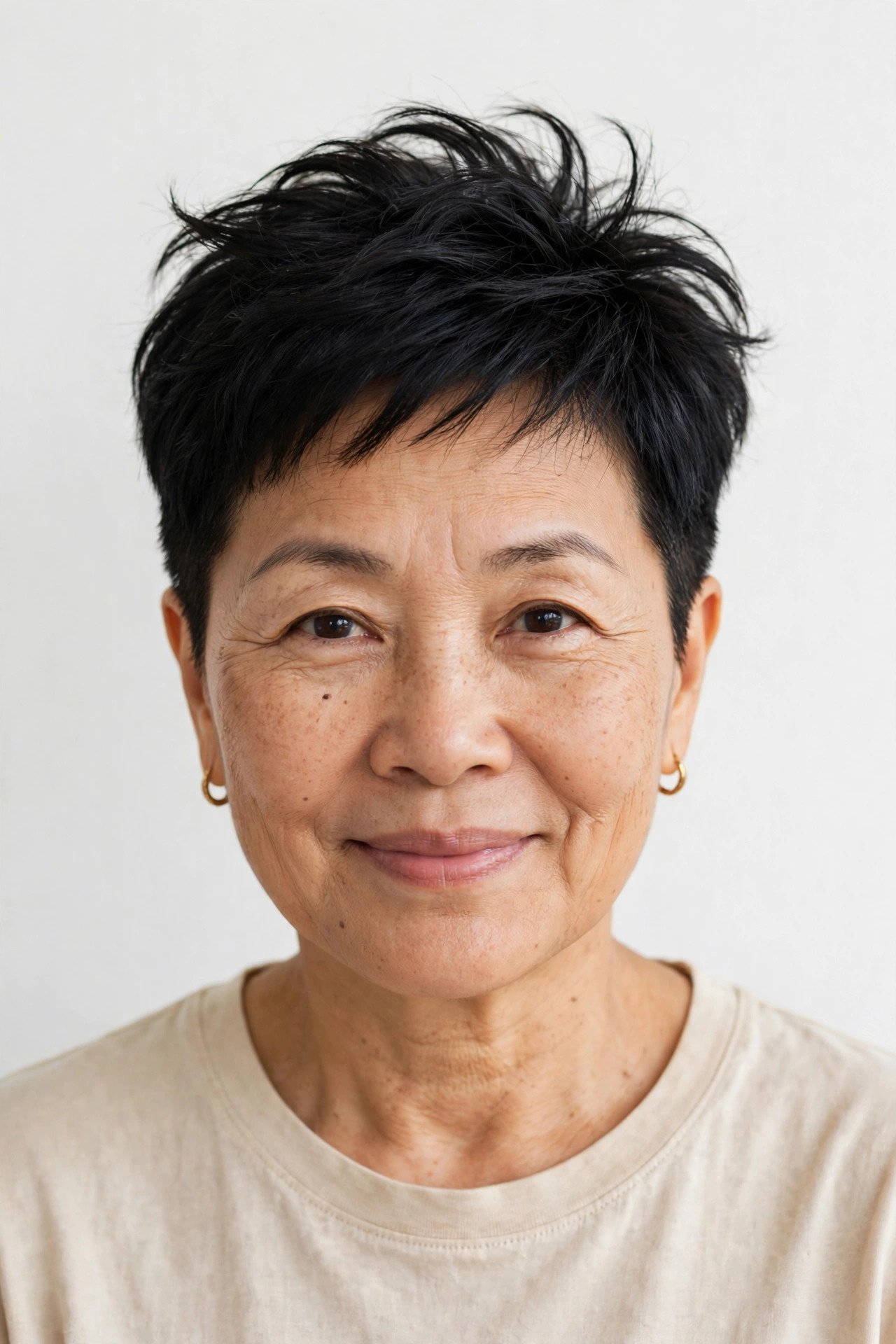
Short everywhere except the crown, and that one longer patch does all the styling.
The sides and back are cropped close, while the crown keeps a few inches of length that can be pushed forward, back, or to the side. Because the long part is small, it dries in minutes and sits where your fingers leave it.
It is a strong choice for very straight hair that refuses to hold a style. Nothing in it needs holding. The cut is the style.
22. Centre-Part Shoulder Cut With No Fringe to Manage

No fringe, no layers, no part tricks to maintain. The centre part is the whole design.
Hair falls to the shoulders in one even length from a middle parting, and the symmetry does what styling usually does. It reads polished because it is balanced. After washing, make the part with the end of a comb while the hair is wet, smooth both sides down, and leave it.
Silver and white hair look especially striking worn this way. The clean fall shows the colour like fabric.
💡 Quick Tip
Give the new part a week to train. Hair that has lived in a side part for years takes a few washes to accept the middle, then it starts falling there on its own.
23. Shaggy Pixie Crop With Choppy Ends
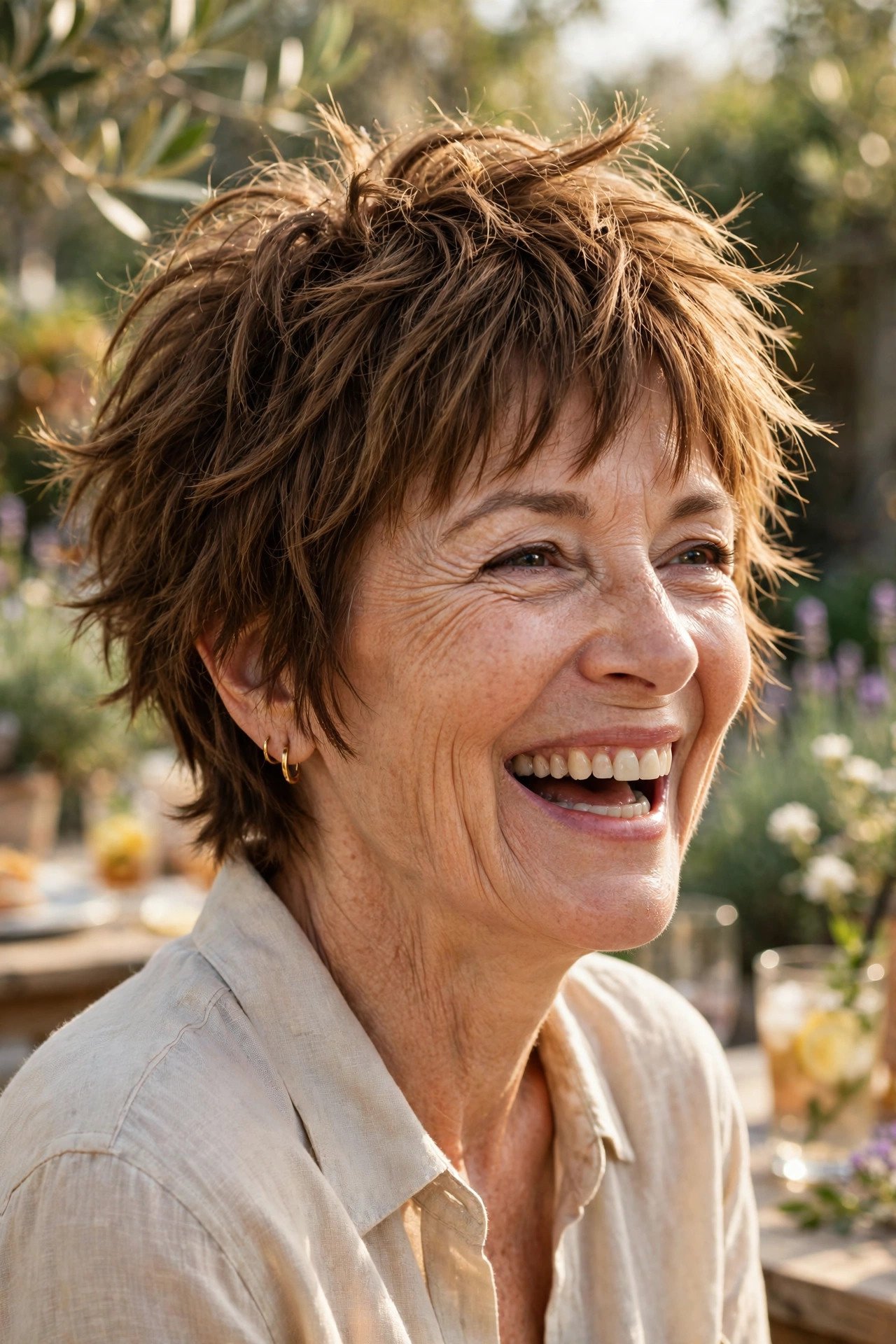
Some cuts look best a little roughed up, and this one is honest about it from the start.
A shaggy pixie crop is cut with choppy, uneven ends all over, a piecey fringe, and texture that points in a few directions at once. That deliberate mess is why it is so easy. Bed head looks like the plan. A quick finger rake counts as a full restyle.
Warm a tiny bit of matte paste between two fingers and pinch the front pieces if you want more separation. Or skip it. The cut forgives both.
Rake it through with your fingers and call it done.
Pinch the fringe pieces with a little paste when you want definition.
Chasing a neat, brushed finish. Neat is not the point of this cut.
Heavy shiny products that clump the choppy texture into strings.
The through line in all 23 cuts is the same. The shape does the work, so your mornings do not have to. None of these wash-and-go haircuts over 50 ask for zero care. They ask for the right trim on time, one product at most, and a few honest minutes of air.
Pick the cut that matches your hair as it is, not the hair you keep wishing for, and wash day stops being a project. Save this list to your hair board and take it to your next salon visit. Showing your stylist the exact photo gets you closer than any description.