
How Often to Trim Your Hair Over 50
There is a particular morning when your hair stops cooperating. The style that sat so neatly last month now flips at the ends, falls flat by lunch, and refuses every brush stroke. Most of the time nothing is wrong with your hair. The trim is simply overdue, and nobody ever told you the schedule that would have prevented it.
Knowing how often to trim your hair over 50 takes the guesswork out of good hair days. After 50, hair often grows a touch slower and the ends are finer, so the gap between tidy and tired can feel short. The right timing depends on your cut, your colour, and the signals your ends are sending.
Below is a plain guide, cut by cut and sign by sign, with honest week ranges you can plan around. No scare tactics, no pressure to live in the salon. Just a rhythm that keeps your shape working for you.
1. Pixie Cuts: Book Every 4 to 6 Weeks

A pixie has nowhere to hide. Two extra weeks of growth and the neat edges around your ears and neckline turn fuzzy, the top loses its lift, and the whole cut reads as a helmet instead of a style.
Most stylists suggest a tidy every 4 to 6 weeks for a classic pixie, with a quick edge clean-up in between if your salon offers one. Fine hair shows growth sooner than thick hair, so if your fringe starts parting oddly at week three, that is your personal timetable talking.
Short does not mean low effort. It means small, regular effort.
2. Bobs Hold Their Shape for 6 to 8 Weeks
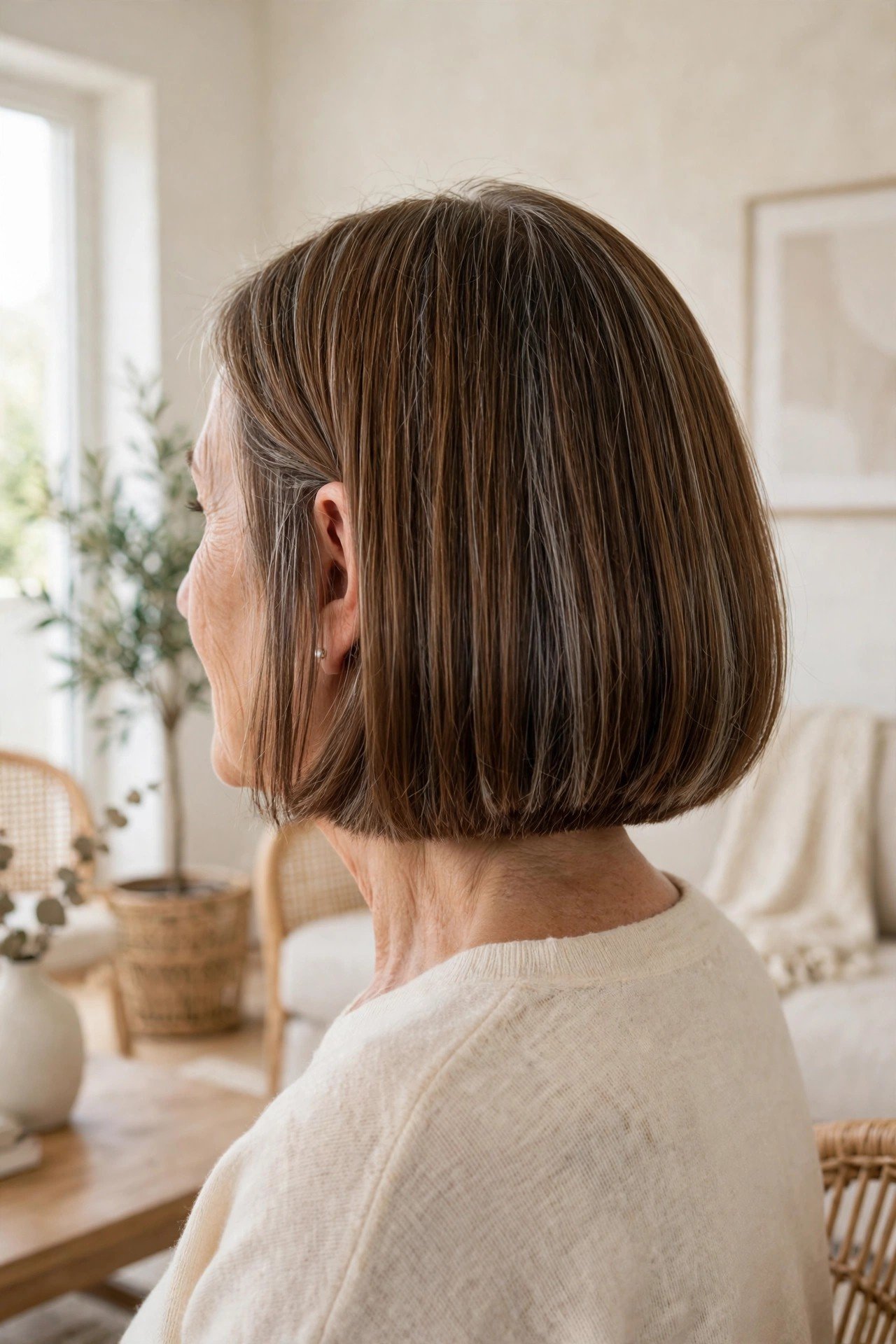
A bob is forgiving in a way a pixie is not. The blunt line keeps its polish for a good stretch, and a typical window is 6 to 8 weeks before the ends start to curl under unevenly or brush your shoulders in a way that spoils the line.
Watch the back view in a hand mirror. A fresh bob sits in one clean sweep. A bob that is due shows:
- ends flipping at different lengths
- a bottom edge that looks chewed rather than cut
- more time spent coaxing it flat each morning
When two of those three appear, book in. The shape is asking, politely, for help.
| Fresh bob | Bob that is due |
|---|---|
| Bottom edge falls in one clean line | Ends flip out at uneven lengths |
| Five calm minutes of morning styling | A daily wrestling match with the brush |
| Sits clear of the collar, neat all day | Tickles the neckline and curls outward |
3. Long Layers Can Stretch to 8 to 12 Weeks

Length buys you time. Long layers usually hold for 8 to 12 weeks because a little growth does not change the overall shape, and the layers simply settle lower.
The rule is about the ends, not the calendar. Run your fingers down the last two inches. If they feel rough, catch on each other, or look paler than the hair above, the ends are worn even if the layers still fall nicely.
Many women over 50 book a light dusting at the halfway point, taking off only the tired tips. It keeps long hair looking cared for without losing the length you waited for.
4. A Fringe Needs a Tidy Every 2 to 3 Weeks

Book the fringe separately from the cut. A fringe grows into your eyes fast, and most women find 2 to 3 weeks is the limit before it starts splitting in the middle or being pushed to one side.
Ask your salon about fringe trims between appointments. Many offer them as a quick, low cost or free tidy for regular clients, and the visit takes ten minutes.
At home, resist the urge to level it yourself with kitchen scissors. One uneven snip takes weeks to grow out, and the fringe sits at eye level where everyone, including you, sees it all day.
💡 Quick Tip
Photograph your fringe on the day it is cut. When it reaches that same length again in your mirror, you have found your personal fringe interval, no guessing needed.
5. Split Ends Are Your Loudest Booking Signal
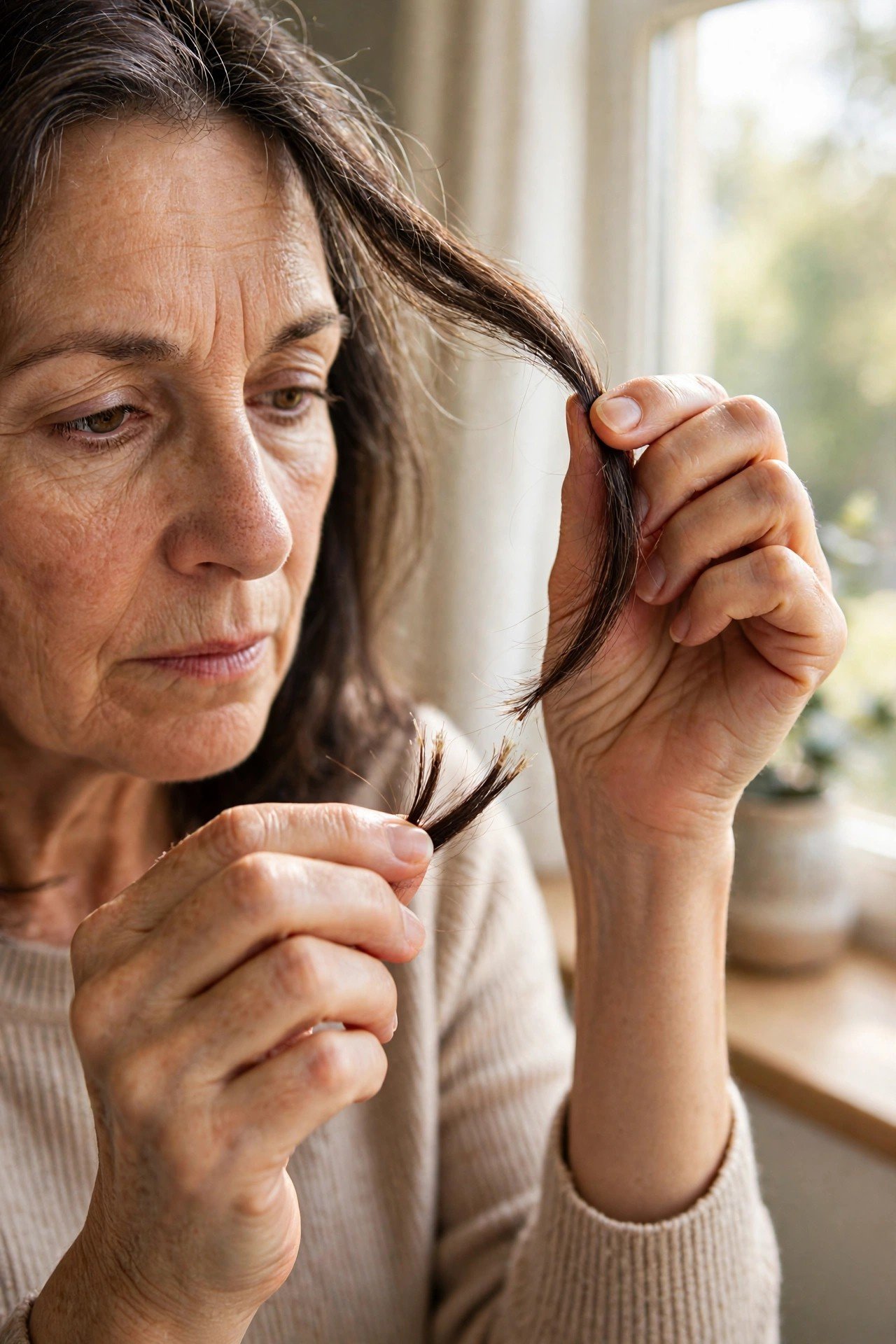
Hold a small section of hair up to the light. Healthy ends look smooth and even. Ends that need cutting tell on themselves: a single strand splitting into a Y shape, tiny white dots along the last inch, or tips that feel like straw when the rest feels soft.
Split ends do not repair themselves, and they keep travelling upward if they are left. A trim every 6 to 8 weeks usually keeps them cleared before they climb.
Check your ends once a month, on dry hair, in daylight. It takes one minute and settles the question honestly.
Cut above the split, never below it.
Check your ends monthly, on dry hair, in daylight.
Serums that promise to glue split ends shut for good.
Snapping split strands off with your fingers.
6. See-Through Ends Mean the Trim Is Overdue

Your ponytail tells the truth before your mirror does. When the last few inches look see-through against your top, or your braid tapers to almost nothing, the ends have thinned past what styling can hide.
Thinning ends are common after 50 because each strand is finer and older ends have survived years of brushing and heat. The fix is a firmer trim, often every 6 to 8 weeks, taking the wispy section back to where the hair looks full again.
It feels like losing length. It reads as gaining thickness, which is the trade most women are glad they made.
Signs your ends have thinned
7. Colour-Treated Hair: Stay Closer to 6 to 8 Weeks
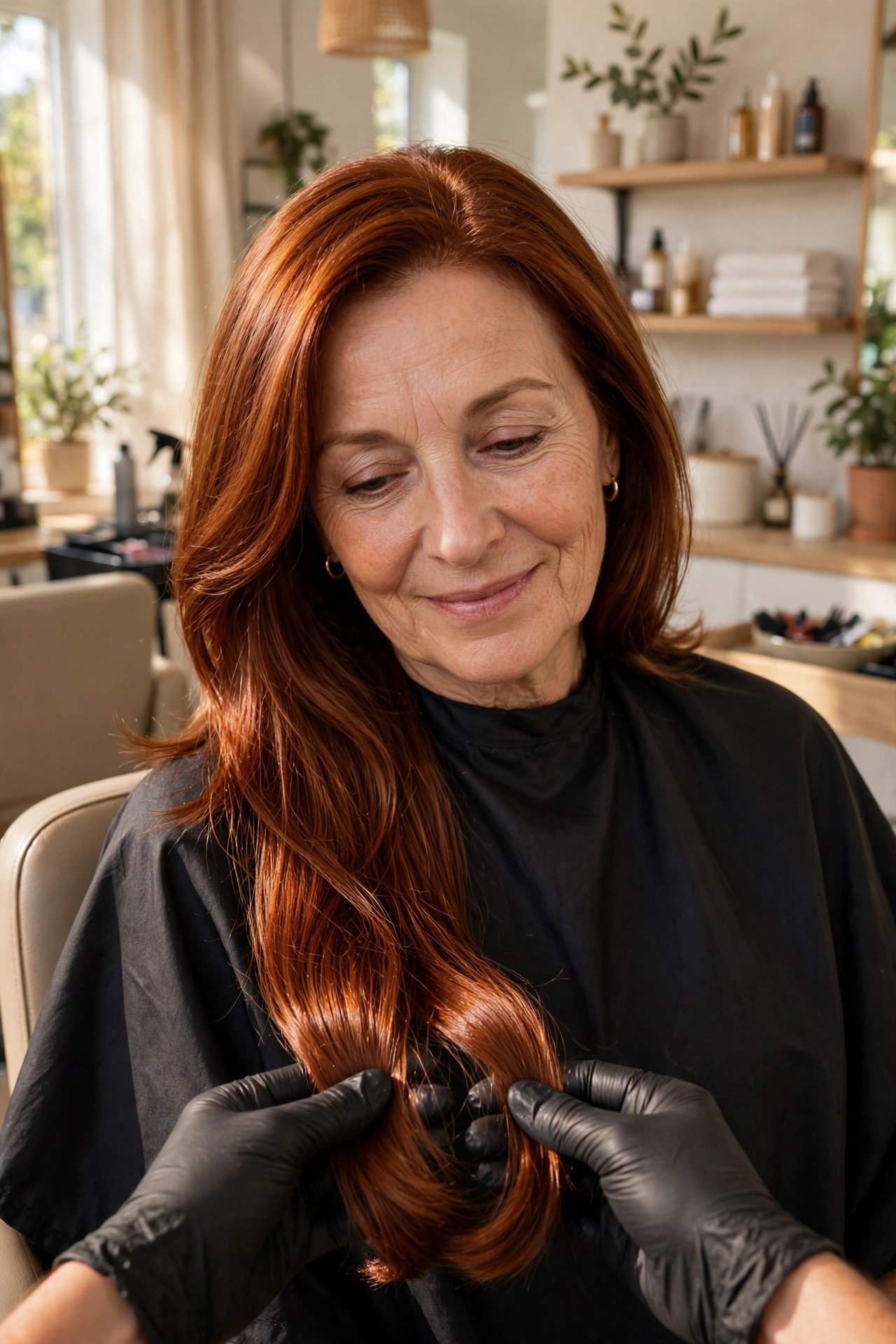
Dyed hair and virgin hair do not age at the same speed. Colour lifts the cuticle each time it is applied, so coloured ends dry out faster, fade sooner, and split earlier than untreated hair.
That is why stylists usually suggest 6 to 8 weeks for colour-treated hair, paired with the colour appointment itself where possible. One visit, both jobs done, and the fresh colour sits on healthy ends instead of frayed ones.
Grey coverage clients often notice the ends looking dull before the roots look obvious. When the shine goes from the last two inches, the trim matters as much as the colour.
8. Curls Play by Different Rules: 8 to 12 Weeks

The old advice to trim curls every few weeks was written for straight hair. Curls grow in spirals, so length hides longer, and most curly cuts hold their shape for 8 to 12 weeks.
What curls cannot hide is dryness at the ends. Look for:
- curls that stretch out instead of springing back
- ends that feel crunchy after conditioning
- a triangle shape creeping in at the bottom
Ask for a dry trim, done curl by curl, if your stylist offers it. Cutting curls dry shows the real shape, so too much length never vanishes once the hair bounces up.
- ▸Book by shape, not by the calendar alone.
- ▸Dry ends matter more than a little extra length.
- ▸A triangle silhouette means the trim is due.
9. Growing Out a Cut Still Needs Reshaping Every 6 to 8 Weeks

Growing out a pixie or a bob is where many women abandon the plan entirely, usually around month three, when the shape is neither one thing nor the other.
Salon guidance for a grow-out is a reshape every 6 to 8 weeks. The stylist keeps the length you have gained but rebalances the weight, so the awkward stages look like deliberate styles instead of accidents.
Tell your stylist the goal out loud at every visit. A trim that protects a grow-out is cut differently from a trim that maintains a style, and she cannot guess which one you want.
One section grows faster than the rest, the back feels heavy, and styling takes longer every single week.
Length kept, weight rebalanced, and the in-between stage looks like a style you chose on purpose.
10. The Calendar Method: Set the Date Before You Leave the Salon

Willpower is a poor haircare system. The women whose hair always looks tidy use a calendar, not a mirror panic.
The method is plain. Before you leave the salon, book the next appointment at the interval your cut needs, whether that is 5 weeks for a pixie or 10 for long layers. The date exists before life gets busy.
Then keep a small note of how your hair behaved in the final week. Too messy by day six of week five? Shorten the gap next time. Still neat? Stretch it. Two or three cycles and the calendar matches your hair, not a generic chart.
Book the next visit before you leave the salon, at the interval your cut needs.
Note how the final week actually looked, tidy or tired.
Adjust the gap by one week, then repeat until the rhythm fits your hair.
11. Wait Too Long and You Lose More Length, Not Less

Skipping trims to save your length backfires quietly. A split end left alone keeps splitting upward, so the damage that started in the last half inch can travel two or three inches up the strand.
By the time the hair looks obviously tired, the stylist has to cut past the damage to reach healthy hair. That is how a woman avoiding trims for six months loses more length in one appointment than a year of small trims would have taken.
Small and regular beats rare and drastic. Your future self, sitting in that chair, will be glad you kept the little appointments.
A split end never heals. It only travels. Small trims on time protect more length than one big rescue cut.
12. One Extra Week, Done Safely

One extra week is fine. Six extra weeks is where trouble starts, so if an appointment has to move, stretch smart rather than simply waiting.
Give the ends a quieter week:
- swap daily heat styling for a smooth bun or a soft braid
- brush gently, starting at the ends and working upward, never ripping through tangles
- add a pea sized amount of leave-in conditioner to the last inches
- sleep with hair loose or in a soft scrunchie, not a tight band
Then keep the rescheduled date. A stretch is a bridge to the trim, not a replacement for it, and your ends will show the difference.
⚠️ Watch Out
One stretched week is a bridge, not a habit. If you reschedule twice in a row, take the earliest slot you can and ask for a slightly firmer trim when you get there.
Good hair after 50 is rarely about a miracle product. It is about a small appointment kept on time. Match the rhythm to your cut, watch what your ends are telling you, and book the next visit before the current style has a chance to collapse. If you are still unsure how often to trim your hair over 50, start with the range for your cut above and adjust by one week either way until your mirror agrees. Save this guide for the morning your style stops cooperating, and share it with a friend who keeps apologising for her ends.