Balayage vs Highlights: Key Differences, Pros & Cons, and How to Choose the Right Technique
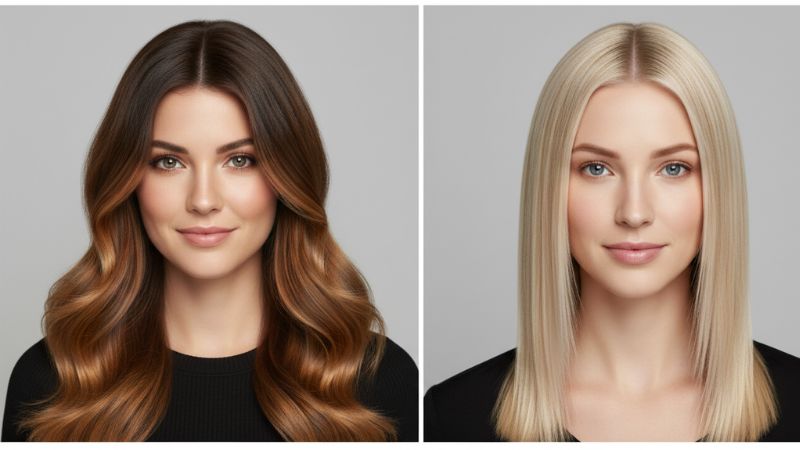
Hair coloring has changed significantly over time. Today, balayage vs highlights are two of the most popular ways to add dimension and brightness to your hair. Choosing between them usually comes down to one question: do you want colour that looks like you just got back from holiday, or colour with bright, deliberate pop? The technique, the appointment, the grow-out and the upkeep are genuinely different — and worth understanding before you book.
It’s easy to confuse the two, because both involve lightening selected strands. The real difference is placement — hand-painted in soft sweeps versus woven into foils from root to tip — and that single choice changes everything from how long you sit in the salon chair to how your roots look three months later.
This walkthrough covers both techniques honestly — how each is done, what the appointment actually feels like, what it typically costs, how the grow-out behaves, and which hair colours and skin tones each suits — so you can ask for exactly what you want instead of just hoping for the best.
Balayage vs Highlights: Quick Comparison
| Balayage | Highlights | |
|---|---|---|
| How it’s applied | Painted freehand onto the hair’s surface, no foils | Woven sections wrapped in foils from root to tip |
| Appointment time (typical) | 2.5–4 hours | 2–3 hours |
| Typical salon cost | $150–$350+ | $100–$300+ (partial vs full head) |
| Where the colour starts | Mid-lengths, feathered away from the root | Right at the root |
| Grow-out | Soft and blurry — refresh every 3–4 months | Visible regrowth line — touch up every 6–8 weeks |
| At-home upkeep | Sulfate-free wash, purple shampoo for blondes | Same, plus toner refreshes between visits |
| Best for | Low-maintenance, sun-kissed dimension | Bright, high-contrast, precise lightness |

What Is Balayage?
Balayage — from the French balayer, “to sweep” — is a freehand colouring technique. Instead of wrapping sections in foil, the colourist paints lightener directly onto the surface of the hair in sweeping strokes, concentrating brightness through the mid-lengths and ends while leaving the root area softly blended. Because there’s no foil trapping heat, the lift is gentler and more diffused, which is exactly what creates that lived-in, sun-kissed finish.
A full balayage appointment typically takes two and a half to four hours, including the toner or gloss that refines the final shade. Prices usually land somewhere around $150 to $350 or more, depending on hair length, the salon, and the colourist’s experience — treat these as typical ranges, since they vary a lot by location.

Main Features of Balayage
- Sun-kissed, diffused brightness — colour melts from your natural base into lighter ends with no harsh line.
- Soft regrowth — because colour starts away from the root, grow-out stays blurry; most people stretch appointments to every 3–4 months.
- Custom placement — the colourist paints where light would naturally hit, so the result is tailored to your cut and face shape.
- Best on length and layers — long hair, beach waves, textured lobs and soft curls show off the gradient beautifully.
What Are Highlights?
Traditional highlights use the foil technique: the colourist weaves out fine sections of hair, paints them with lightener, and wraps each one in foil. The foil traps heat, which speeds up processing and lifts the hair brighter and more evenly than open-air painting can.
Because foiled pieces start right at the root, highlights give stronger contrast and more uniform brightness from scalp to ends. A partial highlight takes around two hours; a full head is closer to three. Typical salon prices run roughly $100–$200+ for a partial and $150–$300+ for a full head, varying with hair length and location.

Balayage vs Highlights: Technique Comparison
The real difference is mechanical. Balayage is painted freehand, so the colourist controls exactly how much brightness lands where — heavier through the ends, feathered near the root. Foil highlights are woven and wrapped, which gives a more controlled, even lift and noticeably brighter results, especially on dark hair that needs several levels of lift. Many colourists now blend the two — a hybrid often called foilayage — painting balayage-style and then wrapping in foil for extra lift. If your hair is very dark and you want serious brightness, ask about that hybrid at your consultation.
Balayage vs Highlights Maintenance
Because balayage starts lower on the hair, it grows out far more gracefully than highlights — but both need the same at-home care to stay pretty. Wash with a sulfate-free shampoo, use a purple shampoo once a week if you’re blonde to keep brassiness away, and never skip heat protectant. Balayage usually needs a salon refresh every three to four months (often just a toner or gloss in between), while highlights need root touch-ups every six to eight weeks. Regular trims matter for both: lightened ends are fragile, and split ends travel upward fast.
Hairstyles That Work Best with Balayage
Balayage loves movement. The gradient only reads as a gradient when the hair moves, so cuts with layers, waves and texture show it off best.
The most flattering pairings include:
- Long layered hair — the layers catch different levels of lightness as they fall.
- Beach waves — waves break the colour into ribbons of light and shadow.
- Textured lob — the choppy ends show off the brightest pieces.
- Soft curls — curls concentrate brightness on the curves for a dimensional finish.

On very short or one-length cuts, balayage has less room to blend, so the effect can look blocky — that’s where highlights often win. If you love the gradient idea in a softer, more grown-out form, this sombre vs ombre guide breaks down the subtler options.
Hairstyles That Work Best with Highlights
Highlights are about precision and contrast, so they shine on cuts where clean lines and brightness around the face matter most.
They work beautifully on:
- Layered bob — foiled pieces frame the face and add brightness exactly where you want it.
- Long straight hair — sleek hair shows off the even, ribbon-like dimension.
- Curly hair — highlights placed on the curves create striking contrast and definition.
- Shoulder-length layered cuts — the classic canvas for partial or full highlights.

If your cut is blunt or graphic, the crisp lines of highlights will suit it better than a soft balayage melt.
Balayage vs Highlights by Hair Type
Texture changes how any colour reads. On straight hair, both techniques show their pattern clearly — balayage as a smooth gradient, highlights as distinct ribbons — which is why how curly and straight hair behave differently matters when choosing colour, too.
Wavy and curly hair diffuses colour, so balayage melts in beautifully and regrowth is even less noticeable; highlights on curls give bold, defined contrast instead. Coarse or thick hair lifts more slowly and may need a second session for very light results — be honest with your colourist about your hair history, because previously coloured or fragile hair can’t always safely reach platinum in one visit.
Skin tone guides the shade more than the technique. Warm undertones glow with honey, caramel and golden blonde; cool undertones suit ash, beige and icy platinum. Brunettes who want dimension without going blonde usually love balayage in caramel or toffee, while blondes chasing maximum brightness tend to prefer foiled highlights with a bright face-framing money piece.
Which One Should You Choose?
There’s no wrong answer here — just the one that matches your maintenance appetite and the look in your head. Use this as your checklist:
Choose balayage if you want:
- a soft, sun-kissed finish with no harsh regrowth line.
- fewer salon visits — typically every 3–4 months instead of every 6–8 weeks.
- dimension that enhances waves, layers and curls.
Choose highlights if you prefer:
- bright, noticeable lightness starting right at the root.
- even, ribbon-like colour you can see in straight or sleek styles.
- a bolder transformation, especially on darker hair that needs strong lift.
Frequently Asked Questions
The Final Word
Balayage and highlights both add light and dimension — they just speak different languages. Balayage whispers: soft, sun-kissed, low-maintenance. Highlights announce: bright, defined, polished.
Match the technique to your real life, not just the inspiration photo. If you want to stretch salon visits and love a lived-in finish, book the balayage. If you want maximum brightness with crisp definition, ask for foils. Bring reference photos either way — and be upfront about your hair history at the consultation, because the best colour always starts with healthy hair.