
Bangs or No Bangs Over 50? How to Decide
Most women do not wake up wanting a new hairstyle. They wake up wanting the mirror to feel a bit kinder at seven in the morning, before coffee, before anyone else is up.
Bangs promise that small lift. They soften the forehead, frame the eyes and make a plain ponytail look planned. Then the doubts arrive. Will they stick to your forehead by lunch? Will growing them out take forever? The honest answer is that bangs suit some faces, some hair and some routines far better than others, and the wrong match is what gives them a bad name.
So treat bangs or no bangs over 50 as a set of small checks, not a leap of faith. None of the checks needs special tools. A mirror, your glasses and an honest look at your calendar will do. Work through the twelve points below, notice which side keeps winning for you, and you will walk into the salon already knowing your answer.
1. Start With Your Forehead: Tall Foreheads and Short Foreheads Vote Differently

Your forehead is the ground this whole decision stands on.
A tall forehead gives a fringe room to sit flat and brings the face back into balance, which is why so many women with high hairlines feel bangs were made for them. A low or short forehead is different. A full fringe can crowd the face, sit close to the brows and make everything below it look squeezed.
- Measure with your fingers. Four fingers or more between brow and hairline usually means tall.
- Three fingers or fewer usually means low, so look at side swept or curtain shapes first.
| Tall forehead | Low forehead |
|---|---|
| Full fringe sits flat and balances the face | Full fringe can crowd the face and hug the brows |
| No fringe shows the height, suits a deep side part | No fringe keeps the face open and clear |
| First try: a classic or curtain fringe | First try: a side swept fringe |
2. Look at Your Forehead Lines and Decide What You Want on Show

Plenty of women rule out bangs because they think a fringe is a hiding trick, and plenty rule them in for exactly the same reason. Both views miss the point.
A fringe rests across the zone where horizontal forehead lines sit, so those lines look softer in the mirror and in photos. An open forehead shows the lines plainly, and plenty of women prefer that honest look, especially once a good moisturizer and sunscreen routine is in place. Neither choice says anything about confidence. It is simply about which view you enjoy more at the bathroom mirror on an ordinary morning.
3. Wear Glasses? Your Frames and a Fringe Share the Same Small Space

Glasses change the fit of a fringe more than any face shape chart does.
Frames sit right at brow level, exactly where a classic fringe ends. A fringe cut a fraction too long pushes on the frames, rides up over them, or splits around the bridge of the nose. Shorter fringes that stop above the frames stay tidy all day. Longer, side swept fringes slide behind the arms of the glasses and behave well too. Readers that come on and off are less of an issue than glasses you wear from breakfast to bedtime.
Take your everyday pair to the appointment. A fringe measured without them is a guess.
💡 Quick Tip
The two finger test: with your glasses on, rest two fingers flat between your brows and where you want the fringe to end. If there is no room for those fingers, ask for the fringe shorter or swept to the side.
4. Check Your Hairline: Cowlicks, a Widow’s Peak and Thinning Edges

Growth direction beats good intentions at the front hairline.
A strong cowlick can split a straight fringe down the middle by midday, no matter how carefully it was blow dried at breakfast. A widow’s peak fights a centre fringe in the same way, pushing it into two curtains. A side swept fringe works with that growth instead of against it, which is why stylists reach for it so often. With no fringe at all, the hairline simply shows, and a soft side part can break up a strong peak or soften an uneven edge.
Work with the growth direction and sweep the fringe the way the cowlick already falls.
Ask your stylist to check the front hairline dry, before any cutting starts.
A dead straight, heavy fringe cut over a strong cowlick.
Fighting a widow’s peak into a centre fringe that splits by lunch.
5. Fine or Thinning Hair at the Front Changes the Math
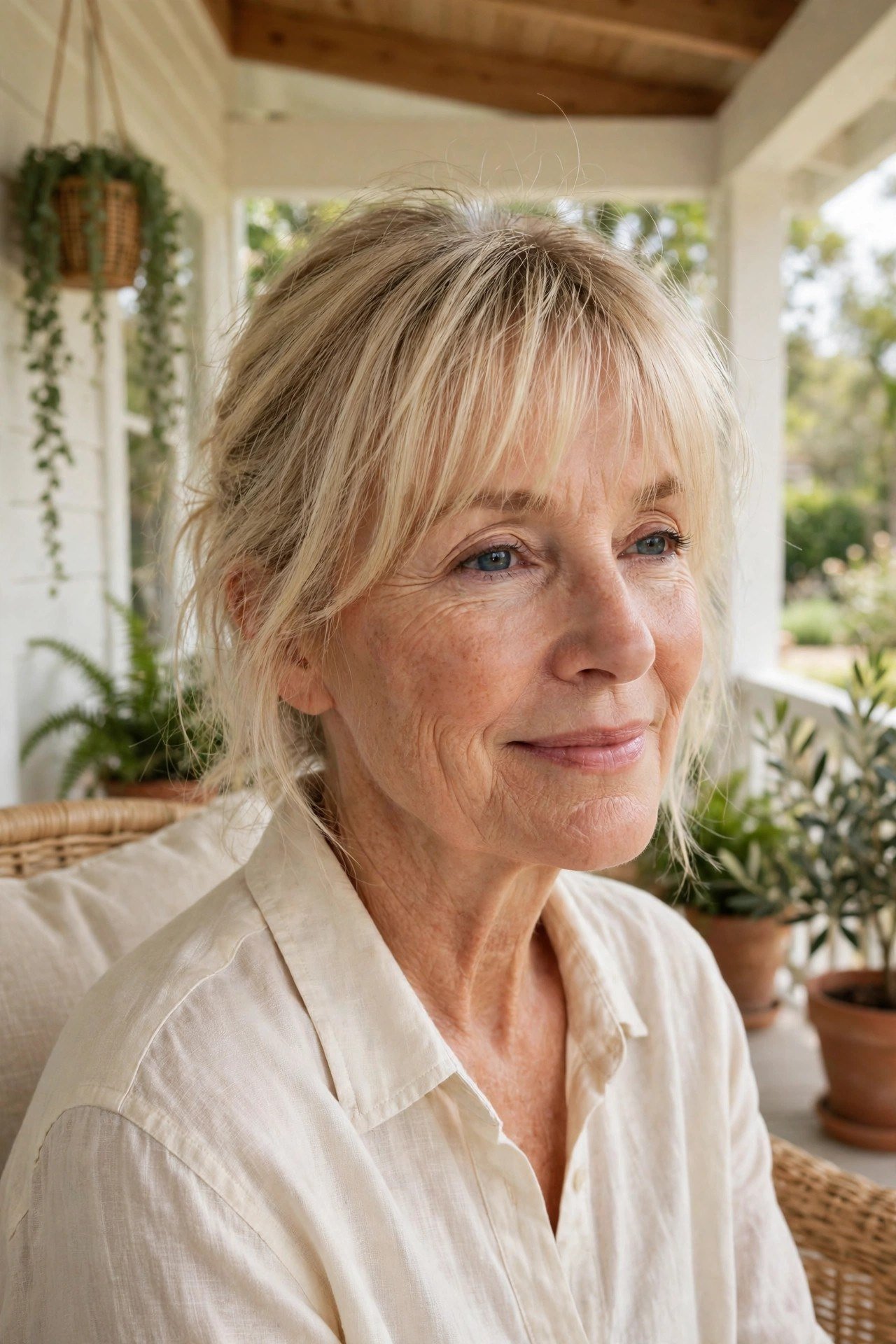
A fringe is not free hair. It is borrowed from the front and top of your head.
On thick hair, that loan is barely noticed. On fine hair, a heavy blunt fringe can leave the crown and the parting looking thinner than before, because the fullness moved forward. A light, feathered fringe borrows far less and still softens the forehead. The other side matters too. A fringe can cover a front edge that is thinning, giving a softer frame while the rest of the hair stays back. Look honestly at where your hair feels sparsest before you decide where it should sit.
Before you borrow hair for a fringe
6. Your Texture Decides the Daily Fight: Straight, Wavy, Curly or Coily

Texture decides how much of your morning a fringe will own.
Straight hair drops into a fringe shape with almost no help, though it shows oil sooner than other types. Wavy hair often needs a quick blast of heat or a careful air dry to stop the fringe curling sideways. Curly and coily fringes can look lovely, but they spring up shorter than they look when wet, so they need extra length left in and a stylist who cuts them dry. Skipping the fringe lets your texture fall where it wants, with no daily negotiation at the mirror.
7. Oily Skin? A Fringe Rests on Your Forehead All Day

Here is the check nobody mentions while you are sitting in the salon chair.
A fringe lies on your forehead skin for every waking hour. On oily or combination skin, it picks up shine fast, separates into strands by the afternoon and needs a wash long before the rest of your hair does. Some women also find their forehead breaks out under a fringe, especially in summer or under makeup. Dry or normal skin rarely causes any of this. If your forehead stays matte most days, file this under not a problem and move on to the next check.
- ▸Shine breaks through your makeup by lunch on most days.
- ▸Your fringe would need washing a day or two before the rest of your hair.
- ▸Your forehead breaks out under hats or headbands in summer.
8. Count the Styling Minutes You Will Honestly Give It

Be honest about the version of you that exists on a tired Tuesday.
A neat fringe asks for a few small things. A quick wash of just the fringe in the sink on the days between full washes. Two or three minutes with the dryer to set the direction before it dries the wrong way. A trim every few weeks, before it reaches your eyes. None of that is hard, but it is daily. If your current routine is a brush and a ponytail, an open style will fit your life better. If you already style your hair most mornings, a fringe simply joins the routine you have.
Choose the option your tired Tuesday morning can keep up with, not the one your best Sunday promises.
9. Think About Your Week: Workouts, Hats, Helmets and Wind

Salon photos are taken on calm days. Your fringe has to survive your actual week.
Sweat from a workout or a fast walk pushes a fringe flat and damp. Hats, cycling helmets and wool scarves press it down and leave it pointing the wrong way when they come off. Wind does the same on a blustery pavement. A fringe can recover with a clip, a puff of dry shampoo and a minute of patience, and many women pin theirs back for exercise without a second thought. An open forehead needs none of that recovery time, which matters if most of your days are spent outdoors.
Fringe survival kit for busy weeks
10. Match the Choice to Your Face Shape: Round, Long, Square or Heart

Face shape does not give orders, but it does give hints.
Round faces usually suit a side swept fringe, which adds an angle and a bit of length to the look. A blunt, straight fringe can make a round face look wider. Long faces often welcome a full fringe, because it shortens the look of the face in a good way. Square faces soften nicely with wispy, broken up edges rather than a hard line. Heart shaped faces, wide at the forehead, often balance best with a side fringe that narrows the top half.
11. Hair Growth Speed and Trim Access: a Fringe Runs on a Schedule
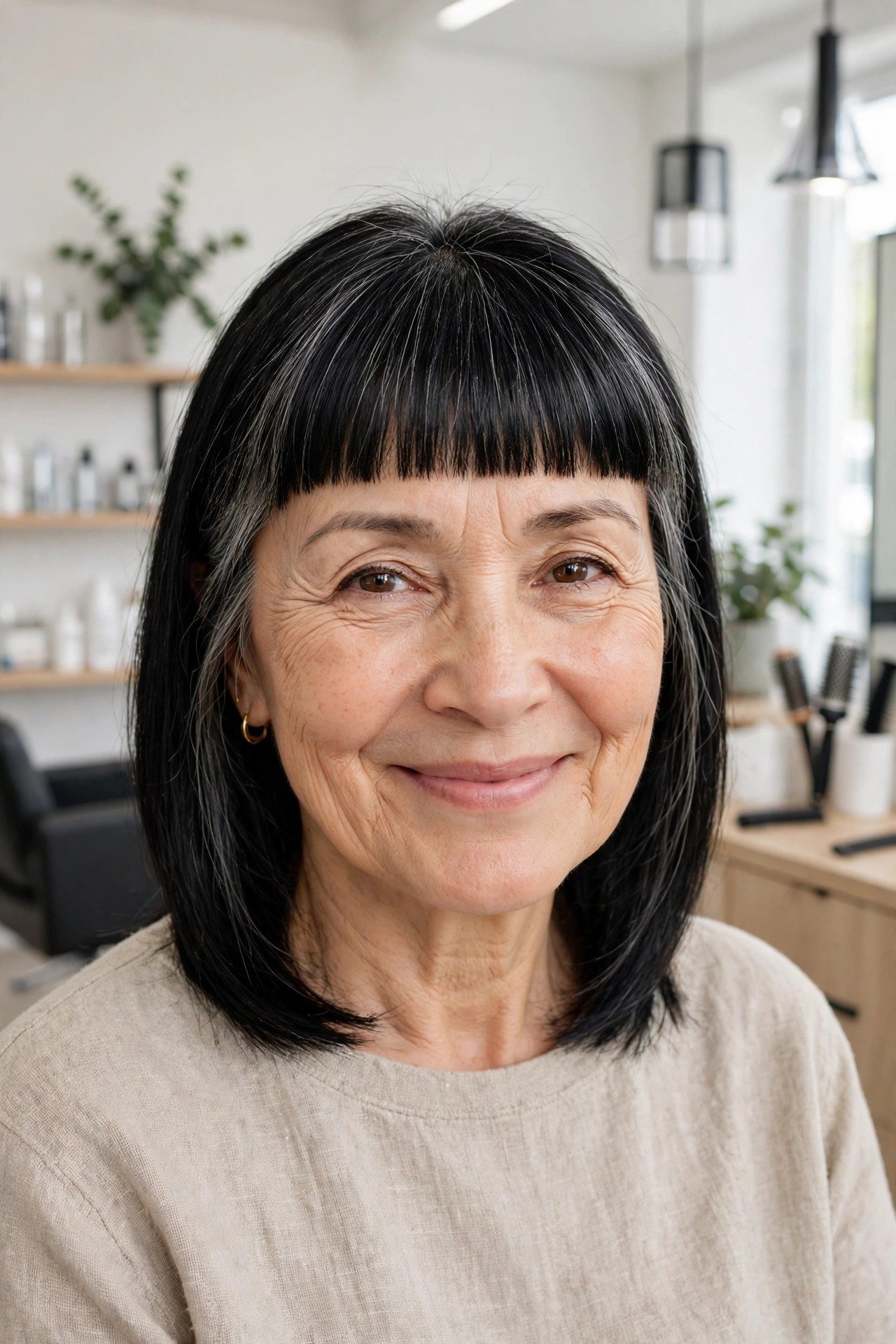
A fringe is the only part of a haircut with a deadline attached.
Front hair grows at the same speed as the rest, but you notice it sooner, because it heads straight for your eyes. Most fringes want a tidy up every three to four weeks. Some salons offer quick fringe trims between full appointments, sometimes free and sometimes for a small fee, so ask before you commit. If your salon trips are rare, or your hair grows fast and your calendar is packed, a longer side fringe stretches the gap between visits. No fringe at all grows out quietly, with no awkward stage at all.
Book the first fringe trim before you leave the salon, while the date is easy to pick.
Note the week the fringe first touches your lashes. That is your personal trim cycle.
Put fringe trims and full cuts on one calendar rhythm, so neither one gets forgotten.
12. Run the Clip-In Test Before Any Scissors Come Out

There is a way to get real evidence before any cutting happens.
A clip-in fringe piece costs little, clips along your front hairline and comes out again at bedtime. Wear it for one full, ordinary day. Put your glasses on and off. Do the school run, the shopping, the dog walk. Take photos in daylight and in your bathroom light. Notice if you keep touching it, pushing it aside or forgetting it entirely. Touching it all day is data. Forgetting it is data too. Then decide with a clear head, because you have already lived a whole day inside the result.
Wear the clip-in fringe for one full, ordinary day, from breakfast to bedtime.
Take photos in daylight and in bathroom light, with your glasses on and off.
Judging the look after five minutes in front of one mirror.
Booking the real cut for the same day you first feel unsure.
Twelve checks later, your answer is probably already leaning one way. Count the sections that pointed to bangs and the ones that pointed to an open forehead, then trust the pattern you see. If the score feels close, start with the softer option, a side swept fringe or a clip-in trial, and let one normal week cast the deciding vote. Bangs or no bangs over 50 is not a test you can fail. It is a fit question, and your hair, your skin and your mornings have already given you most of the answer. Save this list for the night before your salon visit, then book the version your real week can keep up with.