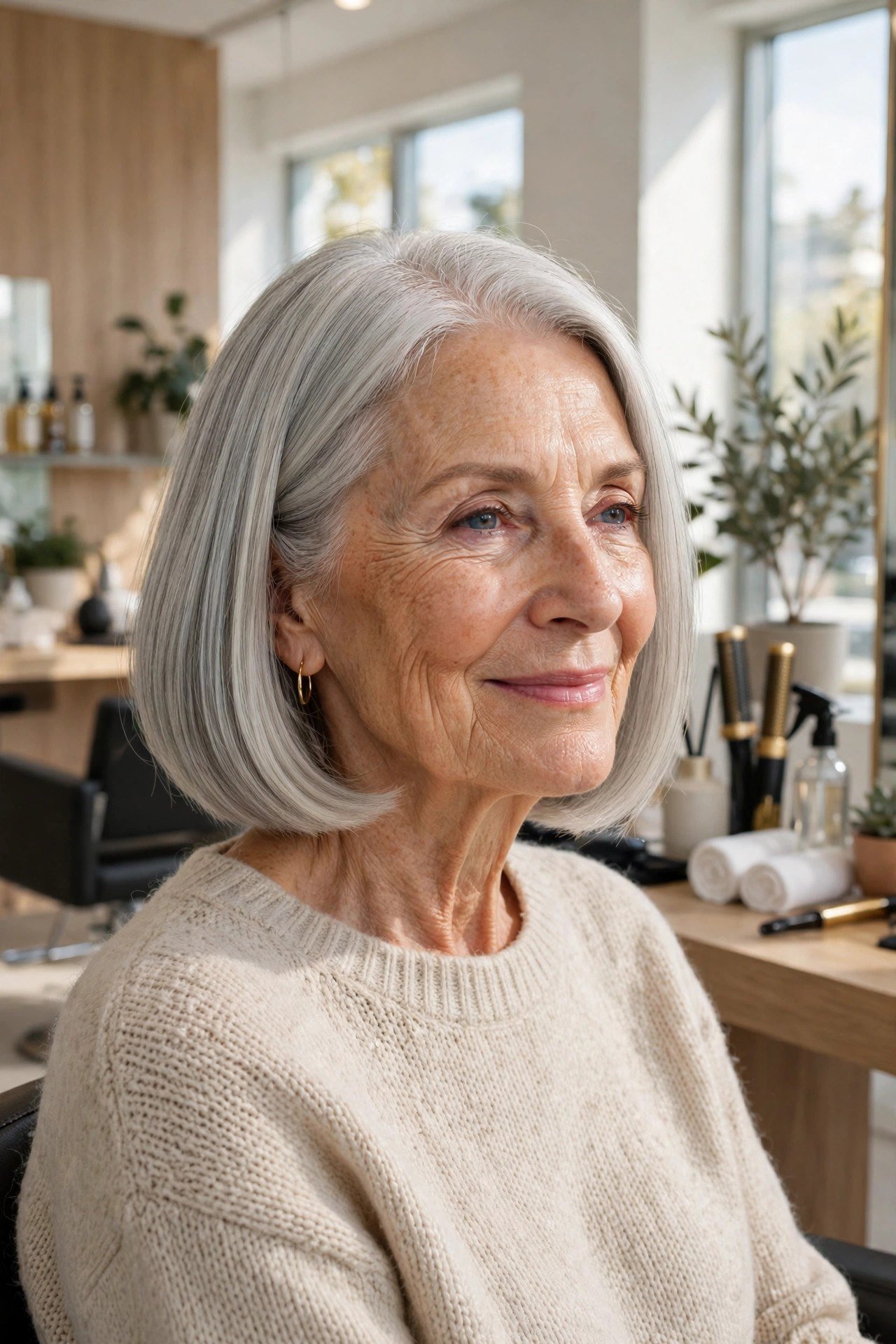
Pixie vs Bob Over 60: Which One Suits You?
There is a particular kind of mirror moment that starts this whole debate. Your hair is not doing what it used to do, the style you have worn for years feels flat, and two cuts keep coming up in every conversation: the pixie and the bob.
Choosing between them is not really about which cut is prettier. It is about your mornings, your hair texture, your glasses, your budget for trims, and how much change you actually want. That is why this pixie vs bob over 60 comparison goes point by point instead of crowning a winner.
Both cuts have plenty of range at this age. A pixie can be soft and feathery or neat and cropped close. A bob can sit at the jaw, brush the shoulders, or stack up at the back. The names are short. The difference in daily life is not.
Read the points that match your life first. If three or four of them lean the same way, you probably have your answer, and you will walk into the salon sounding sure of it.
1. Pixie Daily Upkeep vs Bob Daily Upkeep

Upkeep is where the two cuts split the fastest.
A pixie looks its sharpest with regular tidying. The back and sides grow past their line quickly, so most women book a tidy up every four to six weeks and do very little at home between visits. A bob asks less of the salon calendar and a bit more of your brush. The shape holds for eight to ten weeks, but the ends need smoothing and the part needs a quick reset most days.
- Pixie home kit: one dab of wax and a fine comb.
- Bob home kit: round brush, dryer, one smoothing cream.
Pick by your calendar, not by the photo.
| Pixie upkeep | Bob upkeep |
|---|---|
| Salon tidy up every 4 to 6 weeks to hold the line. | Salon visit every 8 to 10 weeks to refresh the ends. |
| At home: almost nothing beyond a dab of product. | At home: a quick brush through and part reset most days. |
| Forgiving when life gets busy for a week. | Forgiving when you cannot get a salon slot for a month. |
2. Pixie Styling Time vs Bob Styling Time
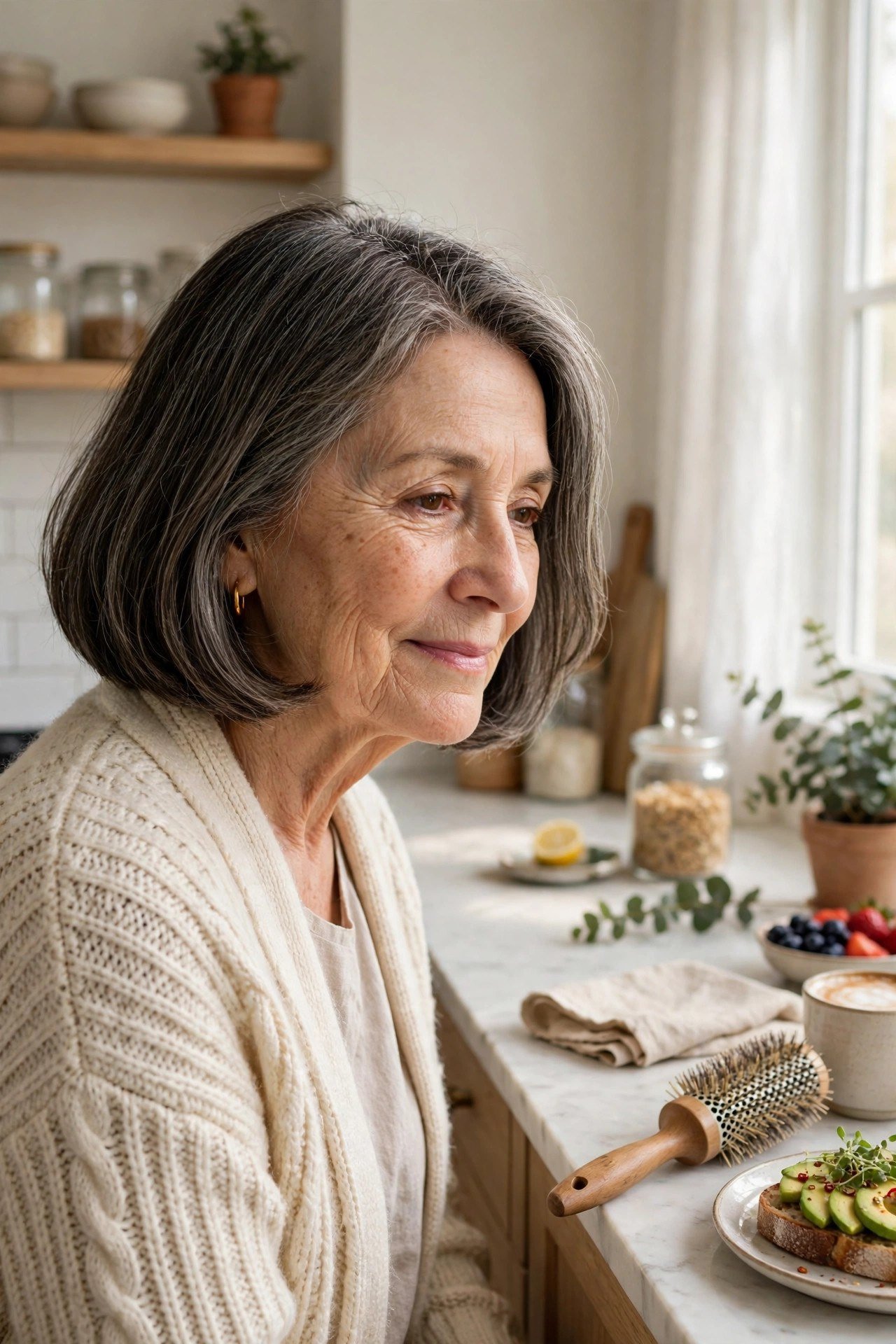
On an ordinary Tuesday, the pixie wins on minutes.
Most pixie wearers are done in about five minutes: dampen, work a little product through with fingertips, push the fringe where it belongs, and leave. A bob usually takes ten to fifteen minutes if you want the ends to turn under and the top to sit smooth, because the dryer and a round brush come out. Skip the dryer and a bob can look sleepy by lunch. A pixie, oddly, often looks better slightly undone.
Your mornings decide this one more than your mirror does.
3. Pixie Face Shape Fit vs Bob Face Shape Fit

Face shape is the point most women overthink, and it matters less than texture and habits.
A pixie puts your features on full display. It flatters oval faces, heart shapes with a soft fringe, and anyone who likes their eyes and cheekbones to do the talking. A bob builds a frame. It softens a strong jaw, balances a longer face when it stops at the chin, and gives a rounder face some vertical line when it falls a touch longer. Bring two photos to your stylist, one of each, and watch which one your eye keeps returning to.
Quick face shape check
4. Pixie on Fine Hair vs Bob on Fine Hair
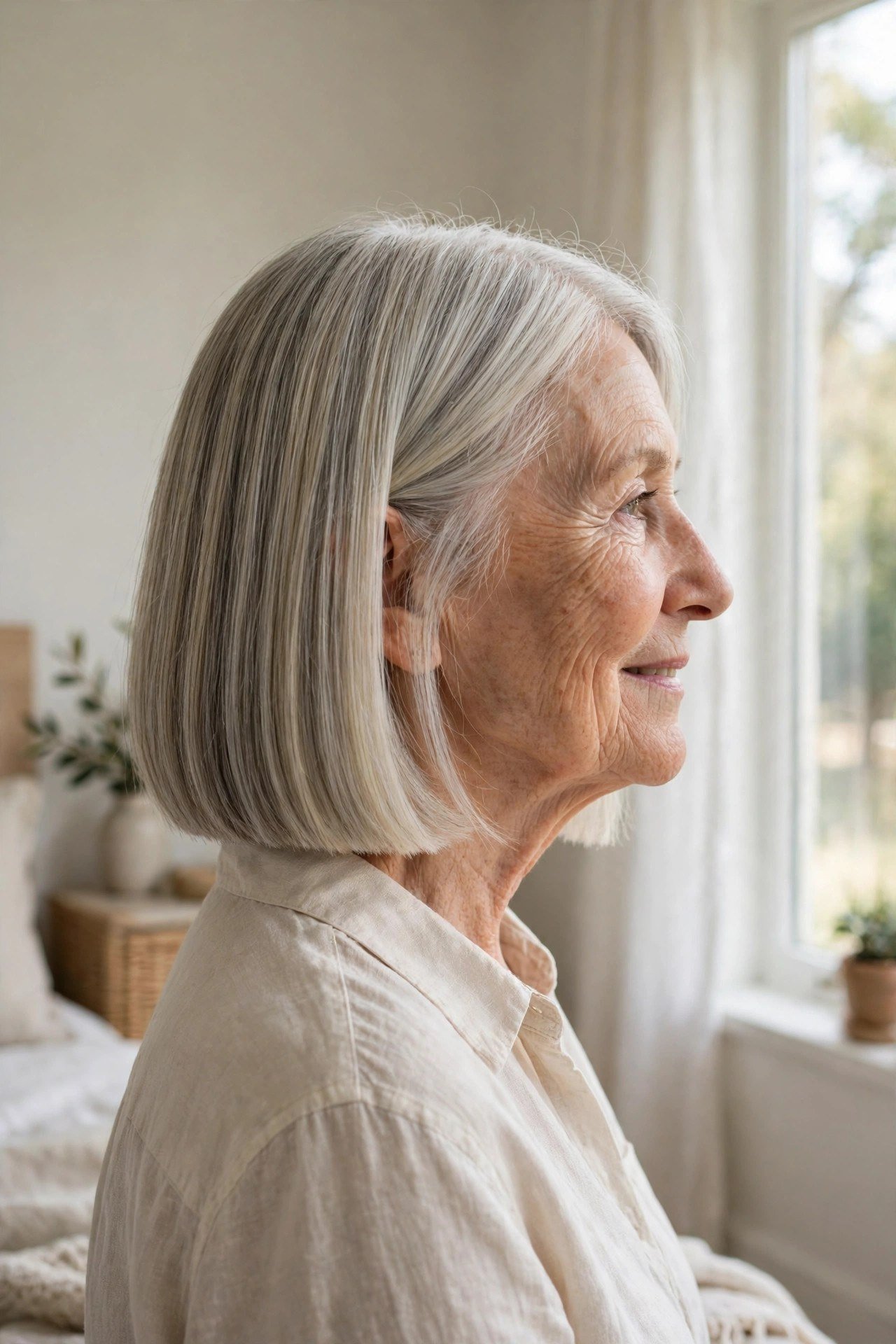
Fine hair changes the answer a lot.
Cut short, fine hair stops fighting itself. A pixie removes the wispy ends that make thin hair look thinner, and short layers can stand up and hold a bit of lift at the roots. A bob works on fine hair when it stays blunt. One clean line at the ends makes the whole head of hair read thicker than it is. Where fine hair struggles is the in between choice: a layered bob that is neither short nor blunt can separate and show every gap.
- Fine hair, quick answers: short layers for lift, a blunt bob for thickness, skip the in between layered bob.
5. Pixie on Thick Hair vs Bob on Thick Hair

Thick hair flips the script.
A bob carries thickness well when the stylist removes weight from underneath. The shape sits smooth, swings a little, and does not need daily wrestling. A pixie on thick hair can look wonderful, but it needs real skill at the cut stage: too much bulk left at the sides and it puffs out like a helmet within a fortnight. Ask directly if your stylist will thin and shape the back properly. Thick hair also grows a pixie out fast, so expect the shape to soften sooner between appointments.
Bulk control is the whole appointment.
💡 Quick Tip
Book a thick hair pixie with a stylist who can show you photos of thick hair they have cut short. The weight removal at the back and sides is the whole job, and it should happen at the first cut, not the fix up visit.
6. Pixie with Glasses vs Bob with Glasses

Glasses are not a side detail at this age. For many women they are the main accessory, worn all day.
A pixie clears the stage. Nothing competes with your frames, nothing tucks behind ears or catches on the arms of your glasses, and bold frames look deliberate. A bob works with glasses when the length is chosen around them: sides that end above the frame line sit clean, while hair that ends right at the hinge can push frames forward and get trapped.
Frame check: bring your everyday glasses to the appointment, not the spare pair in the drawer.
Nothing catches on the arms or tucks behind your ears.
Bold frames get the full spotlight, all day.
Ask for sides that end above the frame line.
Avoid ends that land right on the hinge and push frames forward.
7. Pixie Grow-Out vs Bob Grow-Out
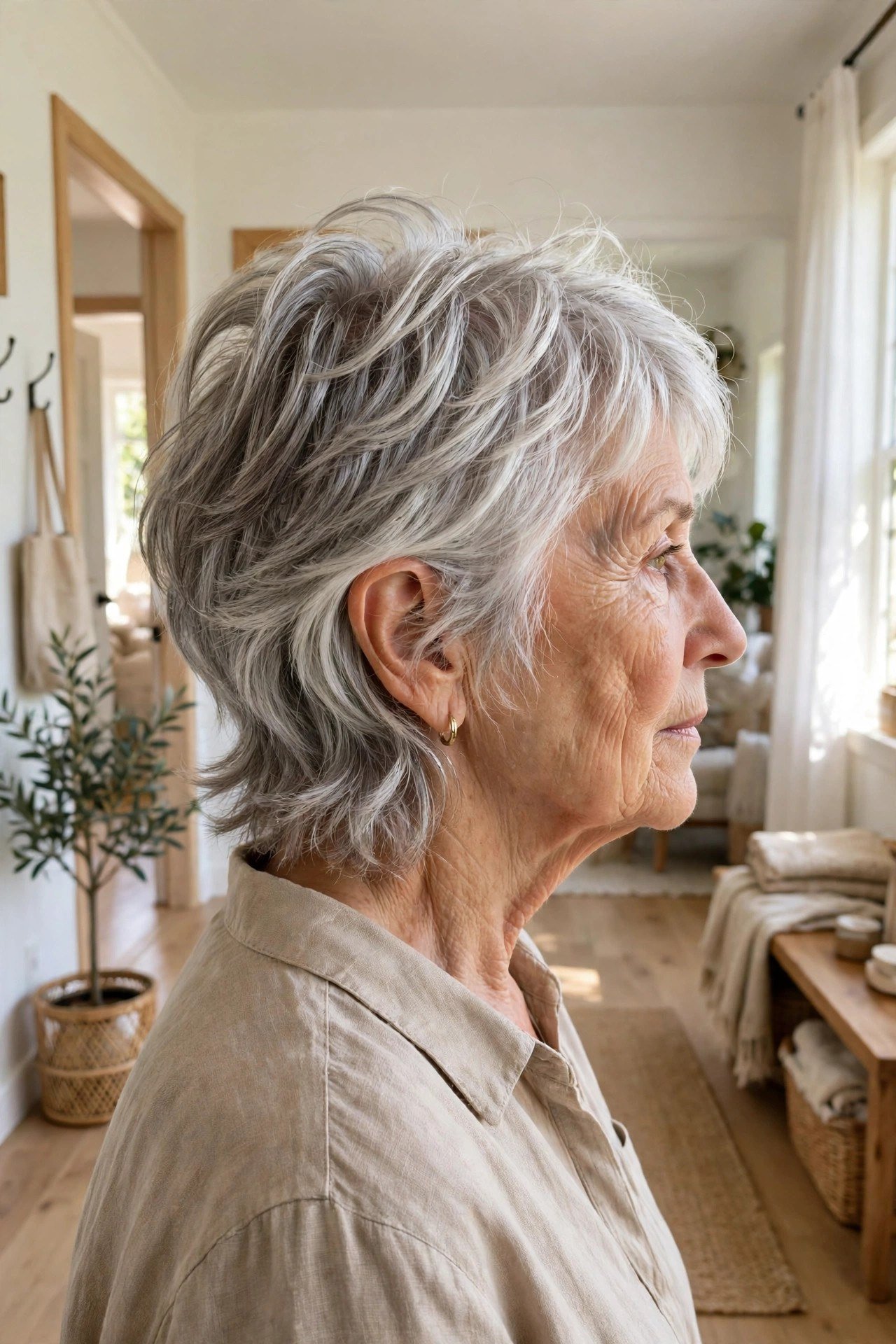
Sooner or later, every cut has to grow, and this is where patience gets tested.
A bob grows out gracefully. It simply becomes a longer bob, then a shoulder style, and you can ride it for months with one tidy of the ends. A pixie grows out in stages that have names in most salons: the neat stage, the fluffy stage, and the awkward stage around the ears and neckline. The fix is small shaping visits that cost less than a full cut and keep you from hating month three.
Budget for two shaping visits and the grow out stops being scary.
Weeks 1 to 4 of a pixie grow out: enjoy it, the shape still holds.
Months 2 to 3: book a short shaping visit for the neckline and ears only.
Month 4 onward: ask for a pixie bob blend to bridge the gap into a bob.
8. Pixie Trim Costs vs Bob Trim Costs
Neither cut is the cheap option in the way people hope. They just spend the money differently.
A pixie trim is usually a shorter, simpler appointment, but you will have more of them across a year because the shape shows regrowth sooner. A bob appointment tends to run longer, with washing, cutting and a blow finish, yet you may only need four to six a year. Add home costs honestly: bob owners spend more on heat tools and smoothing products, pixie owners on almost nothing beyond one styling cream.
Count visits per year, not the price of one visit. The cut that looks cheaper on the receipt can cost more on the calendar.
9. Pixie Volume vs Bob Volume

Volume is the word that comes up in almost every consultation after 60, because hair often grows in finer than it used to.
A pixie builds volume by direction. Short layers at the crown can be pushed up and back, and the lift sits exactly where most women want it. A bob builds volume by shape: a stacked back or a gentle A line angle pushes hair outward and gives the outline more body. On very fine crowns, the bob can fall flat by evening, while the pixie holds its lift with far less hair to support.
Lift is a technique as much as a cut.
| Pixie volume | Bob volume |
|---|---|
| Comes from direction: short crown layers pushed up and back. | Comes from shape: a stacked back or gentle A line angle. |
| Best trick: dry the crown forward, then push it back with fingers. | Best trick: dry the roots away from the scalp, then let the ends fall. |
| Falls flat when the crown grows past its short stage. | Falls flat on very fine crowns by evening. |
10. Pixie Neckline vs Bob Jawline

Look at a pixie and a bob from the side and the difference is easy to spot.
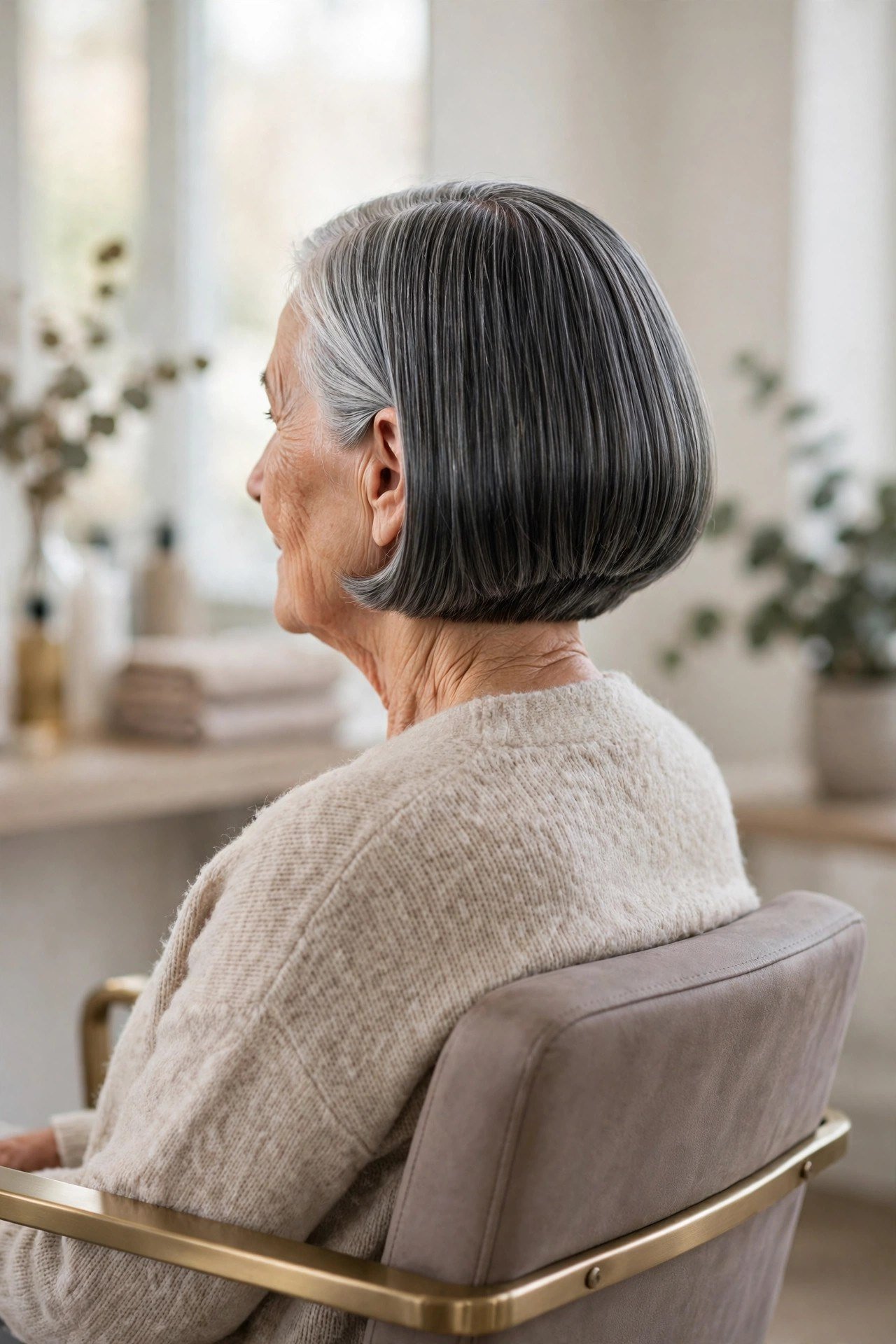
A pixie clears the neck completely. Earrings show, collars sit clean, and a longer neck line appears almost by accident. It also leaves the jaw fully exposed, which some women love and some do not. A bob draws a curtain at jaw level. It can soften the jaw, shade the start of neck lines, and frame the chin. If you wear statement necklaces, the pixie shows them off. If you prefer a softer edge around the face, the bob does that work for you.
Neck, earrings and collars all on display. The jaw is fully exposed too, so this suits women who like their bone structure front and centre.
Hair lands at jaw level and softens the edge of the face. Early neck lines sit in shade, and the chin gets a gentle frame.
11. Pixie Risk Factor vs Bob Risk Factor

One of these cuts is a bigger leap, and it is honest to say so.
Going from long hair to a bob is a change you can test in stages: collar bone first, then chin length, then shorter if you are enjoying it. Going to a pixie is one appointment and a done deal. There is no undo button, only grow out time. That said, plenty of women say the pixie felt less risky than expected because the face they saw in the mirror finally matched how they feel. Start where your nerve is, not where a trend points.
- ▸Tuck and pin your hair up for one full day and live with the open neckline before you book anything.
- ▸Unsure? Take the bob first. A pixie can follow in a single visit once you know you like short.
- ▸Pull your hair back tightly and take a photo. That flat, open read is close to how a pixie will feel.
12. Pixie Seasonal Comfort vs Bob Seasonal Comfort

Seasons sound like a small thing until you live in a cut through all four of them.
A pixie is the cooler summer cut by a wide margin. Nothing sits on the neck, hats press it flat but it revives with wet fingers, and rain barely registers. Winter is its weaker season: ears and neck feel the cold, and hat hair needs a quick rebuild indoors. A bob keeps ears covered and works under a scarf, but summer humidity can puff it out and stick it to a warm neck by midday.
So, which one suits you? There is no trophy winner in the pixie vs bob over 60 debate, and that is the honest answer. The pixie suits a woman who wants fast mornings, a clear neckline, and does not mind regular tidy ups. The bob suits a woman who likes a frame around her face, fewer salon visits, and a shape that grows out kindly. Count how many points leaned one way as you read. Then book a consultation, bring two photos, and save this comparison to show your stylist before anyone picks up the scissors.