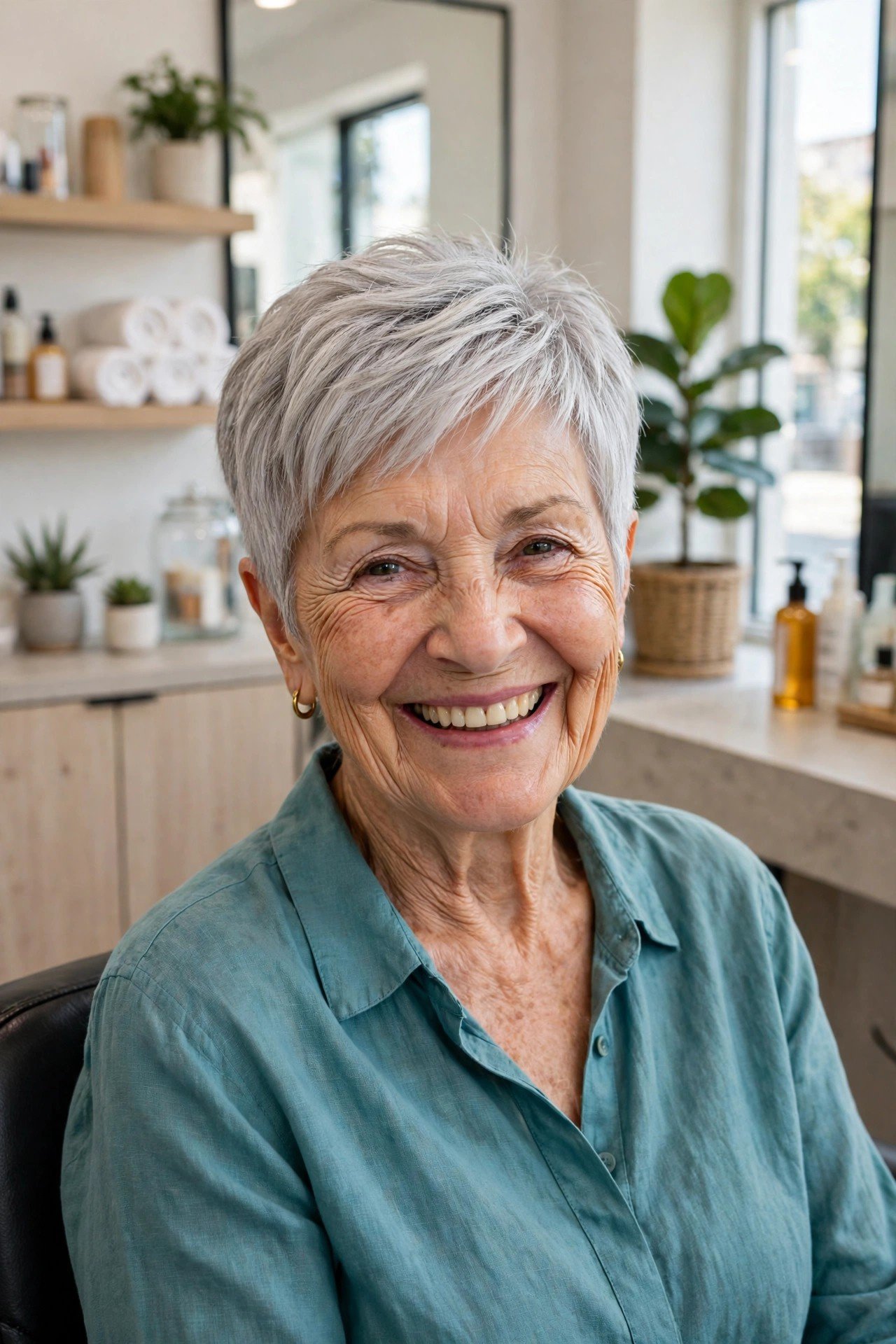
How to Ask Your Stylist for a Pixie Cut Over 60 (Exact Words)
The cut itself is rarely the problem. Most pixie disappointments start in the first five minutes, when the word short means one thing to you and something else entirely to the person holding the scissors.
You have the photo saved. You have been thinking about it for months. What you may not have is the wording, the small specific sentences that turn a vague request into a cut you can style on a Tuesday morning with wet hands and your reading glasses on.
That wording is exactly what this page gives you. Below are the exact phrases for how to ask your stylist for a pixie cut over 60, one for each moment of the appointment, starting with the booking call and ending with the mirror check. Each one is short enough to remember in the chair.
Say them as they are, or bend them to fit your voice. Either way, you leave with the cut you pictured, not the cut somebody guessed at.
1. On the Booking Call, Ask for Talking Time Before Cutting Time

The most useful sentence in this whole list gets said on the phone, days before scissors appear.
When you book, say it plainly: “I am going for a pixie cut, and I would like ten minutes to talk it through before any cutting starts. Can we book it that way?” A change this big deserves more than a quick nod in the chair. Those ten minutes let the stylist see your hair dry, watch where it falls, and hear the whole plan while there is still time to lengthen the appointment.
The detail most women forget is one word: restyle. Tell the salon it is a restyle, not a trim, because a trim slot is short and a rushed pixie is where mistakes creep in.
Say these three things on the call
2. Show Two Photos, One You Love and One You Want to Avoid
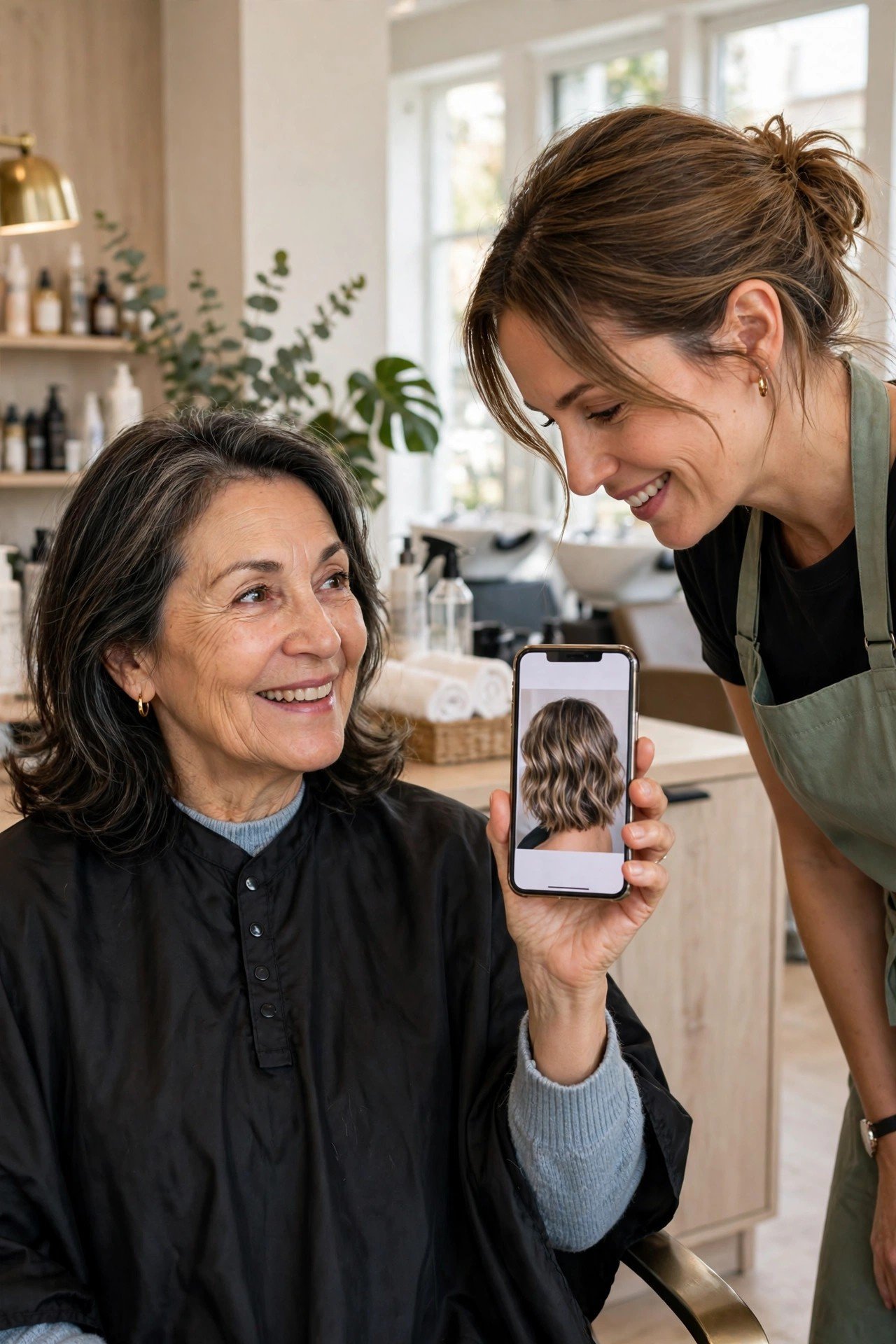
You are in the chair, cape on, phone in hand, scrolling past a dozen saved pictures while the stylist waits. Narrow it down before you arrive, because two photos do the real work.
Hold up the first and say: “This is the shape I keep coming back to.” Then show the second: “And this one is what I do not want, especially around the ears.” Stylists read pictures faster than descriptions, and the avoid photo quietly rules out the cuts you would hate.
The forgotten detail is the model in the photo. Pick women with hair like yours, fine or thick, straight or wavy, or the shape will not sit the same way on your head.
Bring two photos, one you love and one you want to avoid.
Point at the exact part you mean, like the ears or the fringe.
A folder of twenty pictures you only half like.
Photos of hair that is far thicker or straighter than yours.
3. Give the Length on Top in Fingers, Not Inches
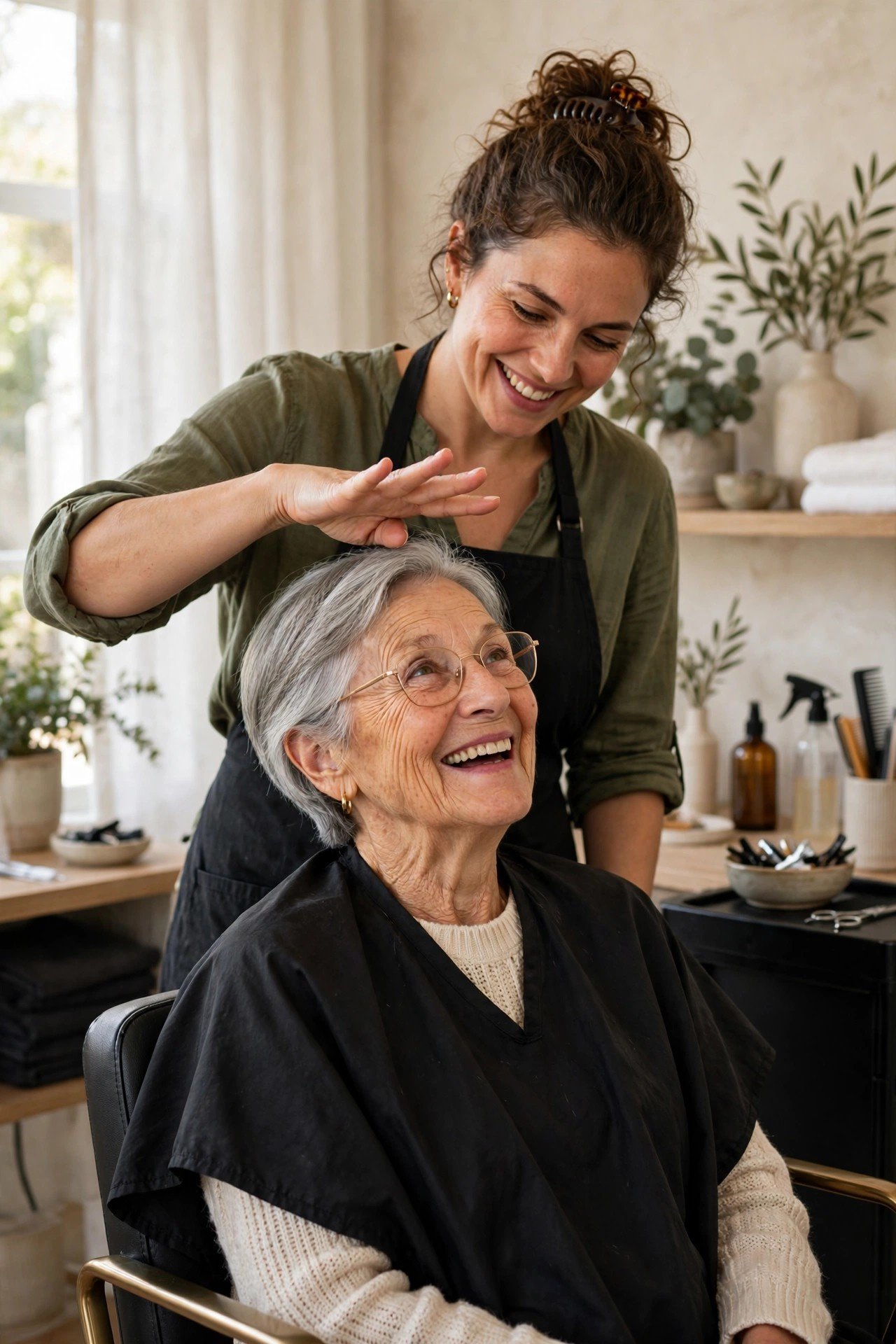
Few of us can picture an inch. All of us can hold up three fingers.
Rest your hand flat on the crown of your head and say: “Please leave about this much length on top, enough to sweep over and tuck behind my ear.” Then show the fingers again so there is no guessing. Length on top is what keeps a pixie soft and movable. Take too much away and it either stands straight up or lies flat with nowhere to go.
One more detail decides everything: tell the stylist what you do with it at home, pushed forward, swept to the side, or fluffed up with your fingers, because that habit decides where the length needs to live.
💡 Quick Tip
Hair springs up as it dries, so a cut can sit shorter at home than it looked wet in the chair. Ask the stylist to leave the top a touch longer than the photo. More can always come off at the end.
4. Say Plainly If You Want Soft Sides or Clipped Sides
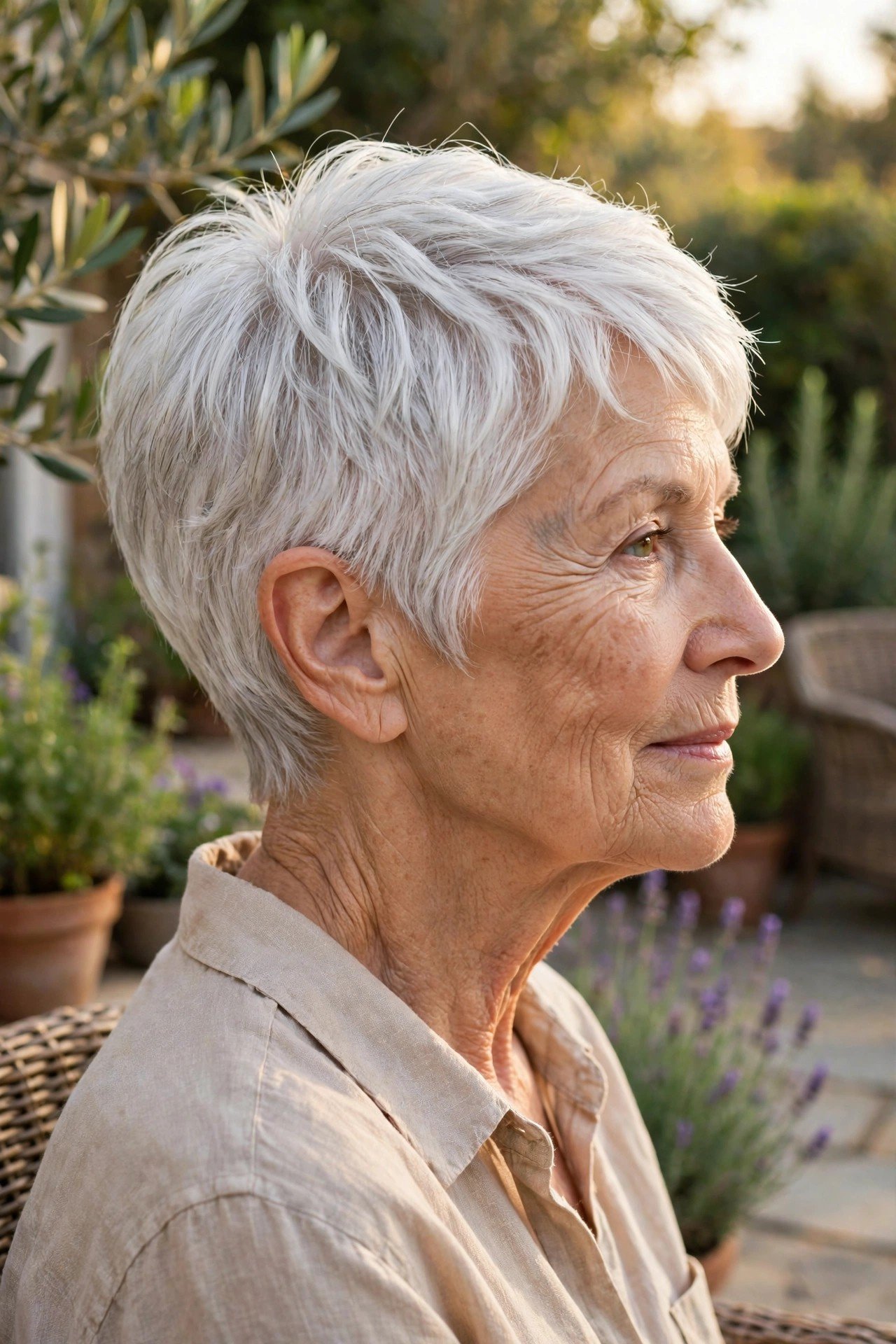
Before the first snip, point at the hair over your ears and settle the sides out loud.
Say: “I would like the sides scissor cut and soft, sitting over the tops of my ears, not clipped close.” If shorter and cleaner is more your taste, say that instead: “You can take the sides shorter, I like a neat edge.” Both are fine. What causes regret is silence, because many stylists reach for the clippers on a pixie out of habit.
The forgotten detail is your glasses. The arms sit right where side hair tucks, and the cut needs a little room there or the hair pokes out over the frames.
5. Decide the Neckline Out Loud, the Part Everyone Sees but You

The back of your head is the view the whole queue at the shops gets, and it is the part most women never discuss.
Say: “Please keep my neckline soft and tapered into my natural hairline, with no hard straight line across the back.” A soft finish grows out kindly and suits finer hair. If you prefer a cleaner edge, say so, and ask how often it needs tidying to stay sharp.
The forgotten detail is your own hairline. Most swirl or sit slightly uneven at the back, and a good stylist cuts with that swirl instead of fighting it into a ruler straight edge.
| Soft tapered finish | Clean straight edge |
|---|---|
| Blends into your natural hairline | Sharp, defined line at the back |
| Grow out stays forgiving for weeks | Starts to show within a couple of weeks |
| Tidied up at your main cuts | Quick neck trims between cuts |
6. Talk About Your Fringe in Terms of Your Forehead and Your Habits
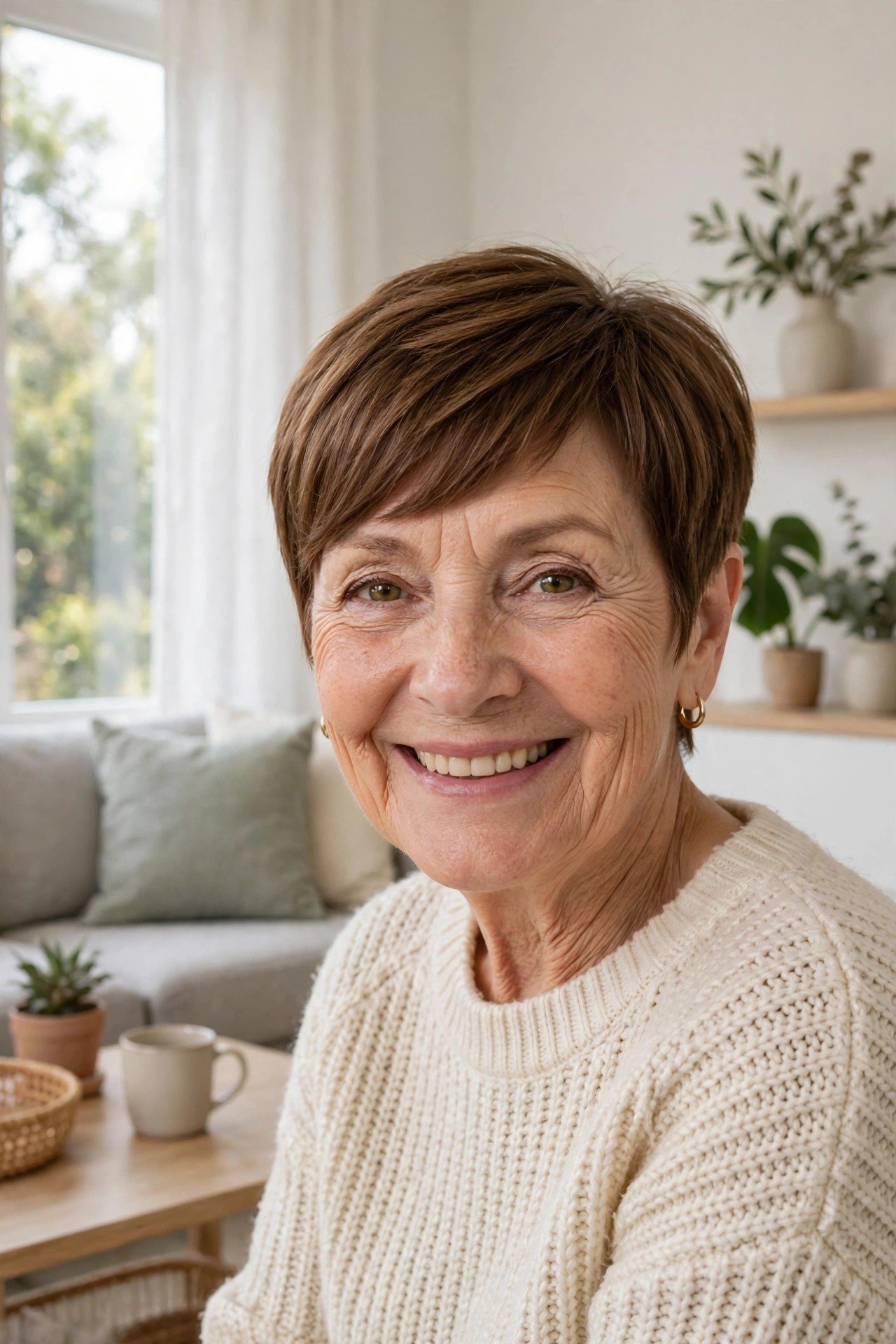
The fringe is where a pixie either feels like you or feels like a stranger, and it comes down to about an inch of hair.
Say: “I wear my fringe swept to the side, and I need it long enough to lie flat and tuck behind my ear on a windy day.” Mention if your forehead gets warm and hair sticks to it in summer, because a slightly longer, lighter fringe behaves better in heat.
Then point at your hairline. If it kicks up at one side, say so. Cutting against a strong cowlick without a plan is how fringes end up springing up by the end of the week.
7. Ask What the Cut Will Do on Your Texture, Not the Model’s

A pixie photo is not a promise. The same cut sits three different ways on fine, thick and wavy hair.
Ask the question straight: “My hair is fine with a wave at the back. Will this shape hold on my hair, or will it fall flat by lunchtime?” A good stylist answers honestly and adjusts the cut, a little shorter where your hair is strong, softer where it is thin.
The forgotten detail is your thinnest patch. Point to it, often the crown or the temples, and ask for length kept there as cover, because a photo model rarely has one.
- ▸Fine, and flat by midday
- ▸Thick, with a mind of its own
- ▸Wavy at the back, straight at the front
- ▸A swirl at the crown that splits open
8. Bring Up Your Grey Pattern Before the Cut Starts

A well planned pixie can make growing out colour feel deliberate instead of overdue.
Say: “I am letting my grey come through, mostly at the front, so please cut it so the blend looks on purpose.” Shorter, softer layers around the face let silver mix with the old colour instead of ending in a hard band. If you still colour your hair, say which parts you want kept brighter.
The forgotten detail is texture. Grey hair is often coarser and catches the light differently, so the same cut can look lighter and softer once the grey grows down another inch.
Your grey pattern is part of the design. Name where it is strongest and let the stylist cut around it, not over it.
9. Be Honest About How Little Time You Spend on Your Hair
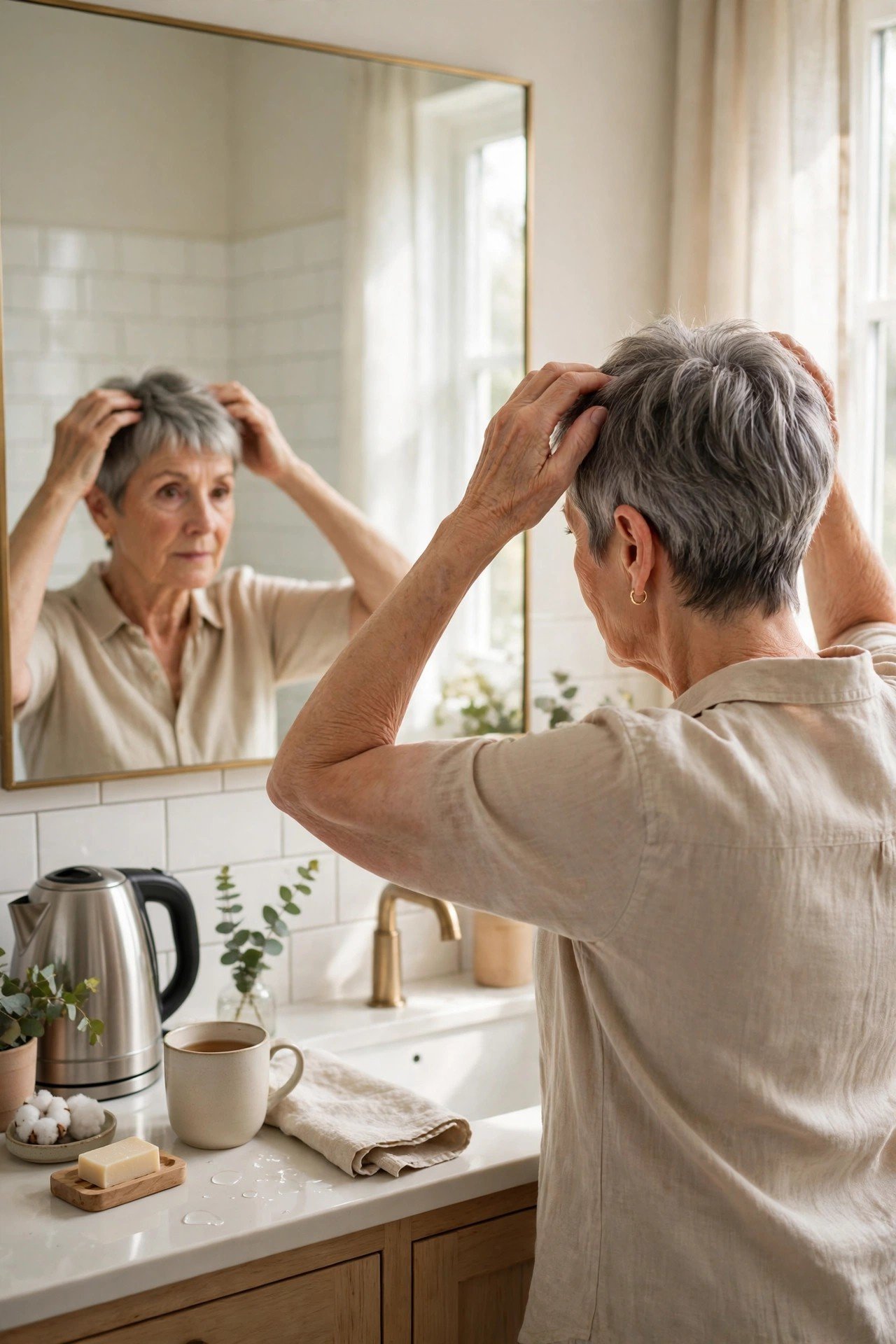
Tell the truth about the bathroom mirror reality: five minutes, damp hands, kettle on.
Say: “I spend about five minutes on my hair in the morning. Please show me how to style this cut in that time, with my hands, before I leave.” Then watch closely and copy the moves while you are still in the chair, hands on your own head. Ask which single product actually matters and which ones you can skip.
The forgotten detail is day two. Ask how to fix the cut after a night of sleep, because most pixies wake up flat on one side, and a mist of water and a pinch of product usually sorts it.
Mist the flat spots with water and smooth them down with your palms.
Warm a pea sized amount of product between your hands.
Push the top the way you wear it, then pinch the ends into shape.
10. Ask How the Cut Grows Out, Week by Week
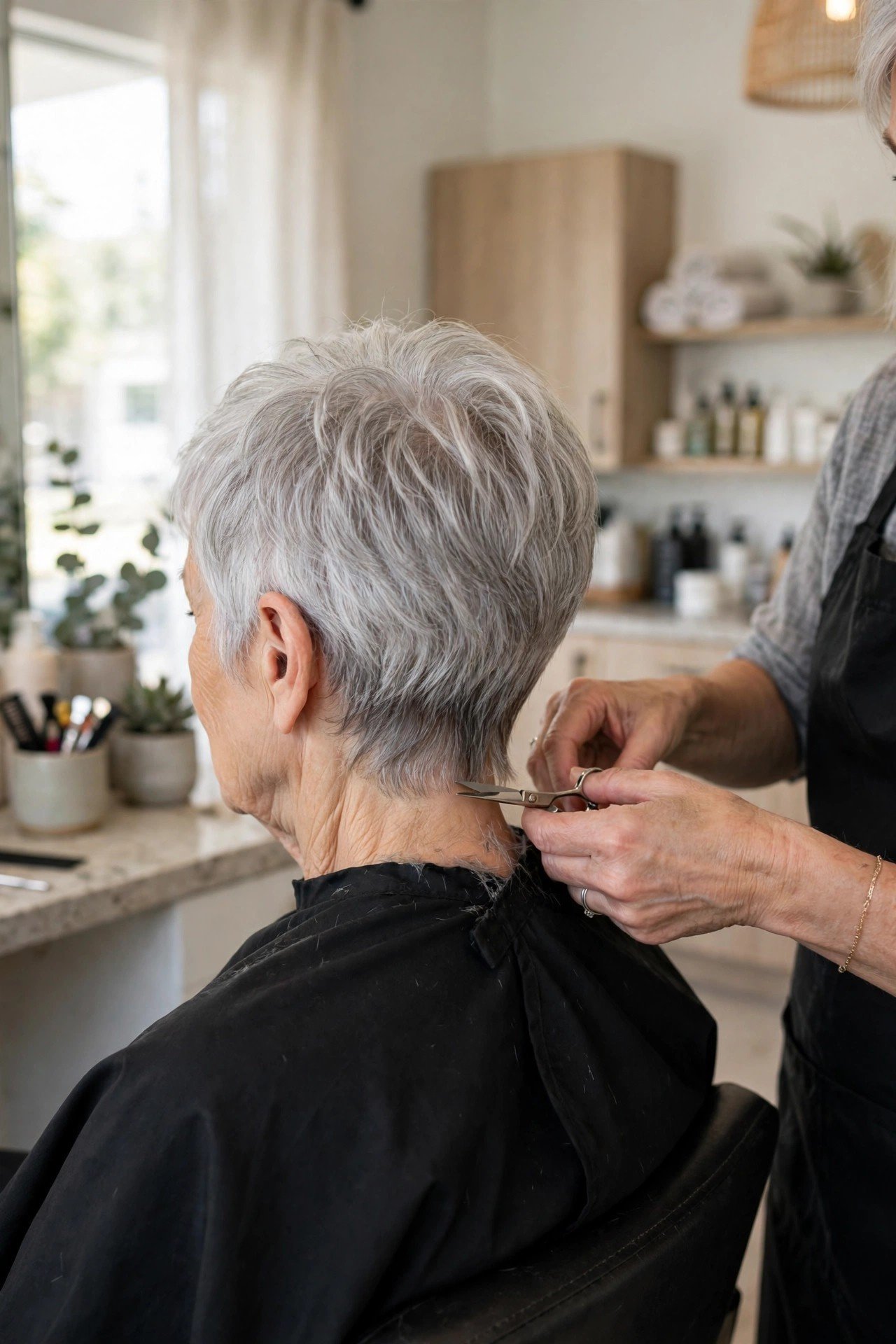
A pixie on day one and a pixie at week six are cousins, not twins.
Before you commit, ask: “How many weeks until this needs a tidy, and which part grows out first?” For most women the answer lands around four to six weeks, with the sides and neckline turning scruffy before the top loses its shape. Knowing that, you can book the next appointment before you leave, while the good slots are still open.
The forgotten detail is the tidy up itself. Ask what it includes, because some salons offer a quick neck and fringe trim between full cuts.
Edges are sharp, the shape sits exactly as it was cut, and styling takes the full five minutes while you learn it.
The outline has softened, the sides and neckline are ready for a tidy, and the top still behaves.
11. If It Feels Too Short, Say So While You Are Still in the Chair

The cape is still on and your stomach drops a little. That is the moment to speak, not the car park afterwards.
Say it kindly and clearly: “This is shorter than I pictured. I know hair cannot go back on, so can you show me how it will soften as it grows, and soften the edges now if you can?” Stylists would rather hear it in the chair, where they can adjust the finish and plan the growing out stage with you.
The forgotten detail is water. Freshly cut wet hair always looks shorter and harsher, so ask to see it dried and styled before you judge the length.
📌 Good To Know
Judge the cut dry, styled, and with your glasses on. Wet hair under salon lights looks shorter and harsher than the same cut will look at home tomorrow.
12. End With the Hand Mirror and a Slow Turn
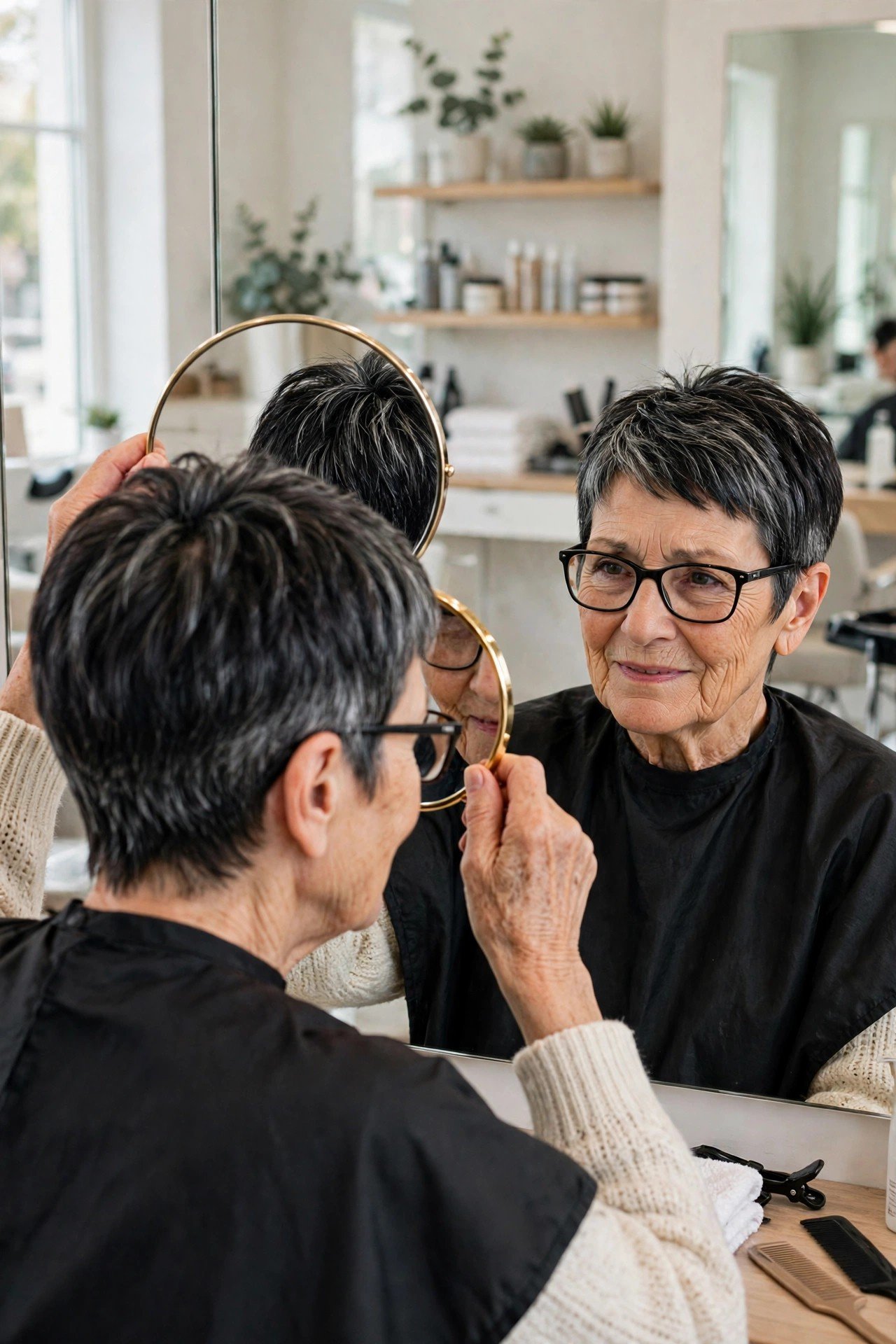
The cut is not finished until you have seen the view everyone else gets.
Say: “Can I hold the hand mirror and check the back and both sides before we finish?” Turn slowly in the chair. Look at the neckline, the shape over your ears, and how the top sits in profile. This is your chance to ask for one tiny snip here or a softer edge there, while everything is still set up.
The forgotten detail is your glasses. Put them back on for this check, because the whole shape changes with frames on, and that is the version the world sees.
A good pixie is a conversation before it is a haircut. The women who love their short cuts are rarely the ones with the best hair. They are the ones who said the quiet parts out loud: the fringe that has to tuck, the five minute mornings, the grey growing through at the front.
Keep these phrases somewhere you can find them before your next appointment. Knowing how to ask your stylist for a pixie cut over 60 is most of the work, and you have just done it at the kitchen table.
Save this list to your hair board so the words are sitting in your phone, in the salon, when you need them.