25 Gray Hairstyles Over 50 That Look Intentional
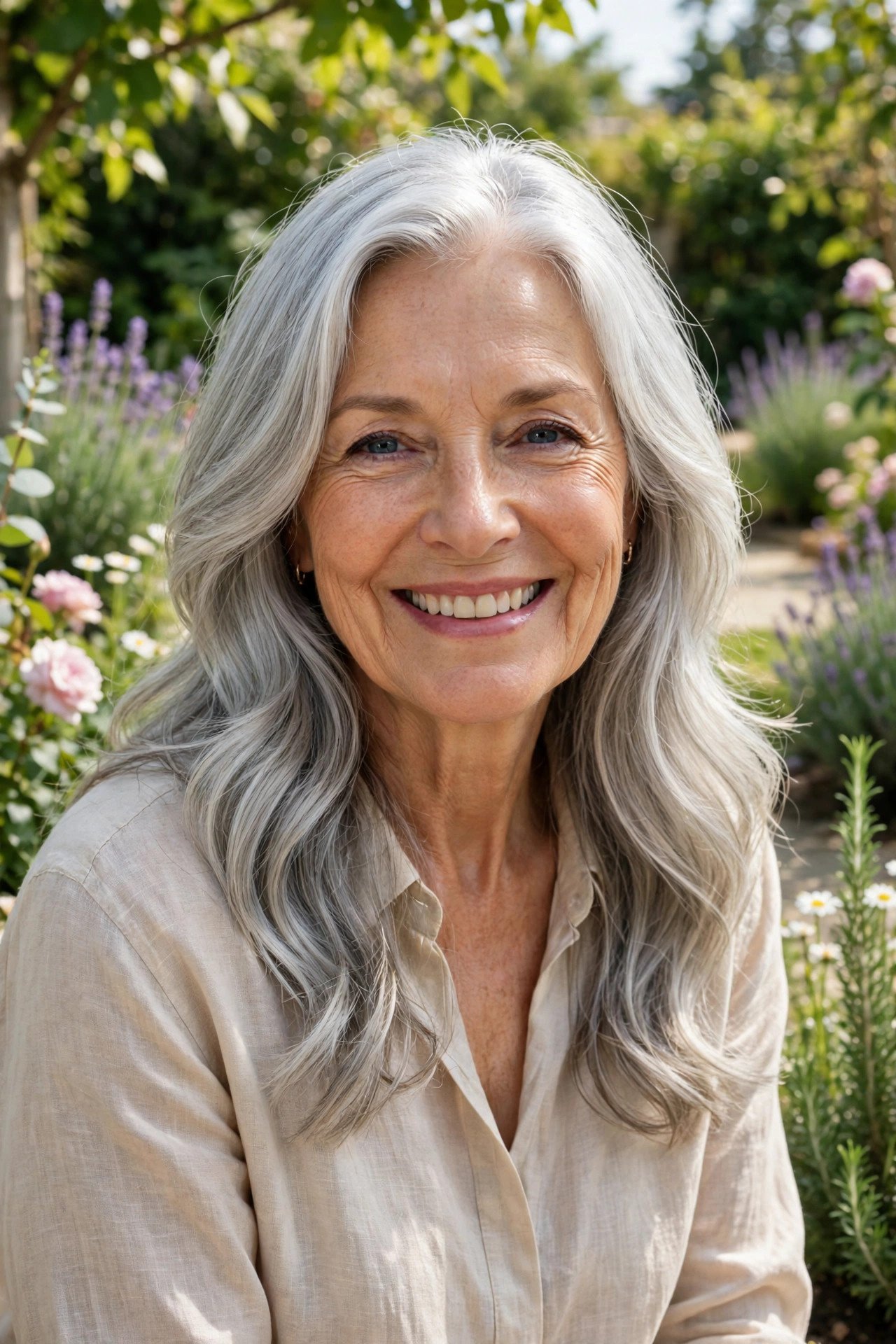
There is a point where gray hair stops looking like something that happened to you and starts looking like something you picked on purpose. The cut does most of that work. A sharp outline, healthy shine, and a shape that suits your face tell everyone this silver was a decision, not a surrender.
The trouble is that many cuts let gray hair down. The texture turns wiry, the shape goes flat, and the color reads dull instead of bright. None of that is the fault of the gray itself. It is the cut, the finish, and a few small habits around both.
The 25 gray hairstyles over 50 below are built to look deliberate. Short crops with clean edges. Bobs with real shape. Long silver lengths that move. Each one comes with the detail that makes it read as chosen: the part, the fringe, the finish, the upkeep it honestly needs. Save the ones that match your texture and your mornings.
1. The Sleek Silver Pixie, Cut Close and Clean
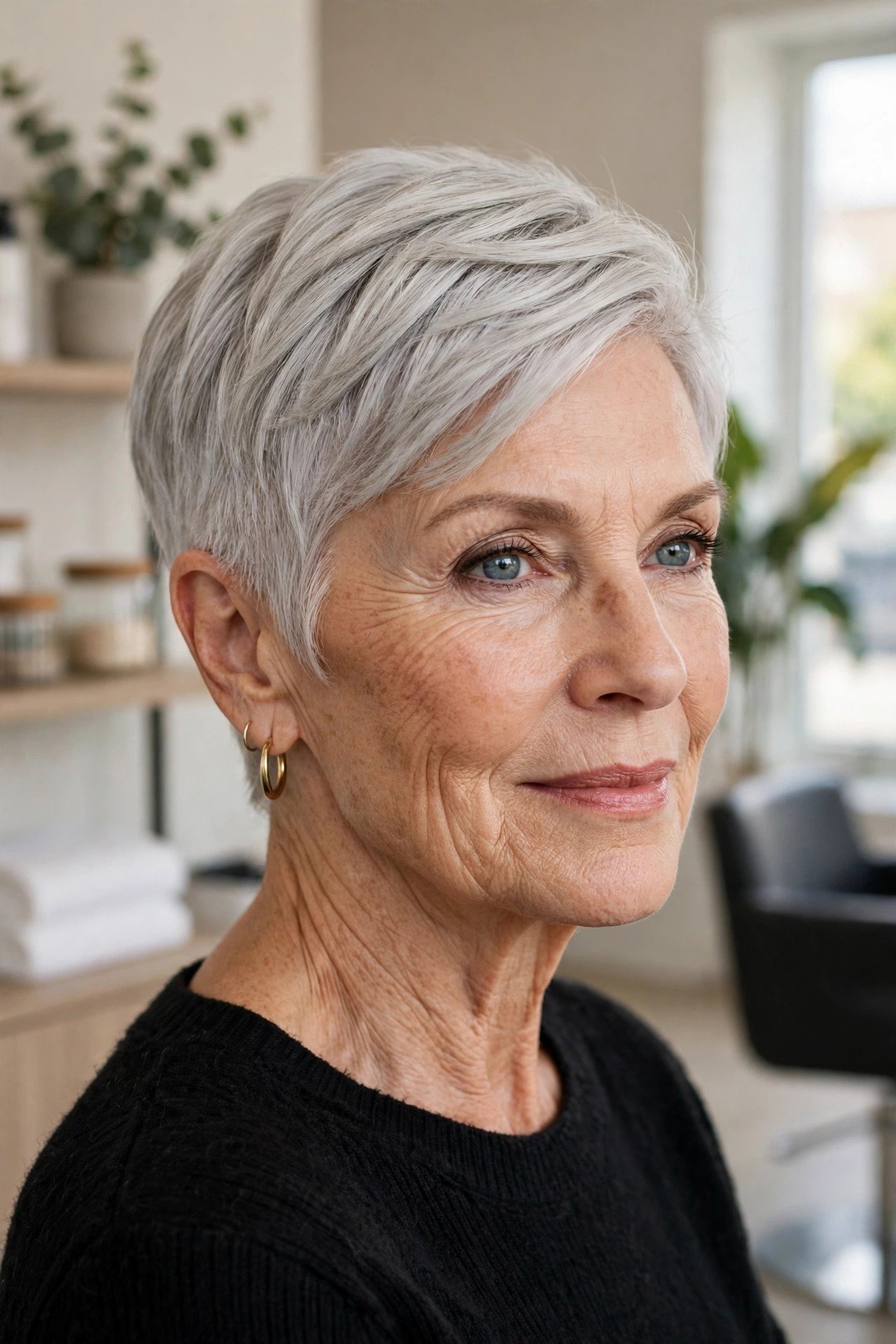
Short, smooth, and cut with real precision. This is the pixie that reads as a style choice from across the room.
The sides and back sit close to the head, while the top keeps two or three inches that sweep forward or off to one side. Gray hair grows in wirier than pigmented hair, and uneven lengths make that texture puff. A close, even cut keeps the surface smooth, so light reflects evenly and the silver looks bright instead of dull. Ask for the outline around the ears and neckline cleaned up at every visit, because that crisp edge is what keeps the whole cut looking deliberate between appointments.
2. Salt-and-Pepper Layers in a Chin-Length Bob

A chin-length bob is where salt-and-pepper hair shows off best, because the dark and light strands sit side by side in every layer.
- Layers start below the cheekbones, so the face keeps its frame
- Ends are point-cut lightly, never thinned into wisps
- The back sits a touch shorter, which lifts the whole shape
Worn with a side part, the mix of tones does the work that highlights used to do. The cut moves when you move, and the color pattern looks rich instead of patchy. Blow it dry with the brush pulling forward, then let the ends fall where they want. That small bit of looseness keeps it modern.
💡 Quick Tip
Book the cut a week before any big event. A fresh bob settles after a few washes, and the layers sit better once they have been slept on.
3. Long Silver Layers With a Soft Curtain Fringe
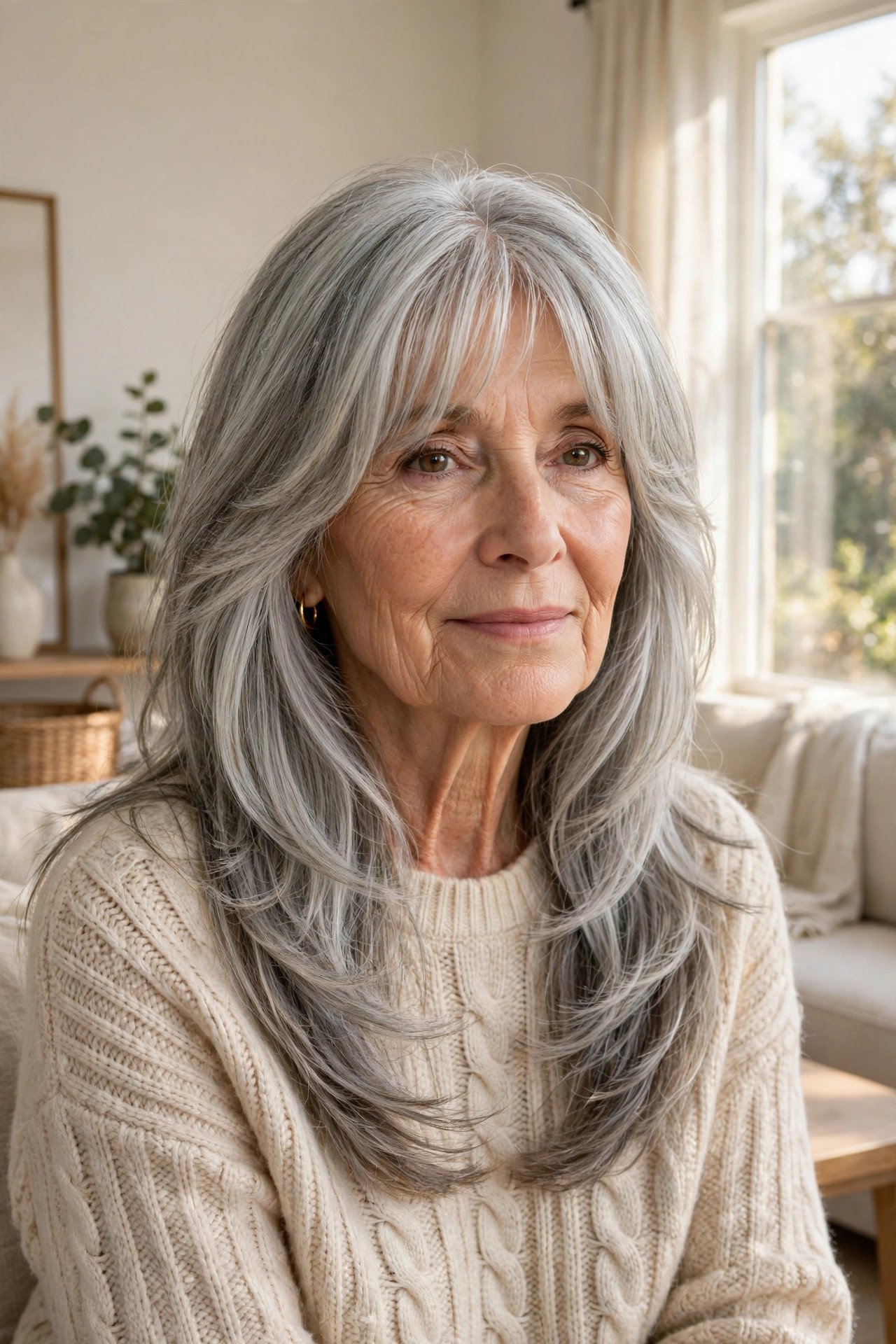
Long gray hair earns its compliments when it has shape, and layers plus a curtain fringe give it shape at every angle.
The layers start around the cheekbones and run down in long, blended steps, so the hair swings instead of hanging. The fringe parts in the middle and sweeps out to both sides, softening the forehead and framing the eyes. Because the front pieces are shorter, they catch light near the face, which brightens your whole look. Keep the longest layer at one clean length at the back. Ragged ends are the one thing that makes long silver hair look neglected, and a blunt back line prevents that.
4. The Gray Shag With Choppy, Deliberate Ends
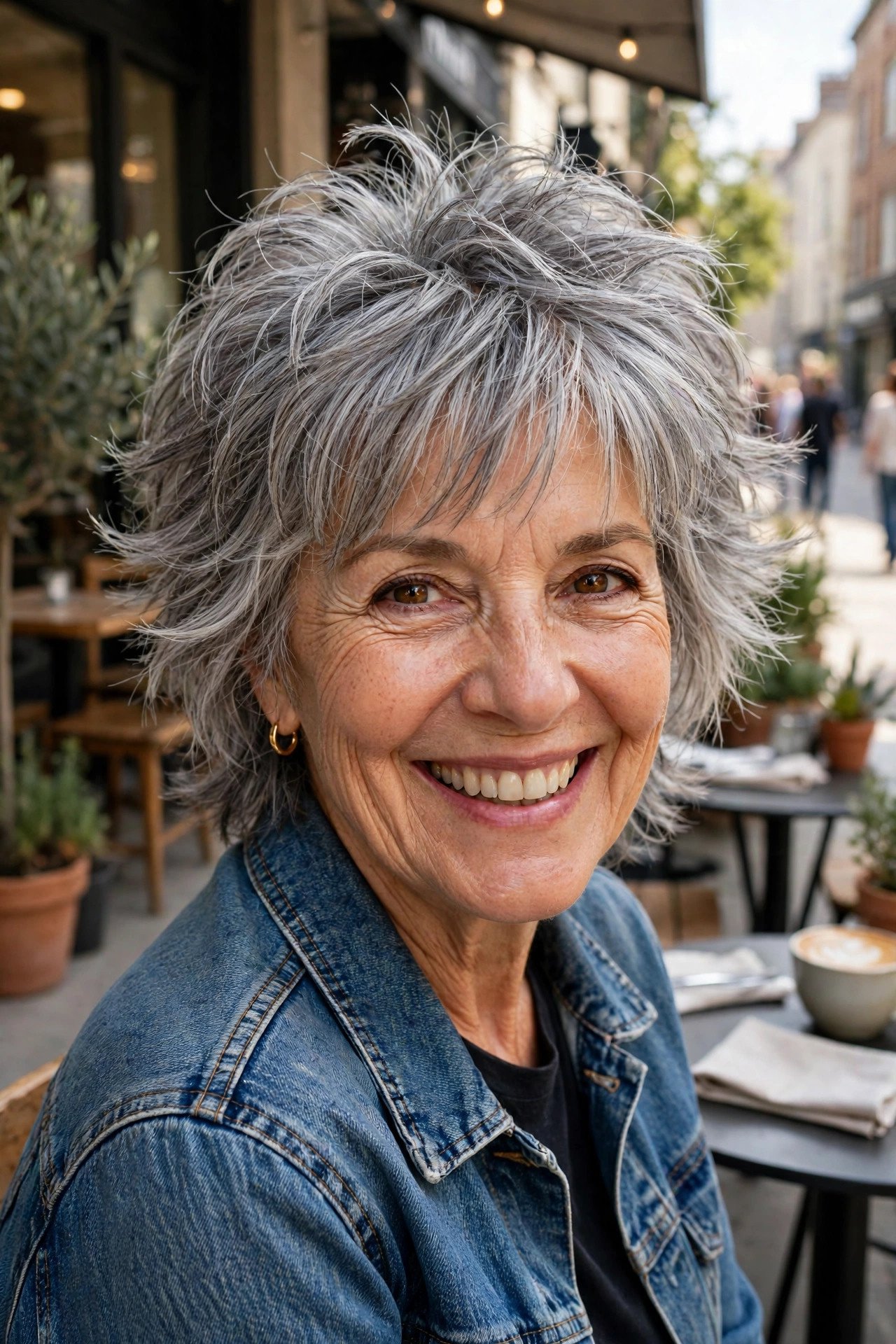
A shag can slide into scruffy faster than any other cut on this list. The difference between the two is in the ends.
On a well-cut gray shag, the layers are uneven on purpose, but every end is clean and freshly cut. The crown keeps volume, the sides feather around the ears, and the back flicks out in pieces that look placed, not frazzled. Gray hair suits this texture because its natural coarseness holds the choppy shape without much product. Scrunch in a little mousse, push the front pieces back with your fingers, and leave it alone. Fiddling flattens the crown, and the crown is the whole point.
Signs the shag is cut well
5. A White Blunt Bob With a Sharp Center Part
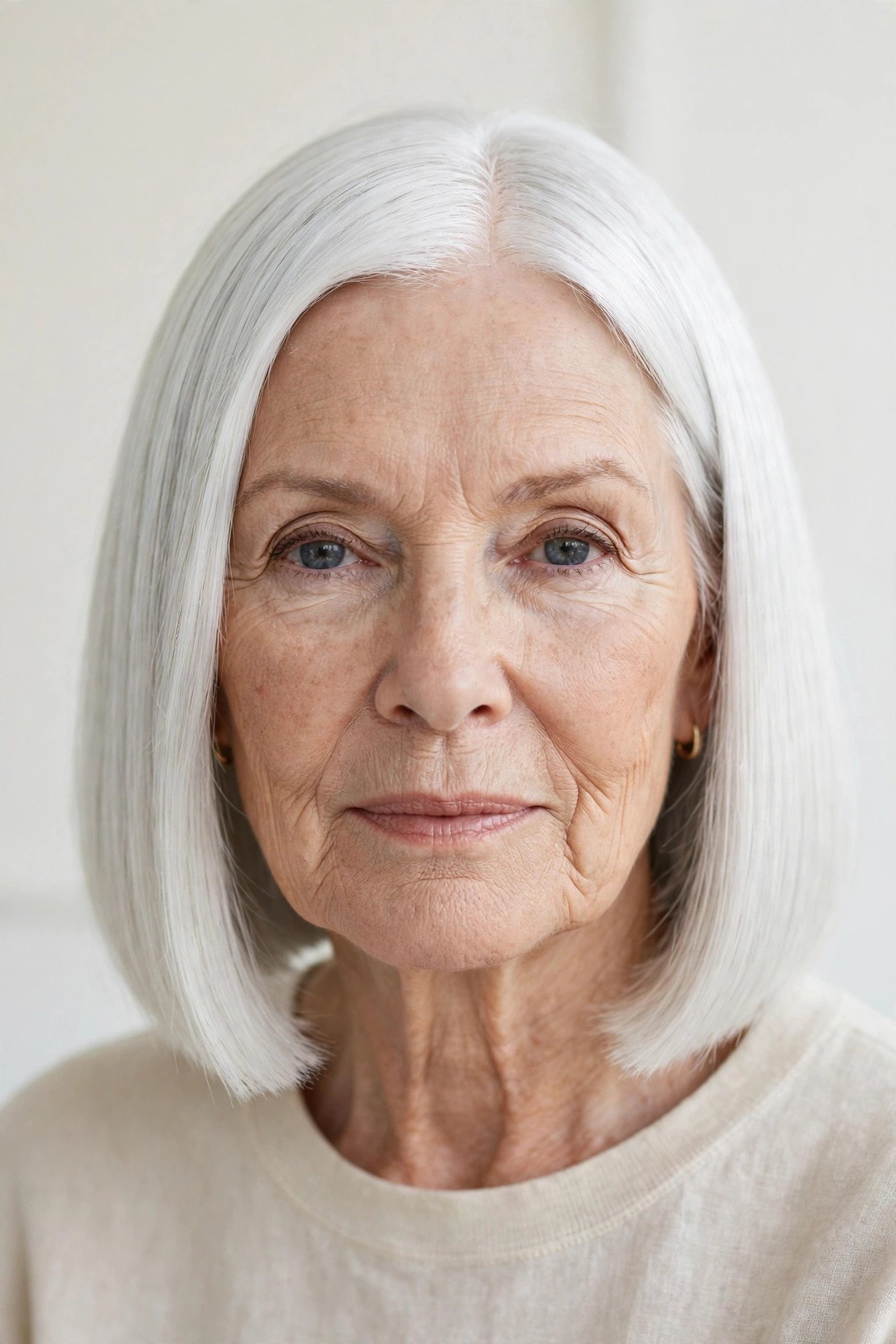
One length, one clean line, and a part ruled straight down the middle. White hair has never looked more deliberate.
The blunt bob works because it refuses to hide. Every strand ends on the same line, so the hair looks thick and the white reads bright and even. The center part adds symmetry, which suits oval and longer faces best. Ask for the ends cut with scissors held flat, not point-cut, and skip any layering through the last two inches. At home, a flat brush and a downward blow-dry keep the line glassy. One warning: this cut shows every split end, so trims are not optional.
Cut the ends in one blunt line.
Dry downward for a glassy finish.
Add choppy layers near the ends.
Skip trims and let the line fray.
6. Shoulder-Length Silver Curls, Shaped Not Bushy
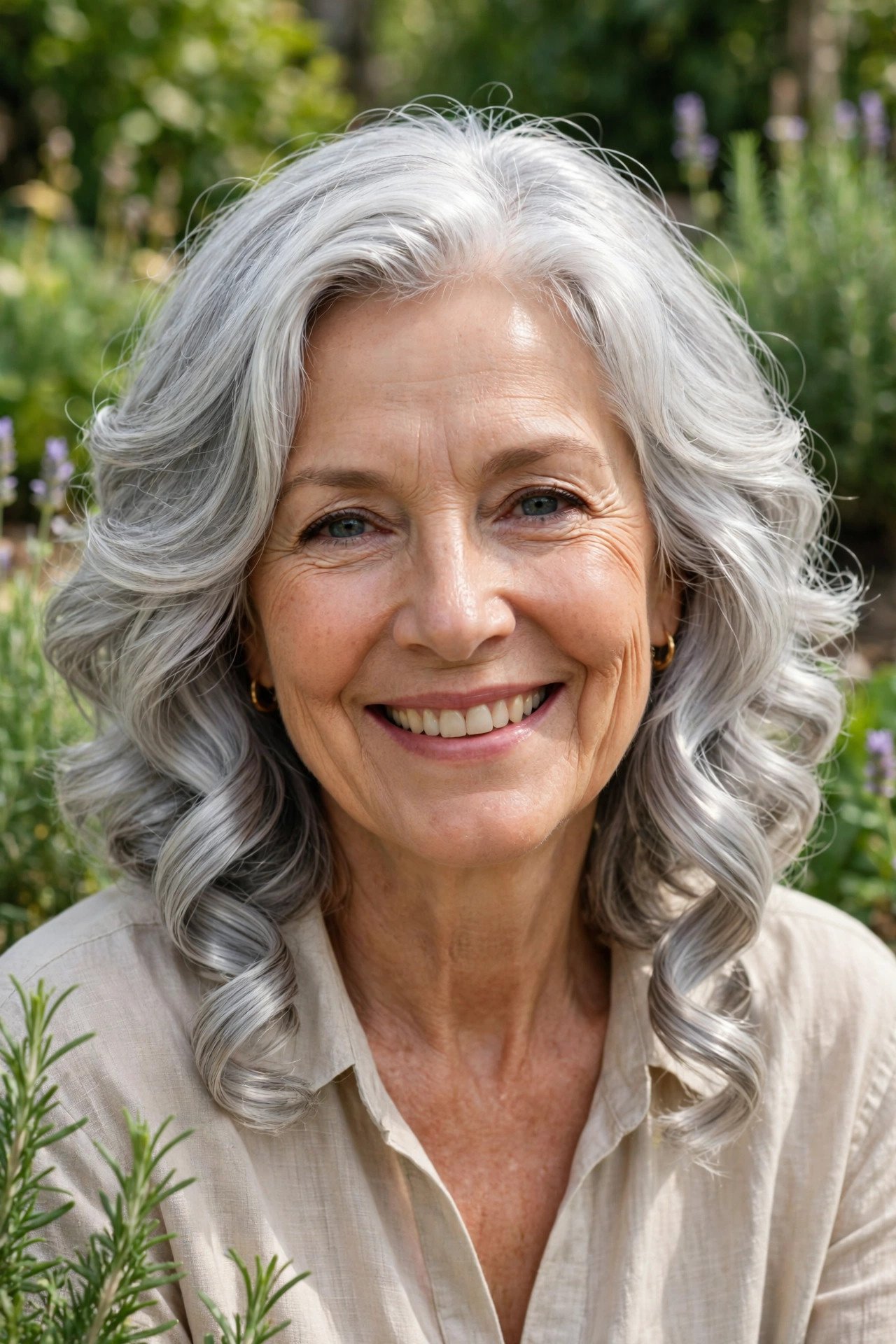
Curls go bushy when they are cut like straight hair. Cut on the curl, this length keeps its shape and its shine.
The shape is rounded at the sides and slightly narrower at the bottom, with layers that follow the curl pattern instead of fighting it. Each curl gets room to sit in its own spiral, so the silver shows in ribbons of light and shade. That ribbon effect is why curly gray hair can look so striking. It needs moisture more than styling: gray curls drink conditioner and still feel dry by day two. Refresh with water and a small amount of leave-in worked through with your fingers, and never brush the curls dry.
Wash once or twice a week with a gentle shampoo, and condition every time.
Scrunch leave-in conditioner in while the hair is soaking wet.
Air dry or diffuse on low heat, hands off until fully dry.
7. The Gray French Bob With Wispy Bangs

Chin length, a soft fringe, and just enough swing. The French bob treats gray hair like a fashion choice, because it is one.
The cut sits at the jaw or just above, with the ends curving slightly under and bangs that brush the eyebrows in fine, separated pieces. Those wispy bangs are the detail that changes everything. They soften the hairline, draw attention to the eyes, and stop the bob from looking severe. Keep the bangs trimmed little and often, since two weeks of growth turns wispy into heavy. If your hair has a natural wave, this is your cut: the wave gives the ends their curve for free.
The bangs carry this cut. Keep them light and wispy, and trim them little and often so they never turn heavy.
8. A Tapered Silver Crop That Grows Out Neatly

Some short cuts look ragged by week three. The tapered crop is built to avoid that, with a shape that softens as it grows.
The back and sides graduate smoothly into the skin at the neckline, while the top stays long enough to lie in different directions. Because the shortest parts are at the edges, new growth blends in instead of sticking out, and the cut still looks tidy at week six. It suits women who want short hair without a standing salon appointment every month. Style it with your fingers and a dab of cream, pushed forward on busy days or swept back when you want more polish.
| Tapered crop | Classic pixie |
|---|---|
| Graduated neckline that blends into the skin. | A harder, defined line at the neck. |
| Still tidy at six weeks of growth. | Needs a tidy-up by week four. |
| Salon visits every 6 to 8 weeks. | Salon visits every 4 to 5 weeks. |
9. Salt-and-Pepper Waves Worn Past the Shoulders
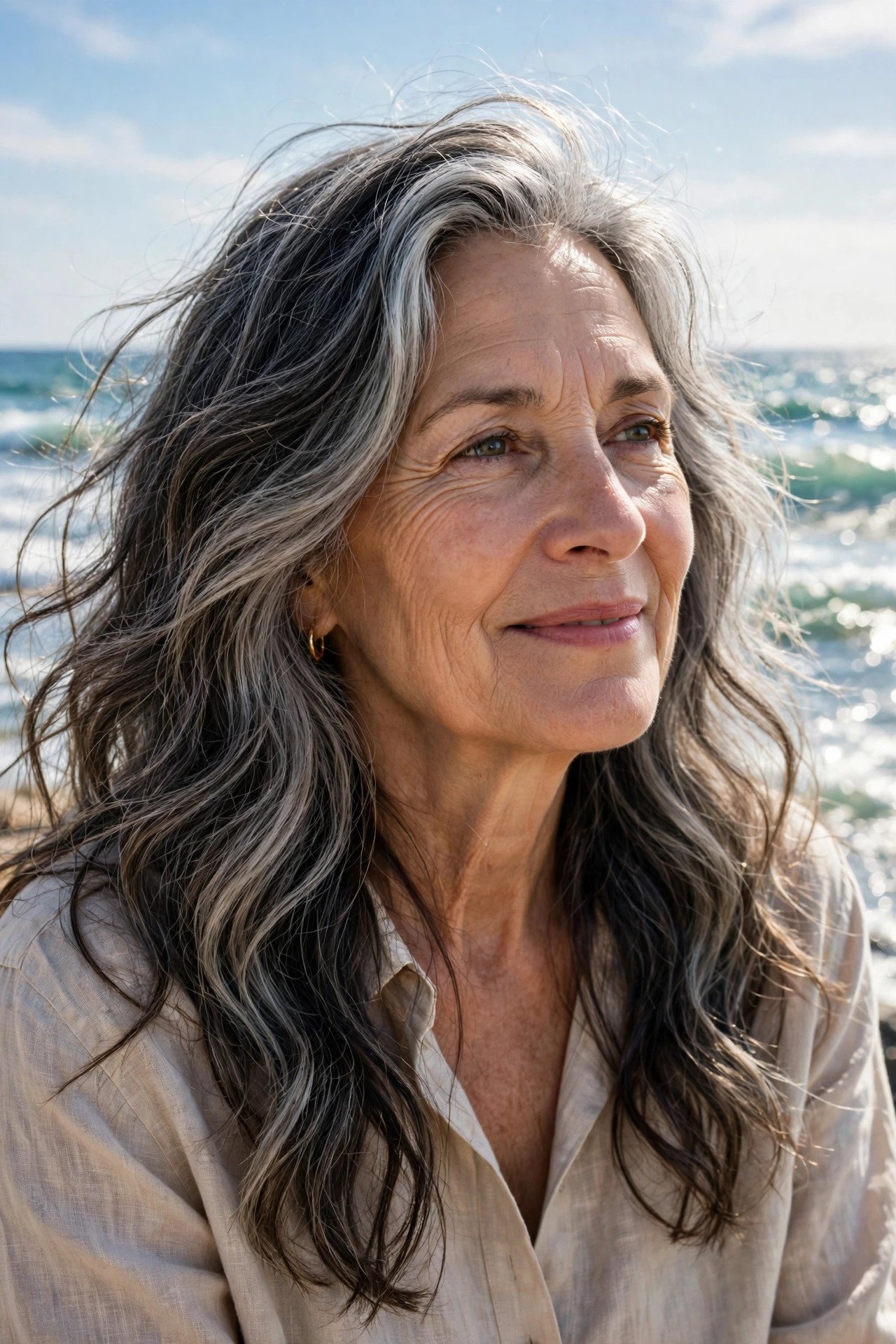
Long salt-and-pepper hair gets stared at in the best way, and the waves are a big reason why.
Dark strands mixed through silver create natural lowlights, so the hair has depth that one flat color never gives. Waves show that mix off, because each bend catches the light on a different tone. Keep the length just past the shoulders, where the waves still have spring. Much longer and the weight pulls the wave straight at the top. A few long layers through the last four inches keep the ends light and moving. Sleep with the hair in a loose braid and the waves will hold their pattern into the second day.
Dyed lengths with a hard regrowth line at the part, in a color that fights the natural tones coming through.
The dye grown out and blended away, waves showing dark and silver strands side by side from root to end.
10. The Silver Pixie Bob With a Long Side Sweep

It has the ease of a pixie and the softness of a bob, and the long sweep across the forehead pulls the whole look together.
The back is cropped close like a pixie, while the front and top keep bob length that falls into a deep side sweep. That sweep is the signature. It covers a thinning hairline, frames one side of the face, and gives you something to play with when you style. Blow the roots up and over with a small round brush, then let the sweep fall. The contrast between the neat back and the dramatic front is what makes this cut look planned rather than grown out.
📌 Good To Know
The sweep holds best when the roots are dried in the opposite direction first, then flipped over. Thirty seconds of backward drying buys hours of lift.
11. A Bright White Bob With a Rounded Silhouette

The shape comes first here: a smooth, rounded dome of white hair that curves in gently at the ends.
This bob is cut to one length with the very ends beveled under, so the silhouette stays round and full instead of square. White hair shows the cut more than any other shade, and a clean geometric shape reads as pure intention. It flatters straight and slightly wavy hair, and it loves a center or just-off-center part. Use a purple shampoo once a week to keep the white bright, since white hair picks up a yellow cast from sun and hard water faster than any other shade.
12. Feathered Gray Layers for Fine, Flyaway Hair

Fine gray hair has two problems at once: it can look thin, and it can float away in every direction.
Feathering answers both. Short, soft layers around the face and crown lift the roots and give the hair a direction to fall in, so it reads fuller and stays put. The trick is restraint. Ask for feathering through the top and front only, and keep the back and ends in one solid line, because over-layered fine hair turns see-through at the bottom.
- Blow-dry the crown forward, then back, for root lift
- Use mousse on damp hair, never oils on dry ends
- Finish with cool air to set the shape
- ▸Best length sits between the ears and the chin.
- ▸A deep side part adds crown height on flat days.
- ▸Trim every five weeks to hold the feathered edge.
13. Long Gray Hair With a Deep Side Part

Rule one for long gray hair: give it a strong part. A deep side part turns plain length into a style.
Worn straight down the back or over one shoulder, long silver hair can drift into looking unfinished. The deep side part fixes that in seconds. It creates a sweep across the forehead, adds height at the crown, and sets up an asymmetric line that reads as styled. Keep the part honest by redrawing it after every wash, while the hair is damp. Long gray hair also needs its ends defended: a pea-size amount of oil on the last few inches each morning keeps them smooth and stops the frizzy halo that gives length away.
14. The Silver Undercut Pixie for Thick Hair
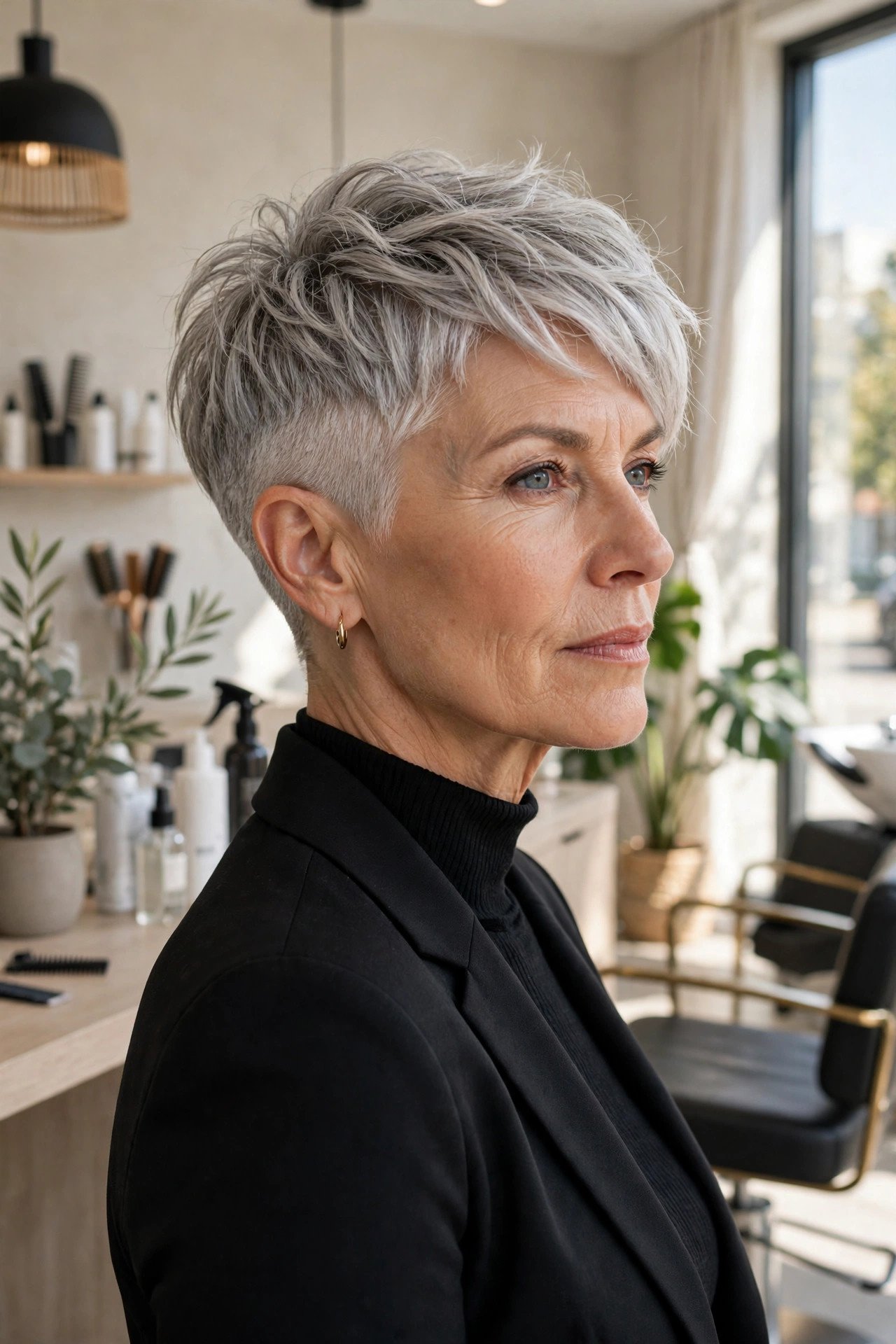
Thick gray hair in a standard pixie can mushroom. The undercut removes the bulk underneath and leaves the top free to shine.
The sides and back are clipped short under a longer top layer, so the silhouette stays slim instead of round. The top keeps three to four inches that can be swept, spiked softly, or pushed back. This is the pixie for women whose hair has always felt like too much of a good thing. It grows out with a harder line than a tapered crop, so plan on tidy-ups around the edges every three weeks. The payoff is a sharp, modern shape that takes two minutes to style.
Ask your stylist for
15. Short, Round Silver Curls With a Defined Shape
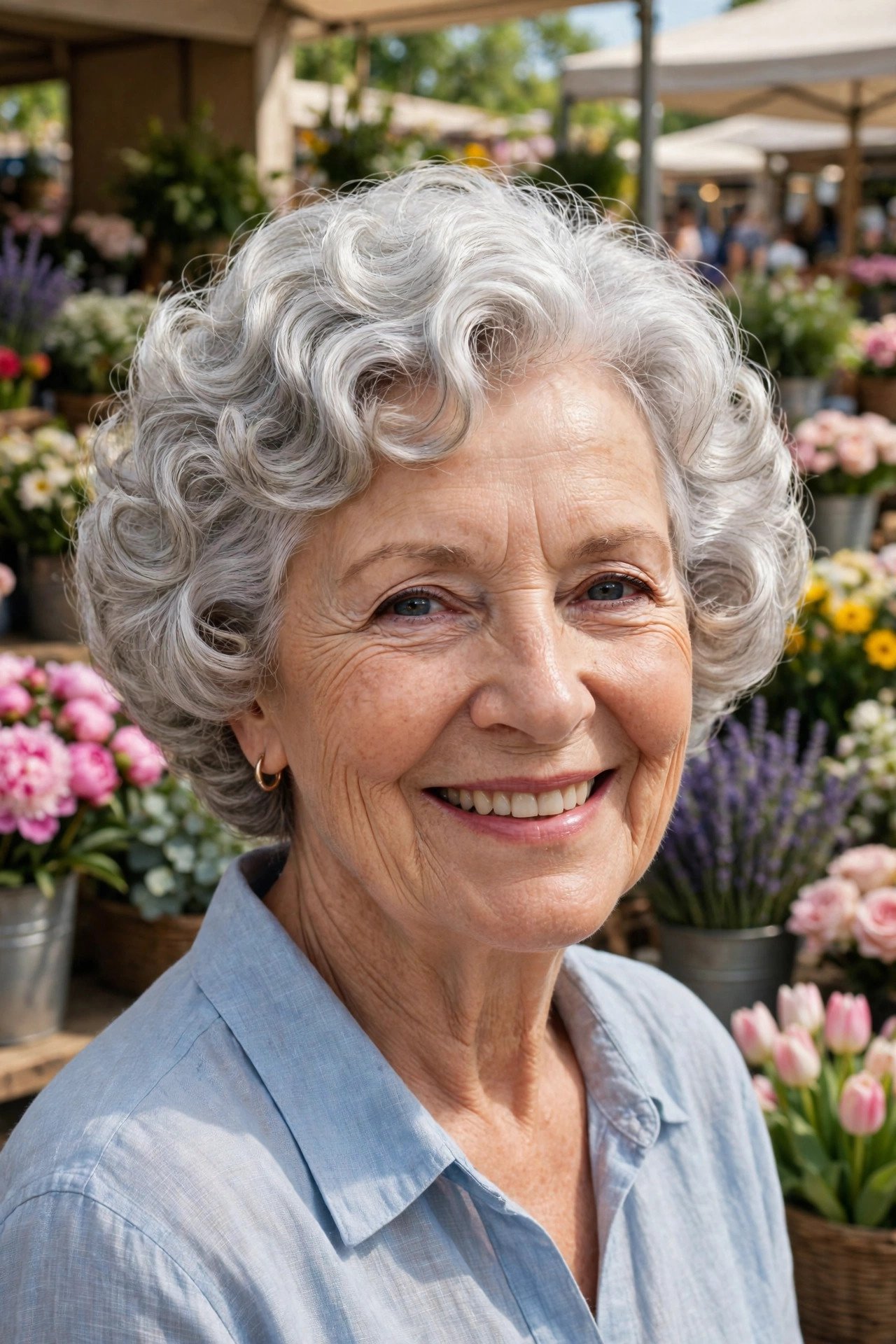
Short curls do not have to mean a tight helmet of hair. Cut into a round shape with room to move, they look soft and deliberate.
The shape is the whole story: fuller at the sides, close at the nape, with the top long enough for the curls to form full spirals. Cutting each curl at its natural resting point stops the spring-back surprises that ruin short curly cuts. Silver curls show their pattern beautifully because the light and shade sit in separate ringlets. Define them with gel scrunched in while wet, then leave them completely alone until dry. Touching wet curls is how frizz starts.
Cut curls dry, at their natural resting length.
Scrunch gel in, then keep hands off while they dry.
Brush or comb the curls once they are dry.
Cut short curls wet and hope they land right.
16. A Steel Gray Lob With Blunt, Healthy Ends

The lob, the long bob that ends at the collarbone, is the safest long option for gray hair, and the blunt ends are why.
Steel gray hair has a cool, even tone that looks polished next to a clean line. Cut straight across with no layers at the bottom, the ends look thick and healthy, and the whole cut swings as one piece when you turn your head. Keep a few long layers only at the front, framing the face. Style it in three moves: dry the roots up, smooth the mid-lengths with a brush, then bend just the ends under. Ten minutes, and the line stays sharp all day.
Dry the roots upward for lift at the crown.
Brush the mid-lengths smooth and straight.
Bend only the last inch under, with a brush or a flat iron on low.
17. Half-Up Silver Hair With Loose Length Below

Sunday lunch, a family photo, ten minutes to get ready. This is the style that saves those days.
The top half of the hair is gathered and pinned or clipped at the back of the crown, while the rest falls loose past the shoulders. It lifts the hair off the face, shows the silver at its brightest around the hairline, and still keeps the length you love. Twist the gathered part once before pinning and it holds without a tight pull. Leave two fine strands loose at the front. Those strands are the difference between a style and a scrape-back, and they soften everything.
Twist the gathered half once before you pin it. The twist is what holds the style and keeps it soft instead of severe.
18. A Low Twisted Bun in Salt-and-Pepper Hair
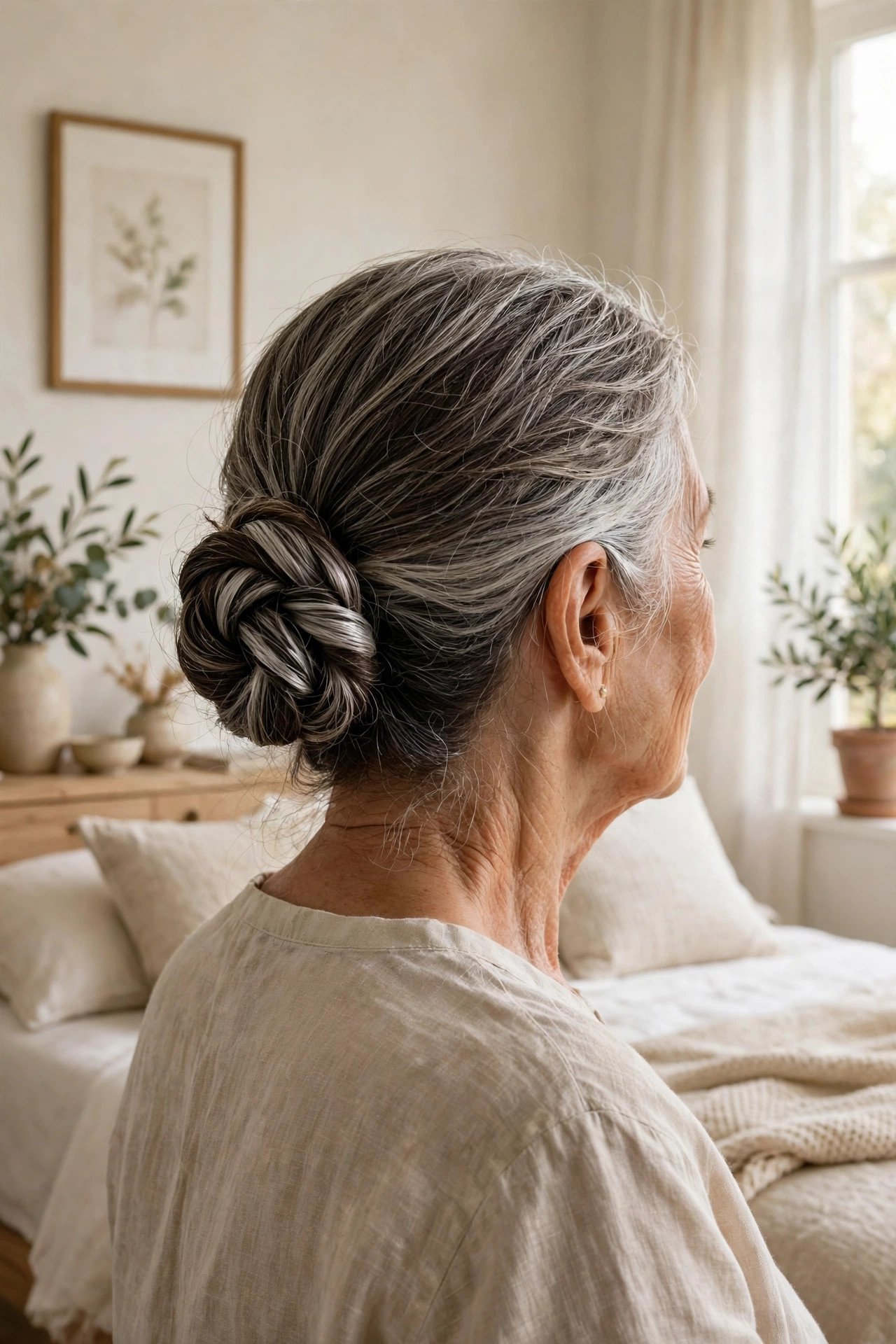
A bun can age a woman or polish her, and the difference sits in two details: height and looseness.
This one sits low, at the nape, twisted rather than coiled tight, with the salt-and-pepper strands showing their pattern in the twist. Low placement keeps the look soft and current, and it never pulls at the hairline. Gather the hair into a low ponytail, twist it around its base, and pin the ends underneath. Let the front stay slightly loose, with the part visible. If your hair is fine, tease the ponytail gently before twisting. The bun doubles in size and still weighs nothing.
| Low twisted bun | High tight bun |
|---|---|
| Soft on the face, keeps the hairline relaxed. | Pulls the features up and can look stern. |
| Suits daytime, photos and family events. | Best kept for formal evenings. |
| Holds with pins and the twist alone. | Needs a firm elastic and many pins. |
19. The Blended Gray Grow-Out, Done on Purpose

The hardest stage of going gray is the middle, when a hard line of regrowth can make even a good cut look neglected.
Blending is how you cross that stage with your dignity intact. A stylist weaves fine highlights and lowlights through the dyed lengths so the line between old color and new gray softens into a gradient. The cut matters just as much: layers break up the boundary, and a bob or lob length keeps the ends looking thick while the color catches up. Most women need two or three blending sessions across a year. After that, the gray grows in as a pattern instead of a line, and the salon visits end.
A straight regrowth line at the part, with dyed ends in a color that no longer suits your skin.
Fine woven tones through the lengths soften the boundary, and the gray grows in as a pattern.
20. A Short Textured Crop With Piecey Silver Ends

The mistake with this cut is styling it flat. A textured crop lives on separation, and flat hair hides all of it.
The cut itself is short all over, with the ends point-cut into small, uneven pieces that catch the light one by one. Silver shows texture better than any other shade, because each piece reflects at a slightly different angle. Work a fingertip of matte paste through dry hair, pinching the ends as you go, and stop while it still looks slightly undone. It suits square and oval faces, and it is the fastest morning routine on this list: wash, towel, pinch, done.
⚠️ Watch Out
Too much paste dulls silver and turns piecey ends clumpy. Start with half the amount you think you need. More can always go in.
21. Long White Waves With Face-Framing Layers
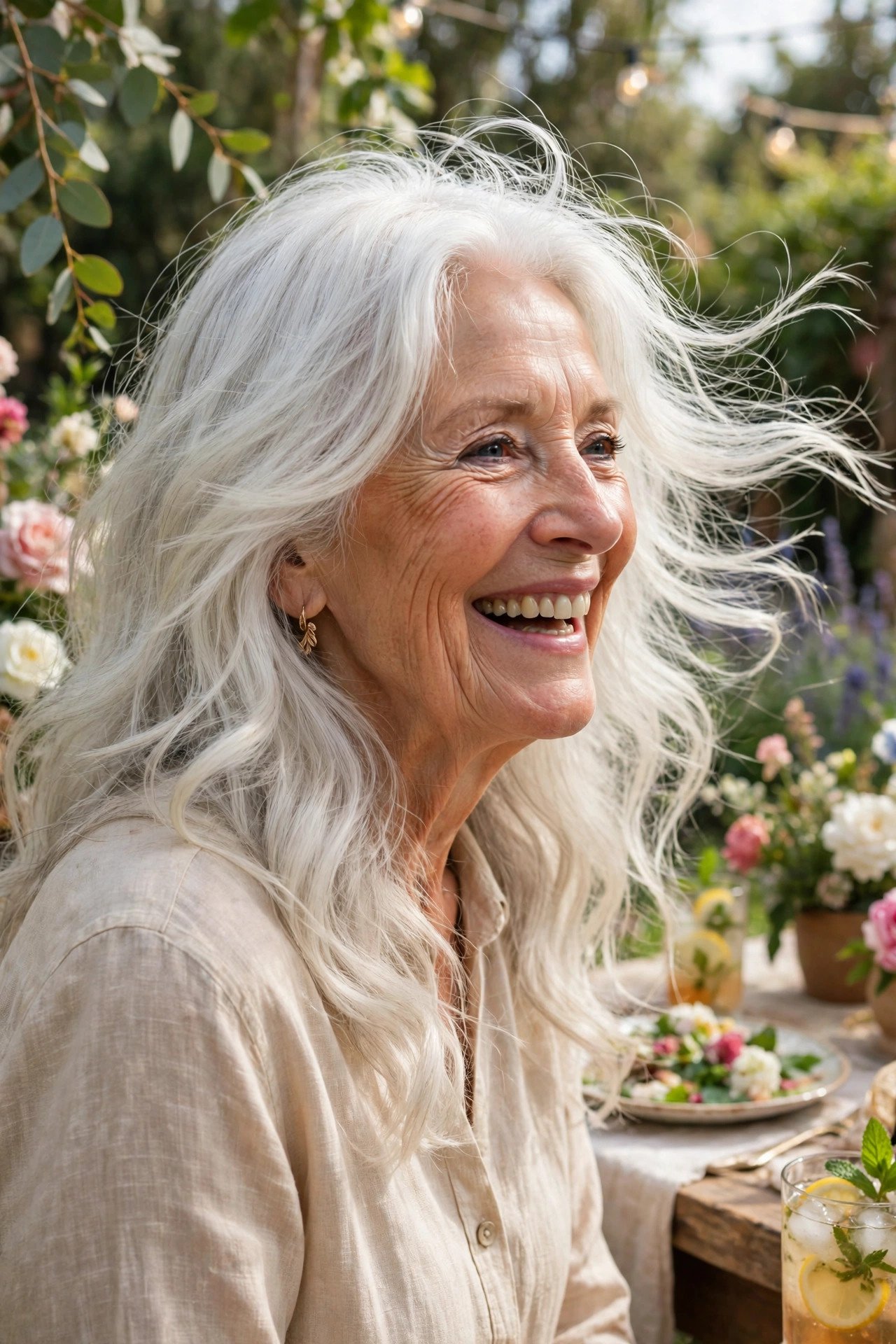
White hair worn long and wavy stops people mid-scroll, and the face-framing layers are what make it work at over 50.
Without them, long white hair can pull the face down. Cut in long layers that start at the chin, and the front opens up, the cheekbones get their frame back, and the waves through the lengths keep everything moving. The wave pattern matters here: loose, brushed-out waves read soft and current, while tight curls at this length can look dated. Use a large-barrel iron on the front pieces only, and brush everything through with your fingers. The result is length with a lift, not length that drags.
22. A Gray Bob With Straight-Across Bangs

Blunt bangs are a commitment, and on a gray bob they pay off in one way: they make the whole cut look designed.
The bob sits at the jaw in one clean length, and the bangs end just above the eyebrows in a straight, even line. That strong horizontal line is what reads as intention. It also covers forehead lines and draws every eye to yours. Two honest warnings come with it. Bangs on gray hair show oil faster, so plan a fringe wash at the sink on day two. And the line needs a trim every three weeks to stay sharp. Women with glasses should bring them to the appointment, so the length is cut to sit clear of the frames.
- ▸Oval, heart and longer faces carry the line best.
- ▸A strong cowlick at the hairline fights a straight fringe.
- ▸Softer swap: ask for the bangs cut in a slight arch.
23. Slicked-Back Silver for an Evening Finish
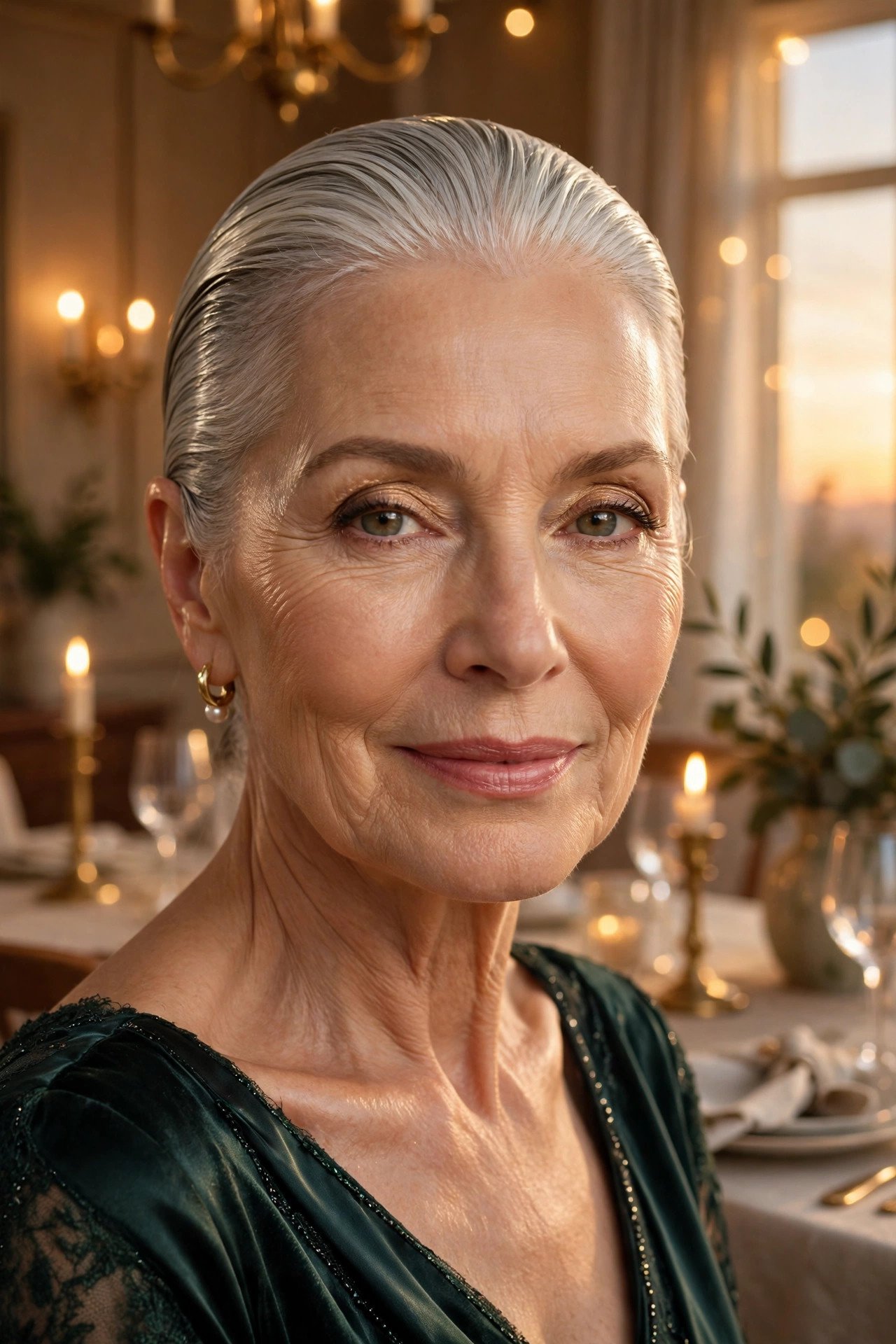
All of it swept back off the face, glossy, and smooth to the touch. Few evening looks strike harder on silver hair.
It works on any cut between pixie length and shoulder length, because the effect comes from direction and shine, not from the cut underneath. Comb gel or a smoothing cream through damp hair, brush it straight back, and let it set. The silver reads like polished metal, and your earrings and makeup get the stage. Keep the sides tucked behind the ears for the cleanest line. It will not survive a windy walk, so treat it as an arrival look: style it last, at home, right before you leave.
24. The Shaggy Salt-and-Pepper Lob

The lob gets the shag treatment here: choppy layers, a piecey fringe, and ends that flick in three directions at once.
Salt-and-pepper hair was made for this cut, because the mixed tones deepen every layer and stop the shagginess from looking messy. The layers start high, around the cheekbones, and the fringe is cut into soft points that blend into the sides. Scrunch it dry with mousse and shake the roots with your fingers. If a section falls flat, that section wants one more layer, not more product. Take a photo at your first appointment and show it at every trim, so the shape stays the shape you chose.
Mirror check before you leave the salon
25. A Polished Gray Ponytail With a Wrapped Base
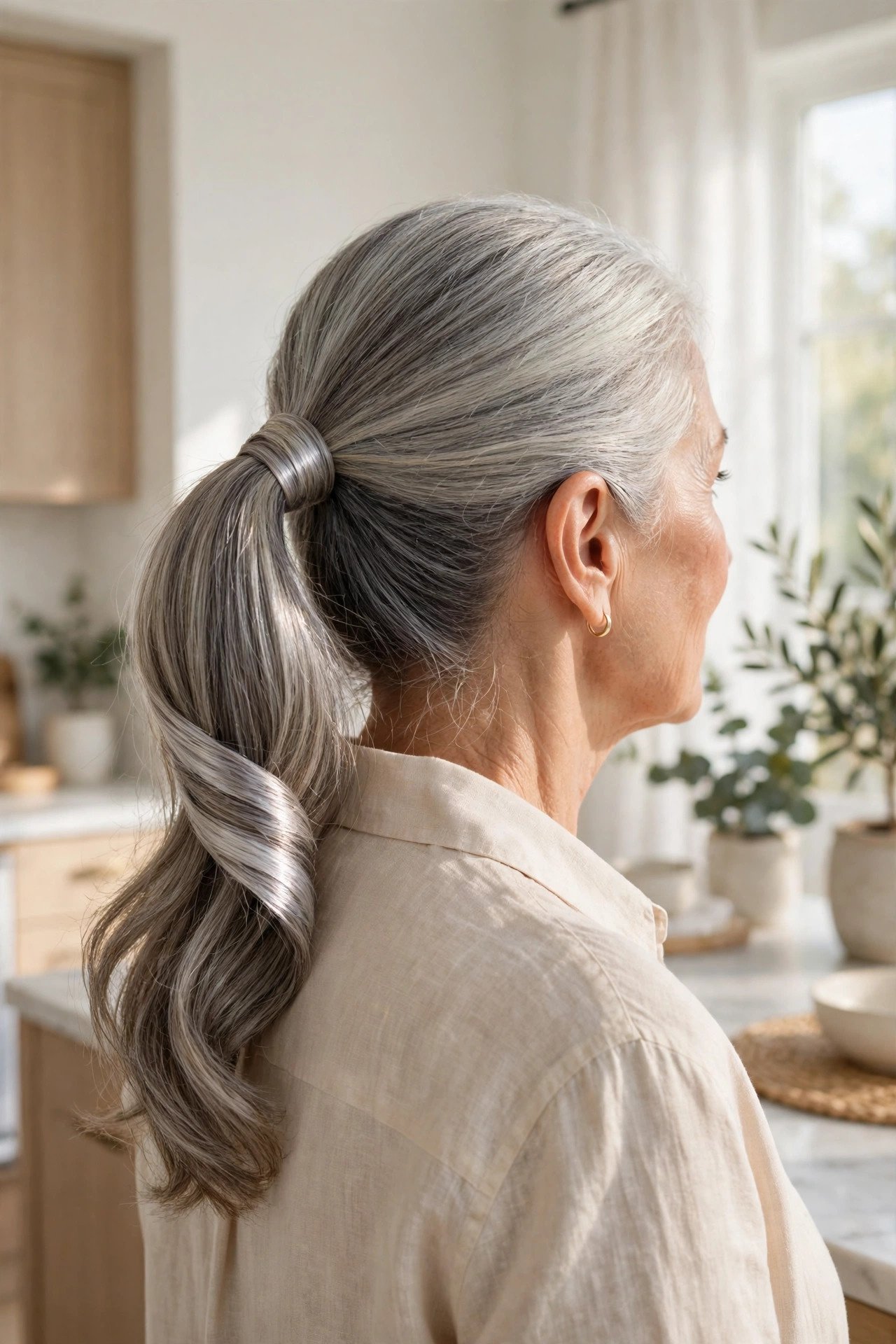
A ponytail reads plain only when the elastic shows. Wrap the base in a strand of your own silver hair and it turns into a finished style.
Brush the hair back smoothly, keep the height at the middle of the back of your head, and secure it. Then take a fine strand from underneath the ponytail, wrap it around the elastic two or three times, and pin the end underneath. The gray strand catches the light like a ribbon and hides every bit of hardware. This works on any hair past the shoulders and holds all day without a tight pull. For a softer version, leave the front loose and pull the ponytail low.
The wrapped strand is the whole trick. It hides the elastic, catches the light, and turns a plain ponytail into a finished style.
Gray hair looks intentional when the cut has a clear shape, the ends stay healthy, and the finish matches the life you actually live. A close pixie and long silver waves can both do it. The common thread is care you can see: clean outlines, shine, and a style you can repeat on a normal Tuesday morning.
Pick the two or three gray hairstyles over 50 here that suit your texture, and take the photos to your stylist. Then save this list to your hair board, so the next cut starts from a plan instead of a guess.