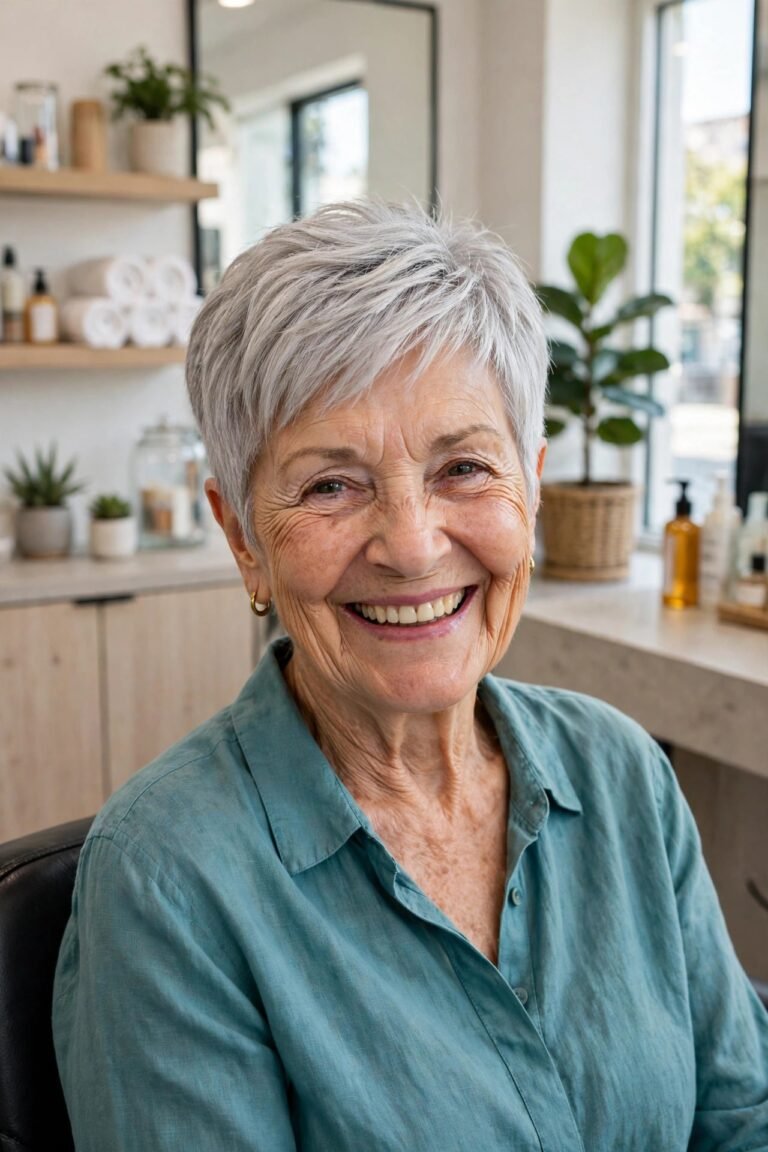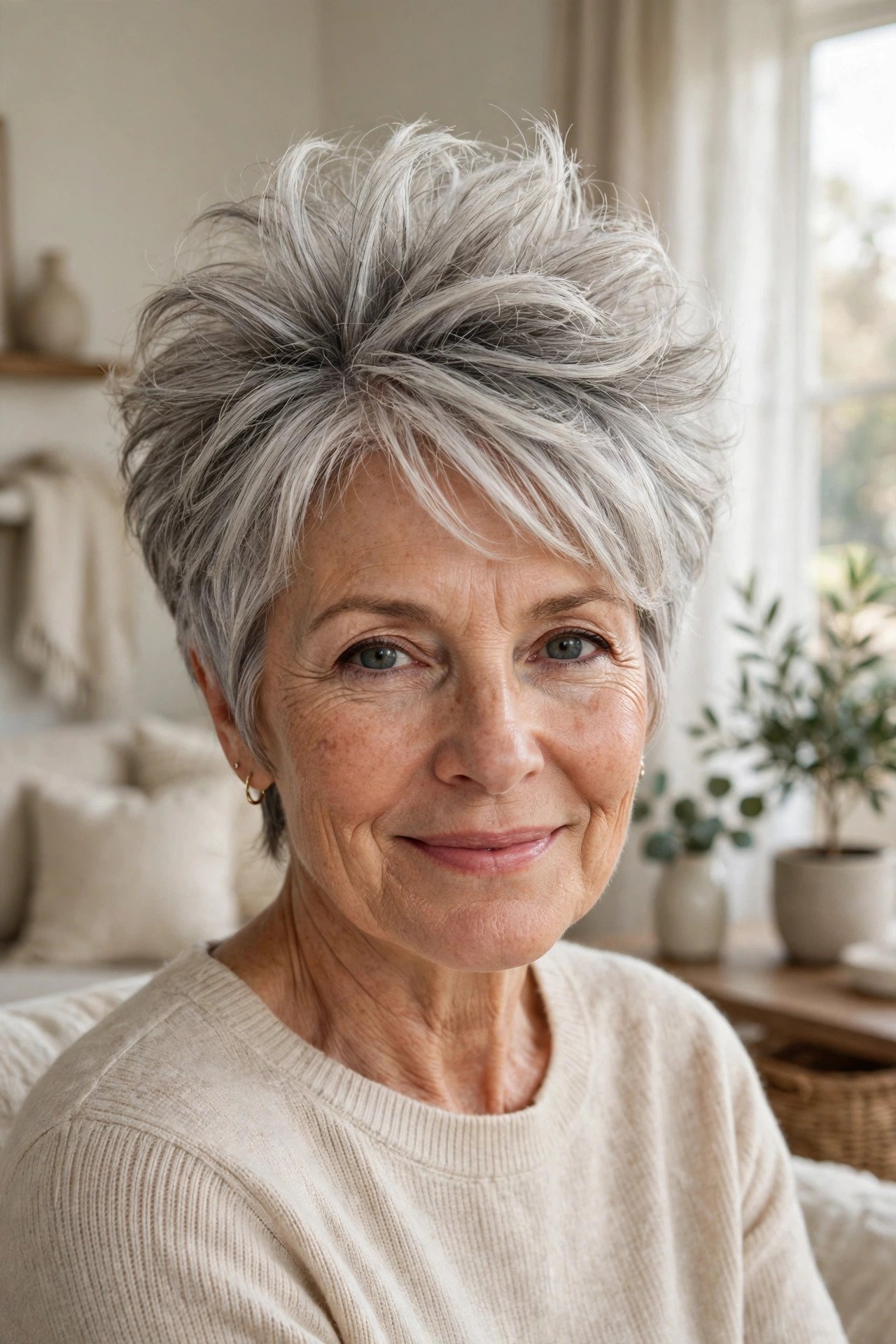
25 Short Cuts for Fine Hair Over 50 That Add Instant Volume
You know the moment. You finish drying your hair, it looks fine for about ten minutes, and then it settles flat against your head like it gave up. Fine hair does that. The strands are thin, so heavy length pulls them down, and wispy layers can make the ends look even thinner.
The fix is rarely more product. The fix is shape. The right short cuts for fine hair over 50 put the weight where it helps, blunt the ends so they read thicker, and stack or layer the crown so your hair holds its own lift. Short does not mean severe. It means every strand has a job.
Below are 25 cuts and cut-plus-styling combinations that build the look of volume in honest ways: stronger edges, smarter layers, parts that create height, and finishes that add grip. Each one notes who it suits and what to ask for at the salon, so you can walk in with a plan instead of a hope.
1. Layered Pixie With Extra Length on Top
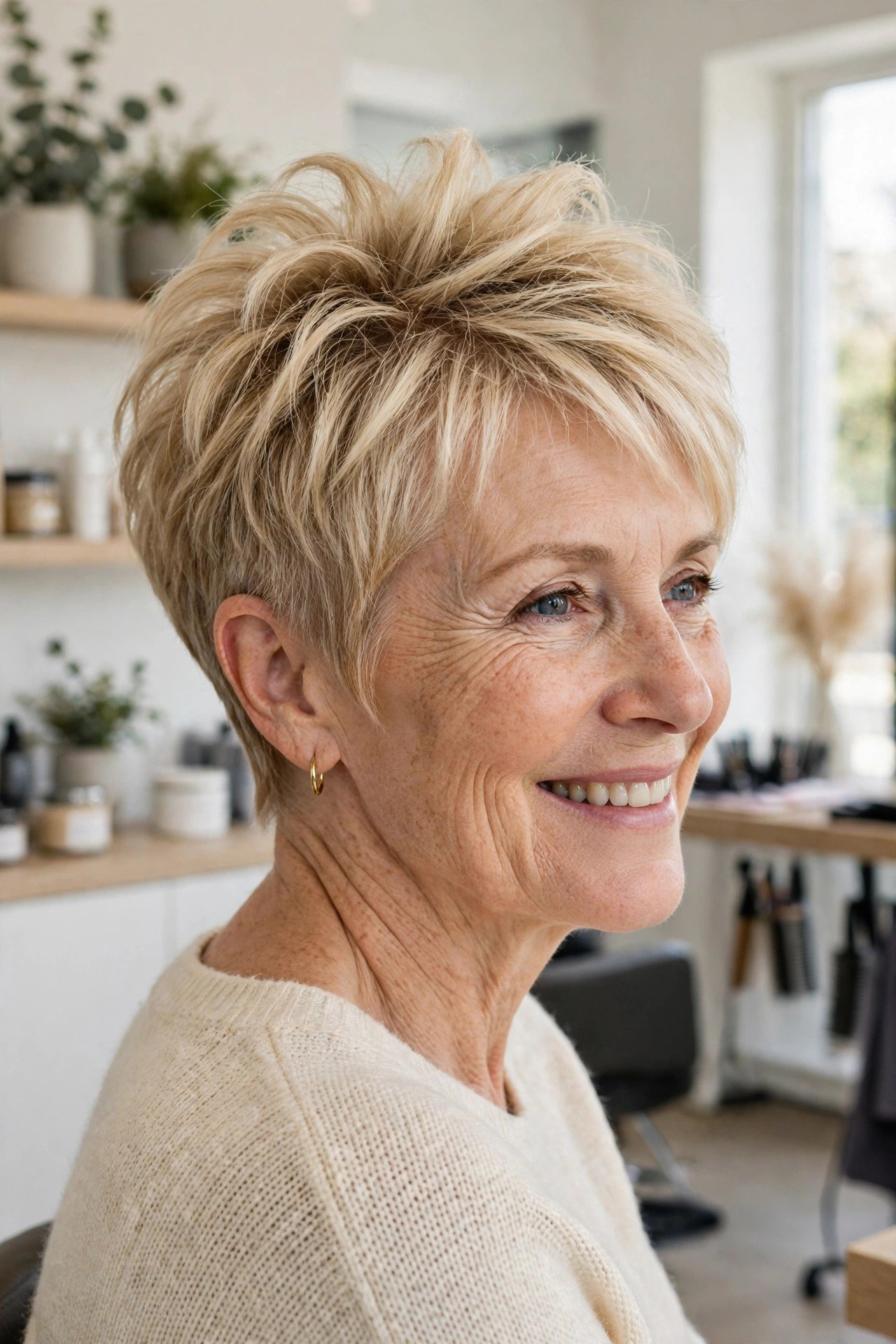
Flat by nine in the morning is the usual story with a fine pixie cut the same length all over.
There is nothing left on top to lift, so the hair lies down and stays down. Keeping the crown two to three inches long changes that. Short stacked layers through the top give each strand something to lean on, and the longer crown can be dried upward instead of flat. The sides stay short and neat, which makes the top look even fuller by contrast.
At the salon, ask for:
- Short, tapered sides that sit close
- Stacked layers through the crown
- Length left on top to style up or forward
2. Blunt Chin-Length Bob With One-Length Ends

Layers are the standard advice for fine hair, and on a bob they often do the opposite of what you want.
Every layer removes weight from the ends, and the ends are where a bob proves its thickness. A blunt, one-length cut keeps every strand ending on the same line, so the hemline reads dense and strong. Dried smooth with the ends bent slightly under, a chin-length blunt bob can look twice as thick as the same hair cut with layers through it.
The fullness is an illusion, and it works every single day.
💡 Quick Tip
Ask your stylist to skip the thinning shears on the ends. Blunt cutting only. Thinning shears shred the hemline that makes this cut look thick.
3. Stacked Bob With a Graduated Back
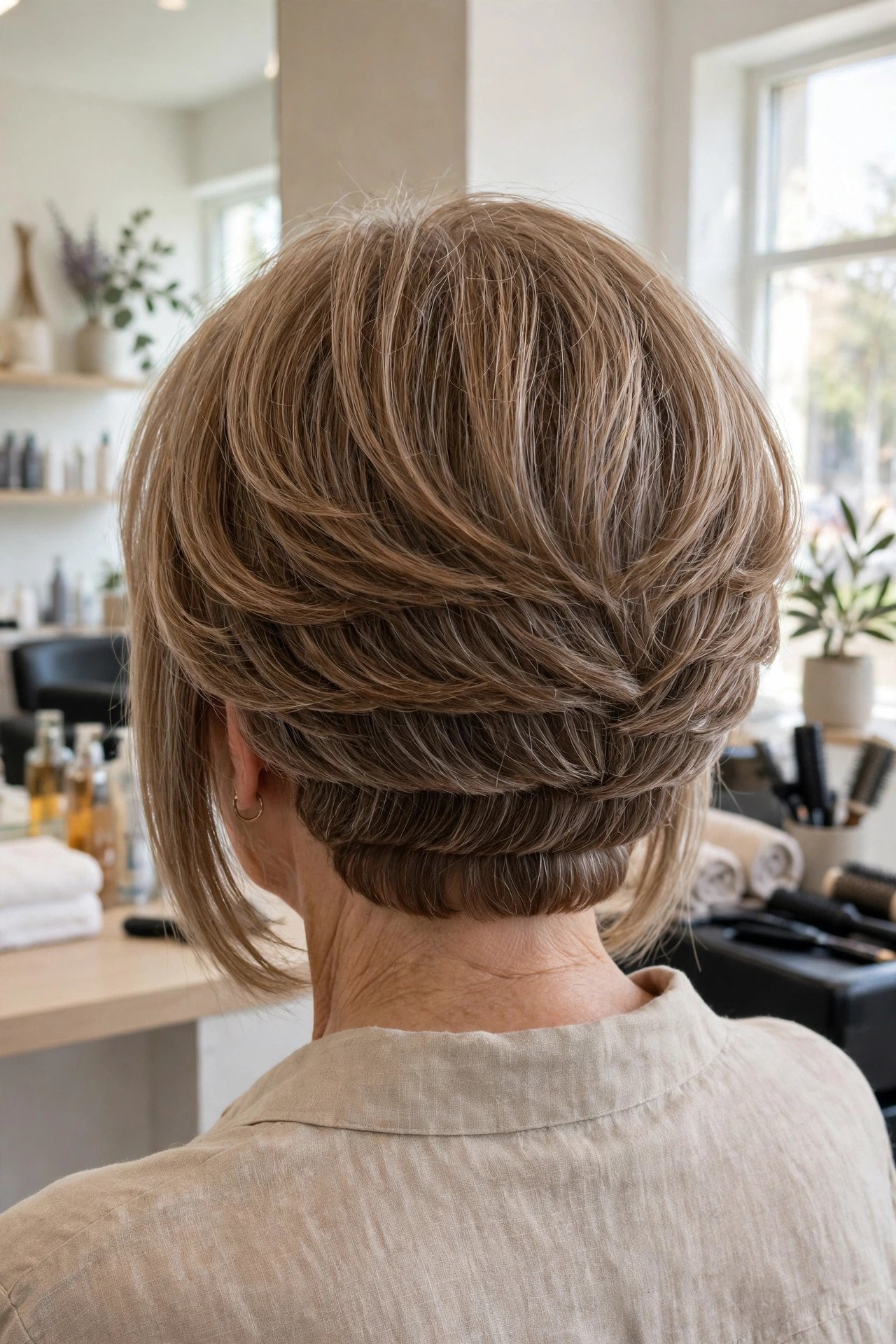
Look at this cut from behind and you see the trick right away.
Short layers are stacked one over the other at the nape, building a soft shelf of hair at the back of the head. That shelf is real volume, not styling. The shape graduates upward into a rounded crown, and the front can stay longer, even chin length, so the cut still feels soft around the face. Fine hair holds this shape well because the stacked pieces support each other instead of hanging.
It suits straight and slightly wavy hair best.
4. Choppy Crop With Point-Cut Ends
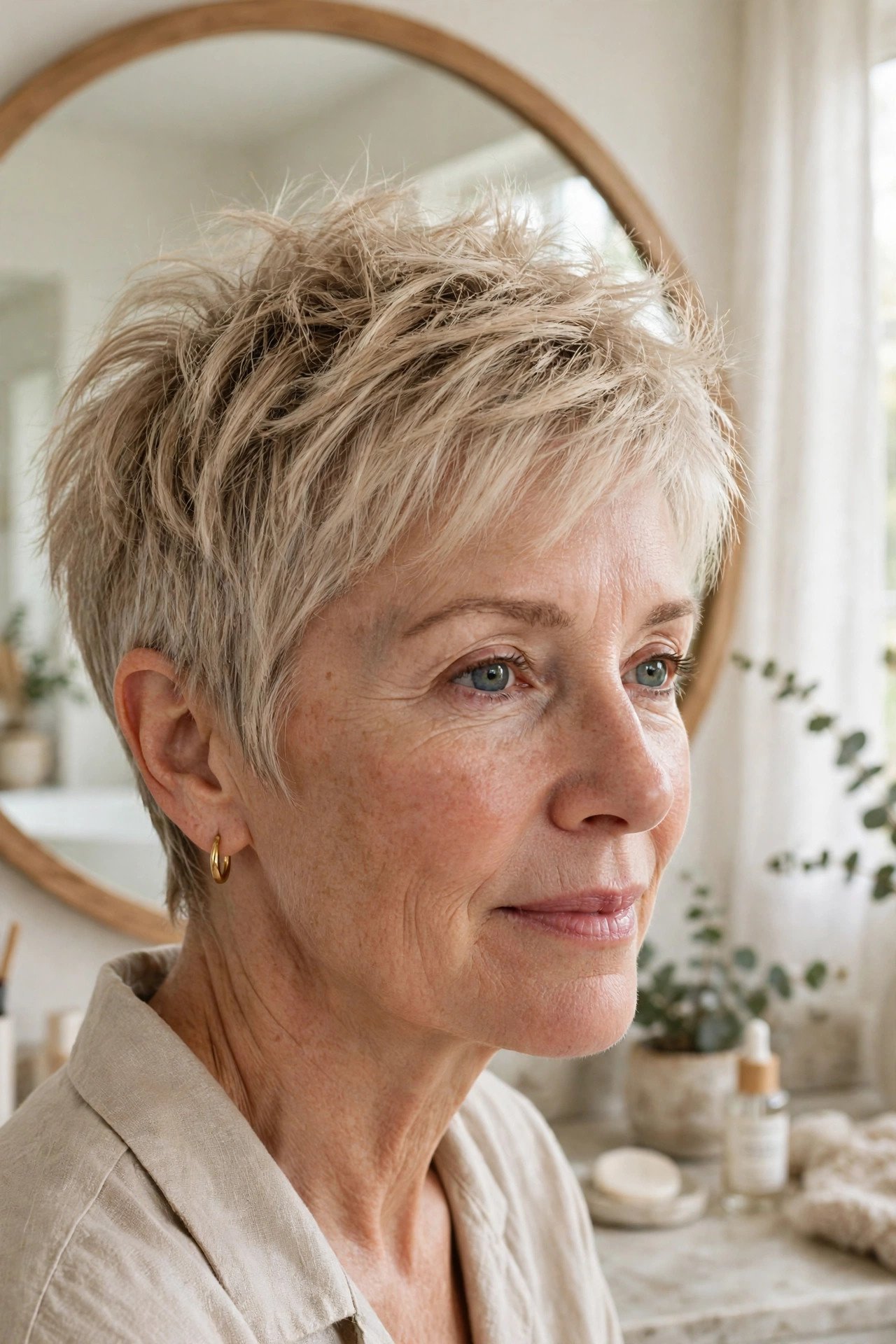
Point cutting is the whole secret here.
Instead of cutting a straight line, the stylist snips into the ends at an angle, leaving a choppy, uneven edge. On fine hair that broken edge catches light from different directions, and the surface looks thicker than a flat, smooth finish. Keep the crop short at the sides and a little longer and piecey on top, so you have something to work with in the morning.
Work a pea-sized amount of styling paste through dry hair, pinch the ends, and the texture shows up fast.
Dry the hair fully first. Texture paste on damp fine hair just weighs it down.
Warm a pea-sized amount of matte paste between your fingertips.
Pinch and twist small sections on top. Leave the sides flat and neat.
5. Feathered Fringe Pixie for a Soft Hairline

A feathered fringe is the kindest frame fine hair can wear.
The bangs are cut wispy and swept to one side, so they borrow fullness from the top of the pixie instead of standing alone as a thin curtain. Feathering softens the hairline, skims across the forehead without hiding the face, and blends into the sides so there is no hard edge anywhere.
It works well if you have:
- A higher forehead you would rather soften than cover
- Fine hair that splits in the middle on its own
- Glasses that sit close to the brow line
A feathered fringe does not need thickness to work. The sweep and the soft edges do the job.
6. Angled A-Line Bob, Longer in Front
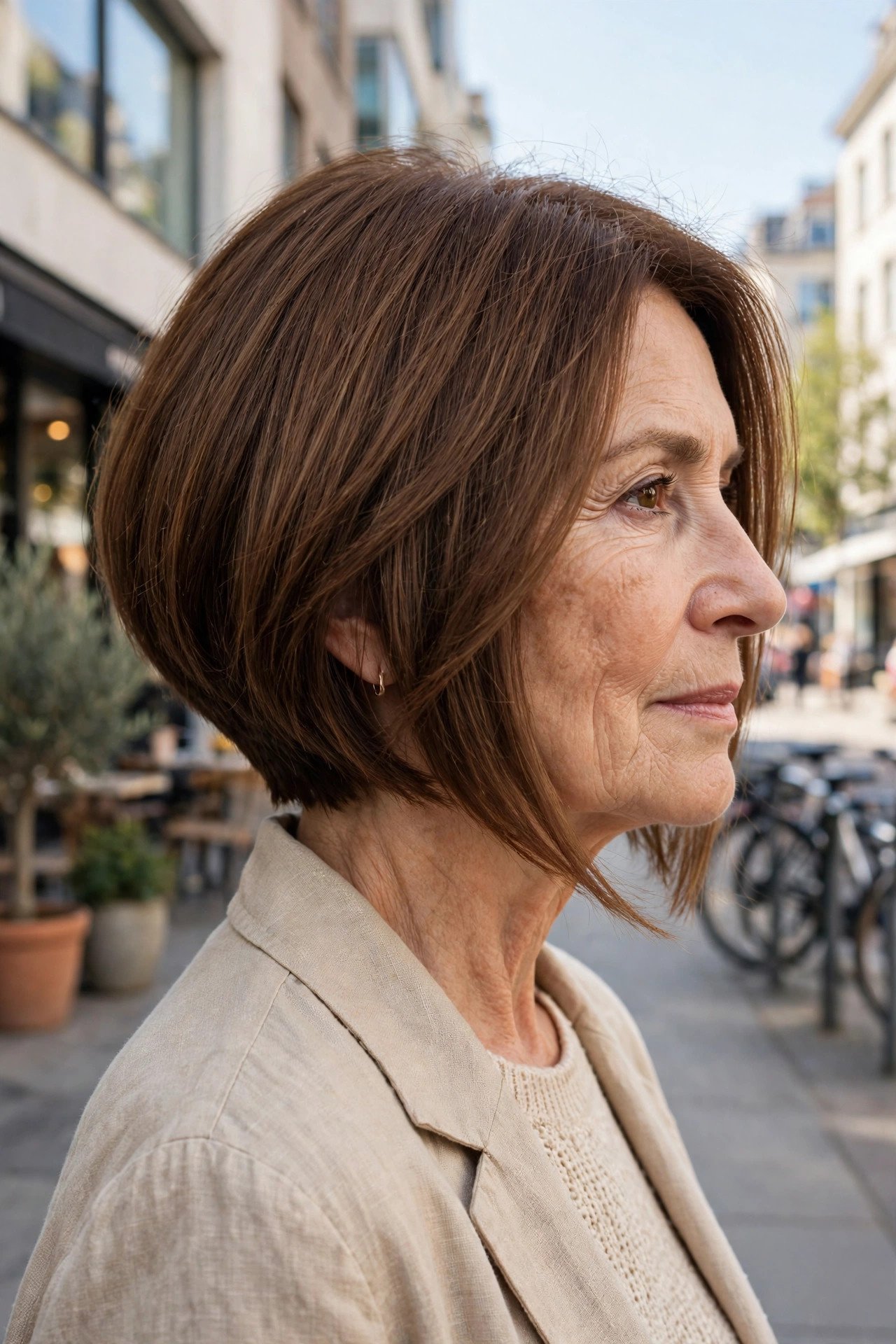
Same bob family, very different result.
A straight bob hangs at one level all the way round, and fine hair can look stringy at the back. The angled version drops longer toward the front and rises shorter at the back. That diagonal line keeps the hair swinging as one piece, and the shorter back stacks slightly, which reads as body. Around the face, the longer front pieces give you something to tuck, sweep, or wear smooth.
Choose the angle if your one-level bob always collapses at the nape by lunchtime.
| Angled bob | One-level bob |
|---|---|
| At the back: rises shorter with a slight stack, holds its shape | At the back: one length, can split and look thin |
| Around the face: longer pieces to tuck or sweep | Around the face: same length all the way round |
| Grow-out: keeps its line for weeks | Grow-out: loses shape as the ends thin out |
7. Bixie: The Pixie and Bob Mix

Plenty of women want the freshness of a pixie without giving up all their length in one visit.
The bixie sits between the two. It keeps the bob outline around the jaw and ears, then adds pixie texture through the top and crown. You get movement and lift where fine hair needs it, with enough length left to feel like yourself. It also grows out kindly, sliding back toward a bob instead of hitting an awkward stage at week three.
Think of it as the trial run that often becomes the long-term cut.
A grown-out bob sitting flat, ends looking thin, crown with no lift by midday.
Bixie shape with texture through the crown, the jaw-length outline kept, ends looking fuller.
8. Soft Shag Crop With Tousled Layers

It is the cut you can style with your fingers at a red light, and it still looks deliberate.
The short shag uses razored or point-cut layers all over, longest at the crown, with a soft fringe piece left longer at the front. All that movement breaks up the surface, so fine hair reads as body instead of flatness. The finish is tousled on purpose. A flawless finish is not the goal here, and that is exactly why it suits fine hair so well.
Messy in the right places beats neat and flat every time.
Ask your stylist for
9. Jaw-Length Micro Bob
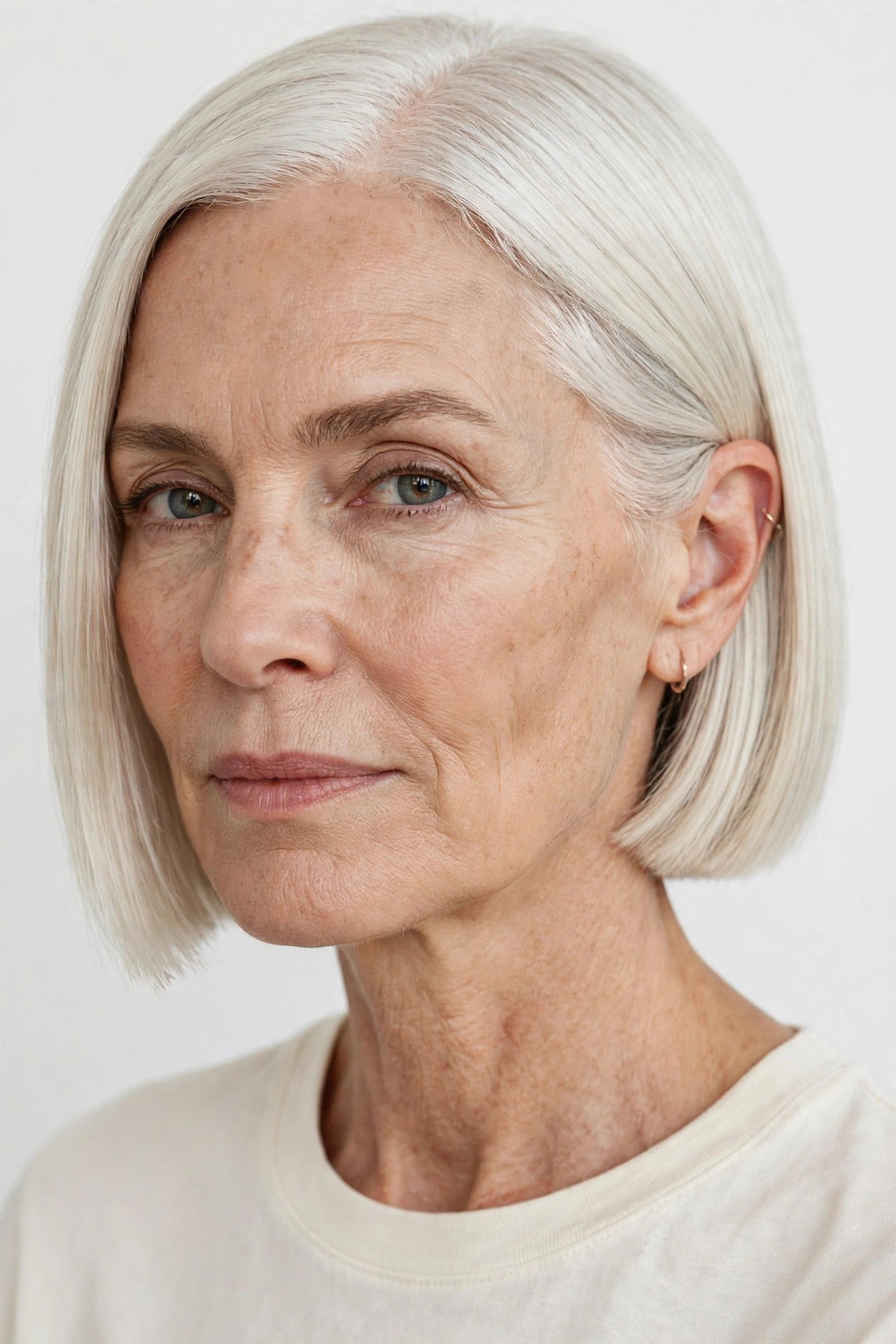
Shorter hemline, thicker-looking hair. That is the rule behind the micro bob.
Cut blunt at the jaw, this bob ends where the jaw gives it a strong line to rest on. There is no extra length below to thin out, so every strand counts in the hemline. Worn tucked behind one ear or both, it looks sharp and deliberate. A slight bend under at the ends keeps it from flicking out during the day.
It is a strong choice if your longer bobs always end up looking wispy by week two.
Blunt ends cut right at jaw level.
A slight undercurve when you dry the ends.
Thinning shears anywhere near the ends.
Layers that eat into the hemline.
10. French Bob With a Lifted Crown
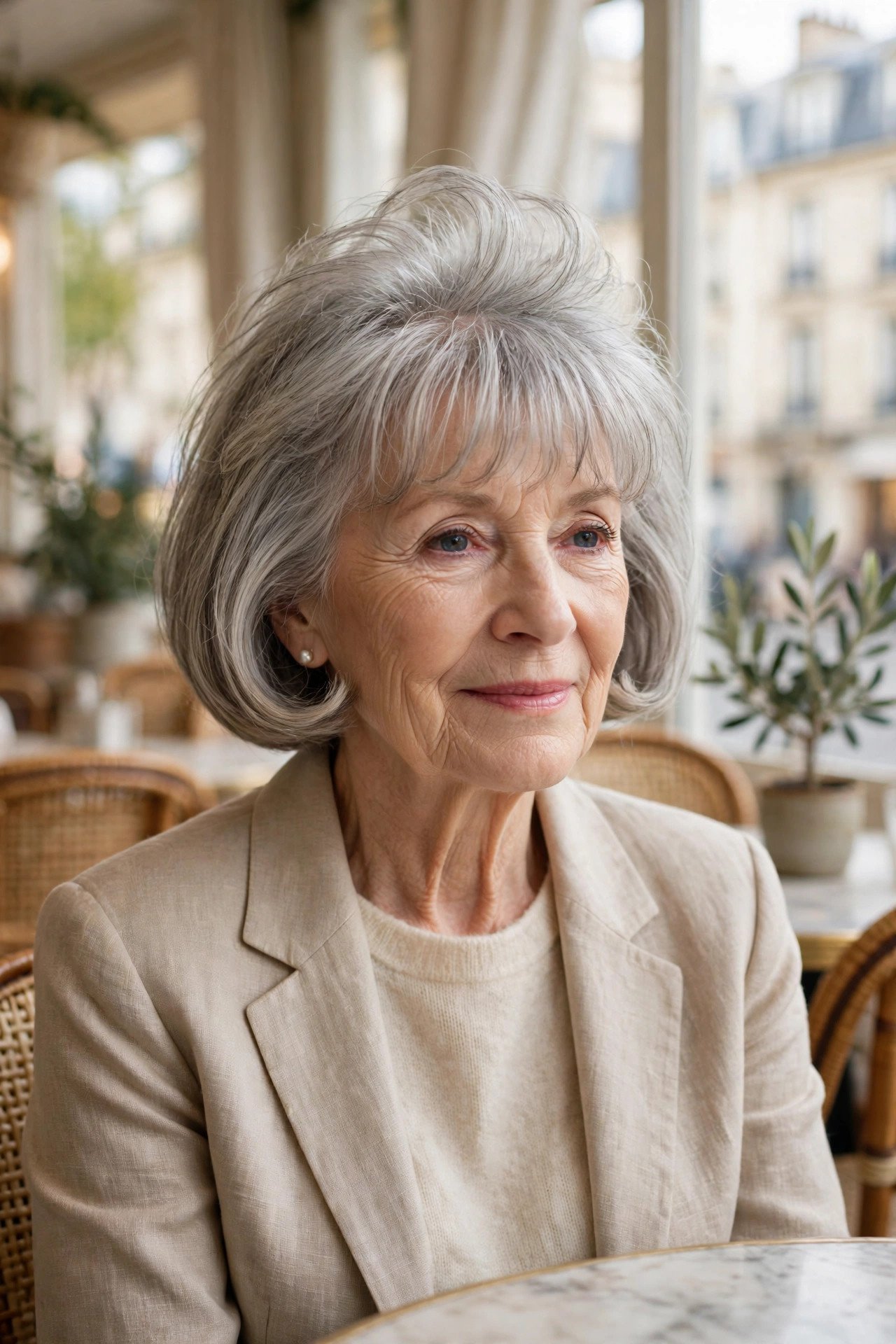
The French bob sits right at the chin, curved slightly under, with the crown dried up and away from the head.
That lifted crown is what separates it from a plain pageboy shape. The cut itself is mostly one length with a soft fringe or none at all, so the ends stay dense. The styling does the lifting: roots dried upward, ends rolled under just a touch. On fine hair the result looks polished without looking stiff or set.
It pairs well with a stronger lip, since the face is so open.
⚠️ Watch Out
Cut above the jaw, this shape can cling to the head and show every thin spot. Keep it at chin level so the ends keep their weight.
11. Asymmetric Crop, Longer on One Side

Dead-even cuts can make fine hair look flatter, because the eye reads the symmetry and notices how little hair there is.
An asymmetric crop breaks the balance on purpose. One side is left longer and sweeps across, the other sits shorter and neat. The longer sweep stacks strands over each other, which reads as thickness, and the deep part built into the cut adds height on the fuller side. The outline keeps changing as you move, so the hair never reads as one flat sheet.
It is a confident cut, and it grows out into a side-swept pixie without a fight.
12. Short Curly Crop for Fine Curls

Fine curls are often cut as if they were straight, then blamed for falling flat.
Curls need the opposite approach. Cut dry, curl by curl, so the stylist can see where each one wants to sit. Taking weight off the ends lets fine curls spring up and take up more room, and room is volume. Layers go where the curls need space to stack, usually through the crown, never hacked into the ends where curls go stringy.
The result is a rounded shape that looks full because the curls are finally allowed to be curls.
Wash and condition, then scrunch with a soft towel. Never rub fine curls dry.
Smooth a small amount of leave-in conditioner through the wet curls.
Scrunch upward in sections and let it air dry without touching it.
13. Side-Swept Fringe Bob

One deep sweep of fringe can give a plain bob a whole new outline.
The side-swept fringe starts from a deep part and crosses the forehead on a diagonal, which does two jobs at once. It covers a wide forehead softly, and it piles hair over to one side, so the crown on that side sits higher. The rest of the bob can stay simple and blunt. This is a good first step if you like the idea of bangs but do not want a full fringe to maintain.
Blow the fringe across with a brush first, then let it settle where it wants.
14. Pixie With a Long Swept-Over Top

Keep the sides short and leave the top long enough to travel.
That is the build of this pixie. The top section, four inches or so, sweeps over to one side and lies across the shorter layers beneath it. Every strand in that sweep stacks on top of others, so the top reads dense even when the hair itself is fine. Change the sweep direction and the cut looks different, which gives you two or three styles from one haircut.
Dry the top in the opposite direction first, then flip it over for the most lift.
- ▸Sweep it low across for a softer, everyday finish
- ▸Sweep it back and across for a smarter evening look
- ▸Let the front piece drop forward on off-duty days
15. Layered Bob With Curtain Bangs

Curtain bangs are the ones parted in the middle and swept out to each side, like two small wings framing the face.
On a layered bob they do real work for fine hair. The centre part splits the fringe, so neither side needs much hair to look full, and the longest pieces melt into the layers of the bob at the cheekbones. Crown layers underneath push the whole shape up. The grow-out is gentle too, since the fringe simply becomes face-framing length.
Dry the fringe forward first, then sweep each side back with your fingers.
Curtain bangs share the work between two sides, so fine hair never has to fake a thick fringe.
16. Deep Side Part: The Fastest Volume Trick
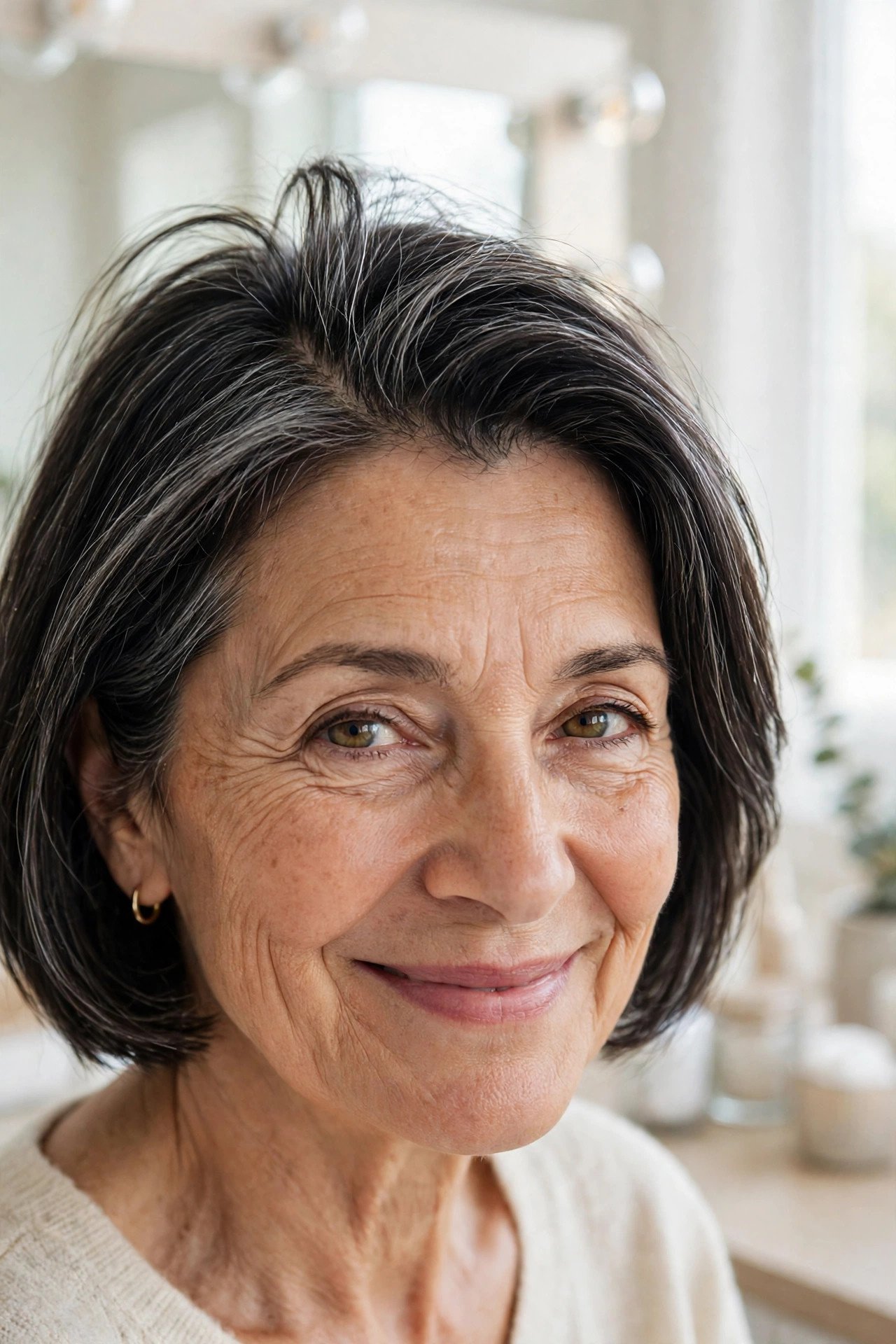
Move the part, move the volume. It really can be that simple.
Hair that always parts in the same place learns to lie flat along that line. Flip it to a deep side part instead and the roots have to stand up to cross over, which gives instant height at the crown on any short cut. If your part line looks sparse, try a soft zigzag part. It covers the line and keeps the lift.
No new haircut required, just a comb and thirty seconds.
Part above the outer edge of the brow for the deepest lift.
Dry the roots in the new direction so the lift sets.
The same centre part every single day.
Heavy oils at the roots, which undo the lift within the hour.
17. Undercut Pixie With a Full Top
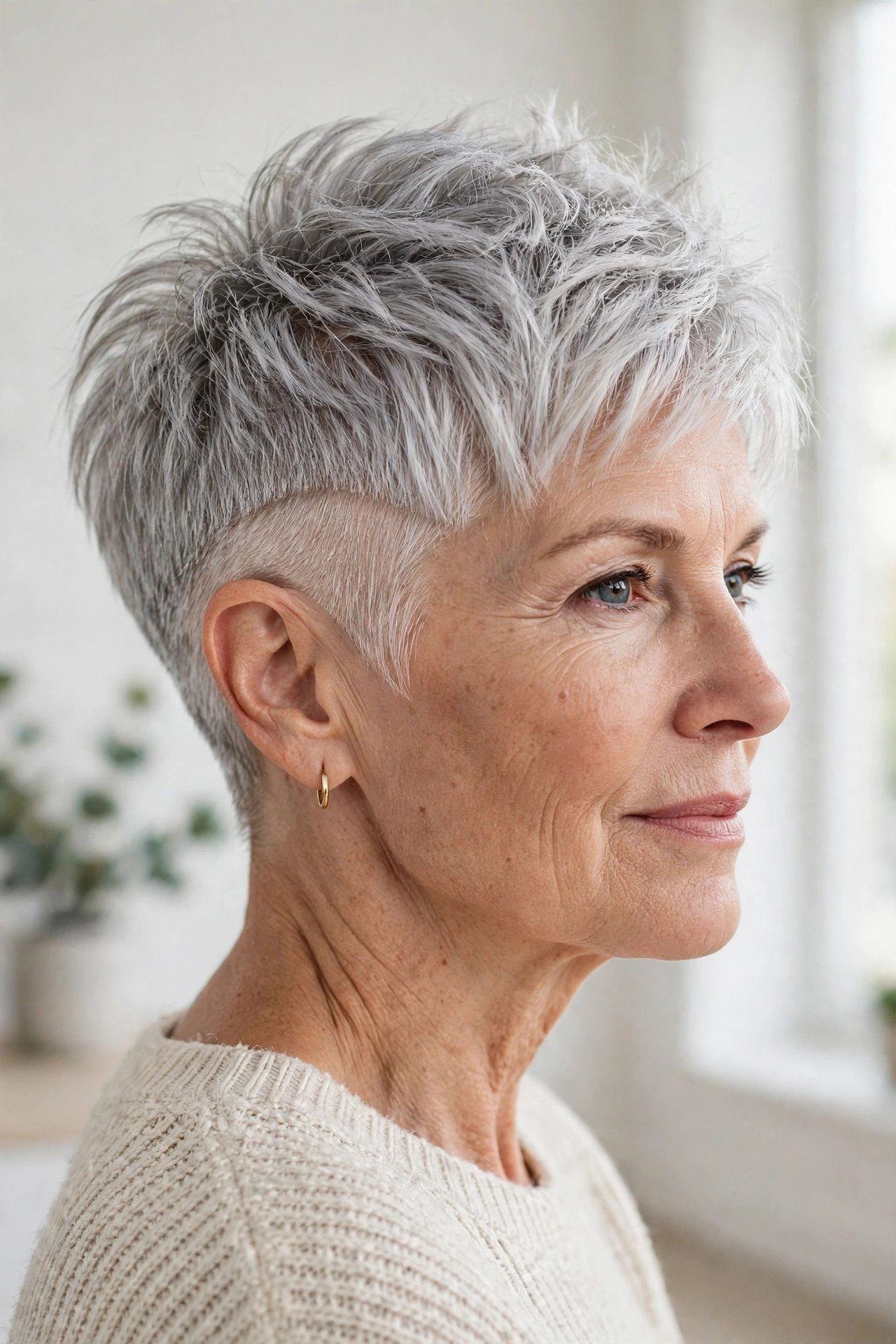
The mistake is assuming an undercut must make fine hair look thinner.
Clipped short at the sides and back, an undercut removes the wispy side hair that never looks full anyway. What is left on top, kept longer and textured, suddenly reads thick by contrast. It works the way a dark frame works around a bright photo: the eye goes straight to the full part. This cut does ask for regular tidy-ups at the edges, about every three to four weeks.
Choose it if your sides always look sparse no matter what you do.
Good signs this cut suits you
18. Feathered Brush-Back Cut
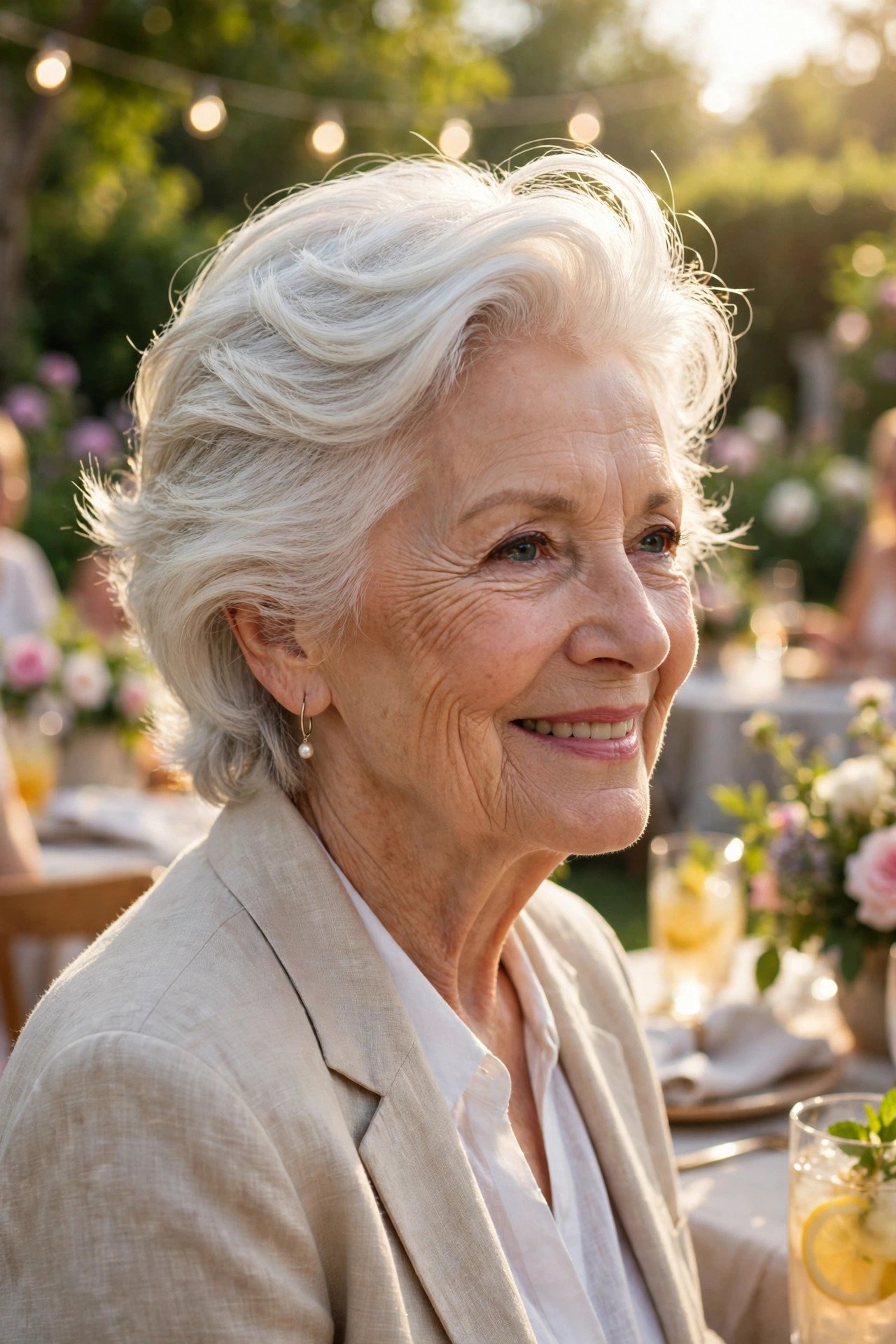
Brushing fine hair forward can make it hug the head. Brushing it back does the opposite.
This feathered cut is layered to be worn swept back off the face, with soft, flicked edges that lift away from the scalp. The height sits at the front hairline, which opens up the face and makes the whole cut look fuller. It is a forgiving shape for hairlines that are thinning a little at the temples, since the sweep covers without a hard fringe line.
Blow dry it back with a vent brush, then let it cool before you touch it.
Fine hair brushed forward, flat at the front, the hairline fully exposed.
Feathered layers swept back, height at the hairline, edges flicking softly away from the face.
19. Rounded Bob With Hidden Crown Layers

From the side, this bob is one smooth curve, and that curve is doing quiet work.
The layers are hidden inside the crown, short enough to push the surface up, long enough to stay invisible. The outside of the cut stays smooth and mostly one length, so the ends keep their density. Rounded shapes suit fine hair because there are no corners or gaps for the eye to catch on. It is a tidy, grown-up bob that still has lift where it counts.
Ask for the layers to stay internal, not carved into the outline.
💡 Quick Tip
Dry the crown first, head upside down for the first minute, then finish right side up. The hidden layers hold that lift far longer.
20. Air-Dried Wavy Bob
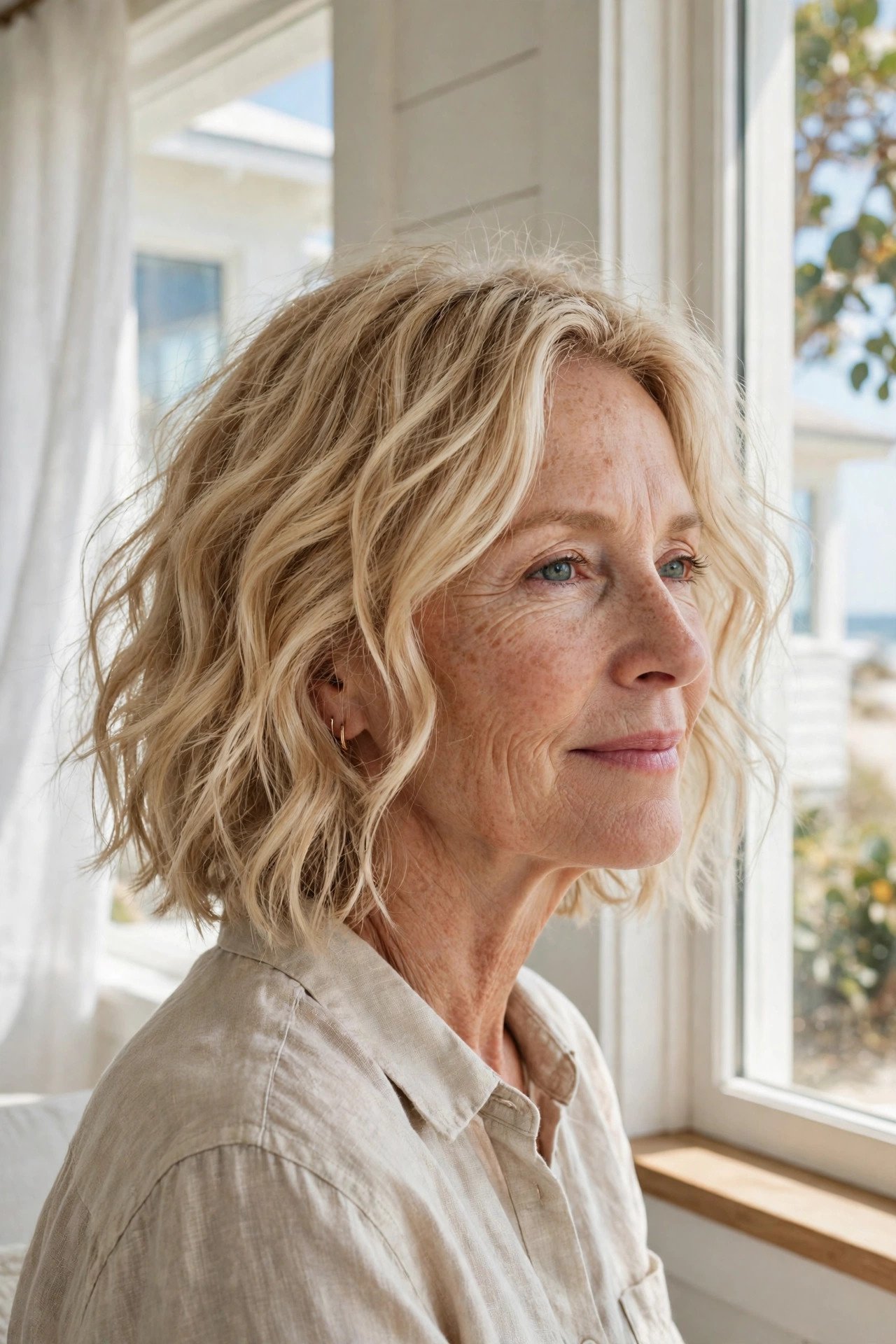
Waves take up more space than straight strands, and space is what fine hair is short of.
This bob is cut with slight layering so the waves can stack instead of clumping, then it is left to air dry with a scrunch. The wave pattern adds width at the sides and movement through the ends, which reads as body all day. It is the lowest-effort volume on this list: wash, scrunch, walk away. Touching it while it dries is the one thing that ruins it.
On day two, a light mist of water and another scrunch brings the waves back.
21. Tapered Back and Sides With Length on Top
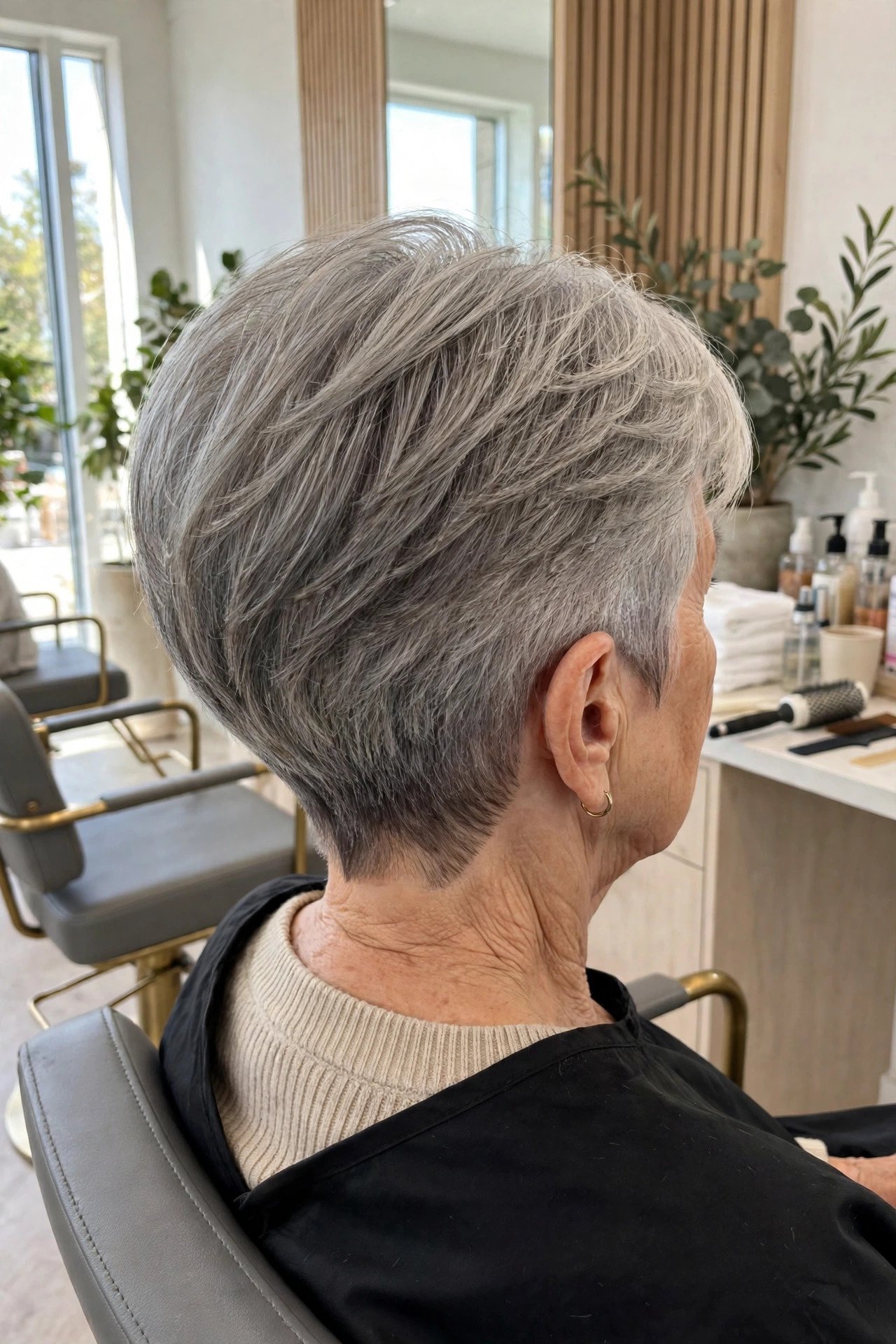
Ask for the back and sides tapered, and protect the length on top.
A taper fades the nape and the sides down neatly, so there are no thin, wispy edges trailing around the outline. The top keeps three to four inches, enough to part, sweep, or lift with a little product. On fine hair this tidy outline matters more than people expect. A clean edge makes the whole head of hair look deliberate and fuller, the way a neat frame finishes a painting.
It is also one of the easiest cuts on this list to keep tidy between visits.
| Tapered sides | One-length sides |
|---|---|
| Outline: fades in neatly, no wispy trail at the edges | Outline: edges can look thin and uneven |
| On top: length kept for parting, sweeping and lift | On top: same length as the sides, fewer styling options |
| Upkeep: a quick tidy at the nape as it grows | Upkeep: the outline blurs sooner |
22. Rounded Crop With a Curved Fringe

The fringe is the first thing you notice: a smooth curve that follows the brow line.
This rounded crop wraps around the head in one soft shape, with the fringe cut in a gentle arc and the sides blending into it. Because the fringe is part of the whole curve, it does not need to be thick to look full. The ends are kept blunt under the curve, which keeps the outline dense. It suits glasses wearers well, since the fringe ends right where the frames begin.
Keep the fringe at brow length or just above, never mid-forehead, on fine hair.
23. Blow-Out Bob Dried With a Round Brush
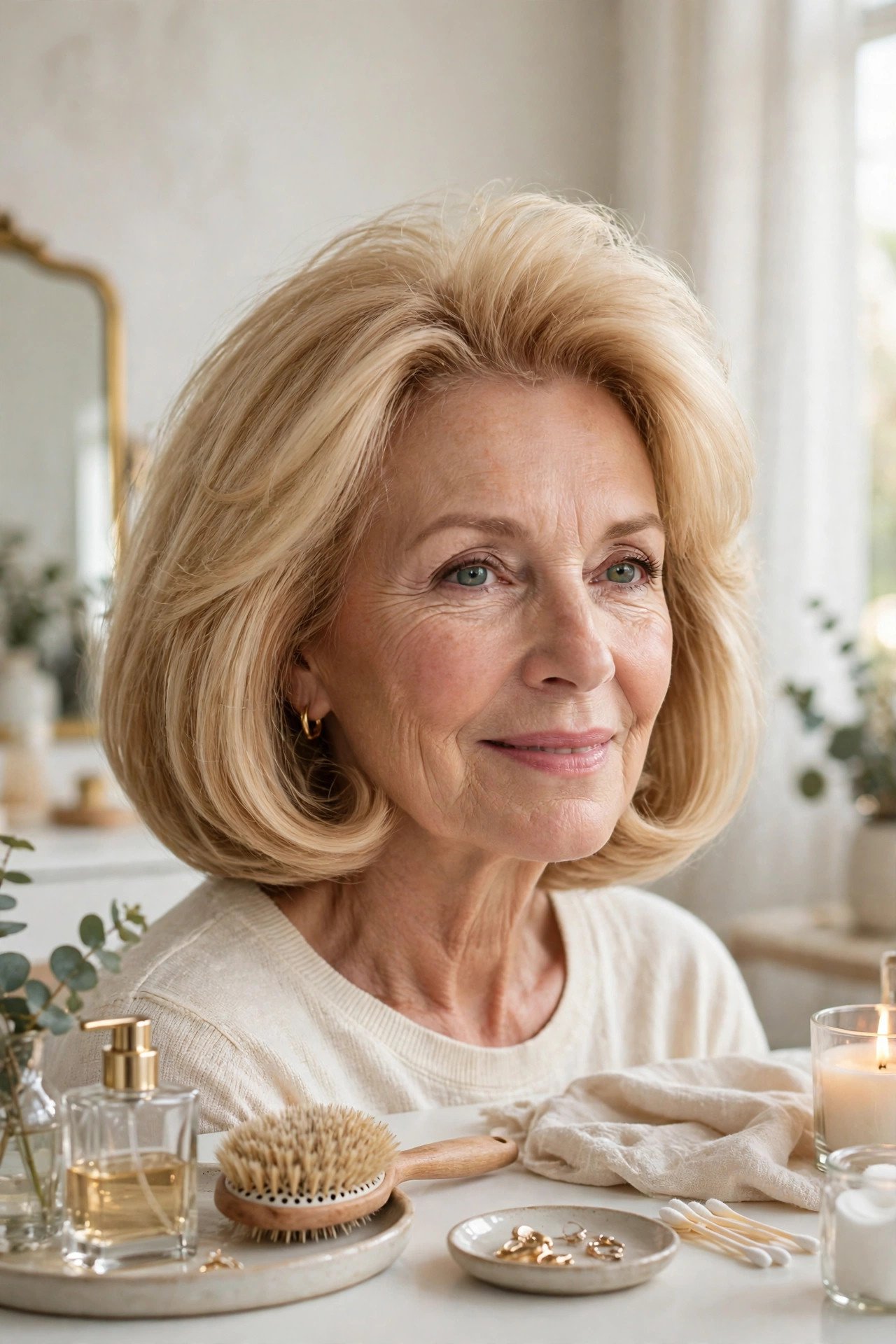
Twenty minutes before you need to leave, this is the dry that earns its time.
The cut underneath is a simple bob. The volume comes from the blow-out: roots lifted with a round brush, each section dried upward and rolled under at the ends. Heat sets fine hair in the lifted position, and the bend at the ends makes the hemline look thick and finished. Work in sections, crown first, and let each one cool on the brush for a few seconds before you move on.
Done well, it holds through the next day with just a shake and a brush-through in the morning.
Rough dry to about eighty percent dry with your head tipped forward.
Take the crown section first. Get the brush under the roots and lift straight up as you dry.
Roll the ends under, hold the heat for a few seconds, then let the section cool on the brush.
24. Face-Framing Layers on a Short Cut
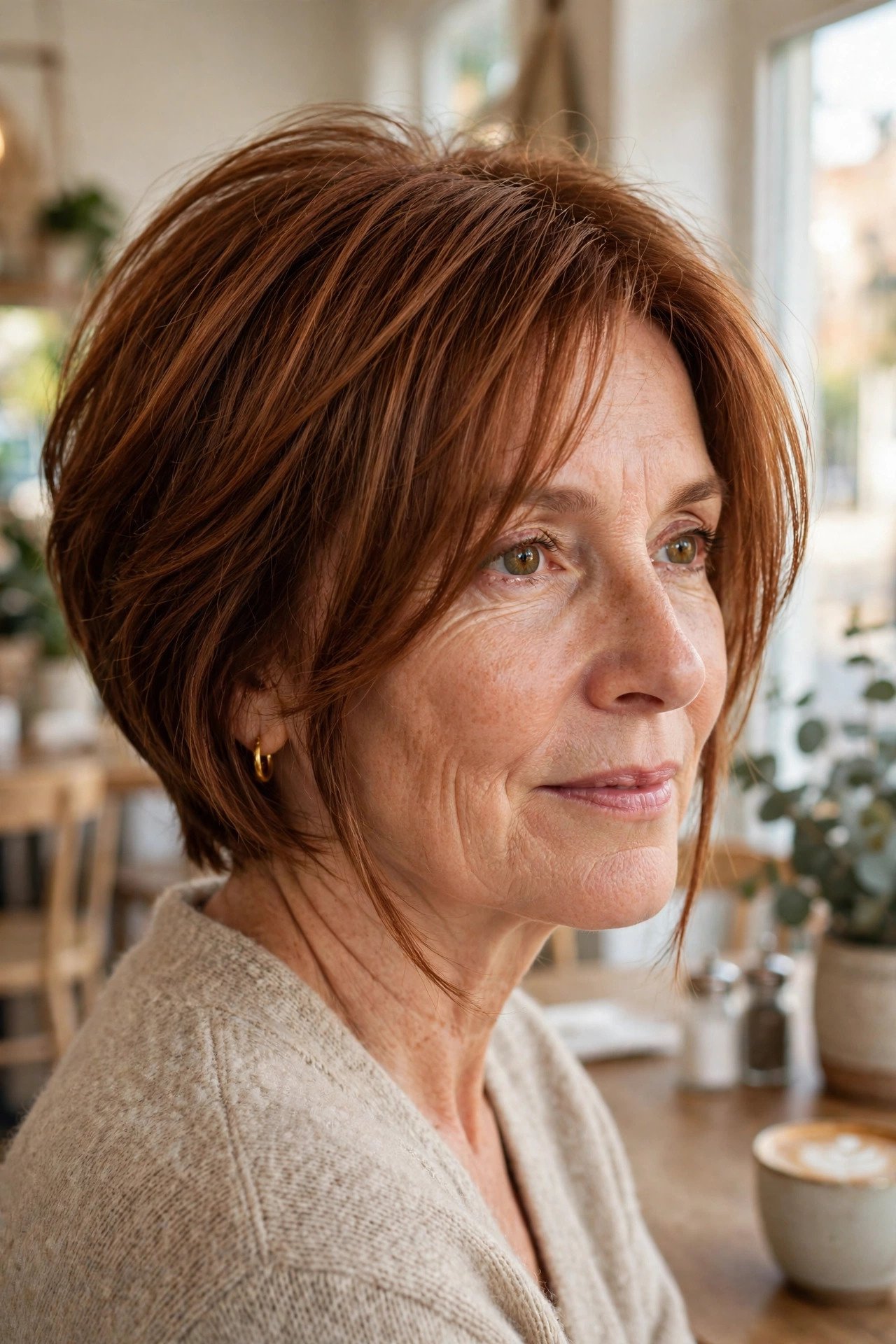
The common mistake is spreading layers evenly through the whole cut and thinning everything out.
Face-framing layers take the opposite approach. The back and crown stay fuller, and the layering is concentrated at the front, where longer pieces are cut to land at the cheekbones and jaw. Those front pieces add movement where people actually look, and they soften the outline of a short cut without costing density anywhere else. On fine hair, where you place the layers matters more than how many you cut.
Point to the exact spot where you want the shortest front piece to land when you sit in the chair.
Keep the fullness at the back and crown. Spend the layers at the front, where they frame instead of thin.
25. Soft-Edged Grown-Out Pixie

Hard, sharp edges on a pixie can expose every thin patch the day the cut grows out a little.
This version keeps the edges soft and blended, and lets the pixie grow a touch longer all over. Soft edges forgive fine hair. There is no harsh line to break up, and the extra length through the top and sides lies over itself, which reads as density. Upkeep is gentle too: a tidy every six to eight weeks keeps the shape, and in between it just looks like a slightly softer version of itself.
It is the low-pressure pixie, and for fine hair it often outlasts the sharper versions.
Between salon visits
Fine hair is not a flaw to fix. It is a texture to cut well. Blunt edges, stacked backs, lifted crowns and grippy finishes all do the same honest work: they let short cuts for fine hair over 50 look fuller than the strands alone suggest. Pick the two or three shapes that match your face, your routine and your nerve, and take the photos to your stylist. A good cut does most of the work before you pick up a brush. Save this list for your next salon visit, and pin your favorite cut so it is ready when you book.