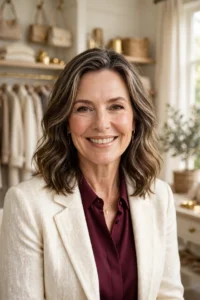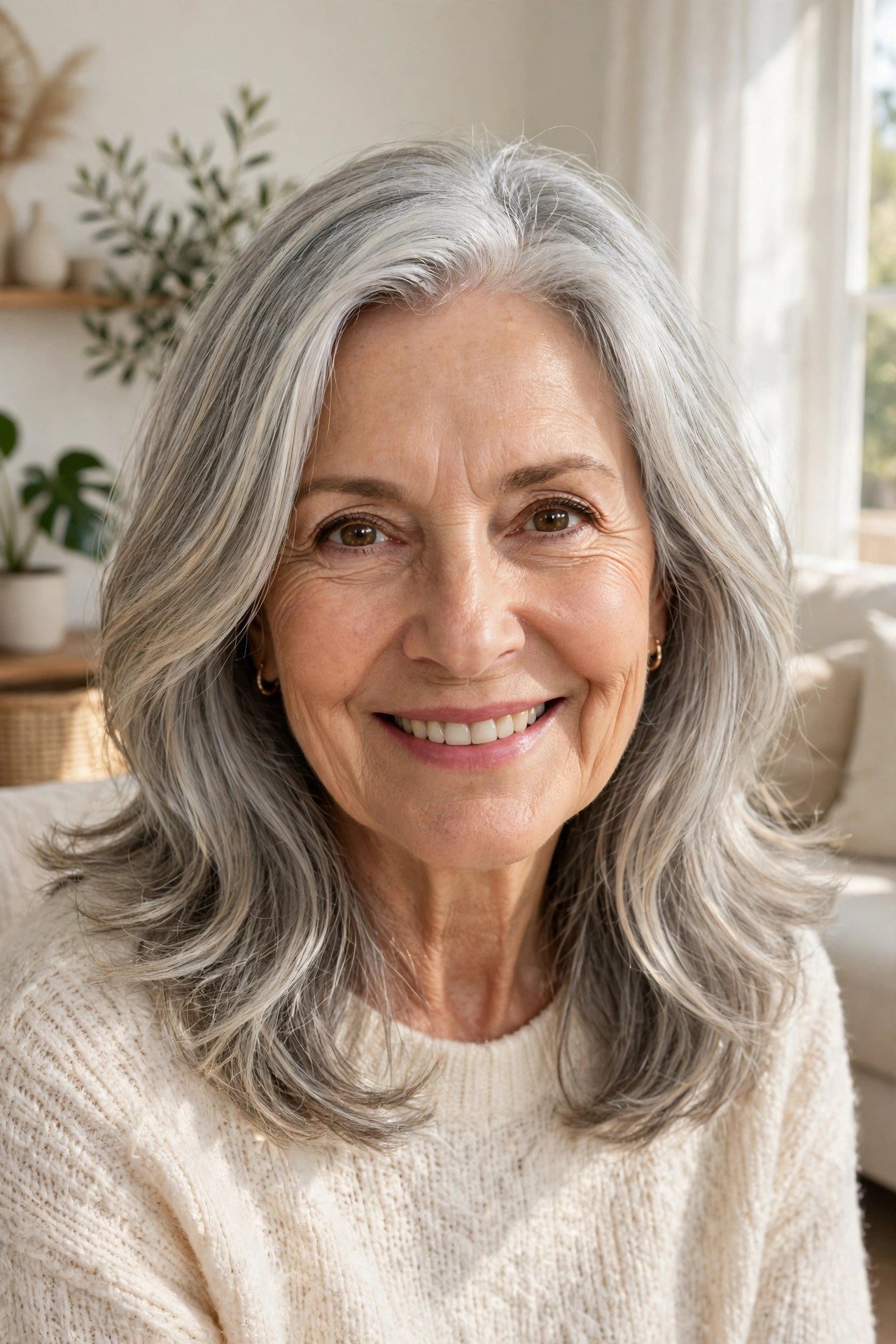
24 Hair Colors Over 60 That Look Younger Without Dye Damage
Most women over 60 know a certain mirror moment well. The cut is good, the style is good, and still the colour looks flat. Flat colour drains the face, and it can make even a great haircut look tired.
The usual fix causes its own trouble. Full head permanent dye covers every grey strand, then grows out with a hard line at the roots. Strong bleach and repeated dark dye leave hair dry, rough and prone to snapping at the ends.
The gentler route often gives the fresher result. The hair colors over 60 in this list lean on glosses, demi permanent shades, fine highlights and grey blending. Each method adds tone and shine, softens the grow out, and skips the harsh processing. Some keep your grey and make it look deliberate. Some warm it, cool it, or deepen it. All of them respect the hair you have. Pick the one that matches your hair now, not the hair you had at forty.
1. Grey Blending Highlights That Grow Out Softly
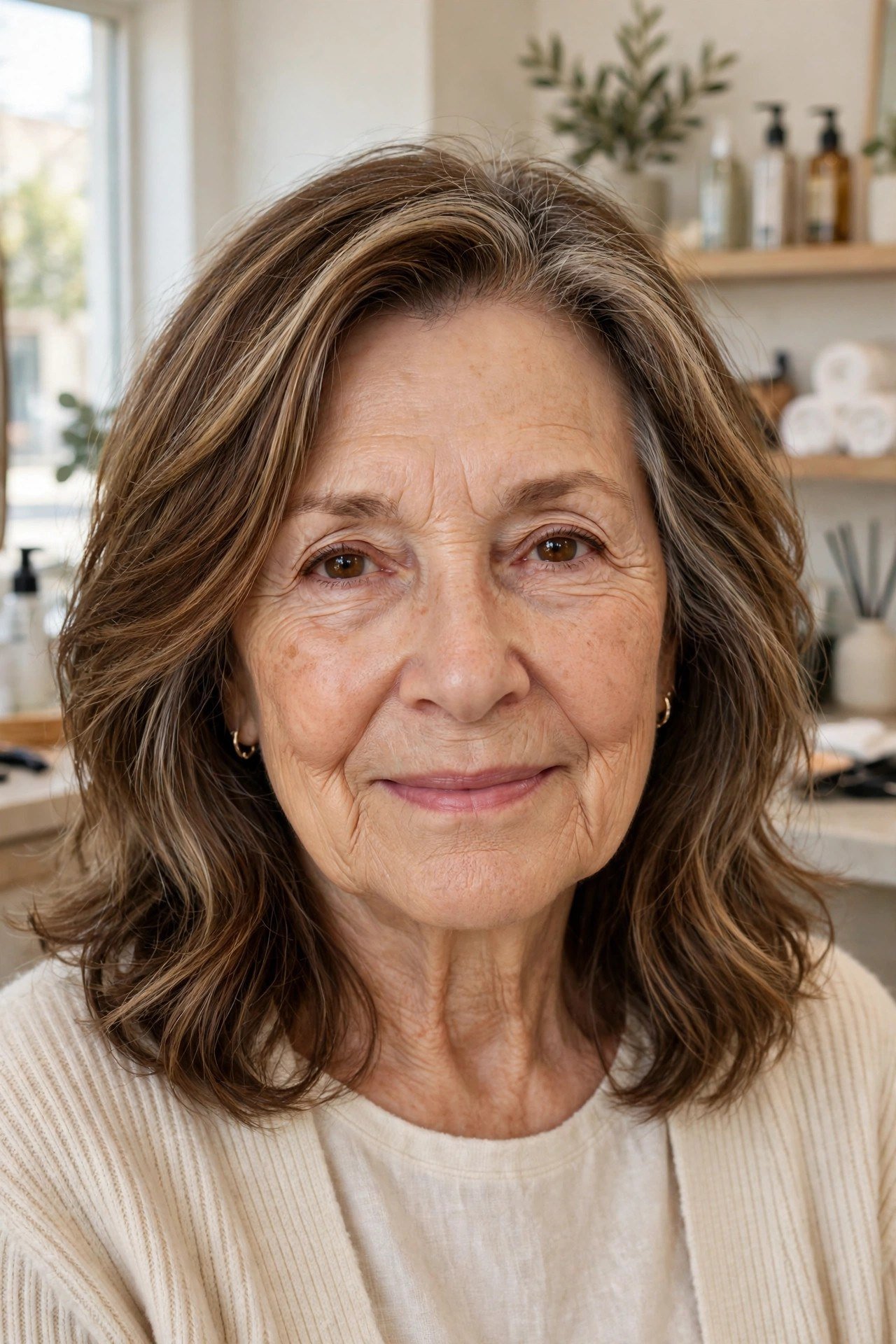
A solid block of dye gives you a stripe at the roots within three weeks.
Grey blending takes a slower road. Your colourist weaves fine highlights through your natural grey, close to your own shades, so the grey reads as one of the tones rather than a line to hide. Because nothing sits in a solid band, new growth melts into the mix. The result looks lit and soft, and the salon gap can stretch far longer than with full coverage.
- Best on hair that is 30 to 70 percent grey
- Ask for fine weaves, not chunky streaks
- Tones sit between your lightest and darkest strands
2. Lowlights That Put Depth Back Into Silver Hair
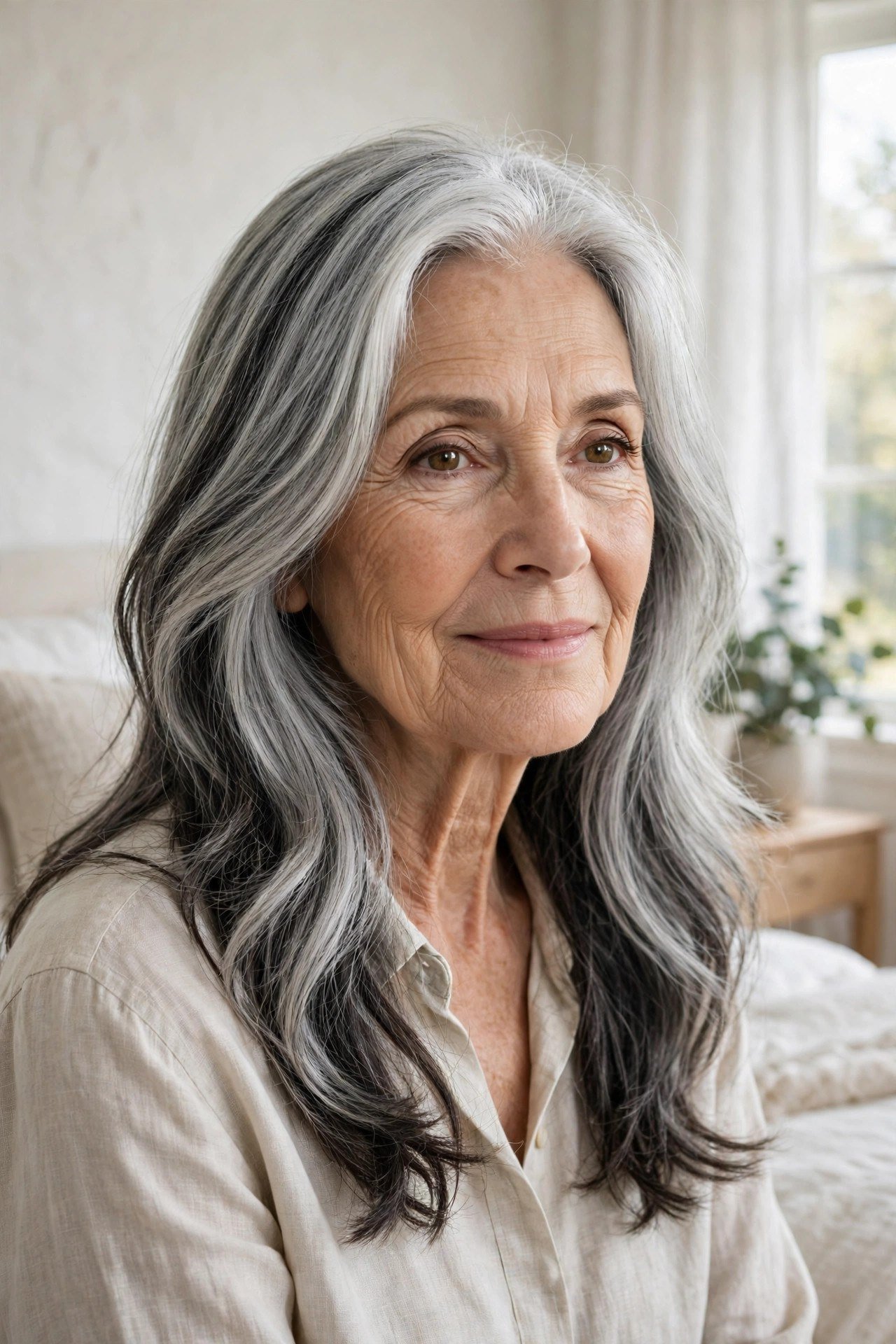
Hair that has gone fully silver can look washed out under indoor light, even when it is healthy.
Lowlights solve that by adding a few darker strands back in. A colourist paints or foils in a shade two steps deeper than your lightest hair, placed mostly under the top layer. The contrast gives silver its shine back, the way shading gives a drawing its shape. Skin looks warmer beside it, and the whole head reads richer.
Start with a small number of lowlights. You can always add more at the next visit, and a light hand keeps the look natural.
💡 Quick Tip
Ask for lowlights in a cool ash brown or a soft charcoal tone if your silver leans warm. Cool depth stops silver from reading yellow under bathroom lights.
3. A Clear Gloss When All You Want Is Shine
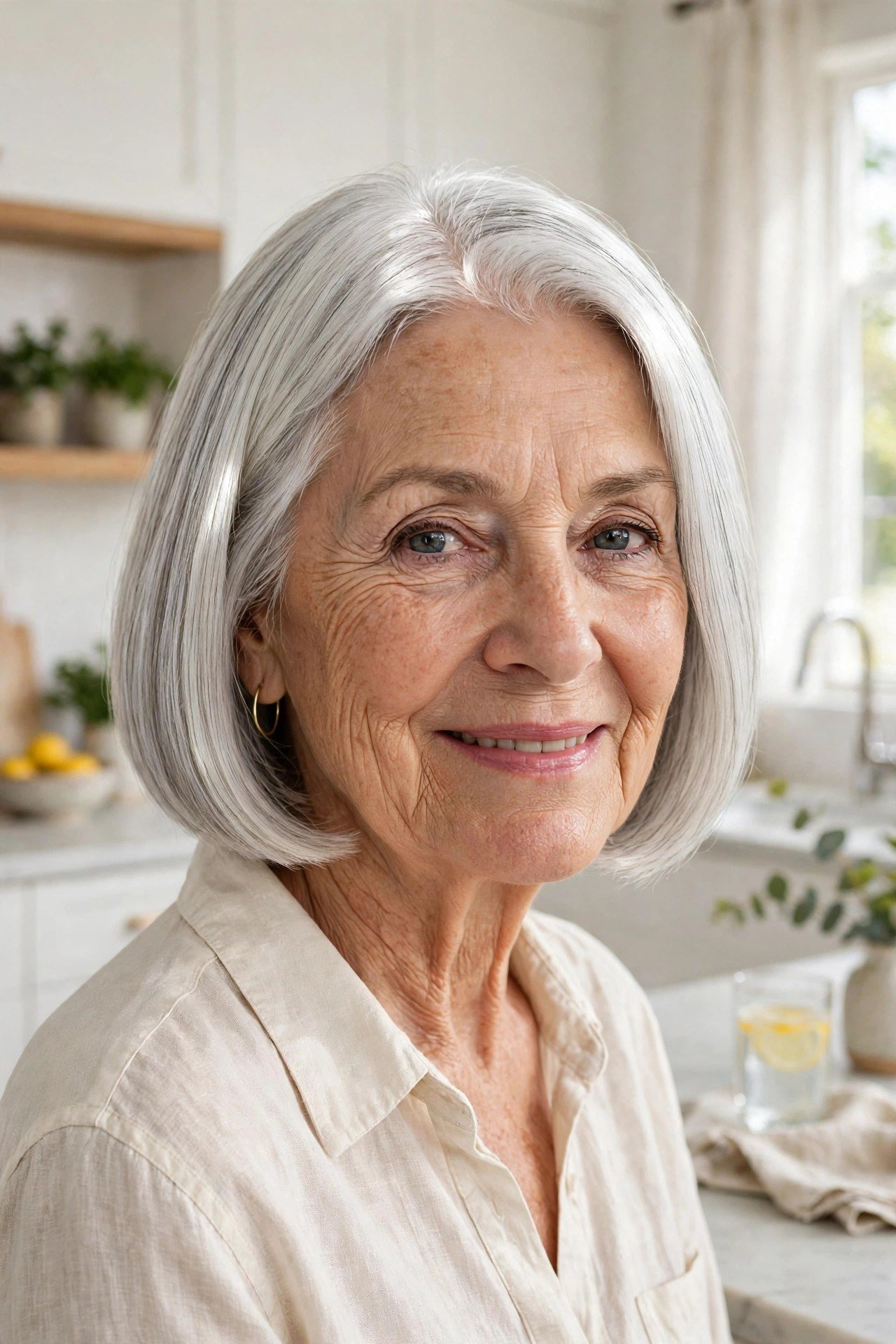
Some hair does not need new colour at all. It needs light.
A clear gloss is a transparent salon coating that smooths the hair surface and adds mirror shine without changing your shade by even half a step. Grey, white, blonde and brunette hair all take it well. The coating also calms the wiry texture grey hair often has, so strands lie flatter and catch light evenly. It fades away over several weeks of washing, so no root line ever forms, and no long term promise needs keeping.
4. Demi Permanent Chestnut That Fades Instead of Growing Out
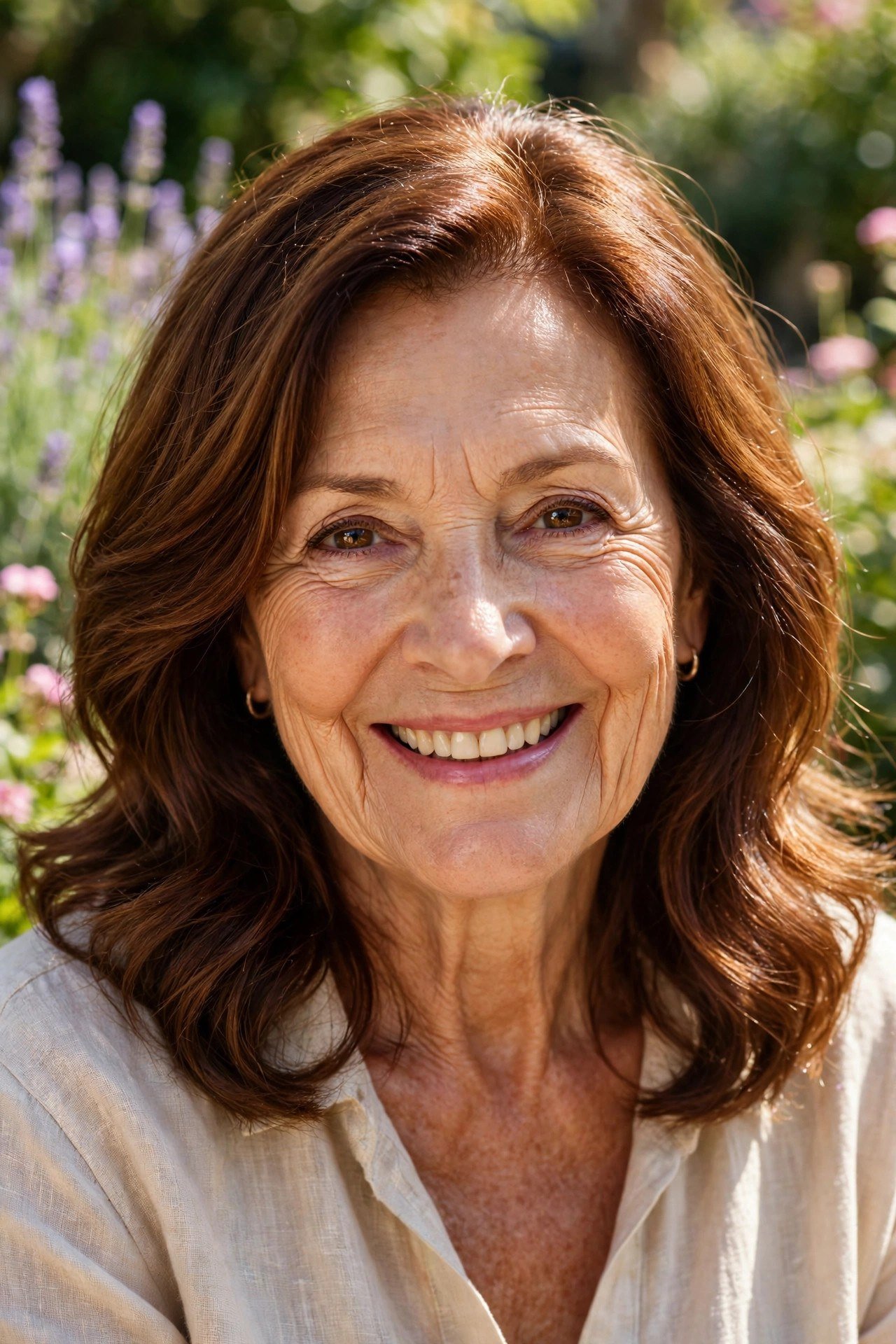
Demi permanent colour sits on the hair rather than lifting it open, and that one detail changes everything about upkeep.
In a warm chestnut shade, it deepens faded brown, blends grey into a softer shadow of itself, and adds a rich shine. Wash by wash it lets go slowly, so week six looks like a paler version of week one, not a line across your head. On hair that snaps easily, the gentler formula is the kinder choice, and most heads need a refresh every six to eight weeks.
Ask at the salon
5. Balayage Painted Well Away From the Roots
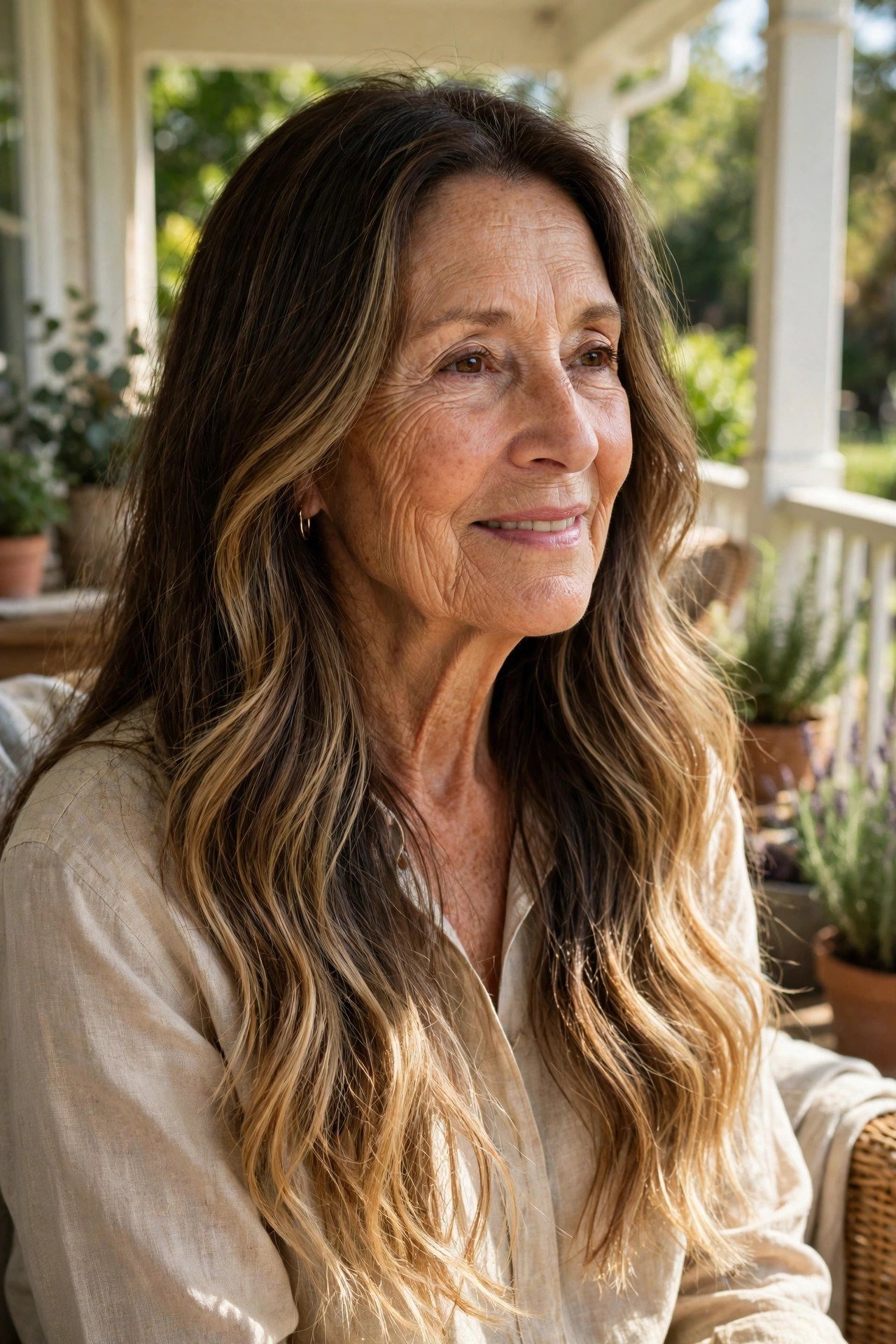
Sun lightened hair never starts at the scalp. It starts halfway down.
Balayage copies that pattern. The colourist paints lighter pieces through the mid lengths and ends by hand, leaving your natural root colour, grey included, exactly as it is. The face gets brightness where it flatters, around the cheekbones and jaw, while the top of the head stays low care. Grow out is a non event, since there was never a line to begin with.
On grey hair, ask for the painted pieces to sit close to your own lightest strands. The blend stays believable for months.
One flat tone along the whole length, with a clear regrowth stripe showing by week three.
Light painted through the lengths, natural roots left alone, and brightness around the face.
6. Pale Face Framing Pieces and Nothing Elsewhere
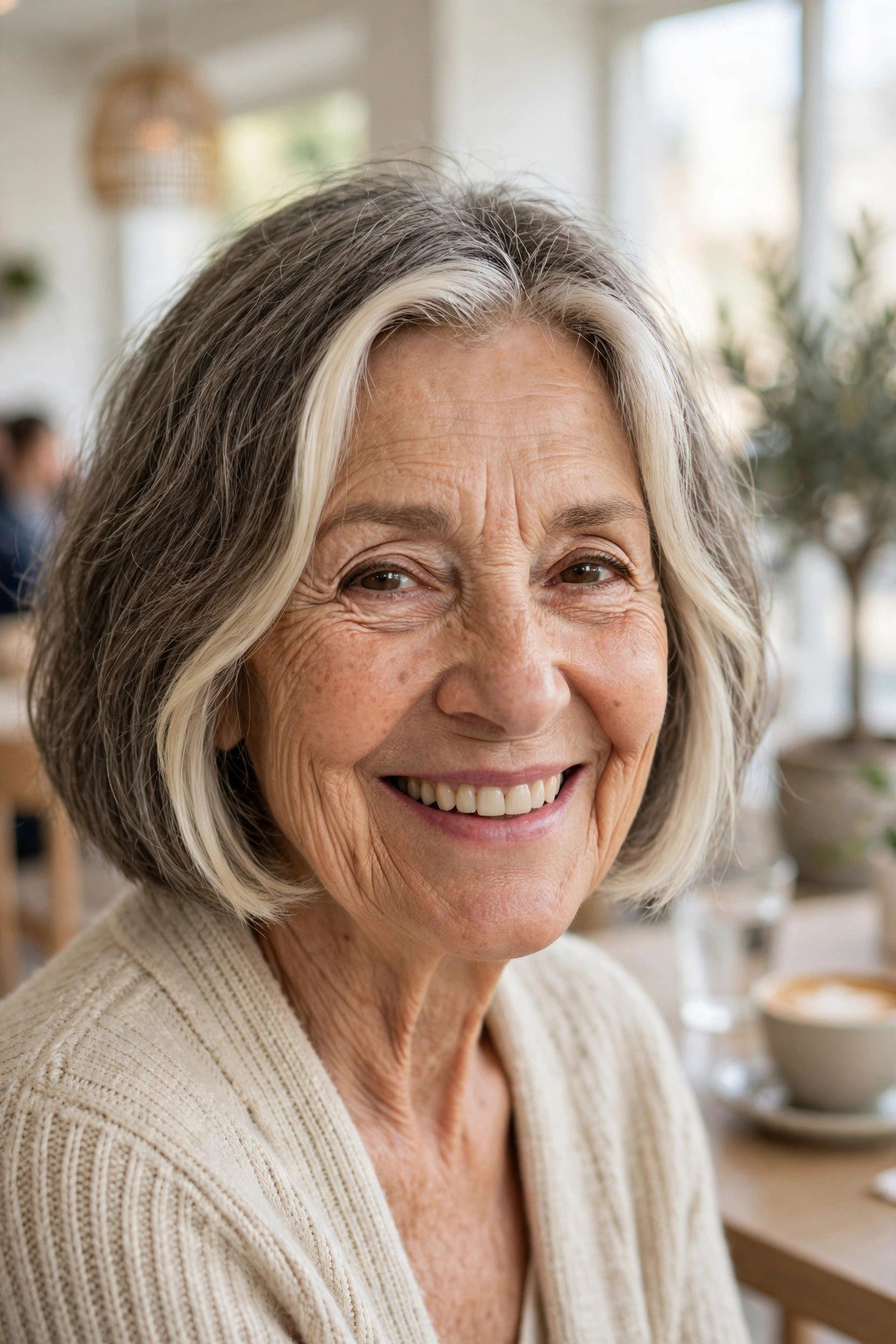
Rule of thumb: the smallest area of colour can do the biggest share of the work.
Two pale sections at the front, the pieces that frame your face, lift the whole look while the rest of your hair stays untouched. It suits women who like their grey but want light near the skin. The pieces can match your lightest grey strands or sit one shade warmer, in a soft cream tone. Because so little hair is lightened, the process is quick and the damage stays tiny.
Pick a tone one to two shades lighter than your base colour.
Paint only the front sections, from the hairline back a few centimetres.
Tone, gloss, and check the blend in daylight before you leave the salon.
7. The Full Silver Transition, Finished With a Toning Gloss
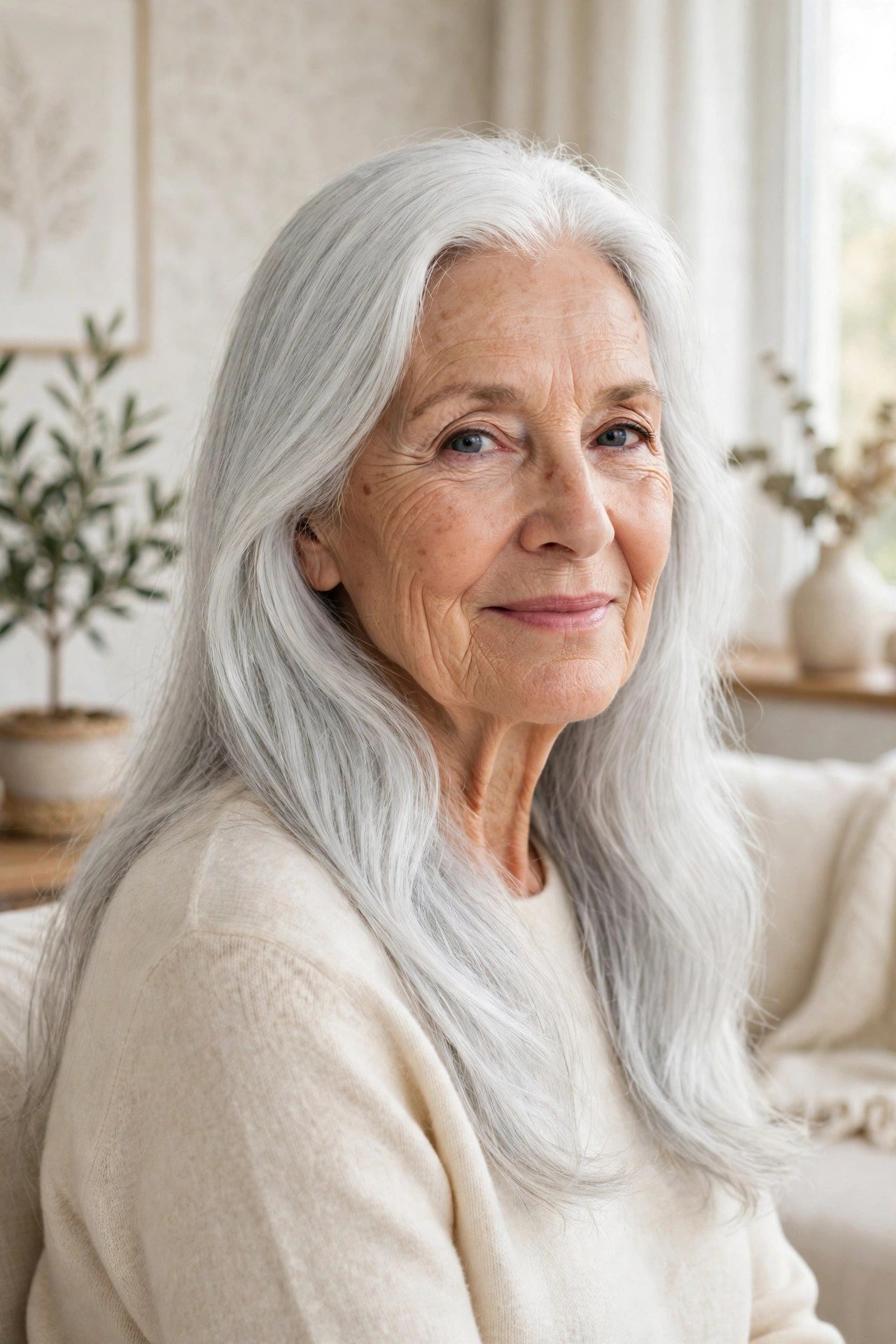
Plenty of women reach a point where dyeing feels like a chore they never signed up for.
The silver transition lets the dye go for good. A colourist blends the old coloured lengths toward your natural grey with fine highlights and lowlights, then a toning gloss evens out the shade so the grey reads bright rather than dull. The in between months take patience, and a shorter cut speeds the journey. At the end, upkeep drops to gloss appointments and good shampoo.
Grey looks deliberate when the old dye line is blurred. Blend first, then let your own colour take over.
8. Honey Highlights Over a Natural Brown Base
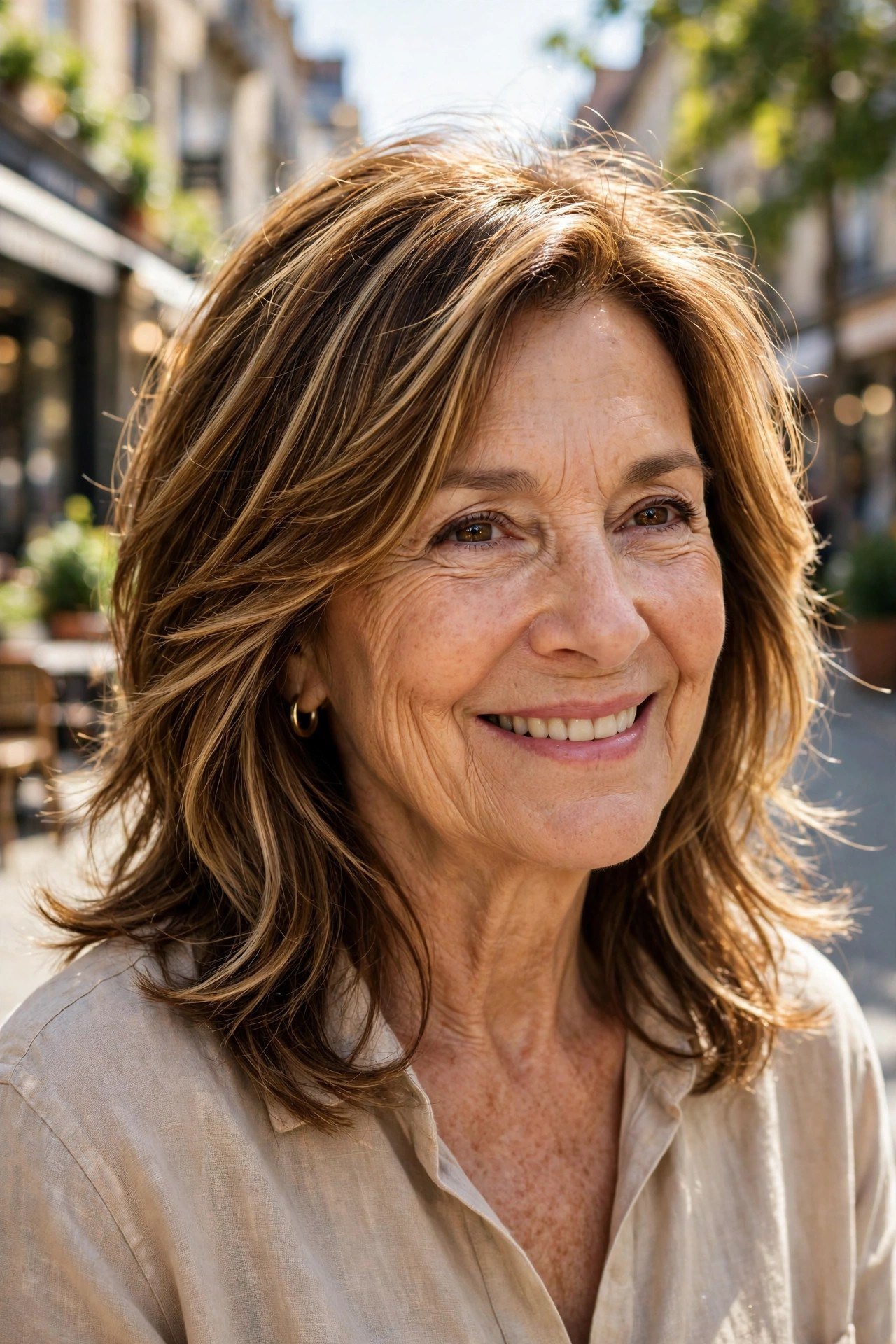
Full head blonde after 60 can look harsh against softer skin tones. Honey highlights give the warmth without the shock.
Warm golden pieces are woven through a brown base that stays mostly your own. The mix flatters skin that has lost some colour, and it softens the contrast between brown hair and incoming grey. Roots blur rather than stripe. If your base is light brown, the pieces can sit finer and paler. If it is dark brown, keep the honey near the face and through the ends.
| Honey highlights | Full head blonde |
|---|---|
| Small sections lightened, base stays yours | Every strand processed |
| Soft blur at the roots as it grows | Clear line within weeks |
| Best for brown bases going grey | Best for hair that is already pale |
9. A Copper Glaze Over Faded Auburn
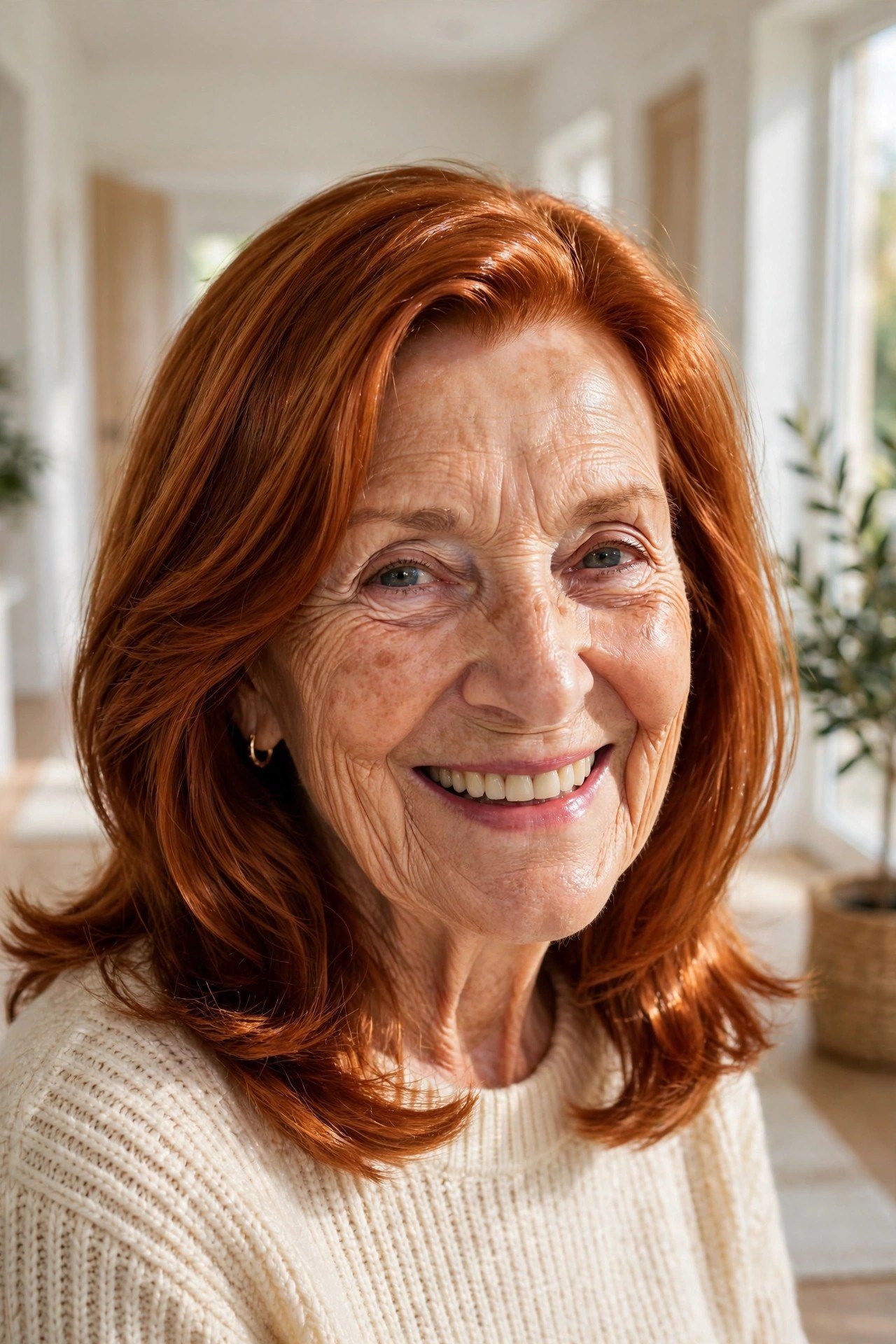
The common mistake with faded red hair is reaching for permanent red dye. It grabs too dark, then fades to a dull rust.
A copper glaze is the gentler fix. It is a sheer tinted coating that lays warm copper tone over your existing colour and washes out over a few weeks. Old auburn wakes up, pale ends pick up richness, and grey strands catch a light copper tint rather than full cover. The shine alone makes the colour look freshly done.
Choose a glaze one shade brighter than your faded colour.
Refresh it every three to four weeks, at home or at the salon.
Skip permanent red dye when the colour only needs warmth.
Skip dark copper on mostly white hair, where it can turn pinkish.
10. A Root Smudge That Melts the Line Away
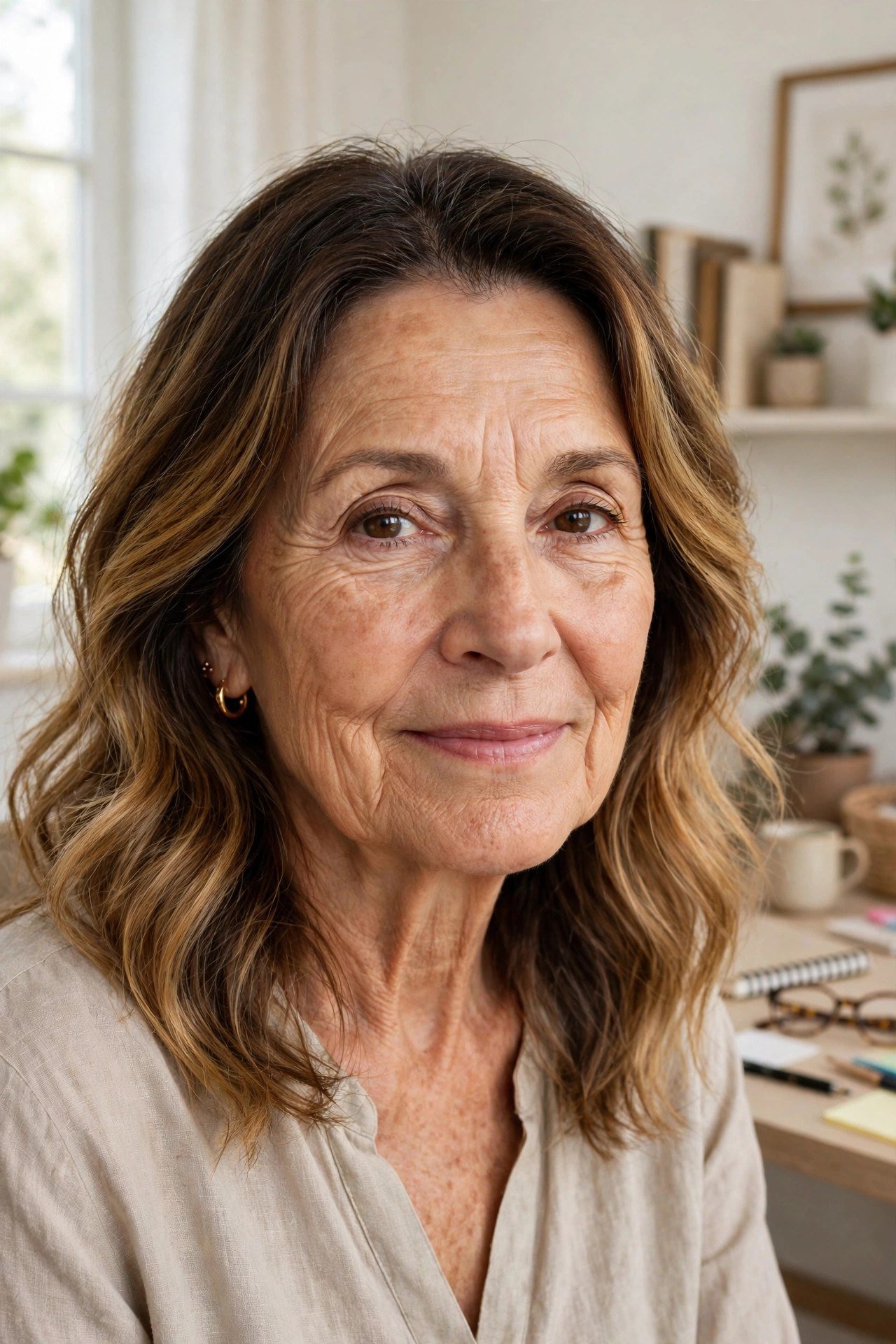
You like your colour. You hate the fortnight when the roots announce themselves.
A root smudge is a soft darker shade blended over the first few centimetres of hair, done right after colouring or on its own between full appointments. It blurs the border between dyed lengths and new growth, grey included, so the eye cannot find the line. The shade sits close to your natural root colour, and the blend is feathered rather than painted in a band.
📌 Good To Know
A smudge adds one short step to a salon visit and can stretch the gap between full colour appointments by weeks. Ask for it by name, since not every salon lists it on the menu.
11. A Champagne Toner Over Grey That Has Gone Yellow
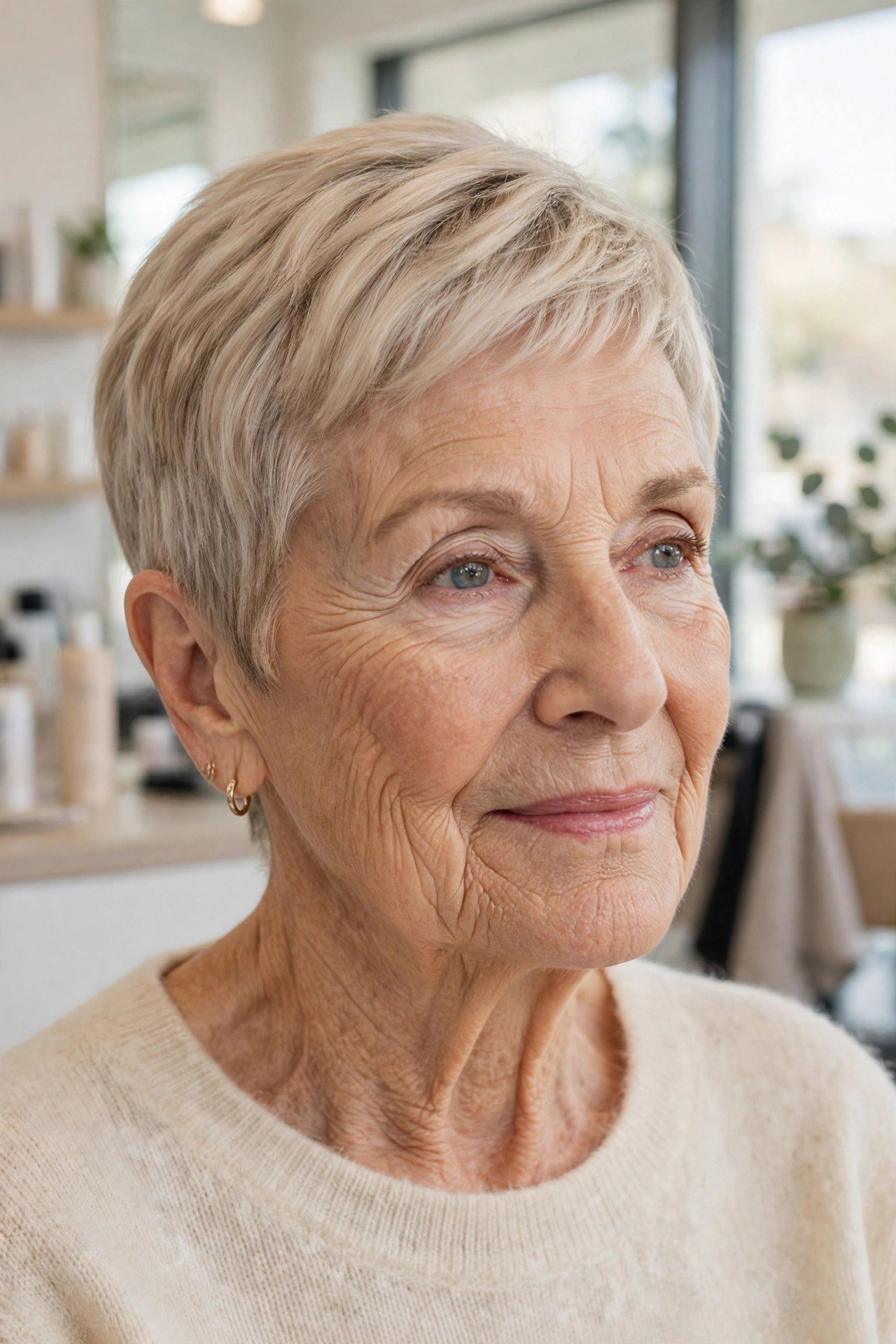
Grey hair picks up yellow from sun, heat styling and even tap water, and yellow grey reads dull fast.
A champagne toner lays a soft creamy beige tone over the hair that cancels the yellow cast and leaves a warm, pale finish. It is a gloss level service, so nothing is lifted and nothing is stripped. On hair that is part grey and part blonde, it pulls both shades toward the same family, which makes the whole head look calmer and more even.
12. Cool Mushroom Brown From a Demi Shade
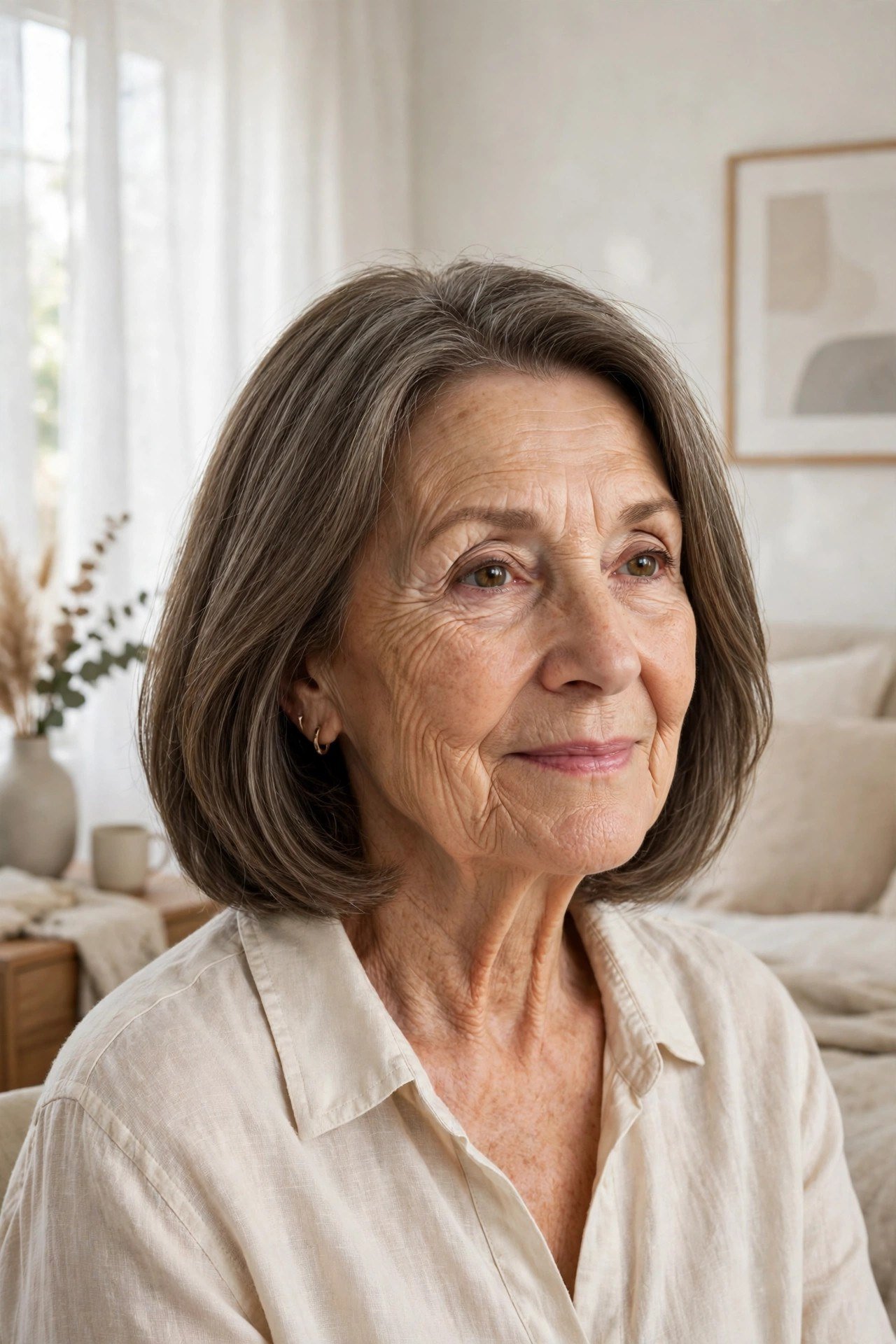
Warm tones are not the only route. Cool mushroom brown flatters skin that flushes easily and sits happily next to grey at the temples.
The shade is a muted ash brown with a grey brown cast, laid on with demi permanent colour so it fades softly. On light brown or dark blonde hair it deepens the tone and mutes brassiness. On hair with early grey, it blends the pale strands into the mix rather than covering them outright. The finish reads calm and modern, and the upkeep stays low.
- ▸Best on light brown or dark blonde bases
- ▸Ask for ash tones, with no red or gold in the mix
- ▸Refresh the demi shade every six to eight weeks
13. Strawberry Blonde Warmth From a Tinted Gloss
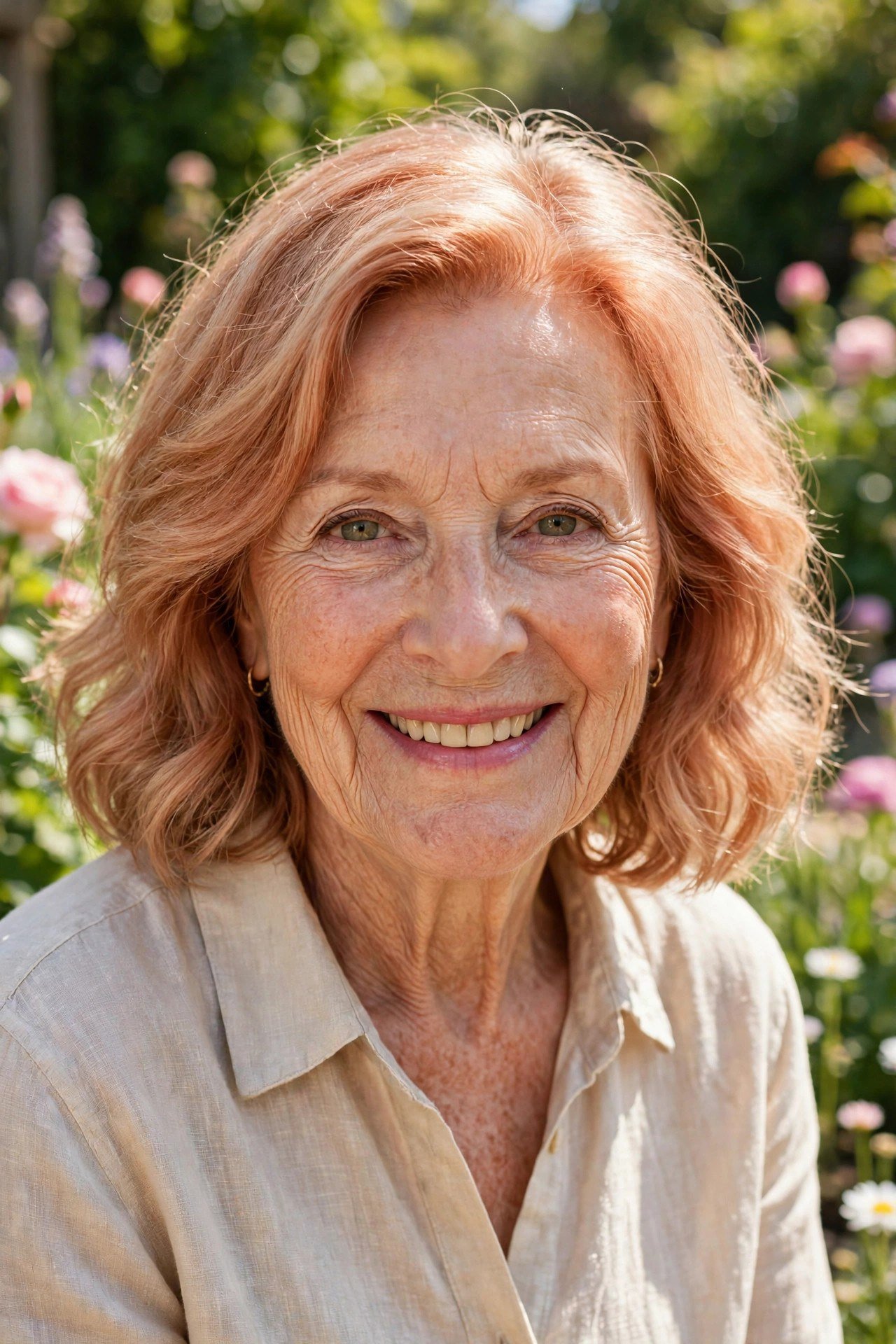
Blonde hair that has gone pale and flat can make the face look washed out by midday.
A strawberry blonde gloss warms it back up. The tint is a soft mix of gold and the faintest rose, laid over blonde or light grey hair as a sheer coating. It brings colour back to the cheeks by reflection, and it fades within weeks, so trying it carries no long term risk. Fair skin and blue or green eyes tend to suit it best.
14. A Colour Depositing Conditioner for At Home Refresh Days
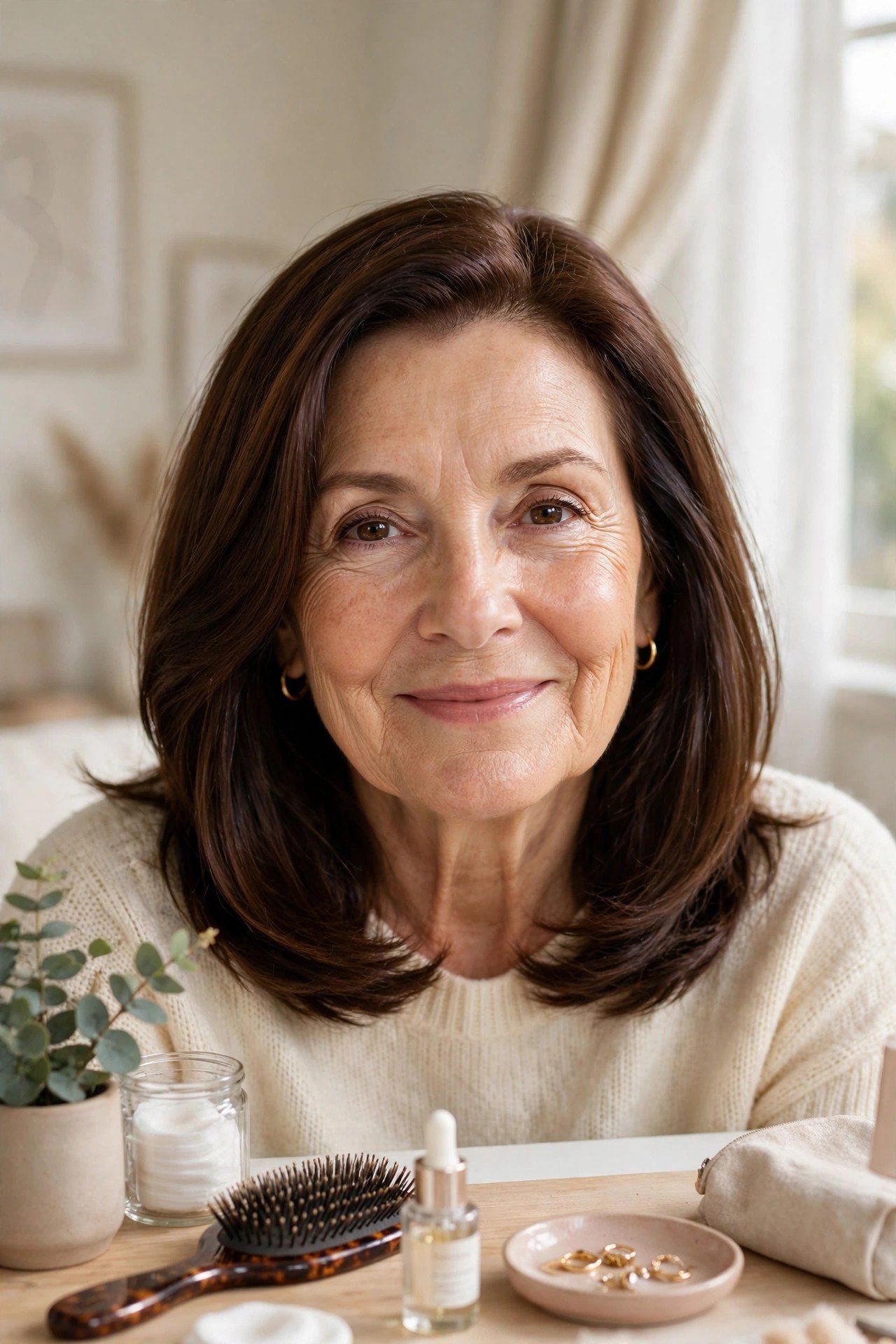
Between salon visits, colour fades from the lengths long before the roots cause trouble.
A colour depositing conditioner tops the tone back up in the shower. It is a conditioner with pigment in it, used on clean damp hair for a few minutes, then rinsed away. Brown shades gain depth, reds regain their fire, and blondes can pick up a soft tint. It adds no lift and covers grey only lightly, which is honest work for a product that also leaves hair soft.
Using it well
15. One Level Lighter, With Demi Colour Only
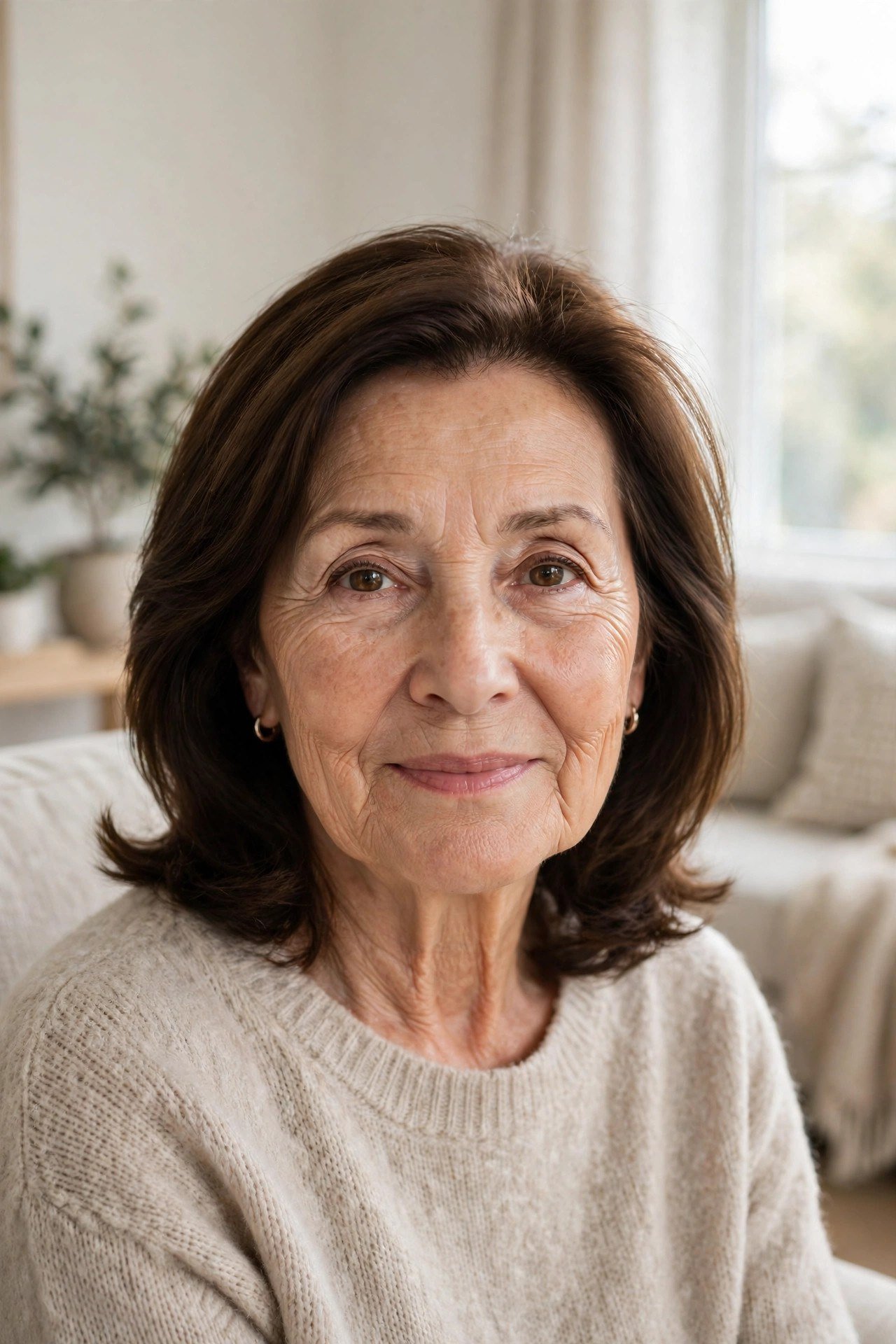
The myth says going lighter always means bleach. On natural, undyed hair, that is not true.
Demi permanent colour can lift natural hair by about one level, taking near black hair to a soft dark brown, or a dark brown to a warmer mid brown. The change is gentle, and the softer shade is kinder to skin that has lost pigment over the years. One honest limit: colour will not lift colour. If your lengths are already dyed dark, this route works on the natural roots only, and a colourist should map the plan.
Try this route on natural hair that has never been dyed.
Expect a soft shift, one level at most.
Skip expecting dyed dark lengths to lighten this way.
Skip the appointment without a strand test on fine or fragile hair.
16. An Apricot Glaze for Pale Blondes Who Feel Washed Out
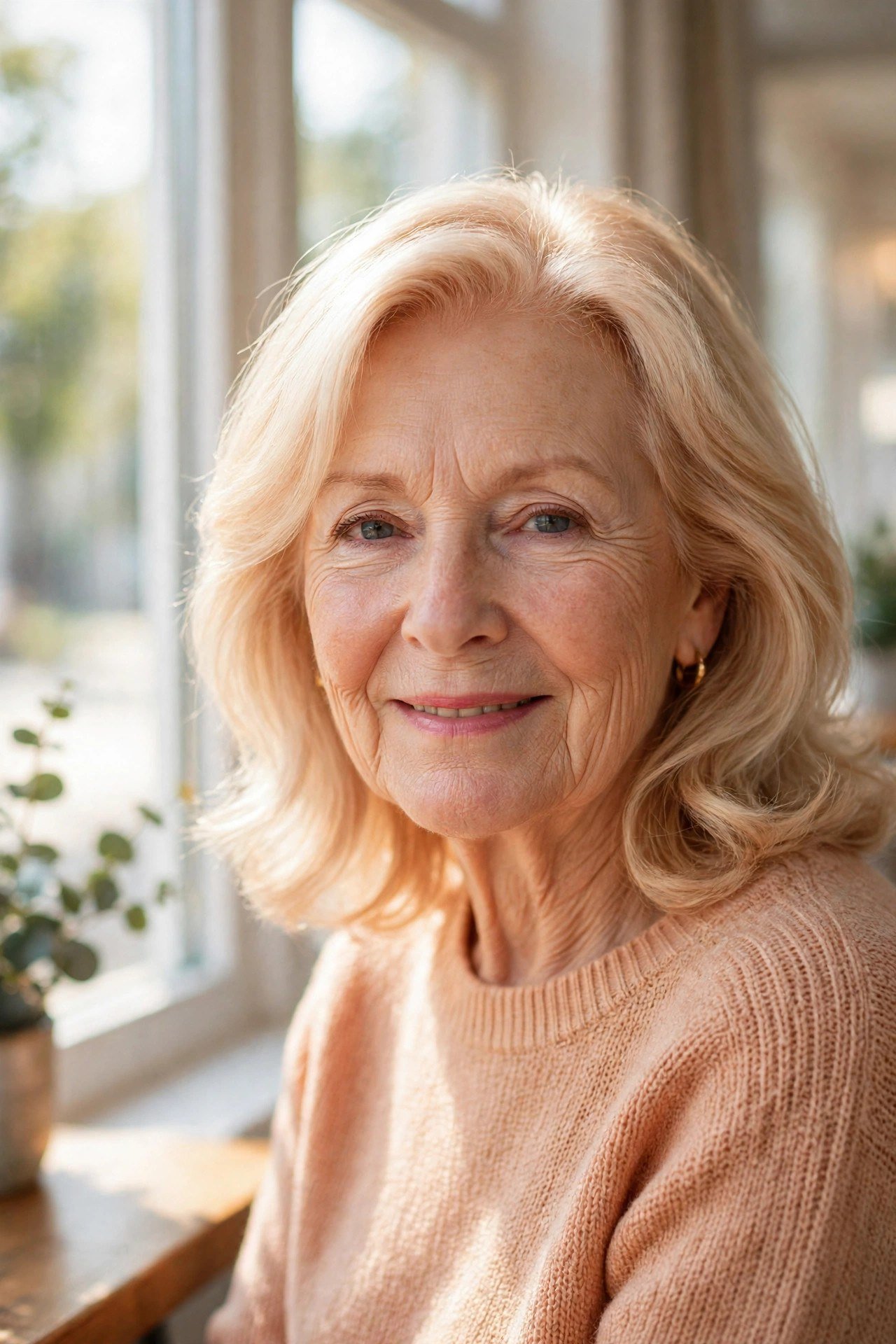
Very pale blonde can disappear against pale skin, especially in winter light.
An apricot glaze lays a wash of warm peach gold tone over the hair. It is sheer, so the blonde stays blonde, just warmer and more alive. The tint reflects onto the face and softens the contrast between hair and skin. Because a glaze coats rather than lifts, fragile blonde hair takes no new damage, and the colour rinses away over a few weeks if you change your mind.
💡 Quick Tip
Ask for the apricot kept sheer. On porous ends the tint can grab stronger, so a good colourist applies it to the ends last and watches the timing.
17. A Wine Tint Over Dark Brown, Seen Only in the Light
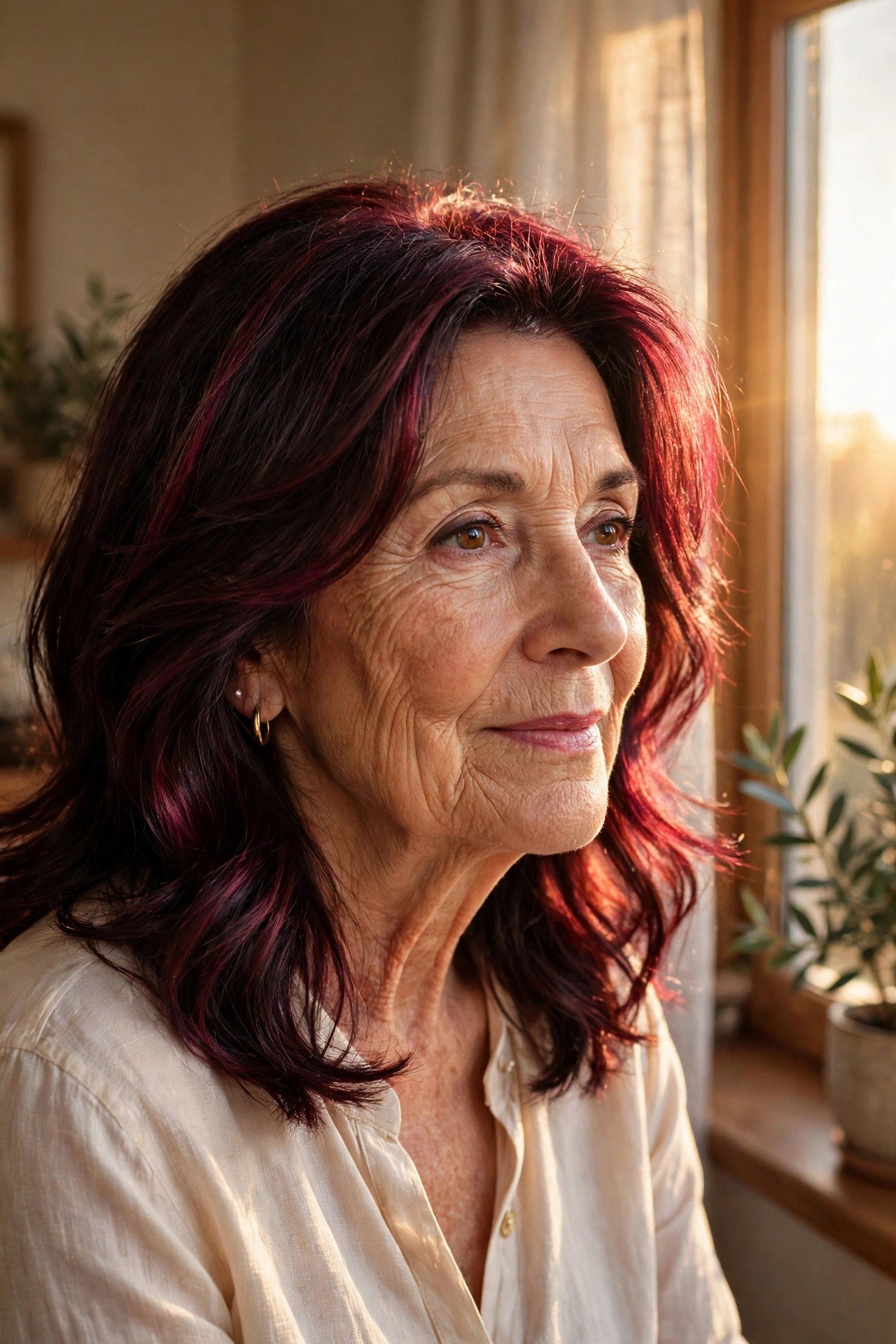
Indoors, it reads as rich dark brown. Step into the sun and a deep wine tone shows through.
That quiet flash of colour comes from a burgundy demi shade laid over a dark base. It suits women who want interest without a loud change, and it flatters olive and deeper skin tones well. Grey strands pick up a softer version of the tint, so regrowth blends instead of shouting. The shade fades evenly, and a gloss every couple of months keeps the wine tone awake.
Dark brown that reads flat and one toned under bright light.
The same depth, with a wine glow that shows when the light hits it.
18. Polished White Hair, Kept Bright With a Silver Gloss
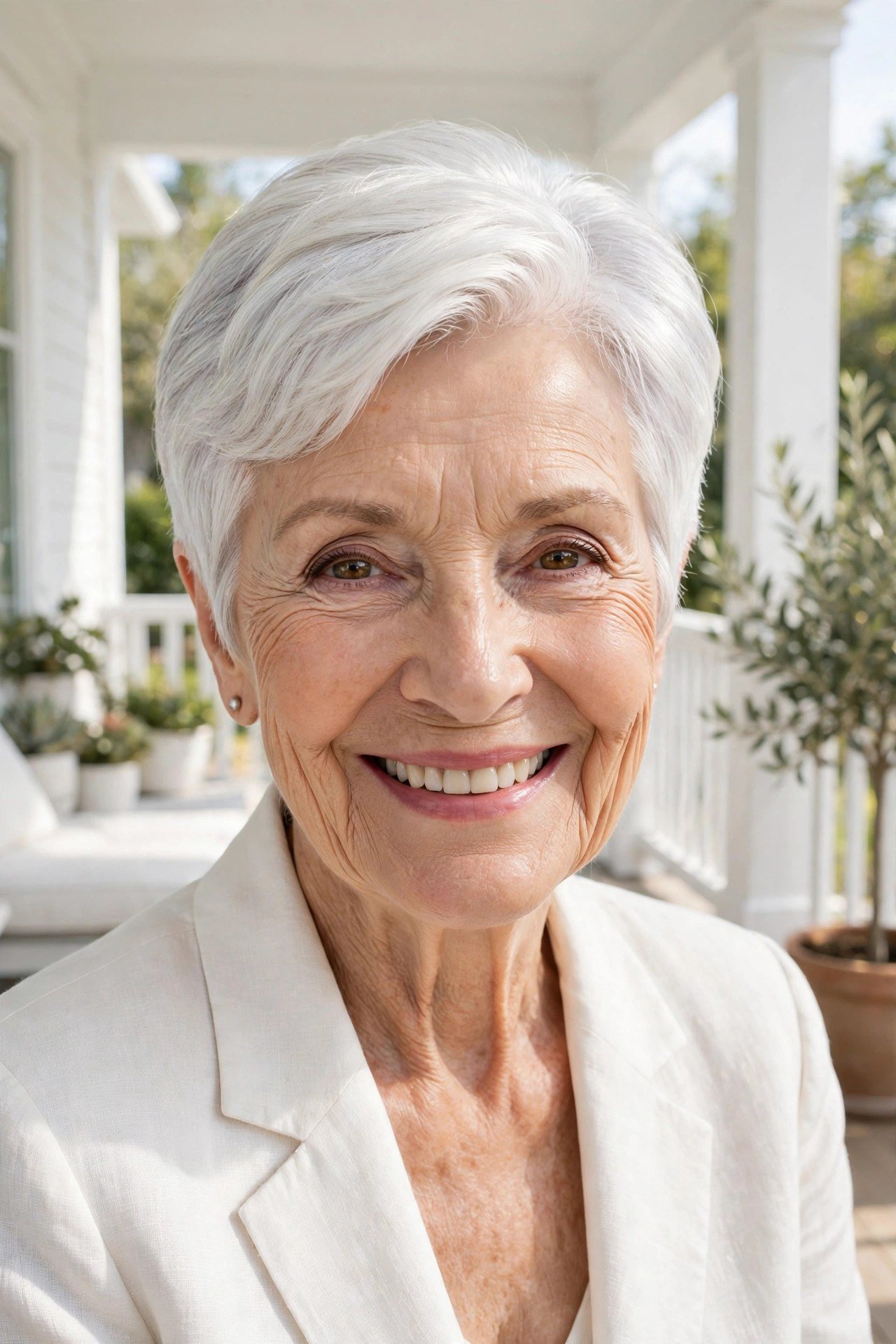
Fully white hair is a colour choice in its own right, and it looks best when it is kept deliberate.
A silver gloss at the salon lays a cool bright tone over white strands and takes away the creamy yellow cast that builds up from sun and styling heat. At home, a violet toning shampoo used once a week holds the brightness between visits. White hair shows every bit of dullness, so shine is the whole game here, and gloss delivers it while asking very little of the hair.
Book a silver gloss every six to eight weeks.
Use a violet toning shampoo once a week at home.
Wet hair with clean water before swimming, so it soaks up less pool water.
19. A Darker Underlayer That Makes the Top Look Lighter
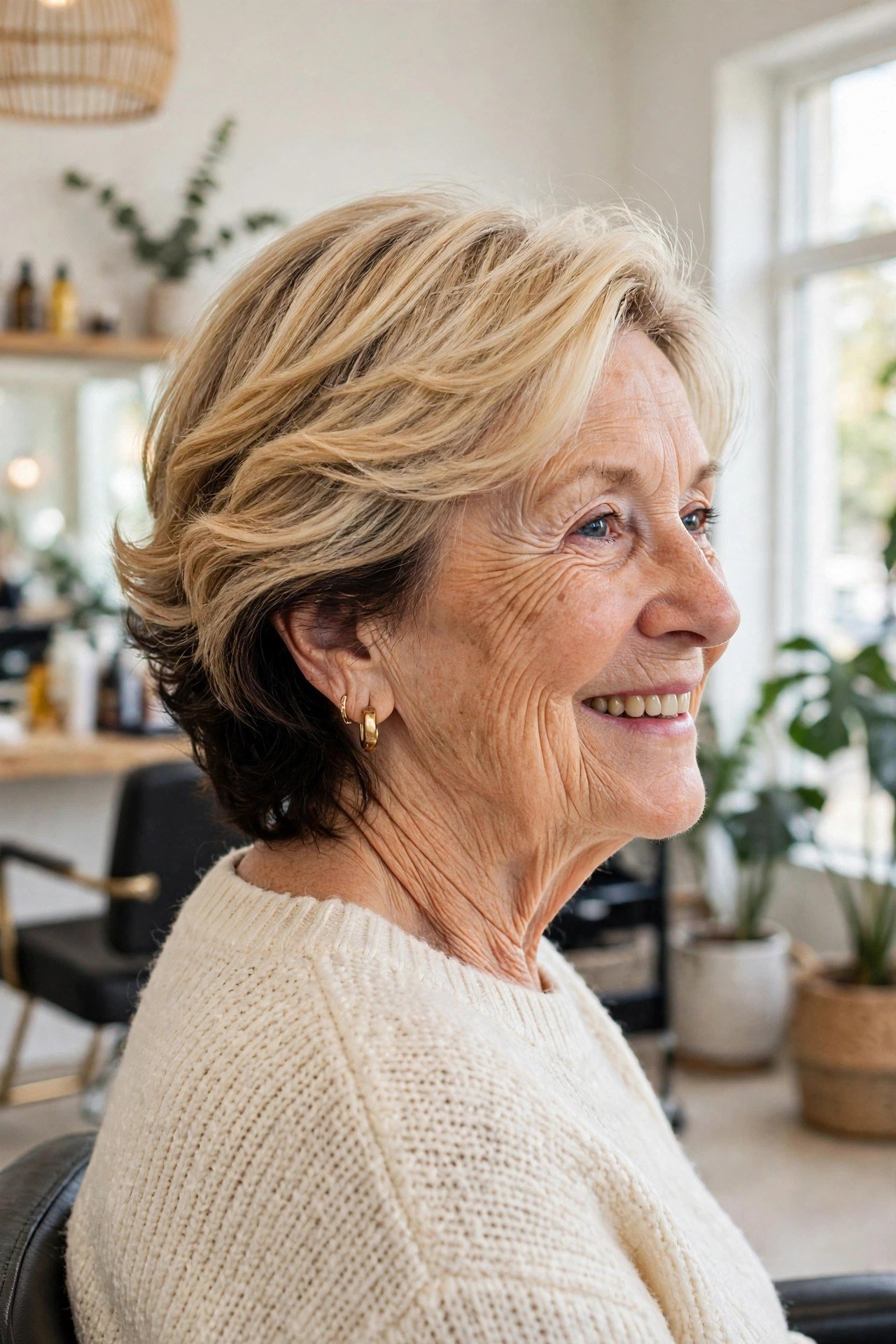
Light hair can look thin and flat when every strand is the same shade along its whole length.
Colourists fix that with contrast. A deeper shade is placed through the underlayer, the hair at the nape and underneath, while the top keeps your lighter tone. The dark base makes the top layer read brighter and fuller by comparison, and the eye sees depth instead of flatness. On grey hair, the underlayer can sit close to your original darker shade, which also softens the look of new growth at the neck.
20. A Colour Melt With No Visible Line Anywhere
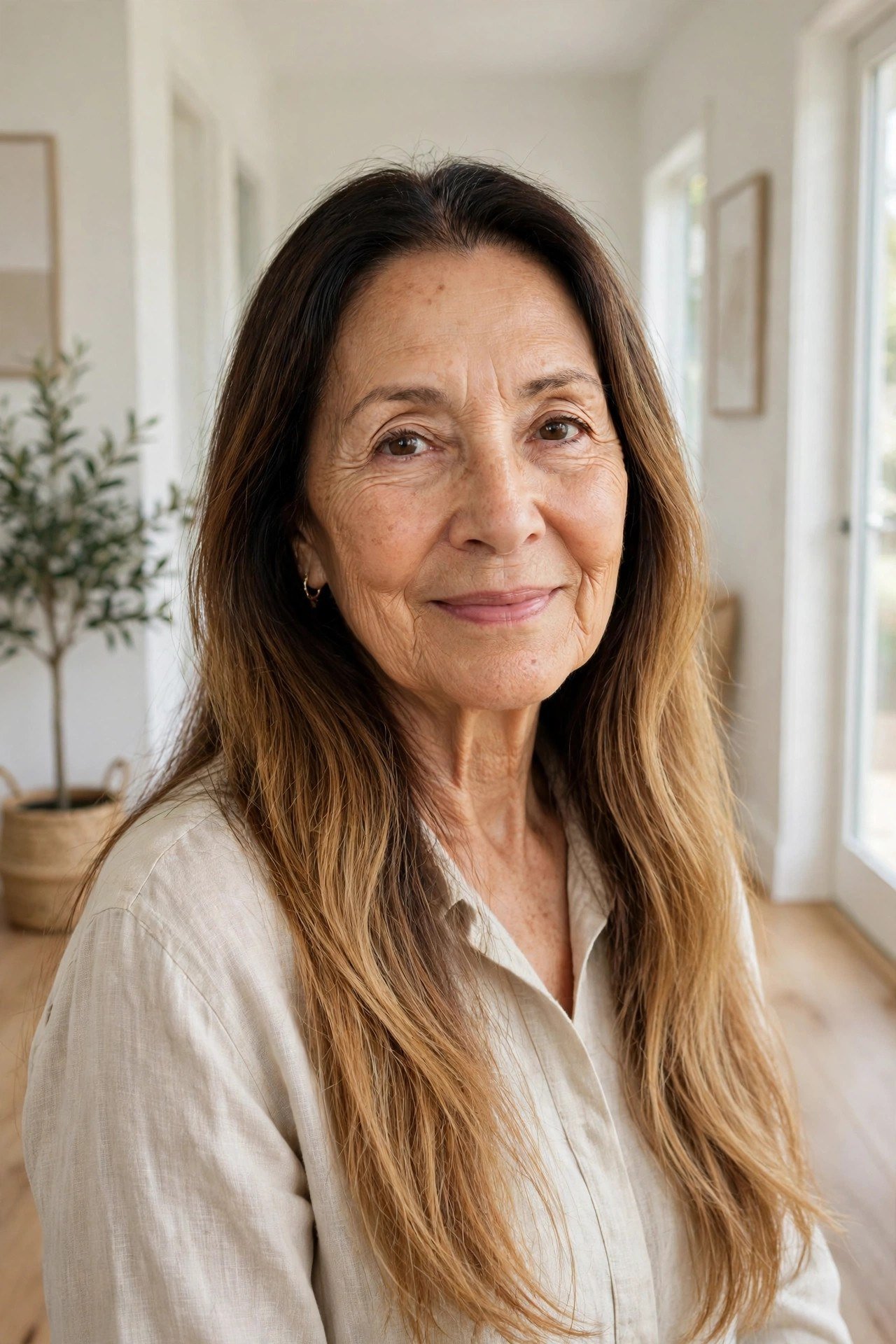
A colour melt does exactly what the name promises. Two or three shades are blended so smoothly that no one can point to where one ends.
The darkest shade sits at the roots, close to your natural colour, and the tones melt through the lengths into a lighter finish. Grey at the parting becomes part of the blend rather than a border. The technique suits longer hair best, since the melt needs length to show. Upkeep is a gloss and a tidy up a few times a year.
| Colour melt | Balayage |
|---|---|
| Two or three shades, blended | Your base plus one lighter tone |
| Light builds gradually along the length | Light sits in the mid lengths and ends |
| Grow out stays invisible | Grow out stays soft and blurred |
21. Caramel Ribbons Through Grey Brown Hair
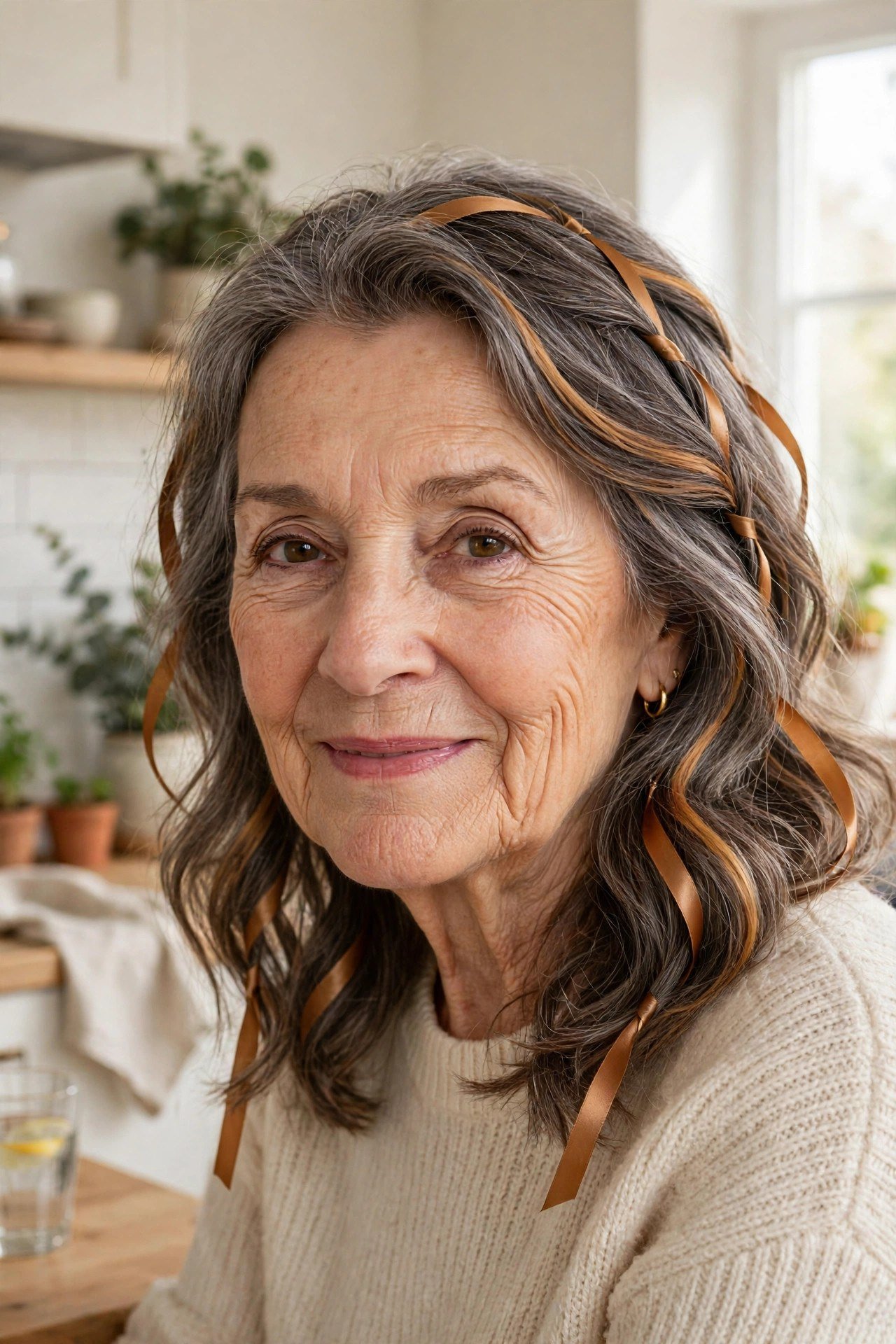
Hair that sits between brown and grey can look muddy in photos, neither one thing nor the other.
Caramel ribbons warm it up. Wider, softer highlights in a warm caramel tone are placed through the hair, spaced well apart, so the grey and brown both show and the caramel ties them together. The warmth flatters most skin tones, and the spacing keeps upkeep low, since a few ribbons growing out never form a line. Ask for the ribbons to start a little below the roots.
Warmth is the bridge. A few caramel ribbons let brown and grey sit happily in the same head of hair.
22. A Rose Gold Sheen for a Playful Change
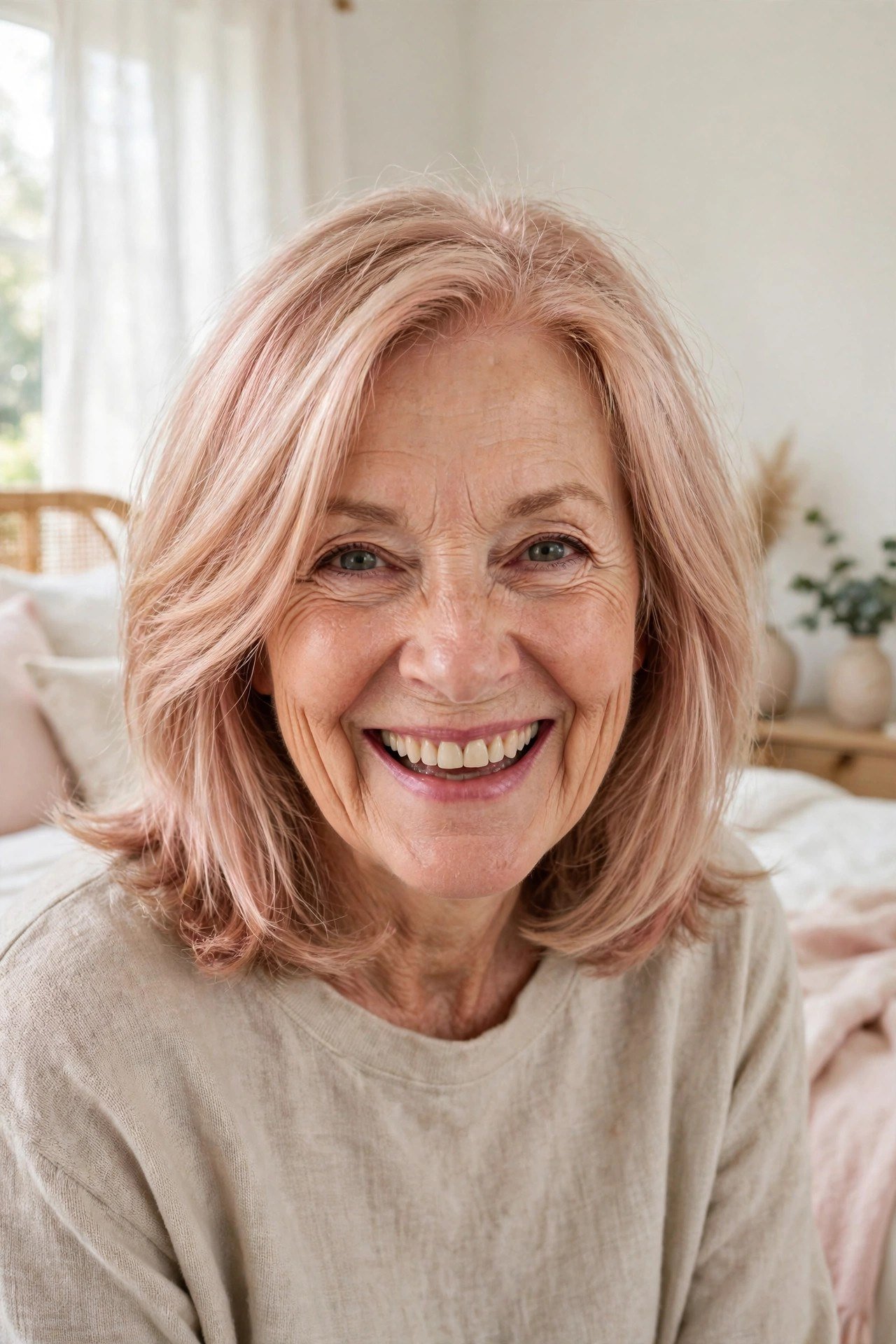
Plenty of women over 60 still like a bit of fun with colour. They just want it to wash out if it disappoints.
A rose gold tint gloss gives that freedom. The sheer pink gold sheen lays over blonde, light brown or pale grey hair and fades within a few weeks of washing. On pale grey it reads as the softest blush. It is a holiday colour, a party colour, a why not colour, with no bleach and no long promise attached.
⚠️ Watch Out
Porous ends grab pink tint faster than the rest of the hair. Ask for a strand test first, and keep the tint sheer, since strong pink on white hair can linger longer than you planned.
23. Root Touch Up Powders for the Weeks Between Appointments
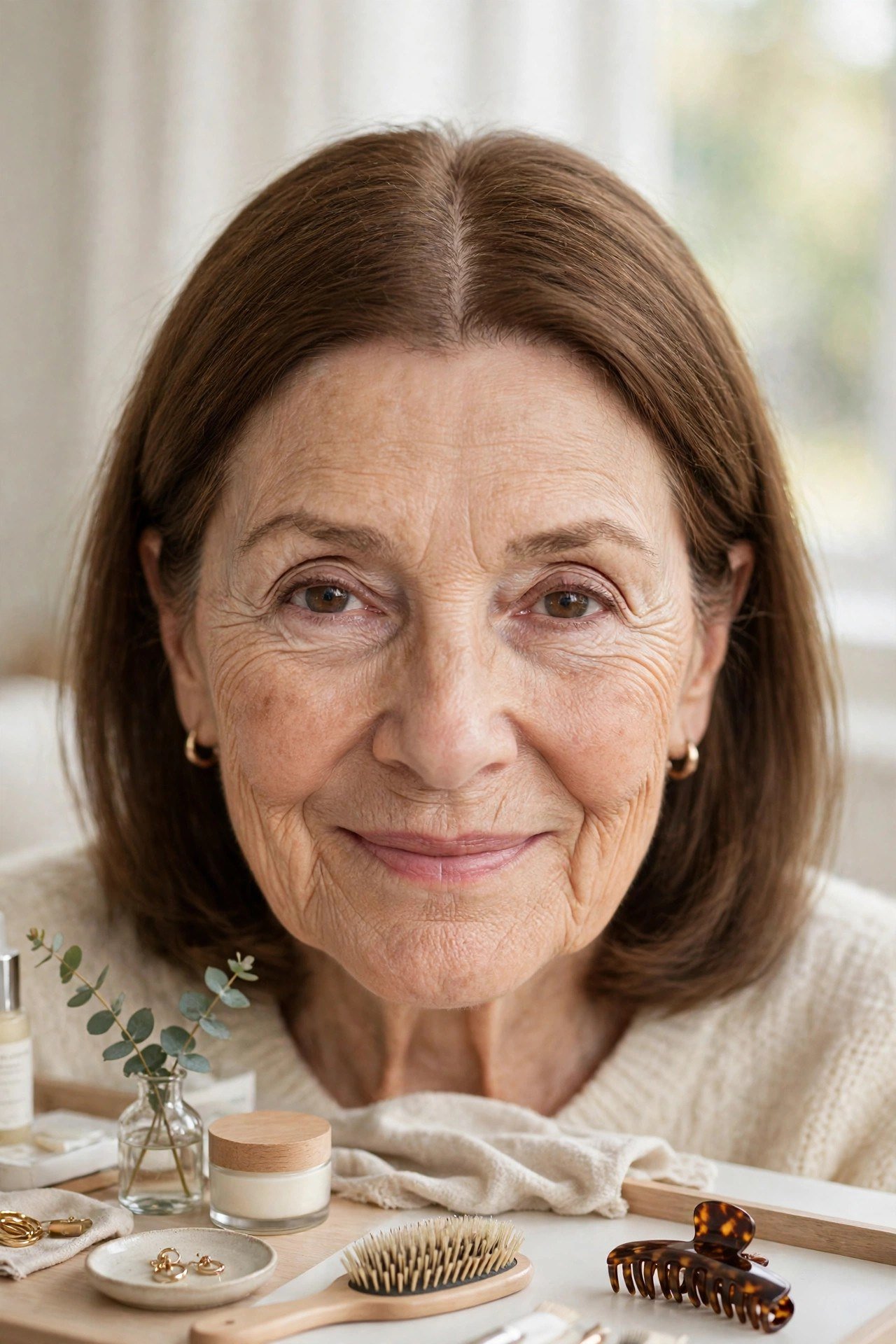
Simple rule: if the roots bother you only at the parting and hairline, powder beats another dye job.
Root touch up powders and sprays dust colour over grey at the surface, where it sits until the next wash. They take minutes, need no mixing, and wash straight out. No processing happens at all, so fragile hair gets a rest. Match the shade to your lengths rather than your roots, and apply after styling so the powder sits where the eye lands.
24. Babylights, the Finest Highlights of All
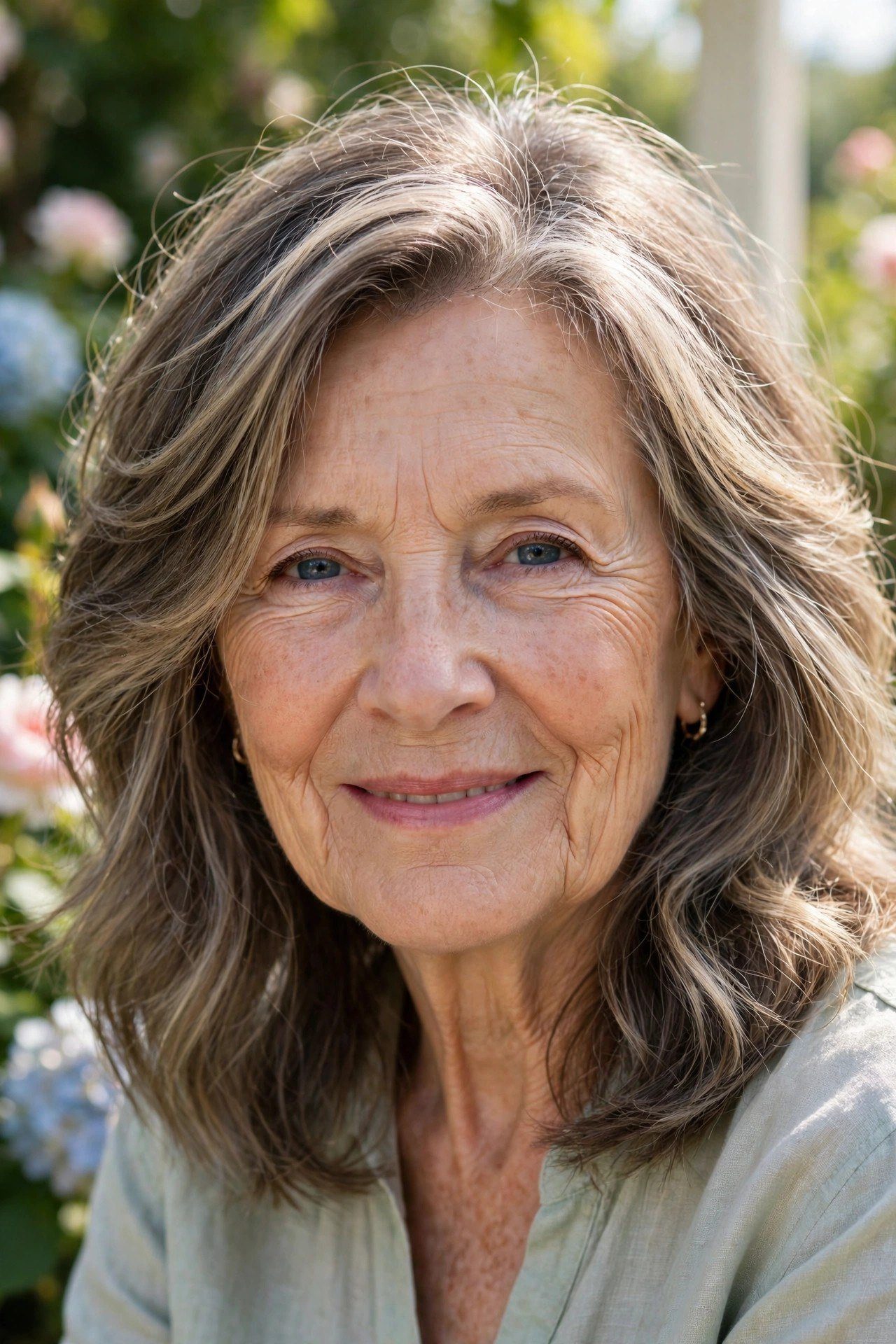
Babylights are highlights taken down to the width of a few strands, and they give the softest blend of any method here.
The colourist takes tiny sections and lightens them just a shade or two, scattered through the hair the way sun would do it over a summer. On grey hair the effect is gentle brightening with no visible pattern and no stripe as it grows. The trade off is time in the chair, since fine work is slow work. For women who want light without a colour commitment, it is the quiet winner of this list.
Babylights suit you if
Colour after 60 does not need to be a battle against grey, and it does not need bleach to look fresh. Glosses add shine, demi shades fade kindly, and blending methods let your own grey join the mix. The hair colors over 60 above cover every level of change, with a gentle route at each one. A clear gloss changes nothing but the shine. A silver transition changes the whole plan. Most women land somewhere in the middle, and that is exactly where the kindest methods live. Save this list for your next salon visit, and point to the one that feels like you.