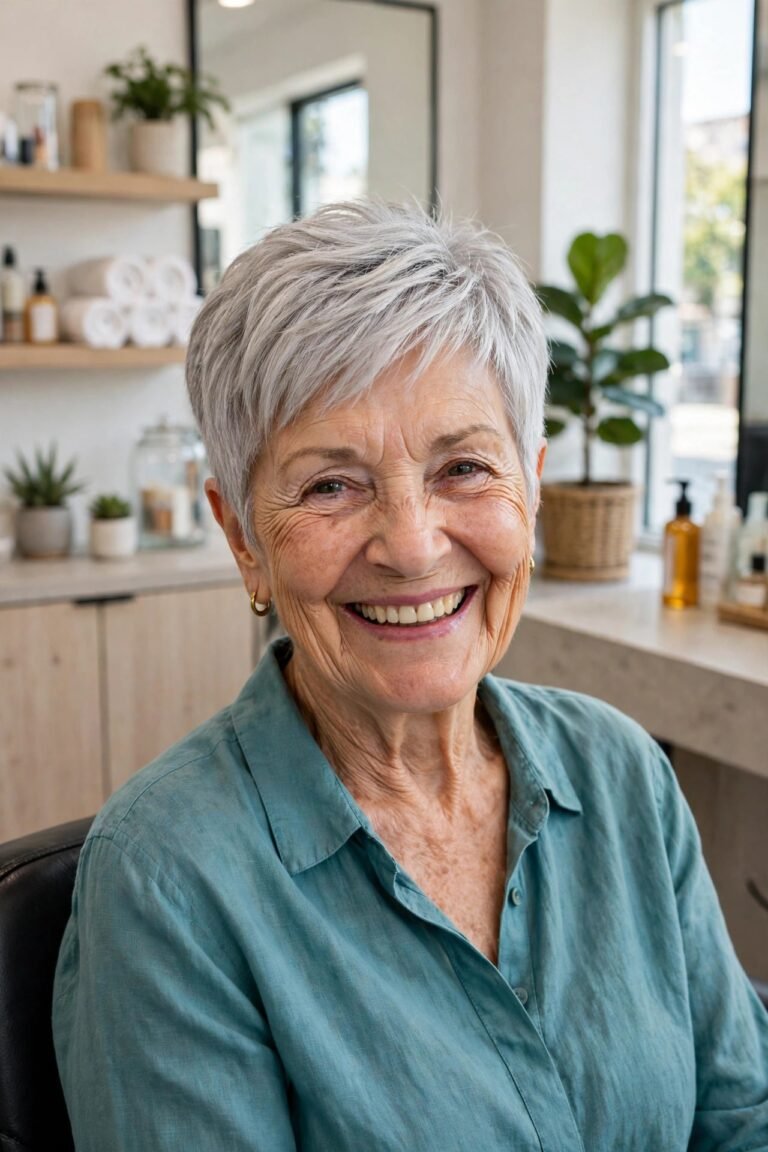
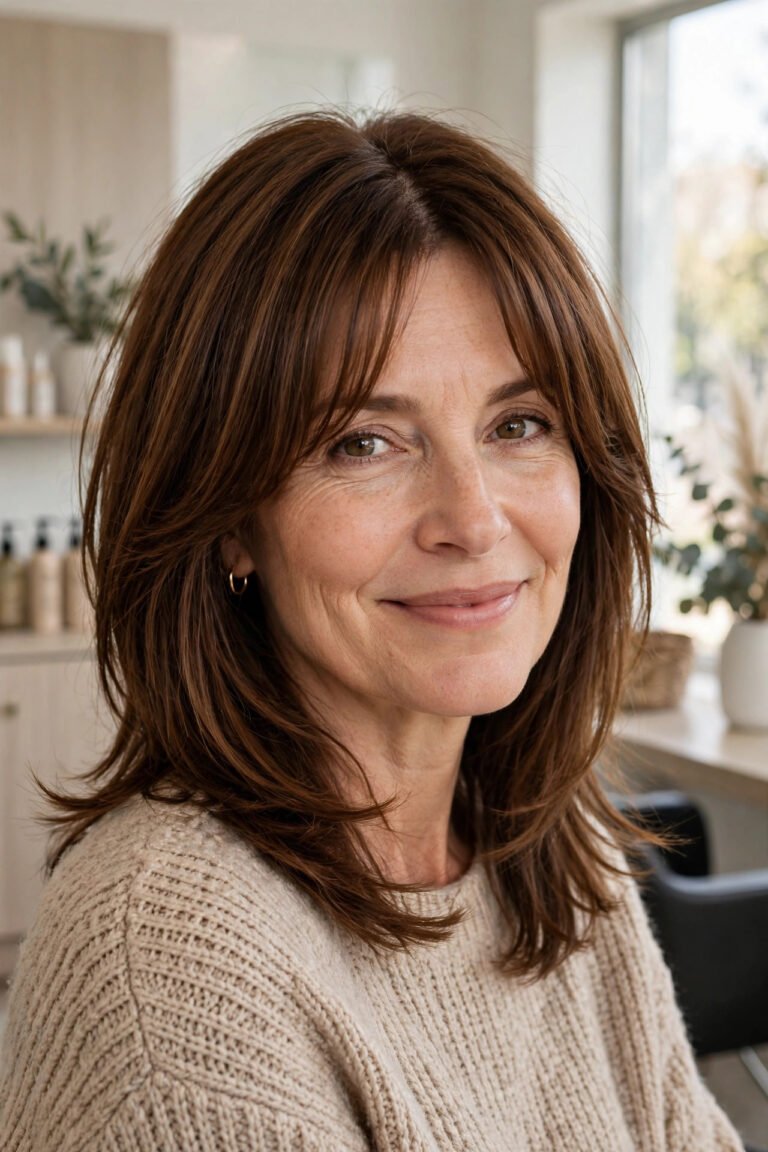
28 Haircuts for Women Over 60 Hairstylists Recommend
You know that walk out of the salon feeling, shoulders back, catching your reflection in every shop window and liking what you see? That is what a well chosen cut does at any age, and it starts with picking a shape that works with the hair you have now, not the hair you had at forty.
Stylists who cut hair for women in their sixties and seventies reach for the same proven shapes again and again: soft layers that lift the face, bobs that hold a clean line, pixies with a bit of height on top. This list gathers 28 haircuts for women over 60 that come up in those salon conversations most often, with honest notes on who each one suits, how much upkeep it asks for, and how to style it at home. Fine hair, thick hair, curls and full silver are all covered.
Bring two or three favourites to your next appointment. A photo says more than a long description ever will.
1. The Soft Layered Pixie for Fine Hair
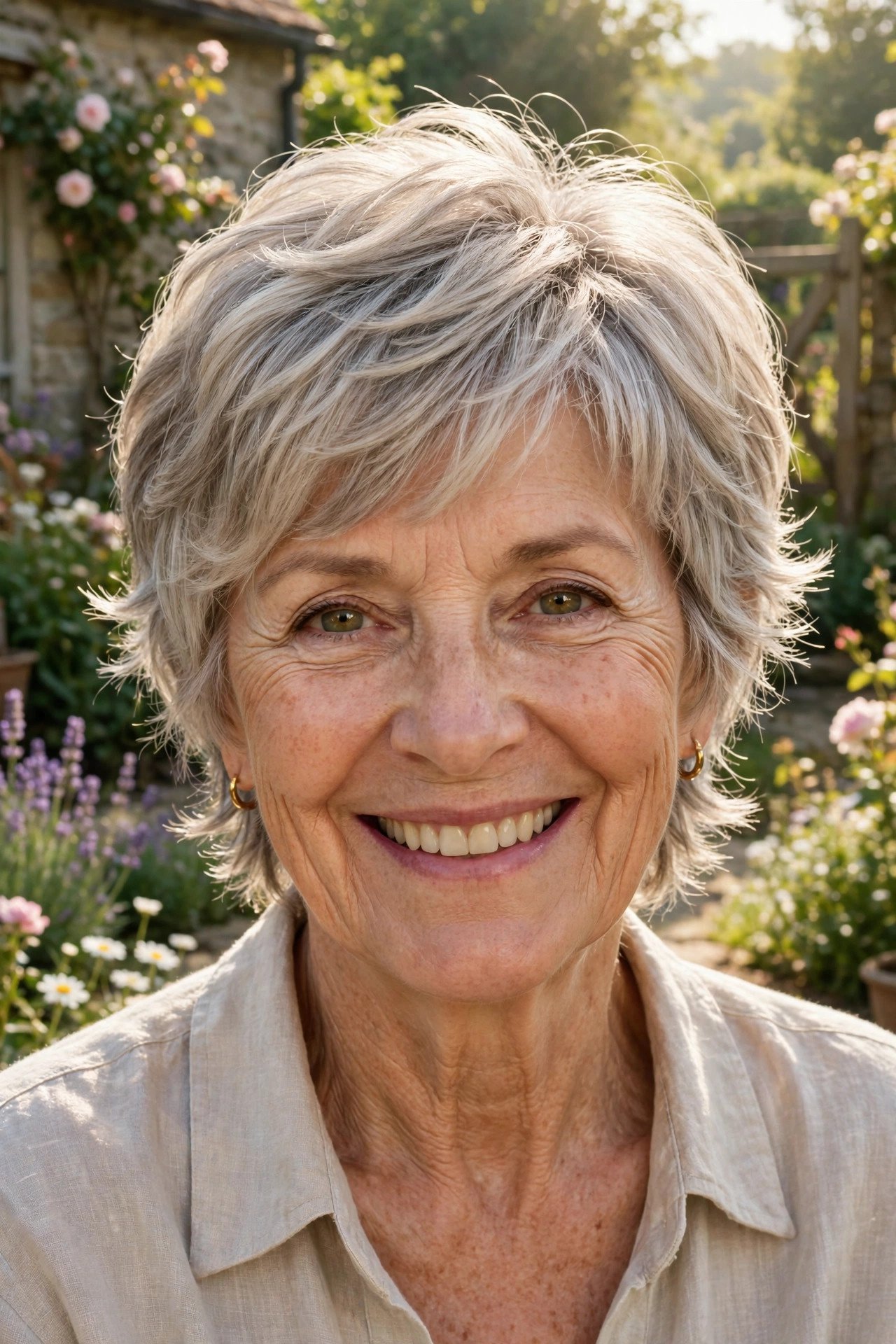
Fine hair often looks its fullest when it is kept short, and this pixie is the cut stylists reach for first.
Short layers through the crown lift the roots instead of letting them lie flat, and the feathered edges stop fine ends from looking wispy and see through. It dries in minutes, which matters on busy mornings, and a quick finger comb puts it back in shape after a hat or a nap.
Ask your stylist for:
- Soft layers on top, nothing blunt or heavy
- A little length left around the ears for softness
- Texture worked into the ends rather than one straight line
It grows out gently, too. Most women get five to seven weeks before it needs a tidy.
2. The Classic Chin-Length Bob
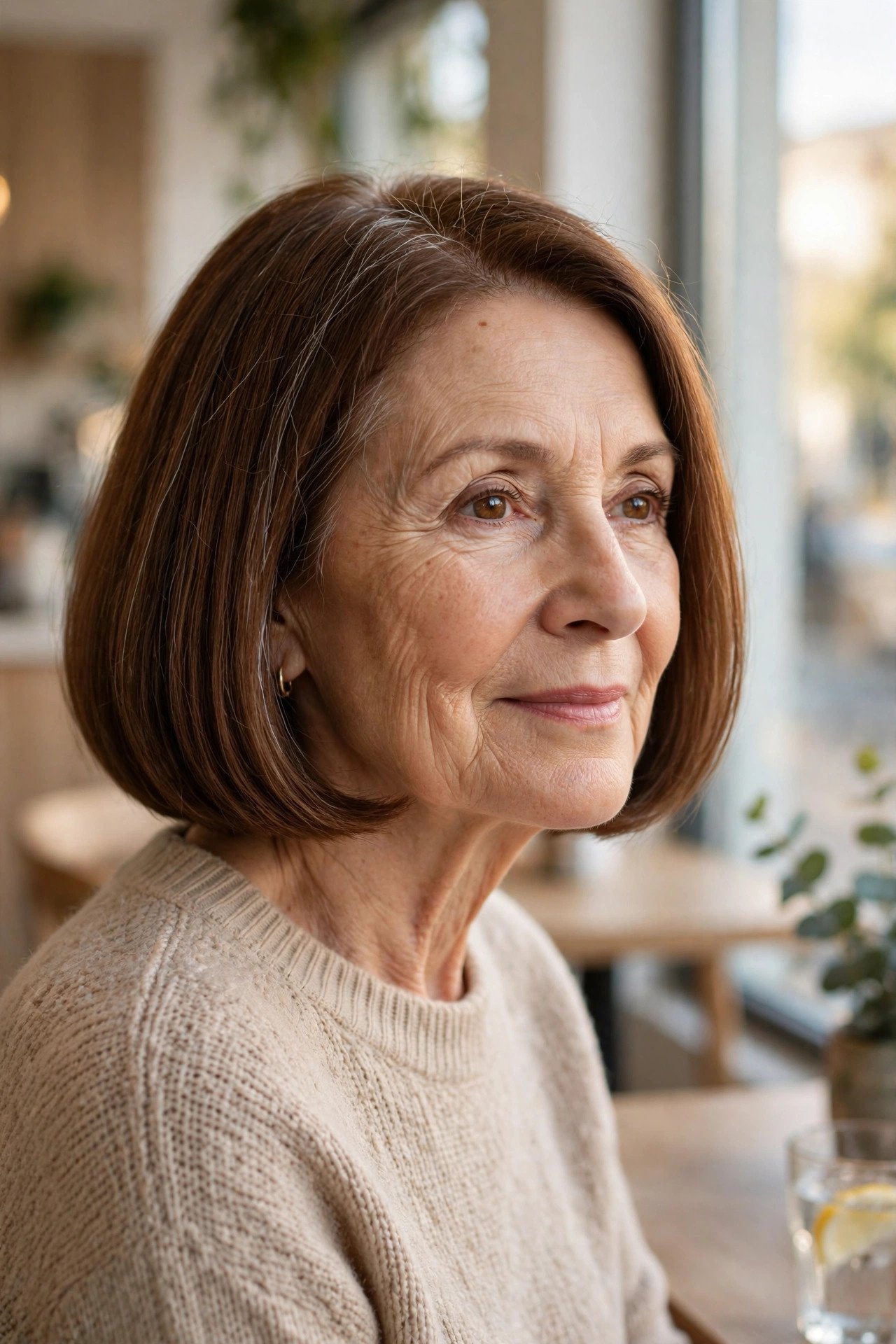
Some cuts never really leave the salon menu, and the chin length bob sits near the top of that list.
The line lands right at the chin, which gives the jaw a clear frame and makes even fine hair look thicker at the ends. Stylists suggest it for women who want a polished finish without a drawer full of styling tools. One length hair swings as a single piece, so the movement looks tidy rather than straggly.
It works especially well if you:
- Wear glasses and want a clean line sitting beside the frames
- Prefer a centre part or a soft side part
- Like a cut that air dries neatly on most days
💡 Quick Tip
Ask for the ends cut a fraction longer at the front. That tiny slope stops the bob flipping outward at the chin and keeps the line smooth.
3. The Feathered Shag with Curtain Bangs
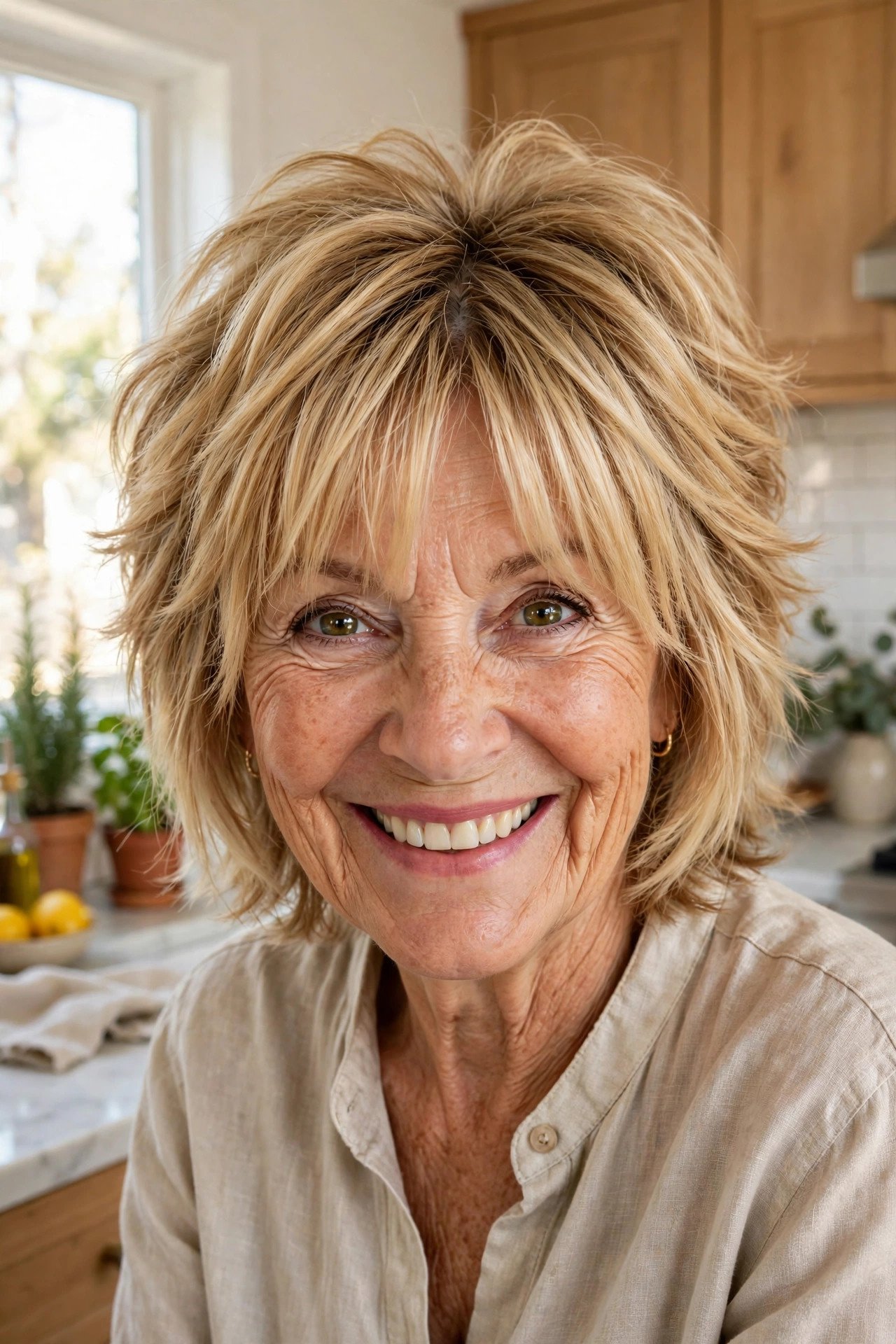
A shag sounds wild, but the modern feathered version is much softer than the old rock star cut.
Layers are feathered through the crown and sides, so the hair falls in light pieces instead of one heavy sheet. Curtain bangs part in the middle and sweep toward the cheeks, which softens the forehead and blends into the layers at the sides. It is a kind pick for wavy hair that frizzes when it is cut too blunt.
The details that make it work:
- Curtain fringe cut to about cheekbone length
- Layers starting high at the back of the head
- Ends left wispy and light, never chunky
4. The Sleek Silver Bob
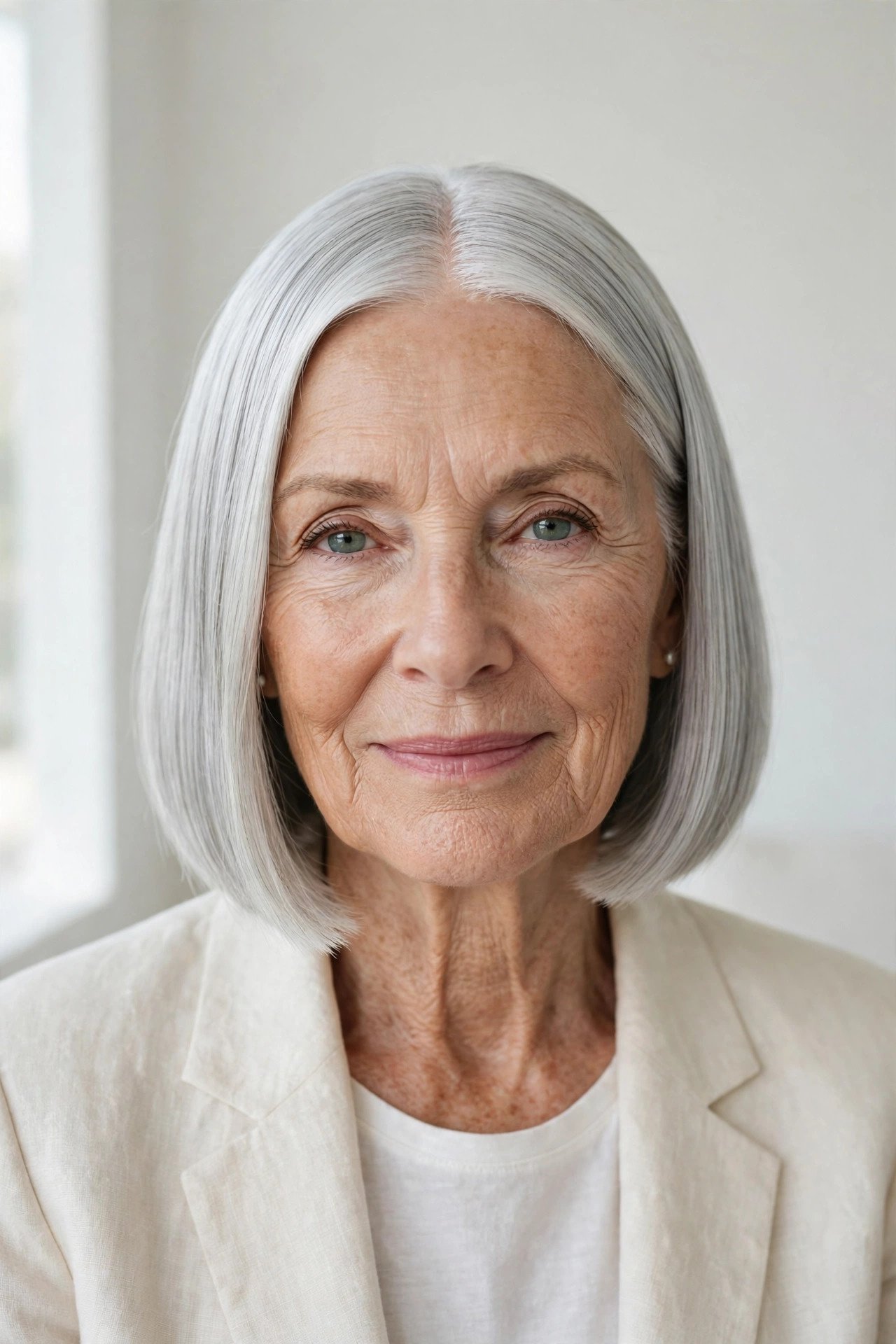
The shine is the whole point of this one.
Cut straight and smooth to the jaw, a silver bob turns grey hair into the main event instead of something to cover up. Stylists often suggest it once hair is mostly silver, because the clean shape shows off the colour and its natural brightness. A flat brush and a slow blow dry keep the surface smooth. One honest note: a sleek cut shows every uneven end, so trims need to stay on schedule.
Book this cut if:
- Your grey has come through fairly evenly
- You enjoy a polished, tidy finish
- You can keep a trim every six weeks or so
Before you book this cut
5. The Textured Crop with a Side-Swept Fringe
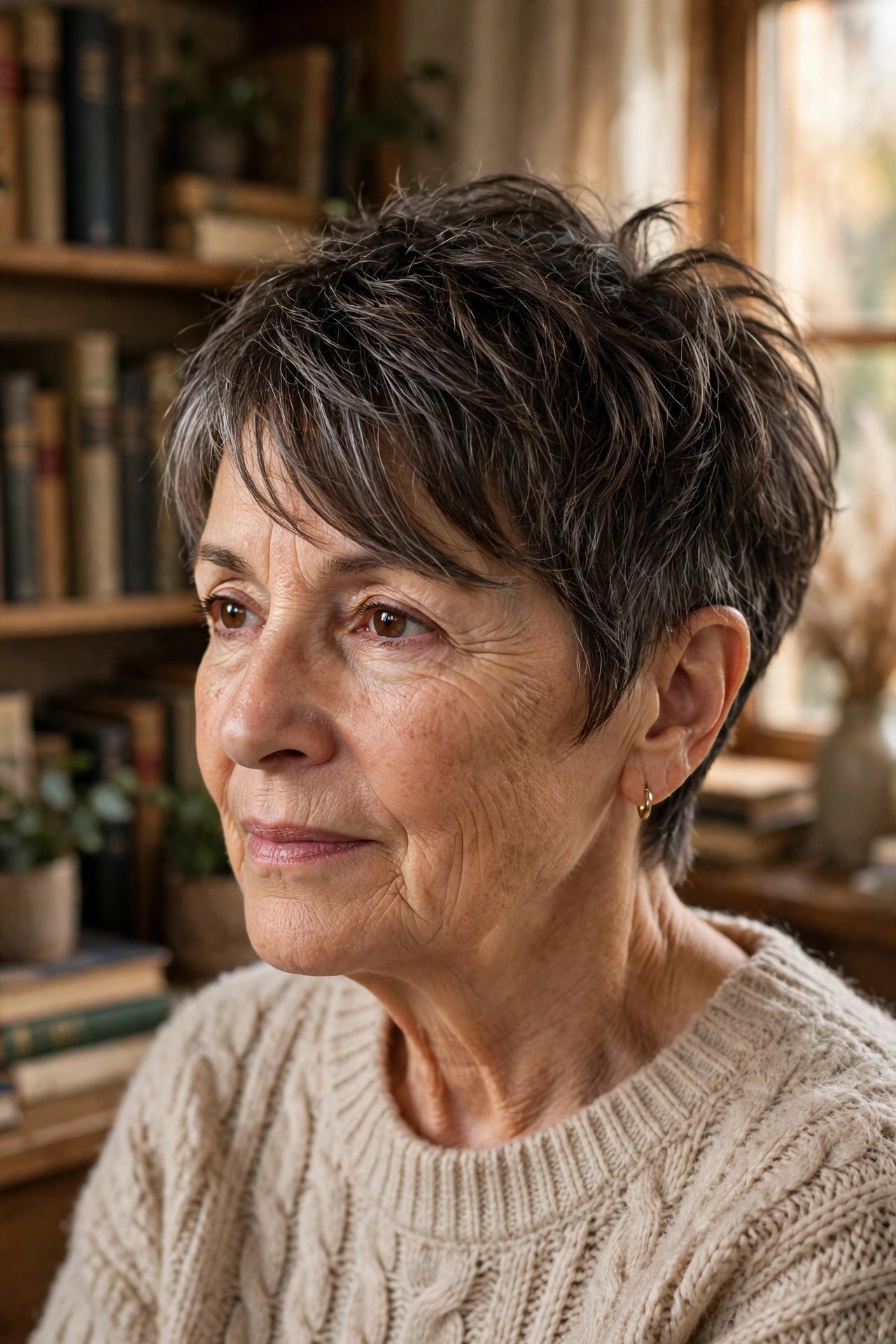
Short hair can fall flat by lunchtime, especially when the top is cut all one length.
A textured crop fixes that with choppy, piecey layers that stand up a little on their own. The fringe is left longer and swept to one side, which softens the forehead and gives the crop its shape. Stylists like it for women who want short hair with some softness left in it. A pea sized dab of styling cream worked through dry hair is the whole morning routine.
Keep it looking right:
- Sweep the fringe into place while the hair is still damp
- Pinch the ends for separation instead of brushing them flat
- Book a tidy up when the fringe starts to hit your eyebrows
Dry the fringe first, while it is damp, so it learns its direction.
Use styling cream on dry hair, a little at a time.
A blunt, heavy fringe. It fights the soft texture of the crop.
Heavy oils on top. They flatten the piecey finish within the hour.
6. The Long Layered Lob
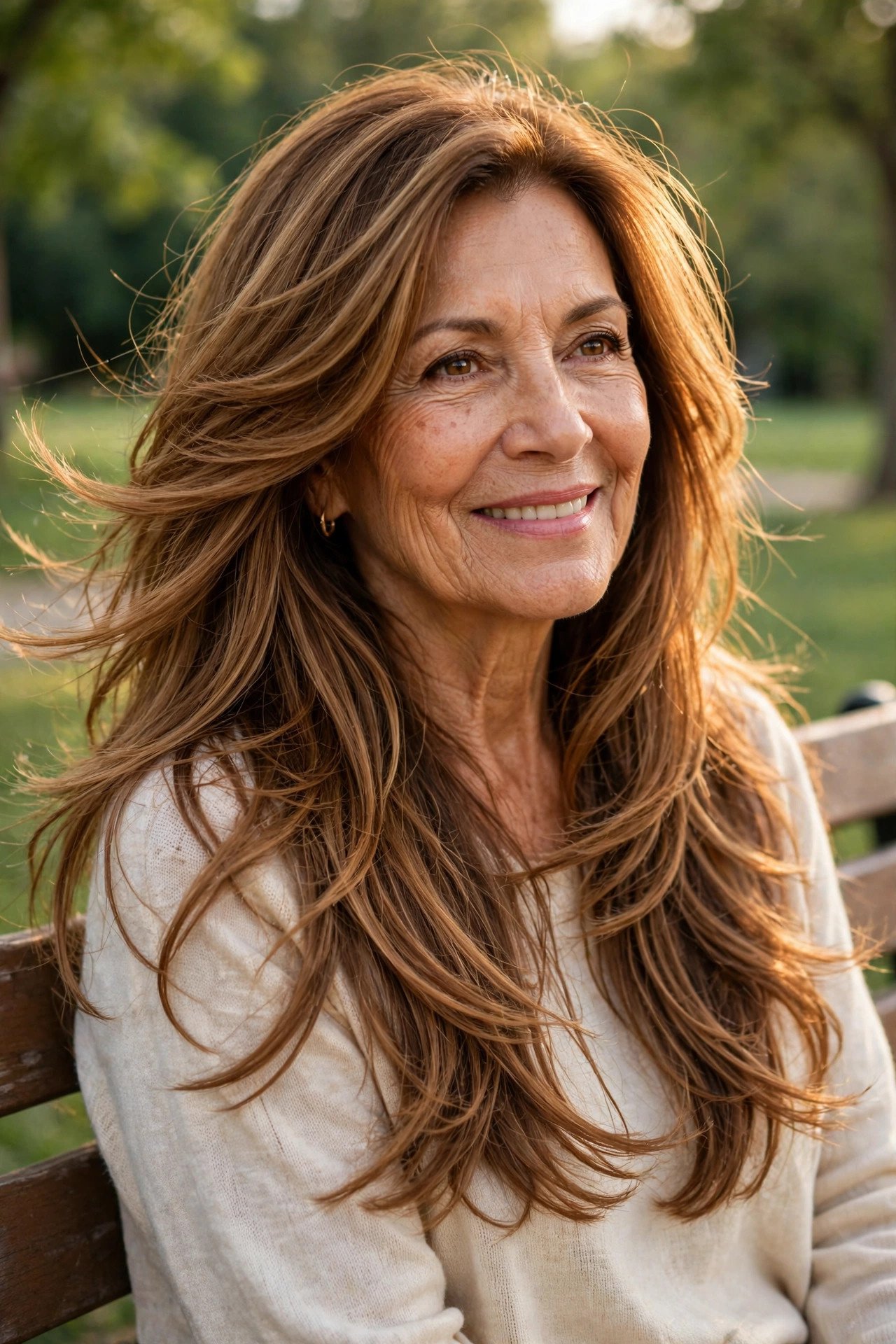
Keeping some length after sixty is very much on the table, and the lob is the version stylists trust.
It sits between the shoulders and the collarbone: long enough for a low ponytail, short enough to keep its shape. Long layers through the last few inches stop the ends looking thin and stringy, which is the usual trouble with longer hair at this age. The front pieces start around the cheekbones and melt into the rest.
Good signs this one suits you:
- You still like wearing your hair down most days
- Your hair has some natural body to it
- You want length that still looks cared for
| The lob | The classic bob |
|---|---|
| Length: past the shoulders, near the collarbone | Length: at the chin or jaw |
| Layers: long, through the lower lengths | Layers: few or none at all |
| Ponytail: yes, easily | Ponytail: rarely, it is too short |
7. The Curly Bob with Soft Layers
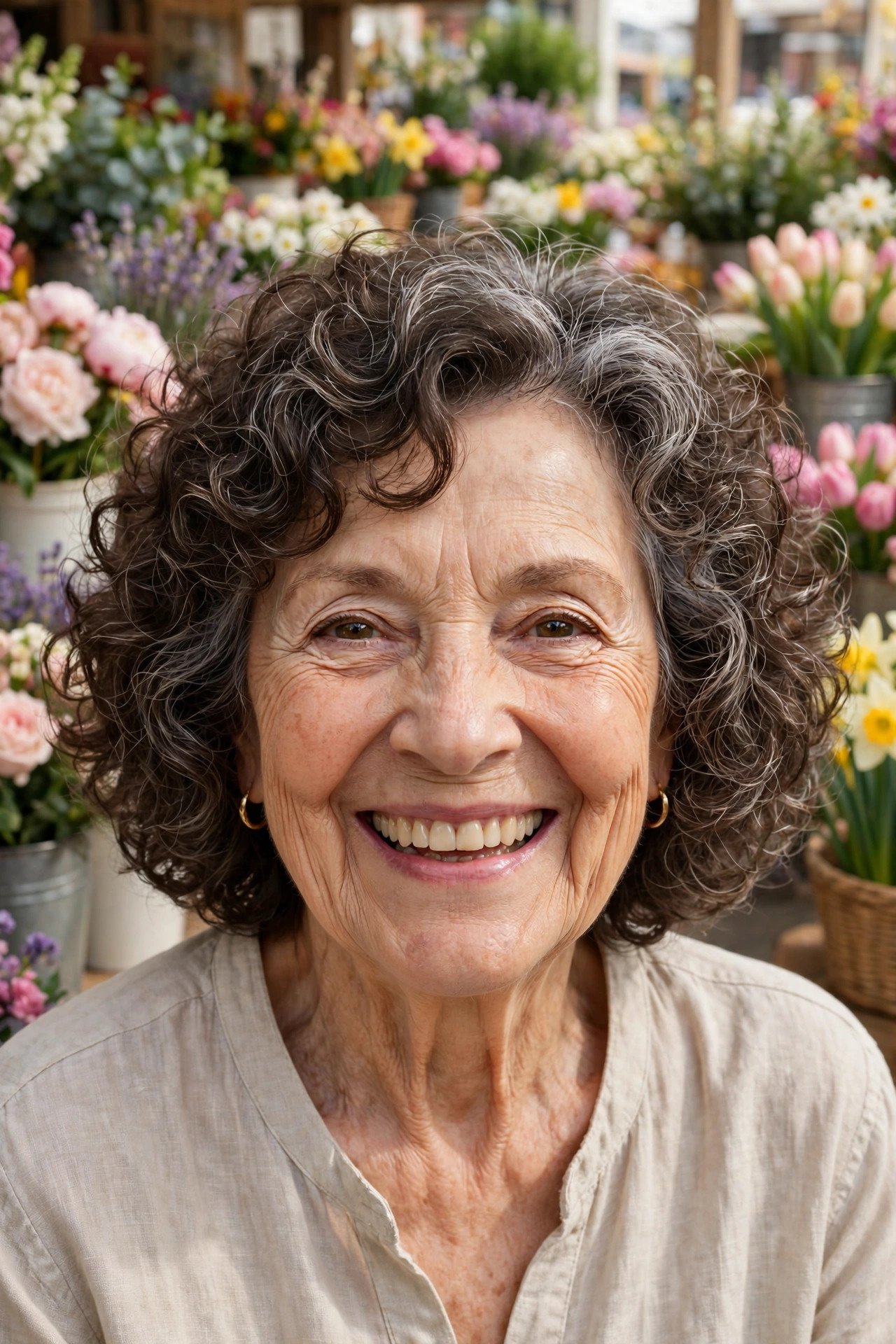
Rule one with curls: the shape gets cut where the curls actually fall, not while they are pulled straight.
A curly bob sits around chin to jaw length, with soft layers that let each curl rest on the next one instead of puffing out into a triangle. Stylists who work with curls suggest cutting it dry, curl by curl, so the shape you see in the chair is the shape you go home with. At home the job is moisture and a light hand.
At home, keep it simple:
- Add leave in conditioner while the hair is soaking wet
- Scrunch with an old cotton t shirt, then leave it alone to dry
- Refresh second day curls with a light water spray
A curly bob holds its shape when the layers follow the curl pattern. Ask for a dry cut, and the triangle shape never gets started.
8. The Tapered Pixie with a Longer Top
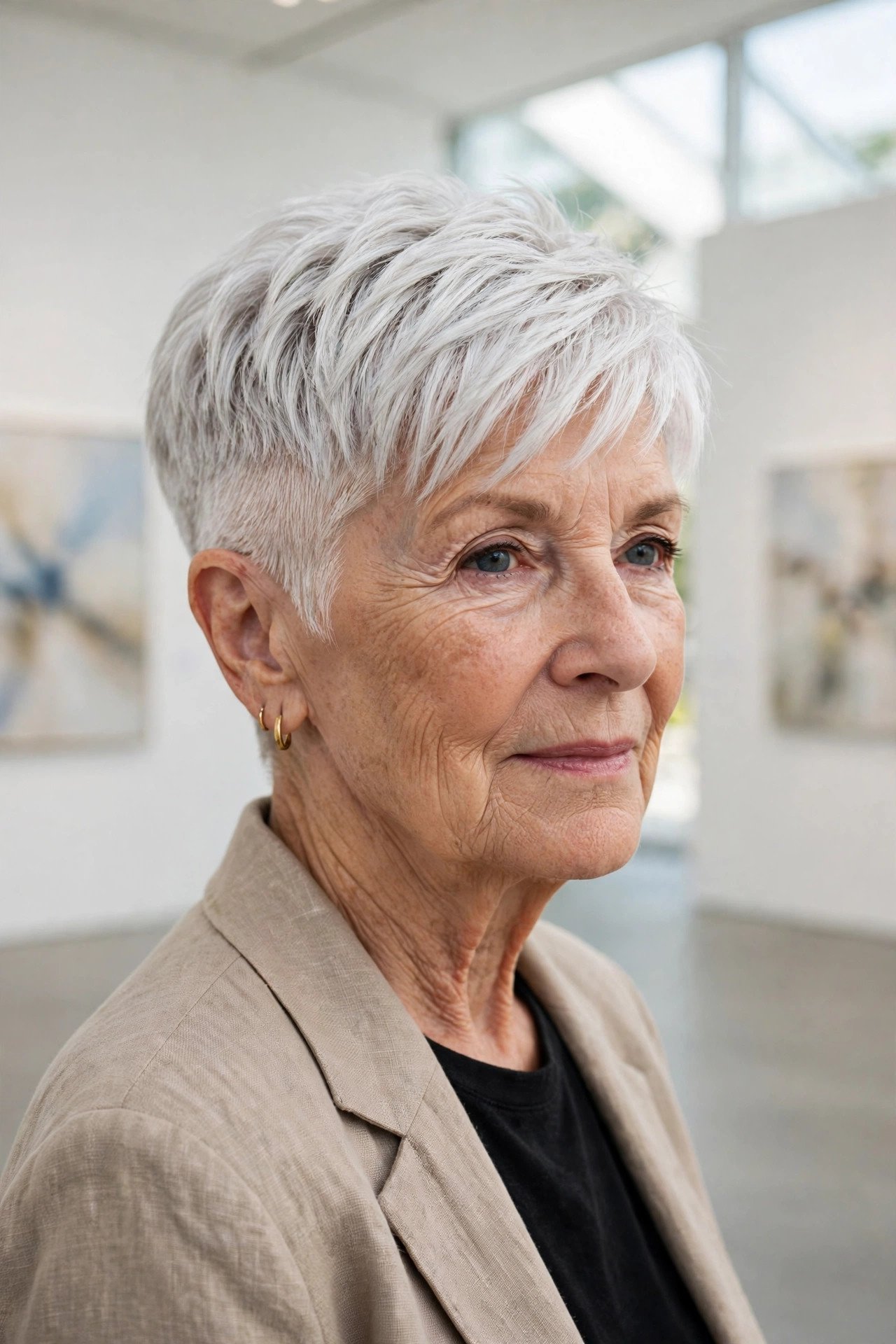
This is the pixie for women who want short sides and still want something to play with on top.
The back and sides are tapered close and neat, while the top keeps a few inches of length to sweep forward or off to one side. That contrast gives the cut its smart shape and keeps the neckline tidy for weeks. It suits strong features and glasses wearers, since the longer top balances frames nicely.
Why stylists suggest it:
- The neckline stays neat for a long stretch between cuts
- The longer top can cover a stubborn cowlick
- It behaves on straight hair and on gentle waves
Blow dry the top forward with your fingers, no brush needed.
Push the front section over to your favourite side while it cools.
Pinch the ends with a little matte paste so the texture shows.
9. The Blunt Bob with a Full Fringe
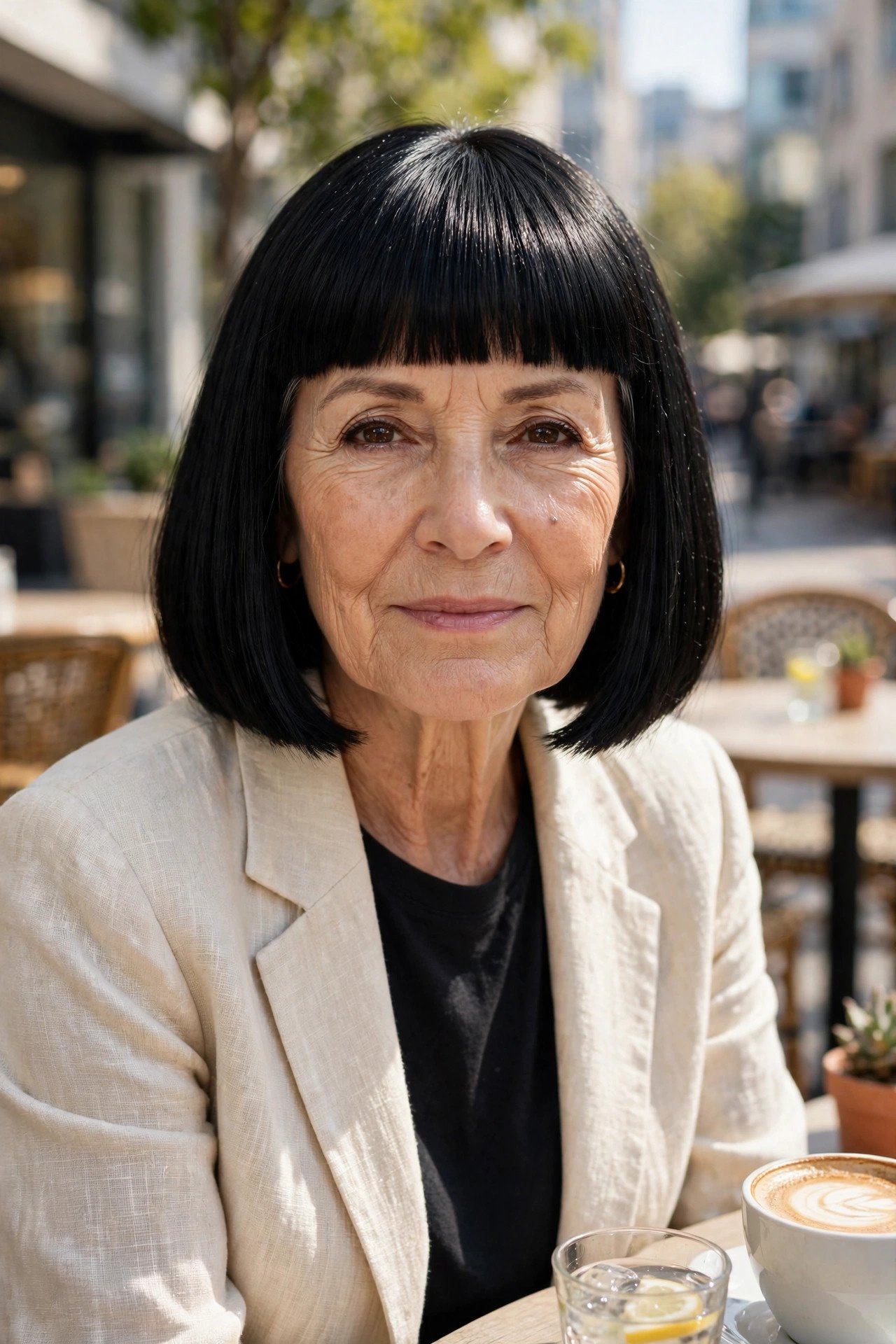
It is the cut you notice across a cafe: one clean line, one straight fringe, nothing fussy.
A blunt bob is cut to a single even length, usually at the chin, and the fringe is cut straight across at brow level. All that even weight makes fine hair look far thicker at the ends. Stylists suggest it for straight hair that holds a line well. Wavy hair can wear it too, though the ends will want a quick pass with a brush while drying.
Be honest with yourself first:
- A full fringe needs its own small trim every three to four weeks
- Fringe plus glasses can crowd the face, so take your frames to the appointment
The fringe has grown past the eyebrows, the ends are uneven, and the whole shape reads tired.
Fringe back at brow level, one clean line at the chin, and the hair looking twice as thick at the ends.
10. Shoulder Length with Face-Framing Layers
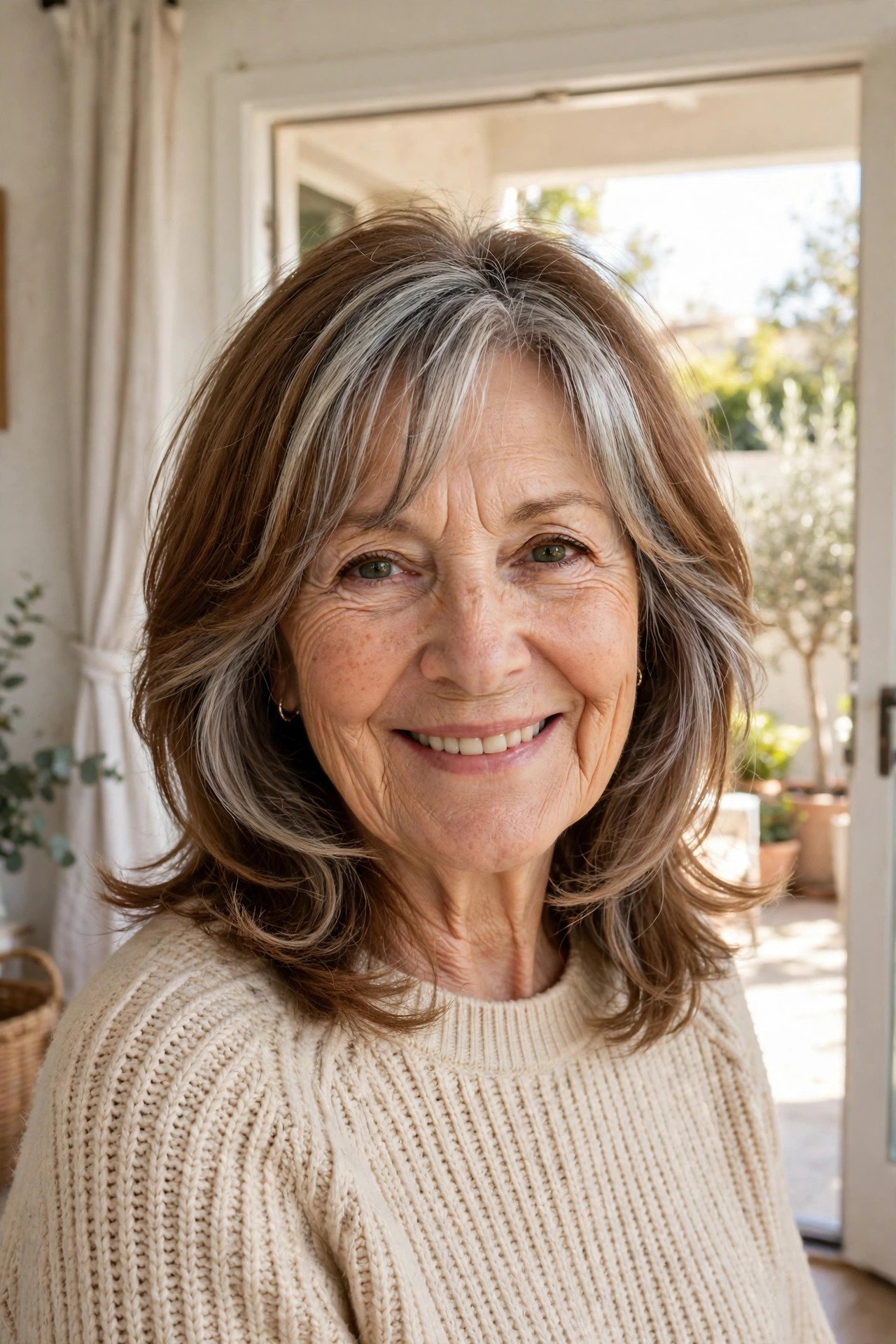
Shoulder length hair can hang like a curtain, hiding the face it should be showing off.
Face framing layers fix the curtain problem. The front sections are cut in steps, starting near the cheekbones or the jaw, so the hair opens up around the face instead of closing it in. The back keeps its length and most of its weight, which keeps the cut feeling substantial. Stylists reach for this one when a client wants a change she can see in the mirror but is not ready to lose length.
Layer starting points to talk through:
- Cheekbone height, for lift around the eyes
- Jaw height, to soften a strong jawline
- Collarbone height, for the gentlest change of all
- ▸The shortest layer at the cheekbones lifts the whole face.
- ▸Keep the back at one length for weight and swing.
- ▸Ask for the front pieces cut on dry hair, so the fall you see is honest.
11. The A-Line Bob, Longer in Front

Look at this bob from the side and the shape tells the story: short at the back, sloping gently down toward the chin.
That forward slope is what makes an A-line bob feel current. The back sits neat above the neckline, and the longer front pieces frame the jaw. Stylists suggest it for women whose hair is thicker at the back, because the shorter back removes bulk in the spot where it builds up. It grows out gracefully too, since the angle simply softens over the weeks.
Ask for:
- A gentle slope, not a steep dramatic angle
- Front points that stop right at the chin
- The back cut clean, so the neckline stays tidy
12. The Stacked Bob for Thick Hair
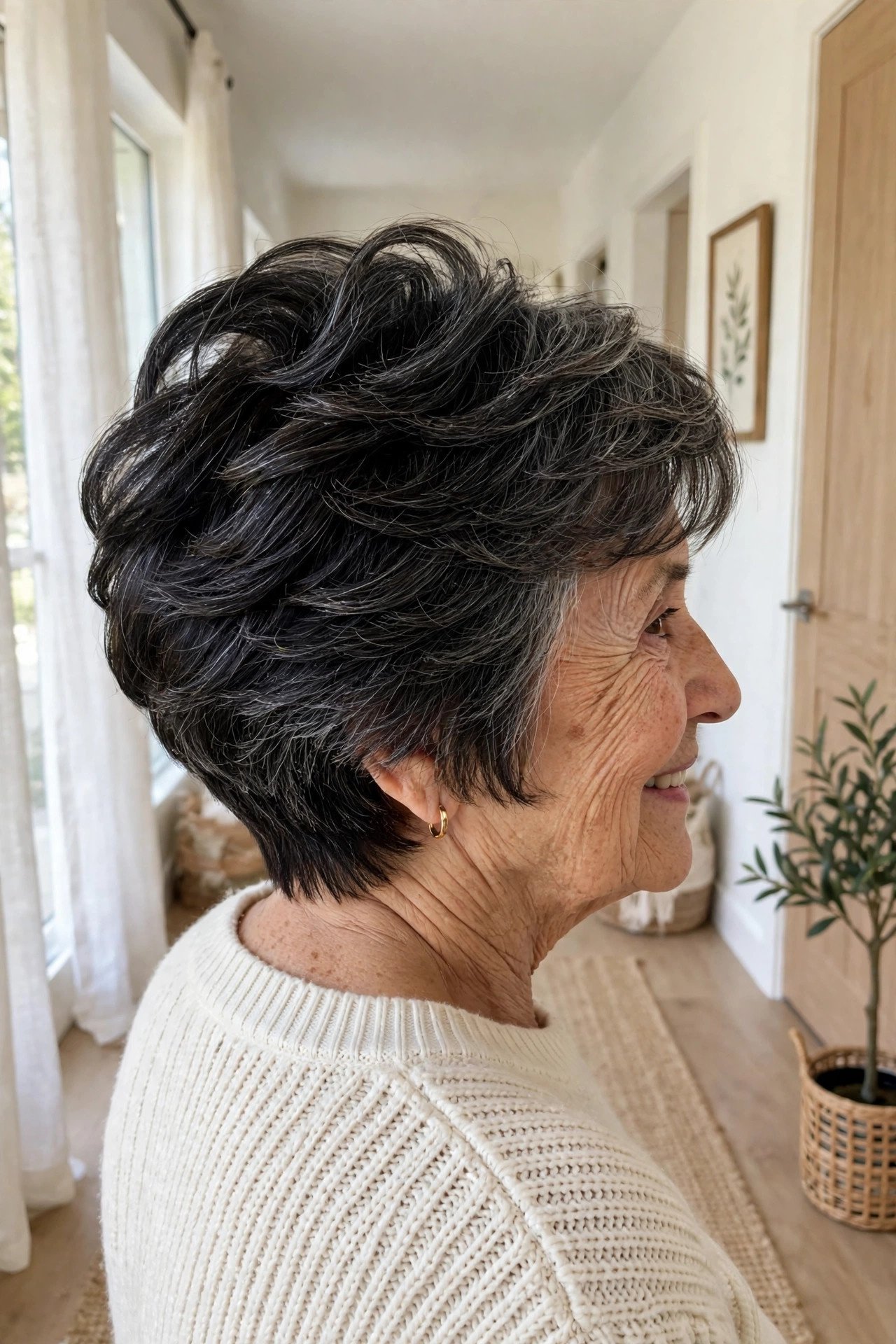
Thick hair in a one length bob can end up wide, heavy and a bit helmet like.
Stacking solves the weight problem. Short graduated layers are built up at the back of the head, one resting over the next, so the crown gets lift and the nape sits close and clean. The front stays longer and smoother. Stylists suggest this cut a lot for thick hair because it takes out bulk in the exact spot where thick hair piles up, and the shape is cut in rather than styled in every morning.
This cut earns its keep if:
- Your ponytail is a thick handful
- Bobs in the past turned wide and triangular on you
- You want volume at the back without any teasing
At the appointment
13. The Silver Pixie with Lift at the Crown
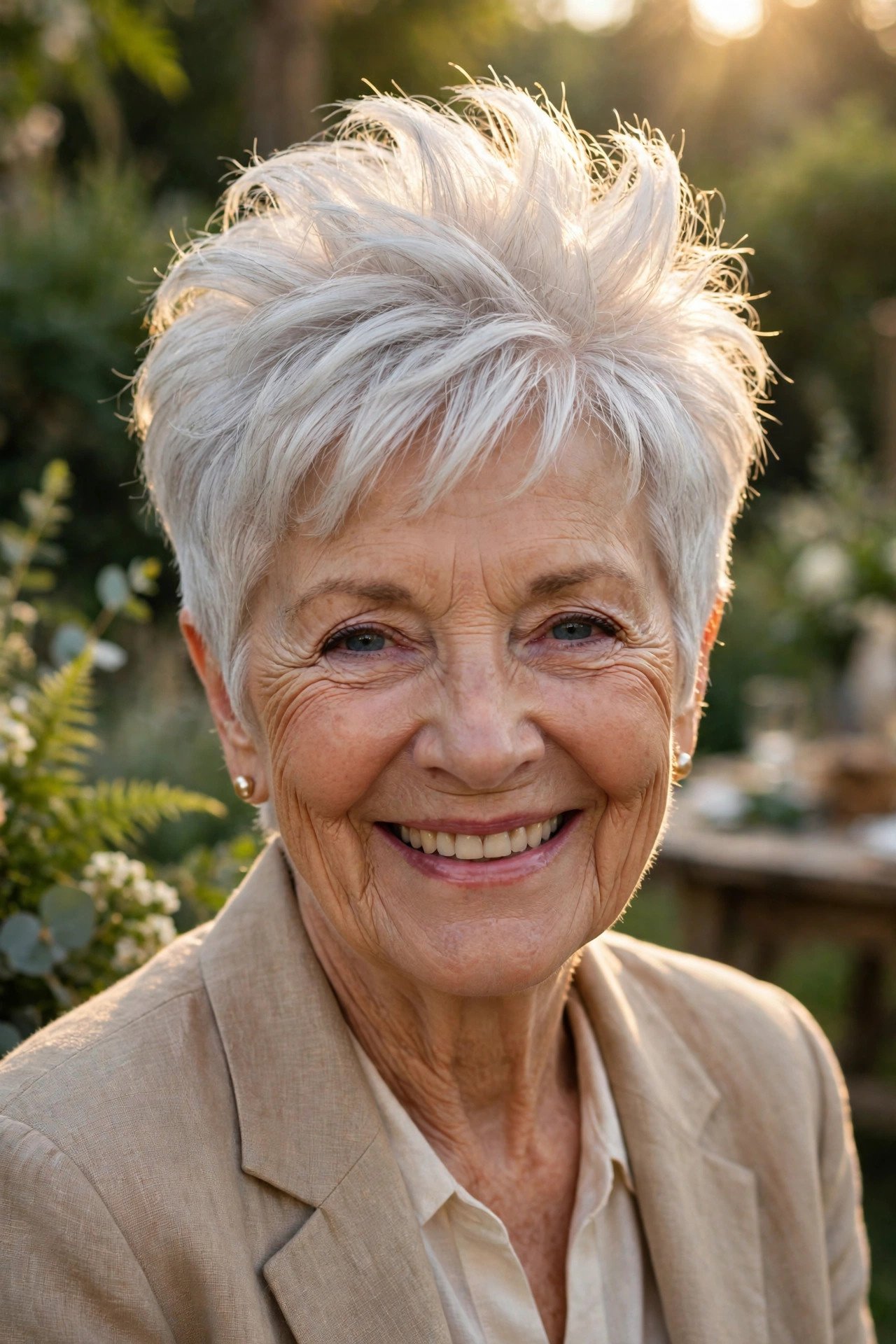
Height at the crown changes the whole balance of a face, and this pixie is built around exactly that.
The top is left long enough to lift and direct upward, while the sides stay short and neat. On silver hair the effect is bright and striking, because the lifted top catches the light as you move. Stylists suggest it when fine hair needs help looking fuller, since short sides make the top read thicker by contrast. Dry the crown first, aiming the warm air upward, and the shape mostly sets itself.
Small habits that keep the lift:
- Dry the crown before the sides, every time
- Sleep flattens it, so a morning water spritz brings it back
- Keep products light, heavy creams pull silver hair down
Blow dry the crown upward and slightly back.
Refresh flat mornings with a water spritz and your fingers.
A flat centre part. It cancels the lift the cut is built for.
Heavy oils. Silver hair shows them fast and loses its height.
14. The Wavy Lob with a Deep Side Part
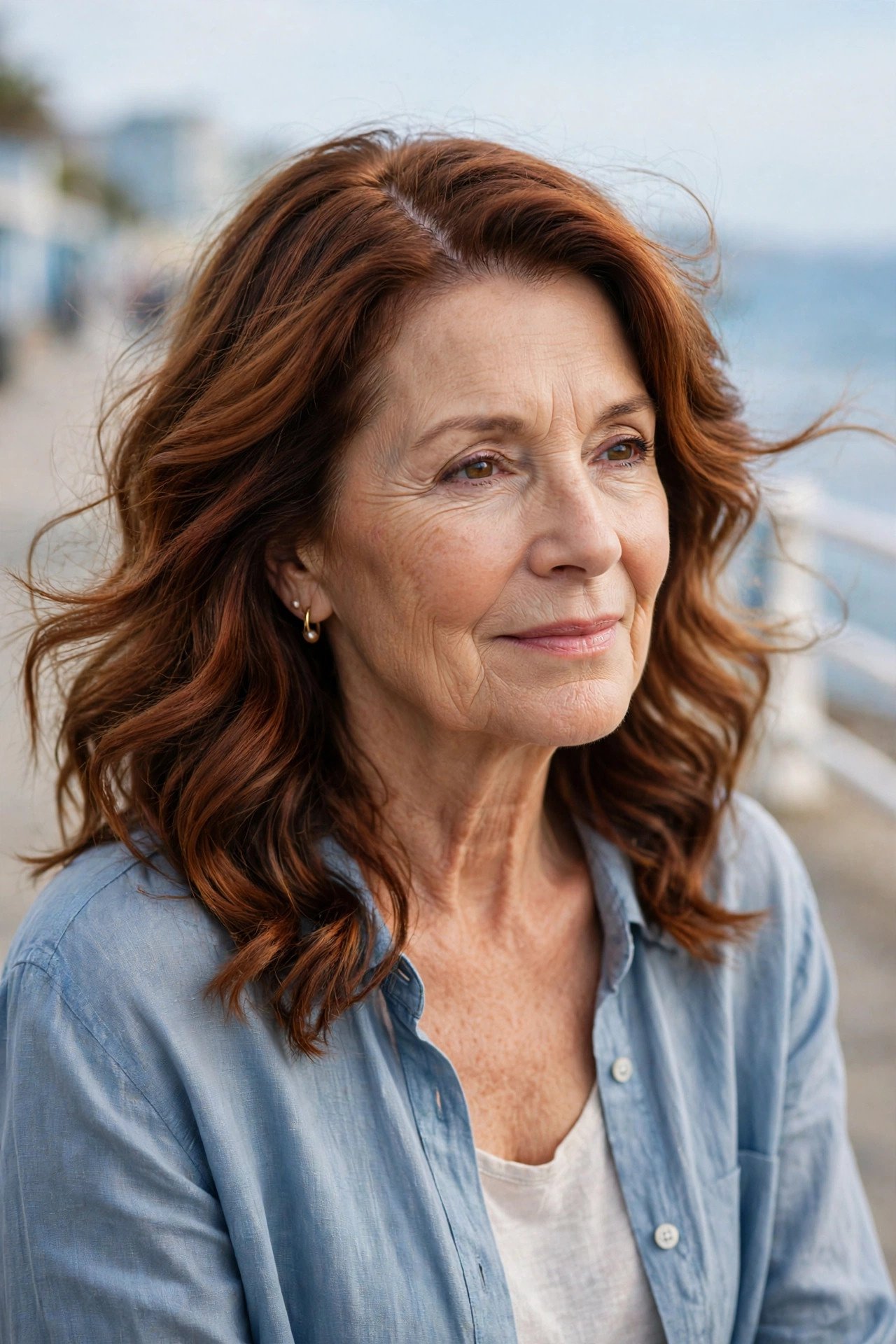
Move your part a couple of inches to one side and a flat lob wakes up. That is the whole trick behind this cut.
The lob itself is simple: collarbone length, a few long layers, ends kept fairly full. The deep side part does the styling work, sweeping the hair across the forehead and giving the crown some height. Stylists suggest it for wavy hair because the part plus natural wave gives movement on most days without heat tools. Flip the part to the opposite side on day two for even more lift.
Wear it your way:
- Tuck the smaller side behind one ear
- Leave both sides loose for a softer read
- Pin the sweep back for evenings out
📌 Good To Know
If your part has sat in the middle for years, the hair will fight a deep side part for about a week. Train it while the hair is damp and it settles fast.
15. The Feathered Bob for Fine Hair
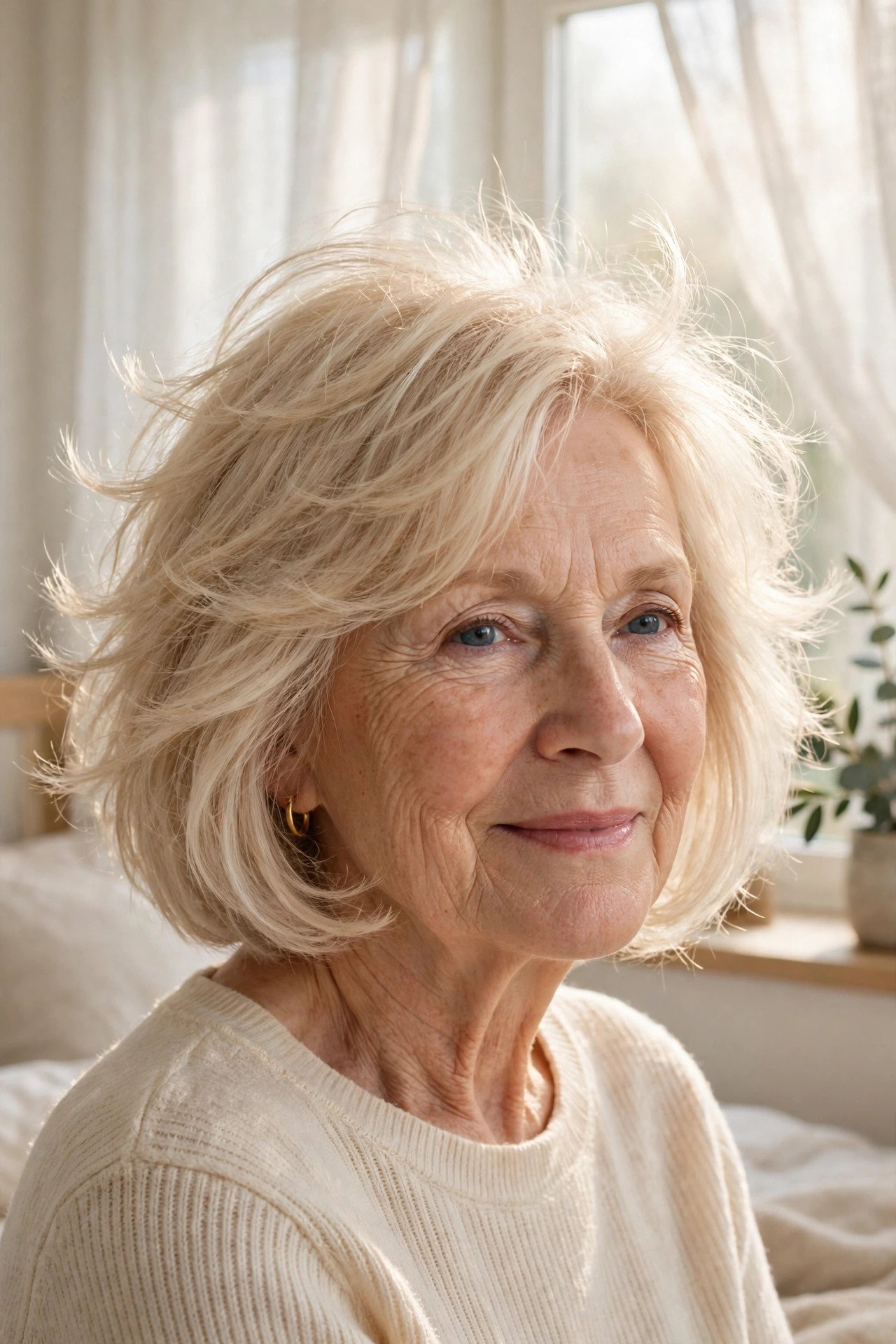
Fine hair and layers are often called a bad mix. Cut the right way, feathered layers are the very thing that gives fine hair its bounce.
Unlike the blunt bob, this version is feathered: the ends are softened and flicked so the hair moves and catches light instead of sitting in one flat sheet. The length stays around the chin, where fine hair looks its thickest. Stylists suggest keeping the layers long and few. Too many short layers steal the little weight fine hair has, and the ends turn see through.
Keep the feathering honest:
- Layers start below the crown, not up at it
- Ends flicked and softened, never thinned to wisps
- Round brush work at the front only, the back can air dry
16. The Asymmetric Bob
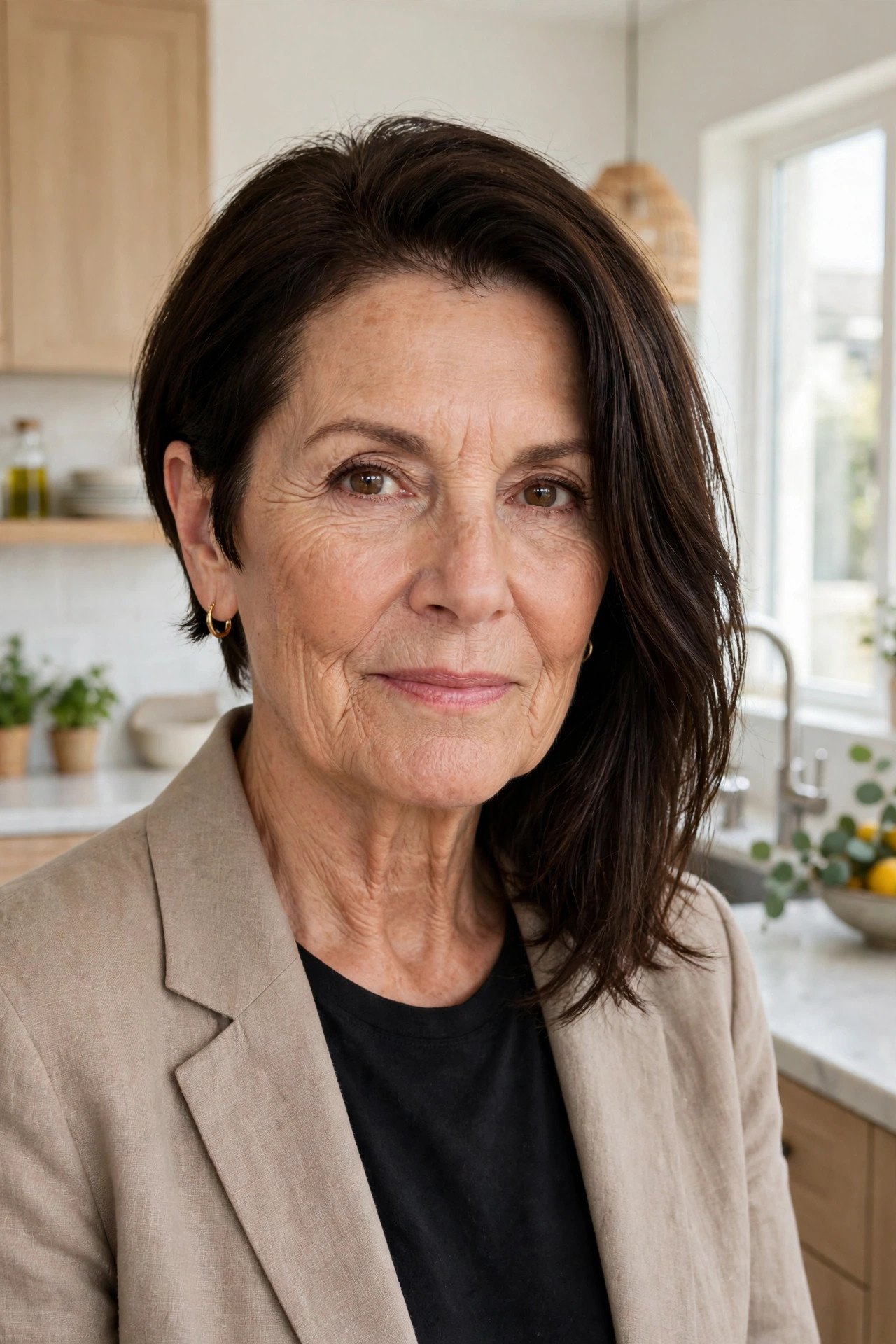
One side longer than the other sounds like a cutting mistake until you see it worn well.
An asymmetric bob keeps one side at jaw length and lets the other fall an inch or two longer, usually with a deep side part. The uneven line draws the eye across the face, which is flattering and a little bold. Stylists suggest it for women who are bored with a classic bob but still want a bob and its tidy manners. Straight and slightly wavy hair show the difference in length best.
Decide before the scissors come out:
- Which side gets the length; most women pick their favourite profile side
- How clear the difference should be, subtle or obvious
- Whether the short side will tuck behind the ear
| Asymmetric bob | Classic bob |
|---|---|
| Line: uneven, and it catches the eye | Line: even all the way round |
| Part: deep side part, nearly always | Part: centre or side, both work |
| Upkeep: trims keep the gap between sides even | Upkeep: trims keep the single line level |
17. The Short Curly Crop

Curls do not need length to look good. Cropped close, they spring up and show off their pattern.
A short curly crop keeps the sides and back close while the top holds enough length for curls to coil properly. Stylists who cut curls suggest shaping it dry, so tight coils and loose ones each get cut at their real resting length. It is one of the lowest effort cuts on this whole list: wash, add a little leave in conditioner, scrunch and go. Curls also hide small amounts of growth well, so the shape holds for weeks.
Keep the crop happy:
- Moisturise more than you think; short curls dry out fast
- Get the top reshaped when curls start flopping forward
- Sleep on a smooth pillowcase to cut down frizz
Short curls look their best cut dry and left alone while they dry. Hands off until the curls set, then shake the roots loose.
18. The Layered Shag for Thick Hair

Thick hair with no layers tends to sit in one solid mass, heavy at the bottom and flat at the top.
A layered shag breaks that mass up. Layers run through the whole cut, longer at the bottom and shorter around the crown, with point cut ends that take weight out where the hair is densest. Stylists suggest it for thick, wavy hair that needs movement more than it needs polish. The result is deliberately a bit undone, which is good news on mornings when a long styling session holds no appeal.
Ask your stylist to:
- Keep the bottom layer at or below the shoulders
- Take the weight out of the middle, not the ends
- Show you the finished shape on dry hair before you leave
Work a little mousse through damp hair, roots first.
Dry with your head tipped forward, scrunching the layers as you go.
Once dry, shake the layers loose with your fingers and leave them alone.
19. The Rounded Bob with a Soft Under-Curve

The ends are the signature here: instead of hanging straight down, they roll under in one smooth curve.
A rounded bob is cut so the outline forms a gentle dome, with the ends bevelled to turn under on their own. Stylists suggest it for women who like a tidy, finished look and wear their hair smooth. It flatters the neck and jawline because the curve echoes the shape of the jaw. A round brush while drying trains the curve, and within a few weeks the hair starts falling into it by itself.
This shape suits you if:
- Your hair is straight or lightly wavy
- You like a neat outline more than a tousled one
- You are happy using a round brush for a few minutes
Ends flipping outward at random, and the outline reading square and boxy.
One smooth curve rolling under at the jaw, and an outline that looks soft and finished.
20. The Grown-Out Pixie
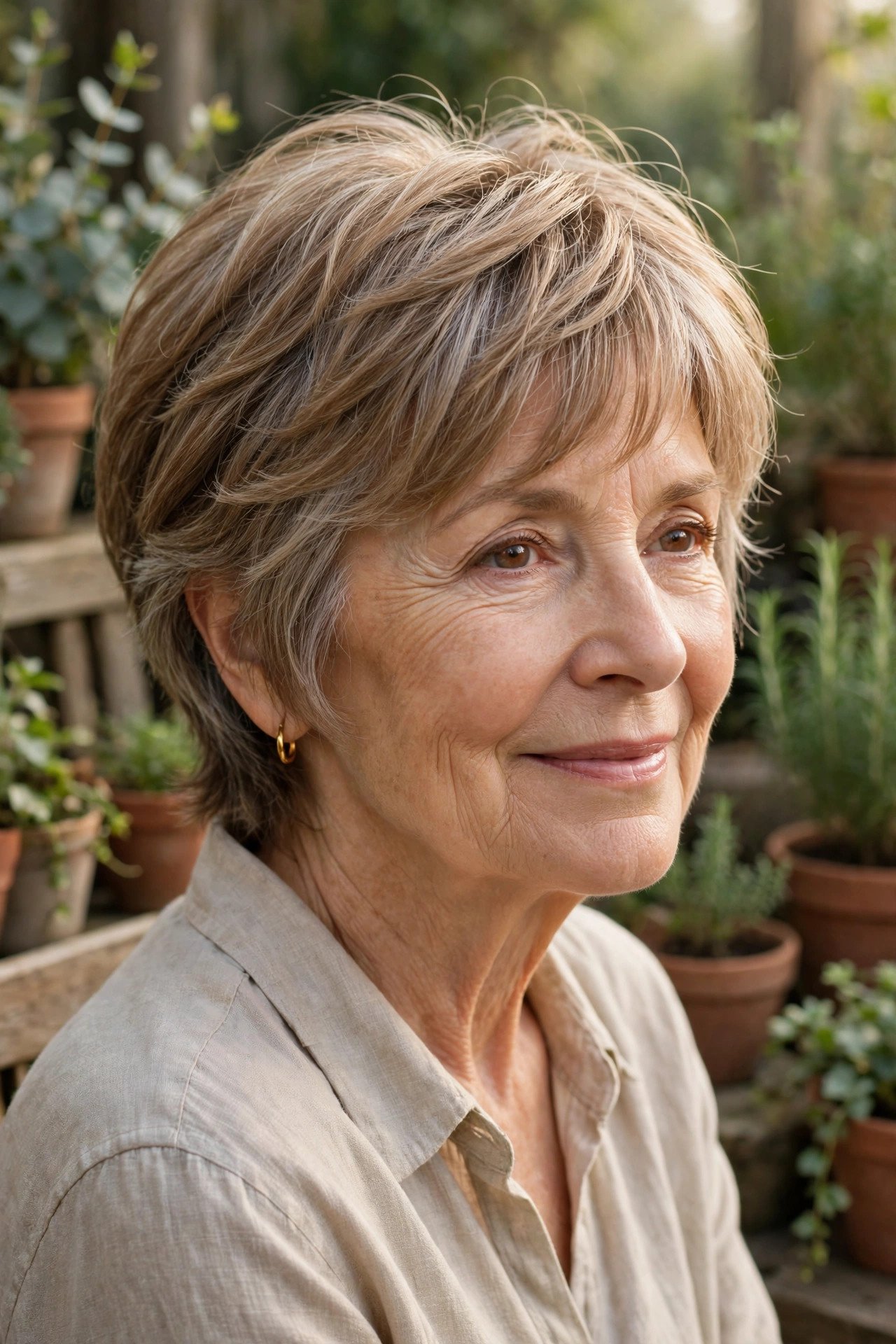
Growing out a pixie has an awkward middle phase, and pretending otherwise helps nobody.
The grown out pixie is a plan rather than a single cut: the back and neckline stay tidy while the top and sides gain length over a few appointments. Stylists suggest reshaping every five or six weeks, taking off only what spoils the shape. Heavy, floppy pieces get thinned, the neckline gets cleaned, and the length you are waiting for stays put. In a few months you land at a soft crop that can turn into a pixie bob.
Survival kit for the in between weeks:
- A couple of plain clips to hold the fringe back
- A headband for the worst hair days
- Patience with the stage where it is neither short nor long
- ▸Tidy the neckline often. It is what keeps a grow out looking deliberate.
- ▸Keep every bit of length on top. That is the part you are waiting for.
- ▸Judge the shape once a month, not in the mirror every morning.
21. The Jaw-Length French Bob
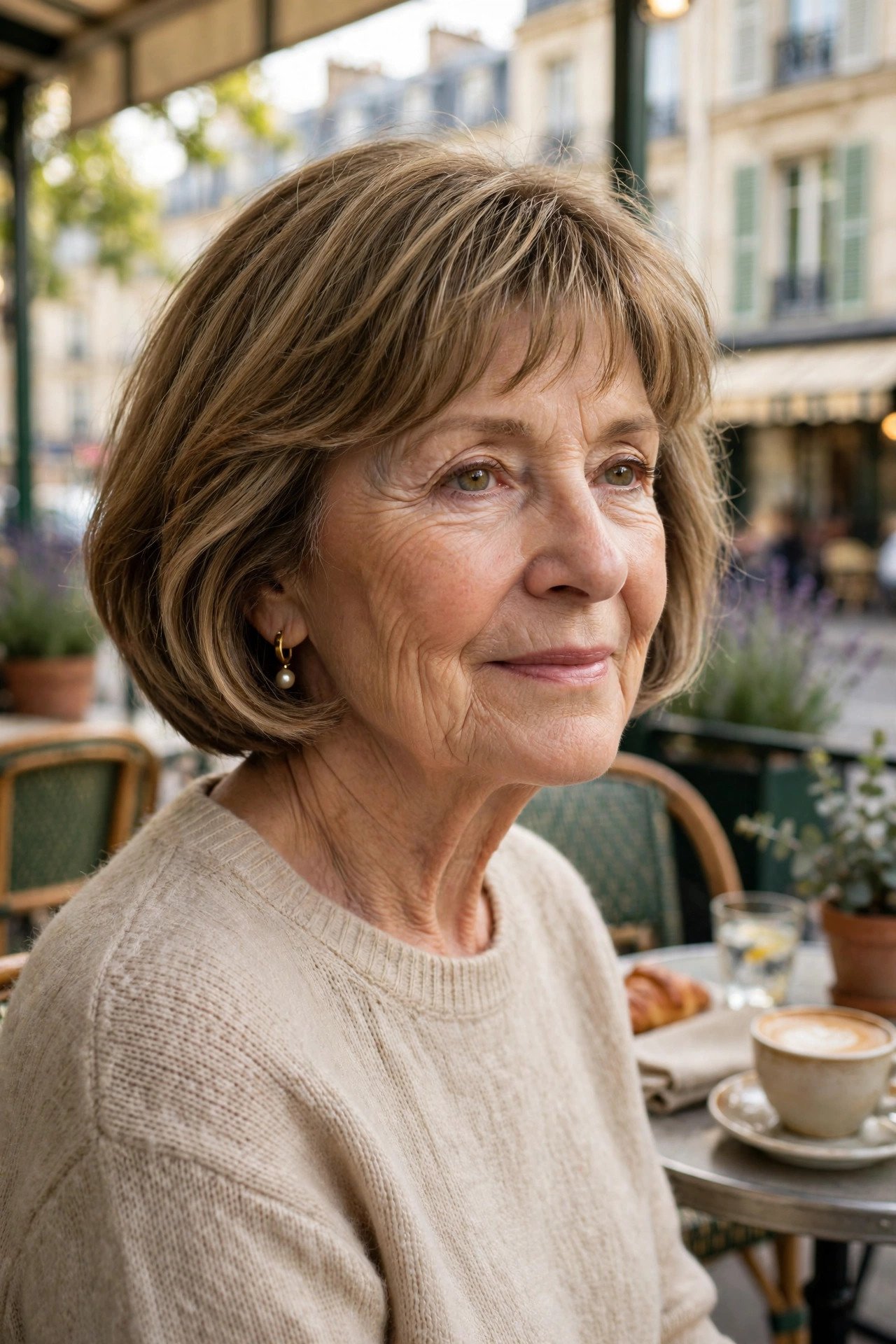
Short, a little undone and always neat at the jaw: the French bob has a very particular charm.
It is cut right at the jaw, often with a short, soft fringe, and it is worn with natural movement rather than a stiff blow out. Stylists suggest it for women with fine to medium hair and a natural wave, because the cut works with that texture instead of fighting it. The fringe is optional; without one, a centre part keeps much the same feel. It air dries well, which is a large part of its appeal.
The details to agree on:
- Length exactly at the jaw, not drifting below it
- Fringe short and wispy, or none at all
- Ends left natural, not ironed poker straight
22. The Salt-and-Pepper Layered Crop
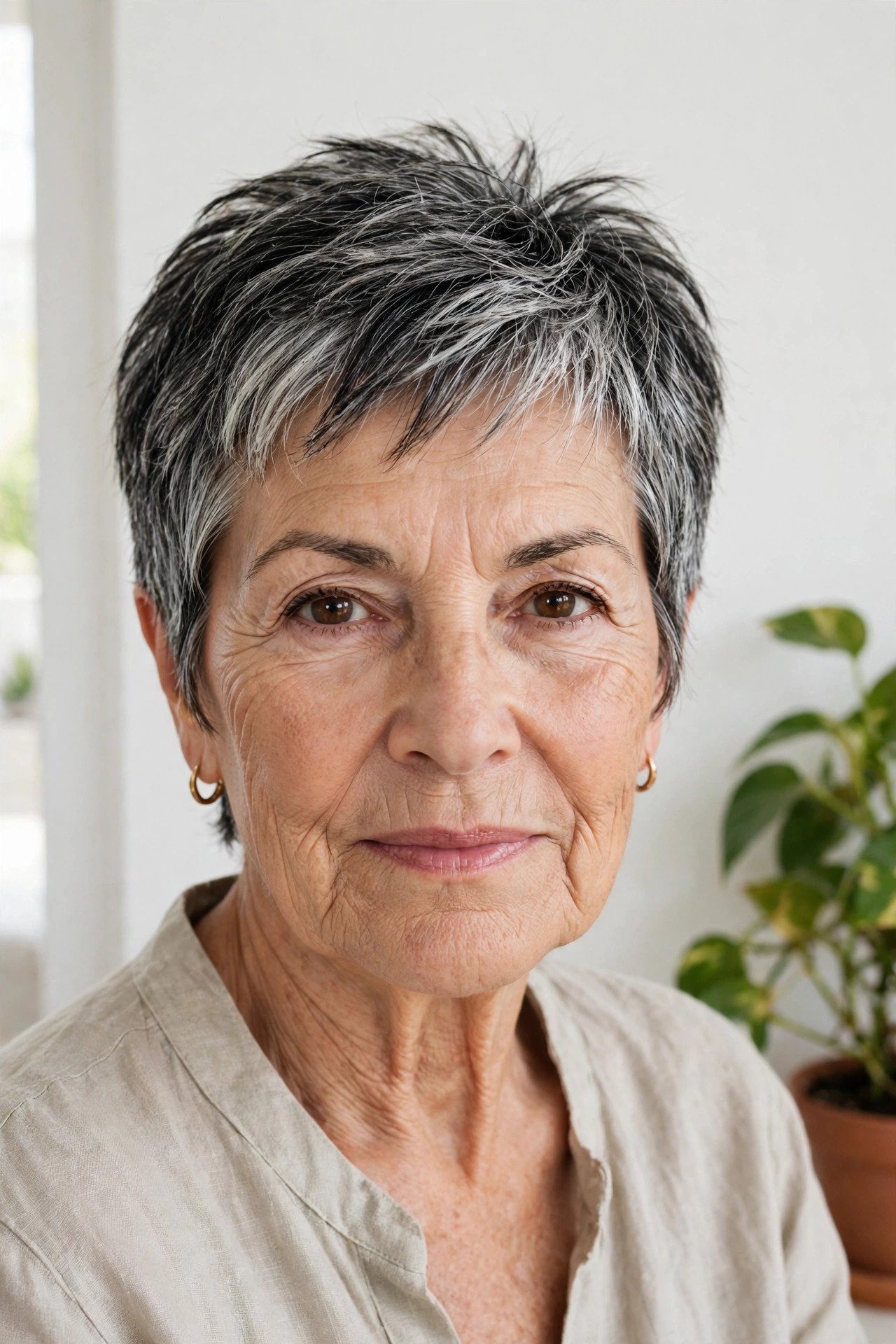
Salt and pepper hair has built in dimension, dark and silver strands side by side, and a layered crop shows that mix better than nearly any other cut.
The crop is short and textured, with layers that separate the strands so the two tones read clearly, not as one flat grey. Stylists suggest it while dye grows out, because the short length reaches fully natural colour in a handful of appointments, not after months of two tone lengths. It also suits women whose grey came through in patches, bright in front, darker at the back.
Make the most of it:
- Ask for texture at the ends, so the strands separate
- A purple toning shampoo keeps the silver from yellowing
- Keep the neckline clean; it sharpens the whole crop
At the appointment
23. The Pixie Bob, the In-Between Length
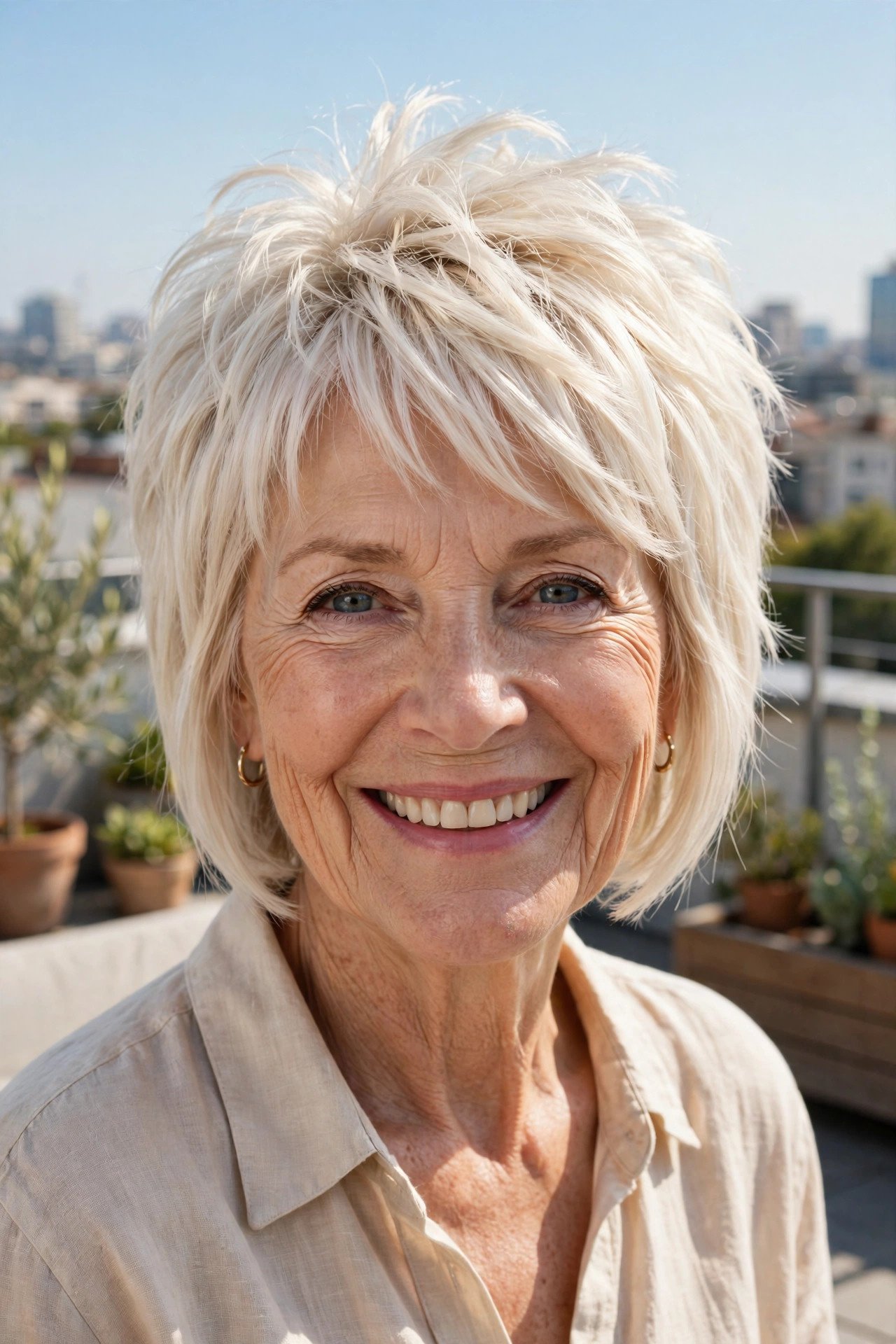
Cannot decide between a pixie and a bob? Stylists hear that a lot, and the pixie bob is their usual answer.
It keeps a bob’s length around the ears and jaw but borrows the pixie’s textured top and tapered neckline. You get a fringe and some height, plus enough length at the sides to feel covered. It is a sensible first step down from a bob, or a comfortable step up from a pixie you found too short. Styling is quick: dry it forward, sweep the front to one side, done.
Best of both, in practice:
- Bob length softness around the face
- Pixie texture and lift on top
- A neckline that stays neat for weeks
Keep some length over the ears if you wear glasses.
Dry the top forward for fullness before sweeping it over.
Letting the back grow into a bob while the top stays pixie short. The balance goes.
Skipping trims. The in between shape blurs faster than either parent cut.
24. The Collarbone Cut with Long Swooping Layers
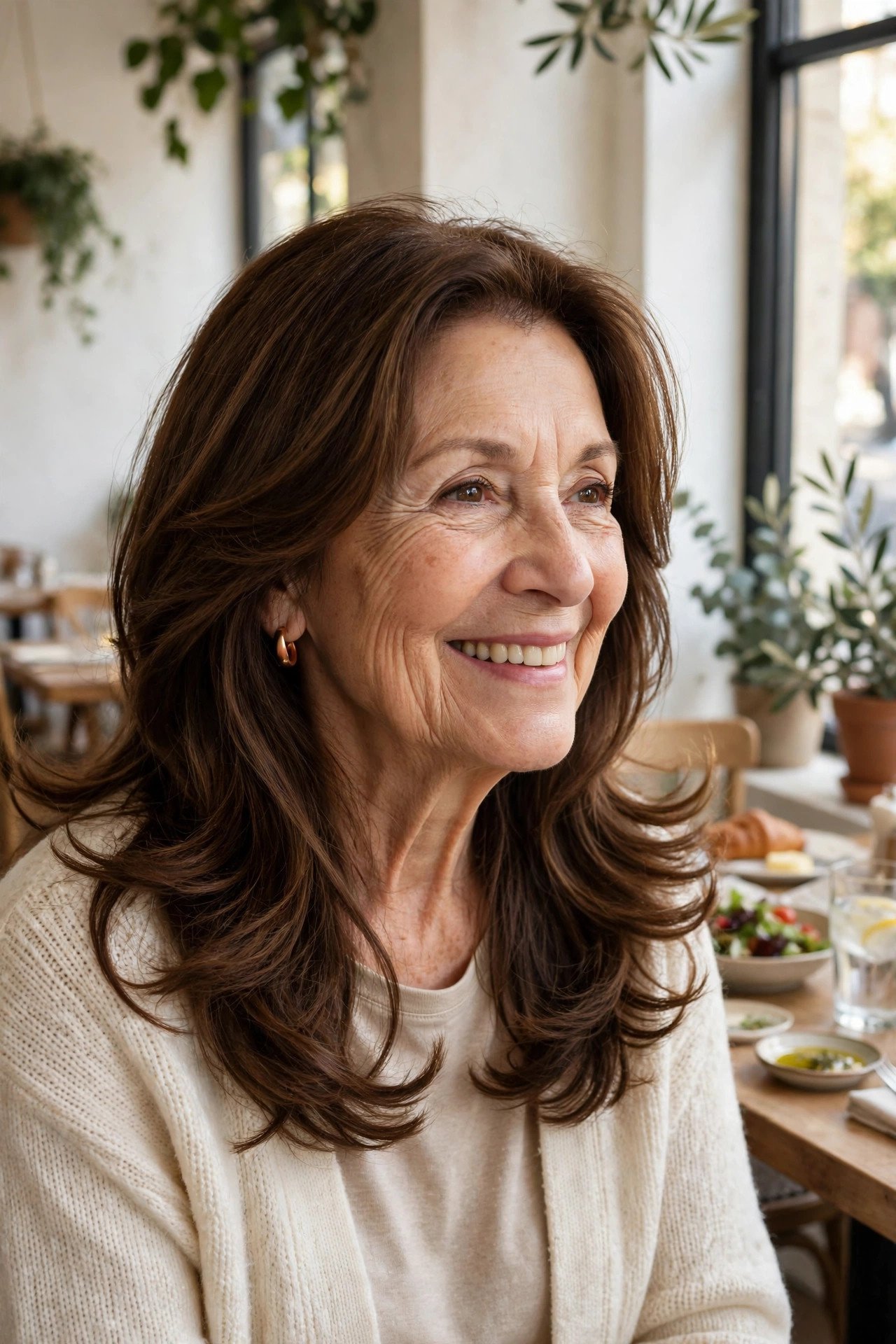
This is the cut for women who like their hair to move when they do.
The length rests at the collarbone, and the layers are long and swooping, cut to curve away from the face in one smooth sweep. Stylists suggest it for medium to thick hair that can hold a bend, and for women who enjoy a round brush finish. Worn with the ends flicked outward it reads relaxed; curled under, it reads formal. Few cuts change mood that easily from one day to the next.
Styling notes that help:
- Dry the front sections away from the face to build the swoop
- The layers start around the chin, so the top stays smooth
- A large round brush does most of the work
💡 Quick Tip
For the swoop to last past lunch, let each front section cool on the brush for a few seconds before you let it drop. Cooling is what sets the curve.
25. The Short Cut with a Lifted Crown

Flat on top, flat all over. Lift the crown, and even a simple short cut looks finished.
This cut keeps the sides and back short and neat, then leaves the crown area longer so it can be dried up and back with height. Stylists suggest it for women whose hair grows forward or lies flat by nature, because the extra crown length gives you something to work with. It is also a kind cut for thinning at the crown: short sides plus lifted length on top reads fuller than one length hair combed flat.
Build the lift:
- Dry the crown first, lifting the roots with your fingers
- Aim the dryer at the roots, not the ends
- Finish with the cool setting for ten seconds to set it
26. The Gentle Wolf Cut
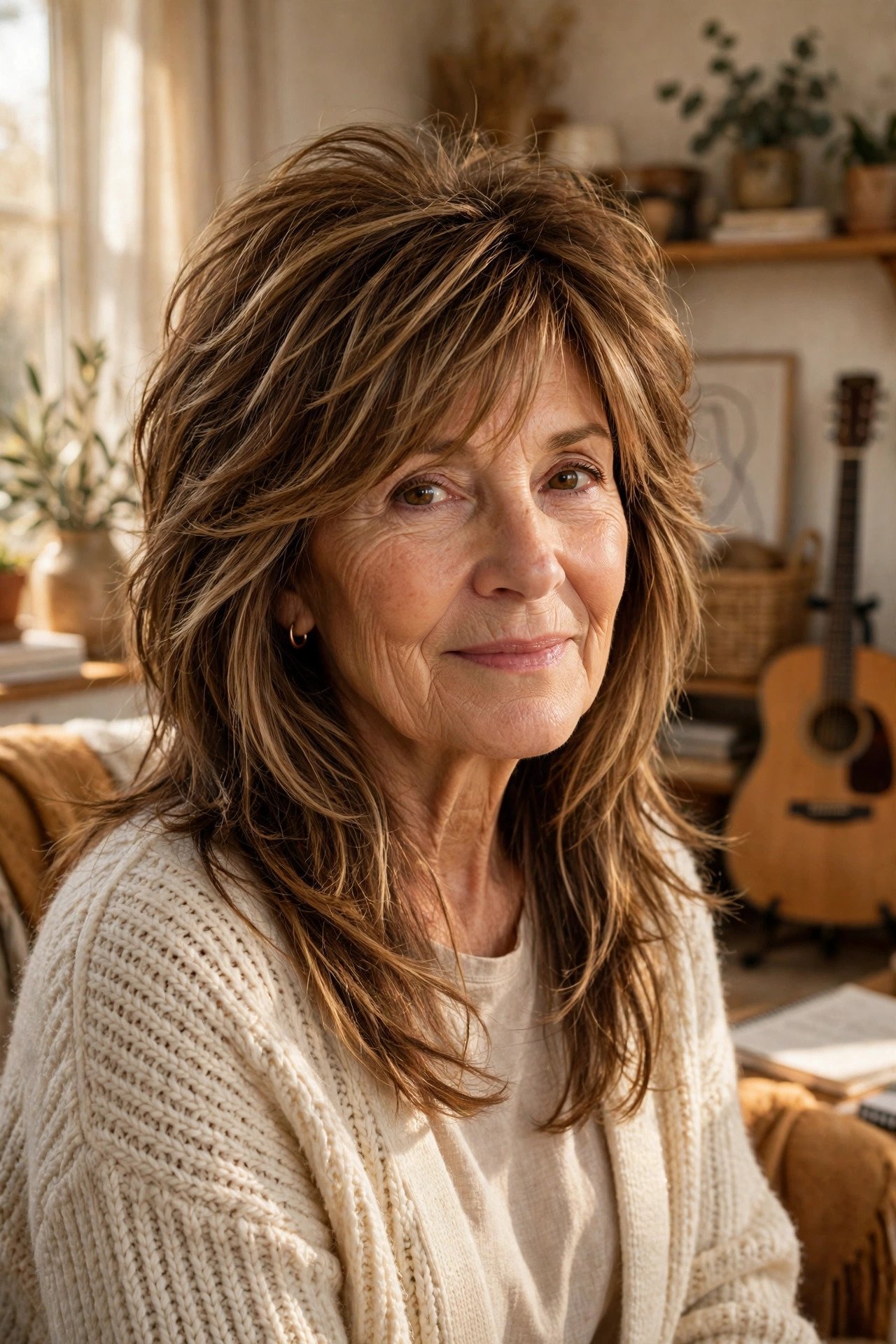
The wolf cut sounds fierce, but the gentle version stylists cut for women over sixty is mostly soft layers and common sense.
It takes the wolf cut shape, fuller on top with tapered, wispy lengths underneath, and softens every edge. No harsh line runs where the top meets the back; the back melts into the sides instead. Stylists suggest it for women with wavy hair who want movement and a bit of edge while keeping a grown up finish. It grows out kindly too, since the layers hold no hard lines to lose.
Keep it gentle:
- Ask for the top full but blended into the sides
- The back tapered, never chopped into a shelf
- Ends wispy all the way through, not only at the bottom
| Gentle wolf cut | Classic shag |
|---|---|
| Top: full and rounded | Top: feathered and flatter |
| Back: tapered, wispy lengths | Back: even layers, one weight |
| Feel: a little edge, still tidy | Feel: relaxed and undone |
27. Long Silver Layers, Worn Past the Shoulders

Long hair after sixty is a choice more women are keeping, and silver lengths can look striking.
The cut is simple in plan: length past the shoulders, long layers through the last third so the ends move, and trims so the hair stays healthy looking. Stylists suggest a gloss or toning rinse now and then if silver turns dull or yellow, and they will tell you that long grey hair asks for gentle handling: a wide tooth comb, low heat, no rough towel drying. Looked after this way, it is one of the most admired styles on this list.
Care that keeps it shining:
- Trim the ends every eight to ten weeks
- Detangle from the ends upward, never from the top down
- Braid it loosely at night to stop tangles
Long silver hair stays beautiful with trims, not despite them. Half an inch off the ends keeps the whole length looking thick and cared for.
28. The Pixie with a Soft Undercut
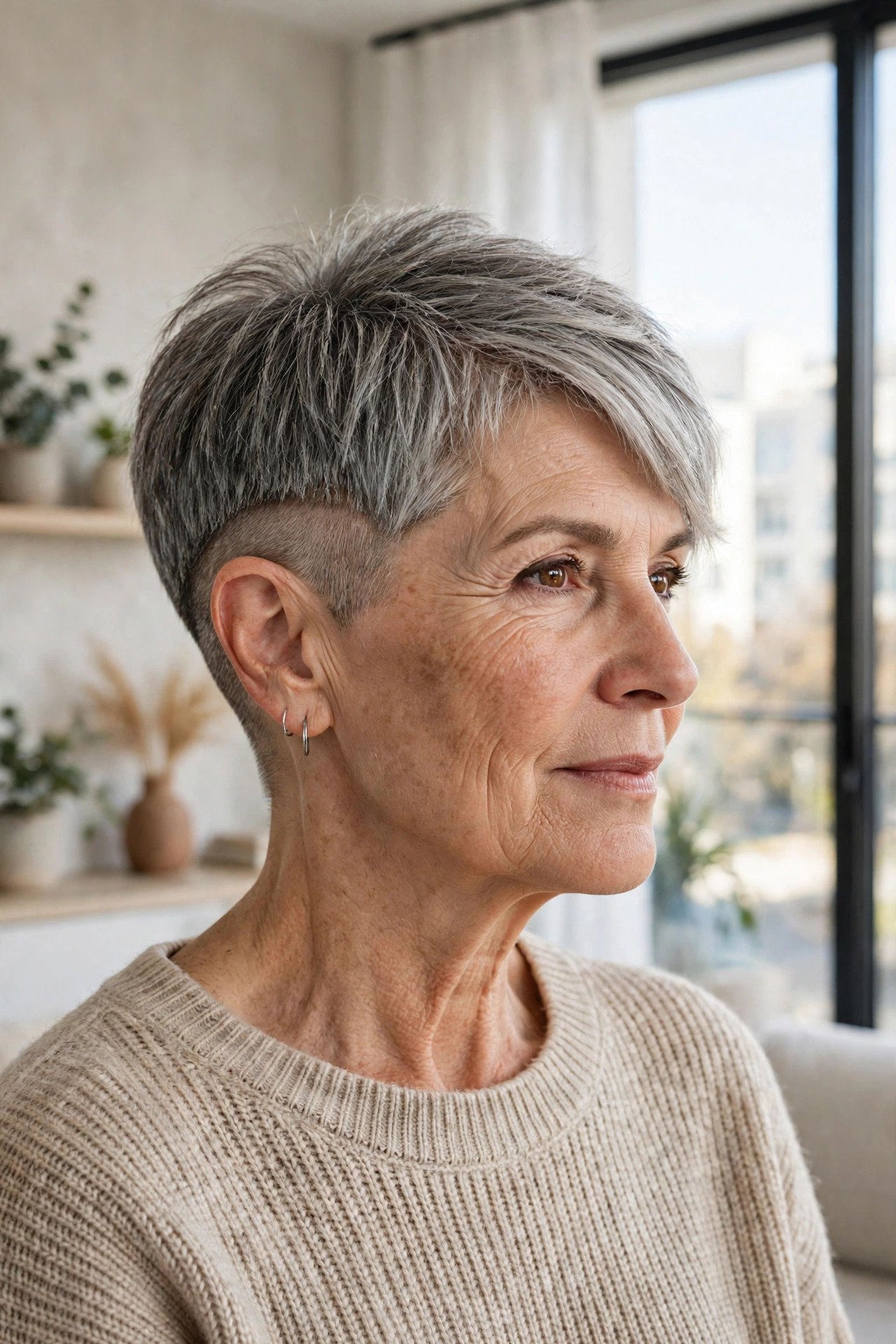
An undercut sounds drastic. Done softly, it is only a tidier pixie with the bulk taken out.
The nape and the area just above the ears are clipped short, while the top keeps its length and texture. Stylists suggest it for thick hair that puffs out at the sides in a standard pixie, and for women who run warm and like a cool, clean neckline. From the front it reads as a classic pixie; the undercut shows itself in the neat neckline and the tidy line above the ears.
Questions to ask first:
- How short will the clipped parts be?
- How often will they need re clipping? Usually every four to five weeks
- Can the undercut start small and go shorter at a later visit?
Before you say yes
Twenty eight cuts is a lot of choice, so narrow it down by your hair first: its thickness, its texture, and how much grey has come through. Two or three favourites are plenty to take to your stylist. The best haircuts for women over 60 are rarely the fanciest ones; they are the shapes that suit your hair, your face and your mornings, and that you can keep up without a struggle. Save this list to your hair board, and take the photos with you to the salon. A picture settles in seconds what words can fumble over for ten minutes.