30 Best Haircuts for Women Over 40 Right Now
You want hair that looks current again. Not a costume, not a copy of the cut you wore at twenty five, just a shape that suits your face now and still feels like you when you catch it in a shop window.
Plenty of women over 40 sit in the salon chair and ask for the same trim they have had for a decade, mostly because nobody shows them what else is possible. The good news is that this is a strong moment for grown up hair. Salons are cutting softer pixies, bouncier bobs and longer layers that move instead of hanging.
This list pulls together the best haircuts for women over 40 that stylists keep coming back to right now, across short, medium and long lengths. Each one explains who it suits, what to ask for, and how much morning effort it really takes.
Read it with your own hair in mind. Your texture, your cowlicks, your ten minute routine. The right cut is the one that fits all three.
1. The Soft Pixie With a Longer, Sweepable Top
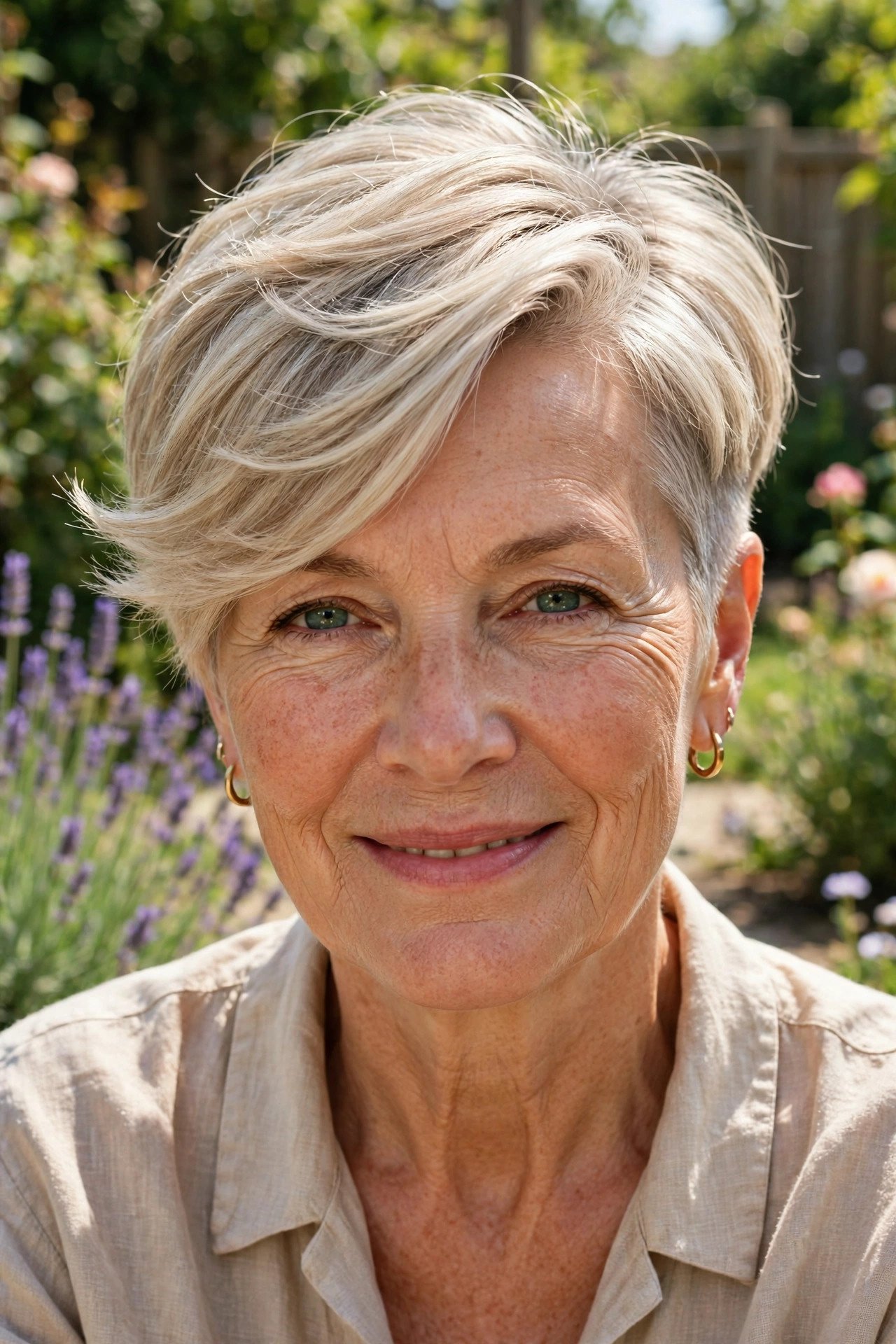
Short does not have to mean severe.
This pixie keeps the sides and back neat and short while the top stays long enough to sweep, tuck or lift. That extra length on top is what makes it forgiving. It softens the forehead, gives fine hair somewhere to go, and grows out gently instead of spiking. Ask your stylist for a pixie with a longer, textured top and a soft, tapered neckline rather than a clipped one.
- Top length: about three to four inches, left textured
- Sides: tapered close, never buzzed tight
- Neckline: soft and feathered, not a hard line
It suits women who want short hair that still moves.
2. The Chin Length Bob With One Clean Edge

The bob that never really leaves is back at chin length.
Cut in one clean line at the jaw, this bob frames the face and makes fine hair look thicker at the ends. The secret is the edge. It has to stay blunt, with no thinning shears near the bottom, or the whole effect thins out with it. Wear it with a centre part for a sharper read, or a side part on days when you want softness.
It works on straight and slightly wavy hair. Curly hair can wear it too, cut a touch longer to allow for the spring.
💡 Quick Tip
Book the tidy up trim before you leave the salon. A blunt bob holds its clean line for about six weeks, then the edge starts to soften and the fullness goes with it.
3. The Textured Crop With Piecey, Separated Ends

Think of the crop as the pixie’s relaxed cousin.
It sits a little longer than a classic pixie, with the ends cut into small, separated pieces that you can push around with your fingers. Those piecey ends are the point. They break up the outline so the cut looks casual instead of helmet neat, and they give flat hair a bit of grip. A pea sized dab of matte paste, worked through dry hair, is the whole styling routine.
- Ask for texture on the ends, not layers through the top
- Keep the fringe long enough to sweep sideways
- Style on dry hair so you can see the shape as you go
On thick hair, ask for weight taken out of the back so it does not puff.
4. The French Bob With a Straight Across Fringe
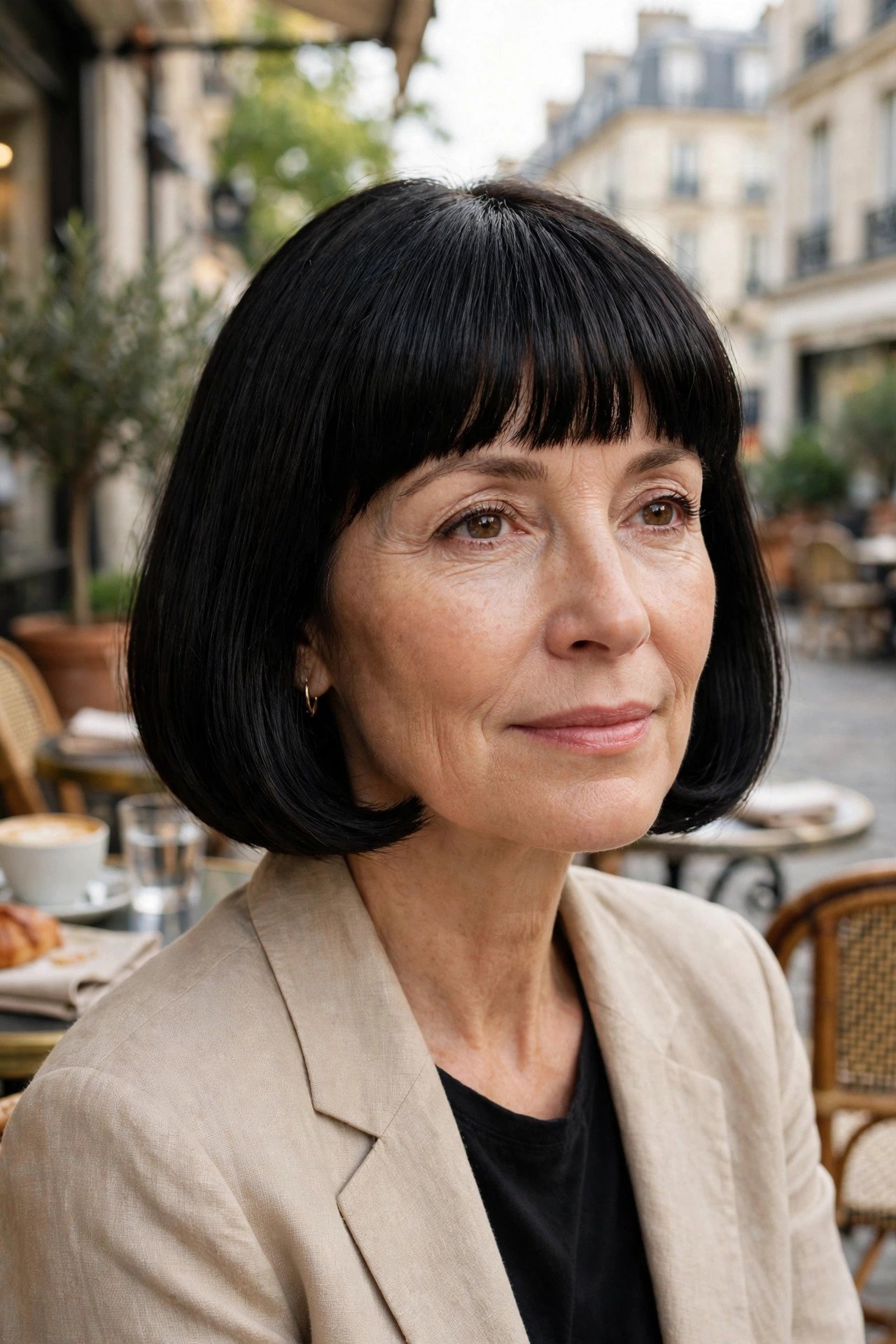
Jaw length, a full fringe, and a slight curve under at the ends.
The French bob is cut to the jaw or just above, with a fringe that sits straight across the brows. It reads polished with almost no styling, because the shape is built into the cut itself. The ends usually curve under a little, which keeps the outline tidy and a touch retro. It flatters oval and longer faces, and it gives fine hair a strong, full looking outline.
One honest warning: the fringe is a standing appointment. It needs a quick trim every few weeks to stay at brow length.
Before you book it
5. The Bixie: Half Bob, Half Pixie, All Softness

Not ready to give up length, but tired of the weight?
The bixie sits between a bob and a pixie. The back and sides are cut close like a pixie, while the front keeps bob length pieces that frame the cheeks. It is the cut women choose when they want short hair without the big reveal. You still get something to tuck behind your ears, and the grow out is kind, because no hard line grows out with it.
It suits most face shapes, and it is kind to fine hair that goes flat inside a full bob.
The bixie is the halfway cut: pixie freedom at the back, bob softness around the face.
6. The Curly Pixie With Tapered Sides
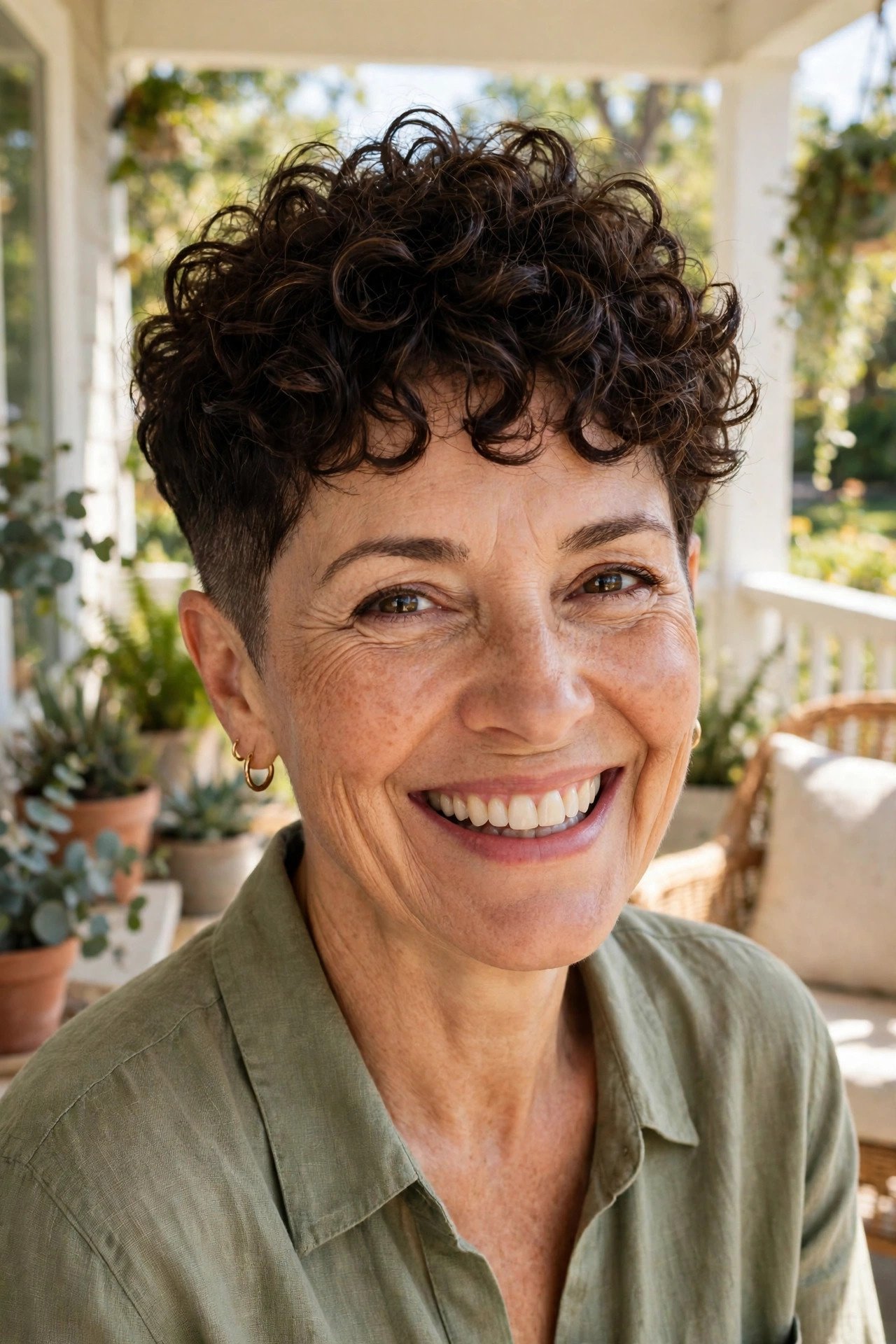
Curls change the rules for short hair.
A curly pixie keeps the sides tapered short and leaves the top long enough for the curl to form a full ringlet or two. Cut dry, curl by curl, it avoids the two classic problems: the triangle shape and the surprise shrinkage. The tapered sides keep the silhouette neat while the top does the talking, and the whole cut asks very little of you on weekday mornings.
Ask for the top left longer than you think it should be. Curls spring up once they dry.
Wash, then work leave in conditioner through soaking wet hair.
Scrunch upward with a cotton tee shirt, not a rough towel.
Air dry or diffuse on low, hands off until the hair is fully dry.
7. The Blunt Lob That Rests on the Collarbone
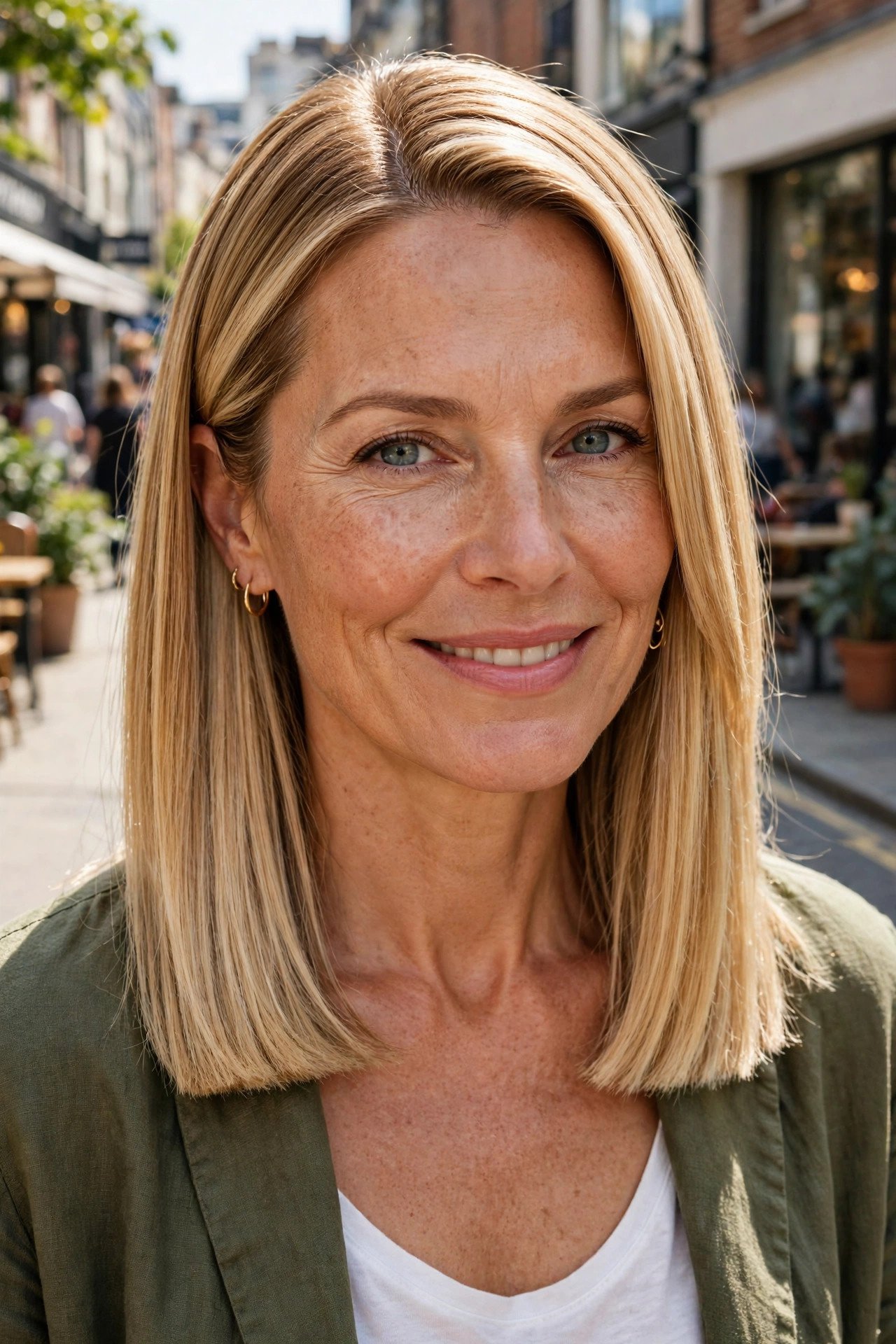
The lob is the most booked cut in most salons, and the blunt version is why.
It lands right on the collarbone, long enough for a low ponytail, short enough to swing. Cut in one line with no layers, the ends look thick and healthy even on fine hair. It is also the rare cut that flatters round, square and long faces alike, because the length sits below the jaw and above the chest, right where most faces look balanced.
Wear it tucked behind one ear with a deep side part on days you want more polish.
Hair past the shoulders with old layers and ends that fade into wisps, so the whole shape reads tired.
One clean line at the collarbone, ends that look thick again, and enough length left for a low ponytail.
8. Curtain Bangs Over Shoulder Length Layers
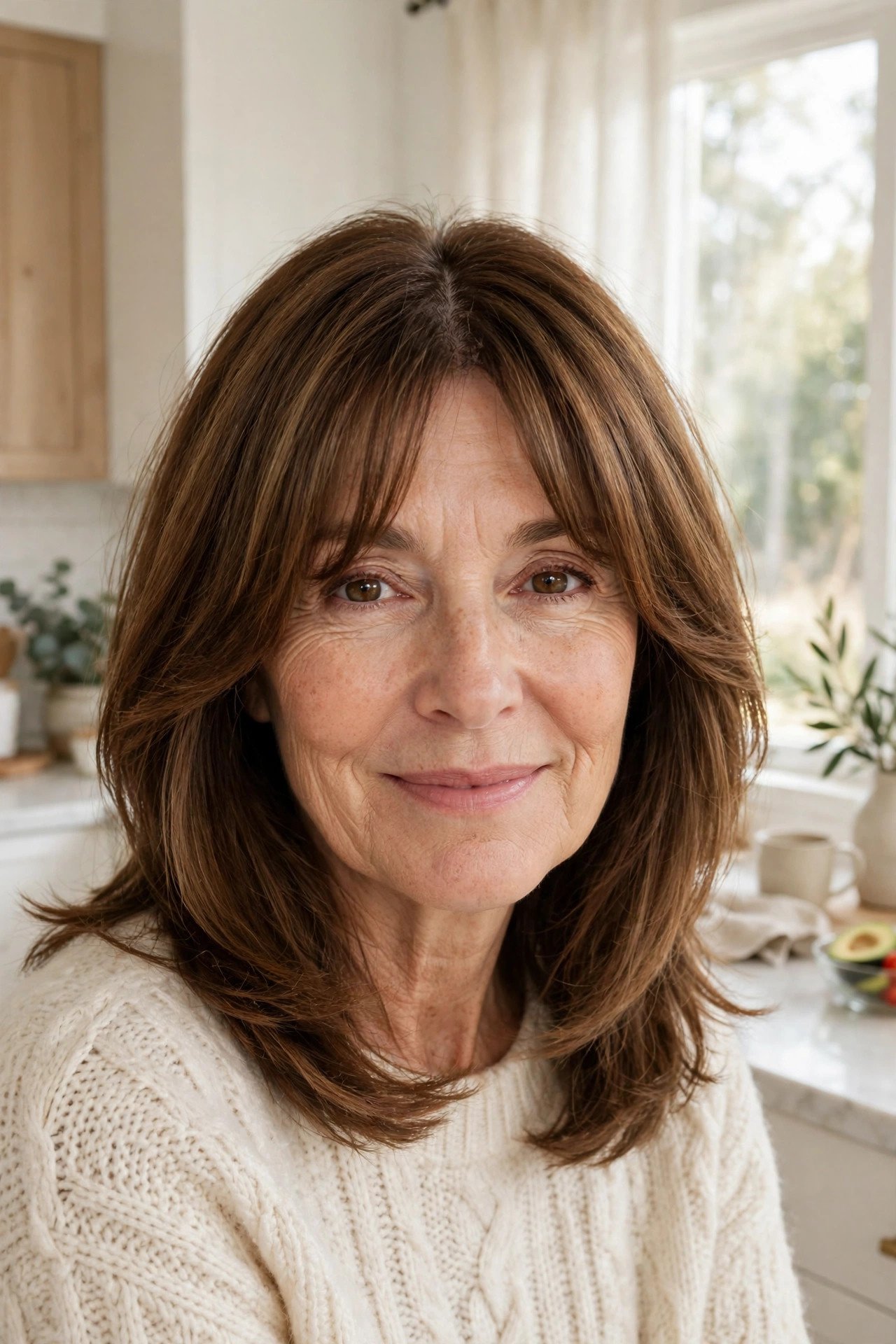
Curtain bangs are the fringe for women who swore off fringes.
They part in the middle and sweep out to the cheekbones, so they frame the face without covering the forehead. Paired with shoulder length layers, they take the heaviness off long faces and soften a strong jaw. The grow out is the friendly part. Within a few weeks they blend into the layers and read as face framing instead of a fringe you are stuck with.
They also behave on wavy hair, which is more than a full fringe can claim.
| Curtain bangs | Full fringe |
|---|---|
| Forehead stays mostly open | Forehead fully covered |
| Grows out into the layers | Needs regular trims to hold its line |
| Best for a first fringe | Best for a bold, polished look |
9. The Modern Shag With Feathered, Flicked Layers
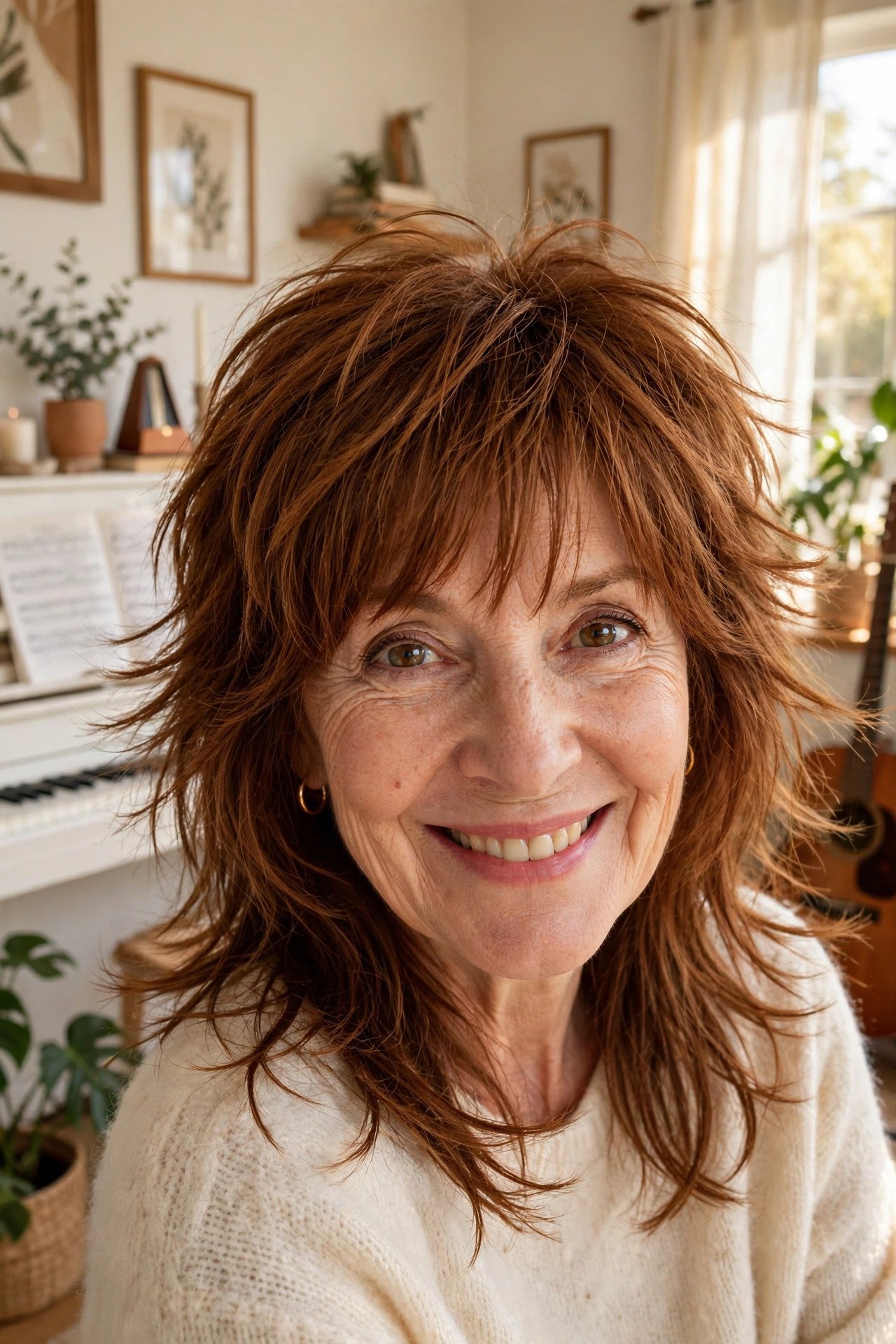
The shag is back, but the current version is softer around the face.
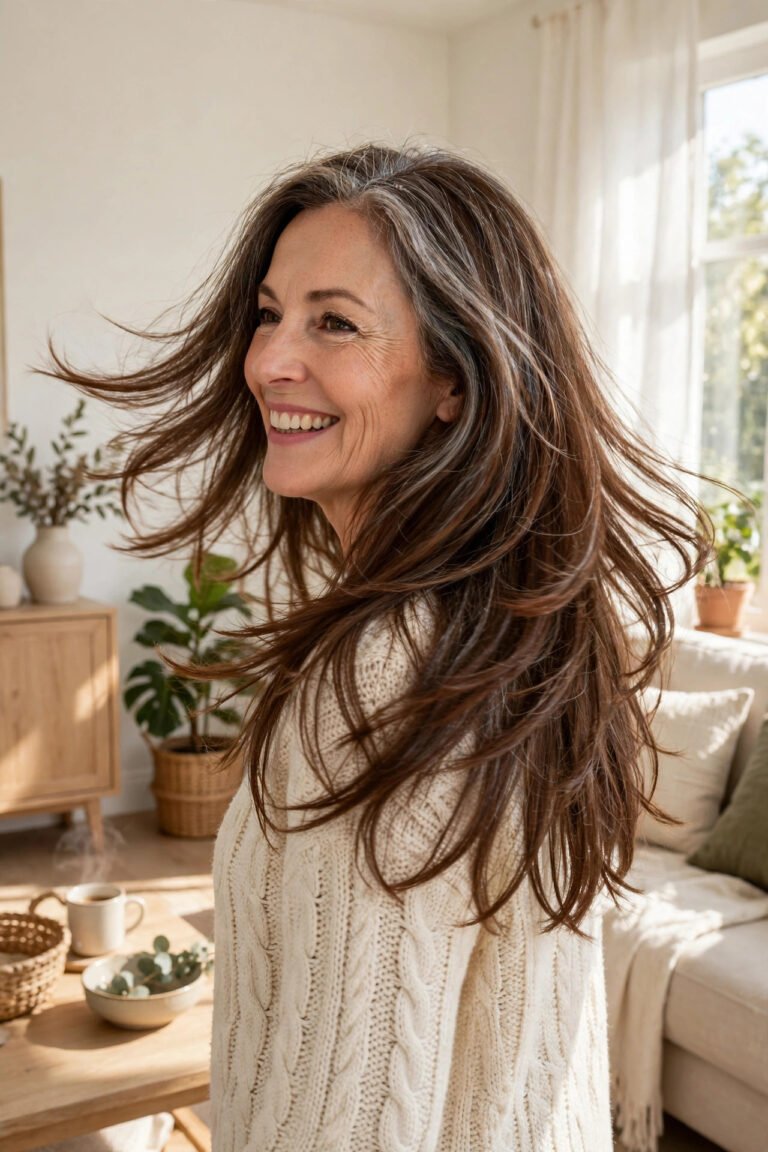
Layers start high, the ends flick out, and the whole cut has movement built in. On women over 40 it does something useful: it lifts the eye up toward the layers instead of down toward the jaw. It loves wavy hair and rewards a rough dry with your fingers instead of a careful blow dry. Straight hair can wear it too, with a bend added through the ends.
Ask for the layers to stay feathery rather than chopped, which keeps the shag on the right side of retro.
Ask for layers that start around the cheekbones.
Dry it with your head upside down for lift at the roots.
Letting the back grow much longer than the front.
Flattening it with a heavy oil every day.
10. The Angled Bob That Runs Longer at the Front
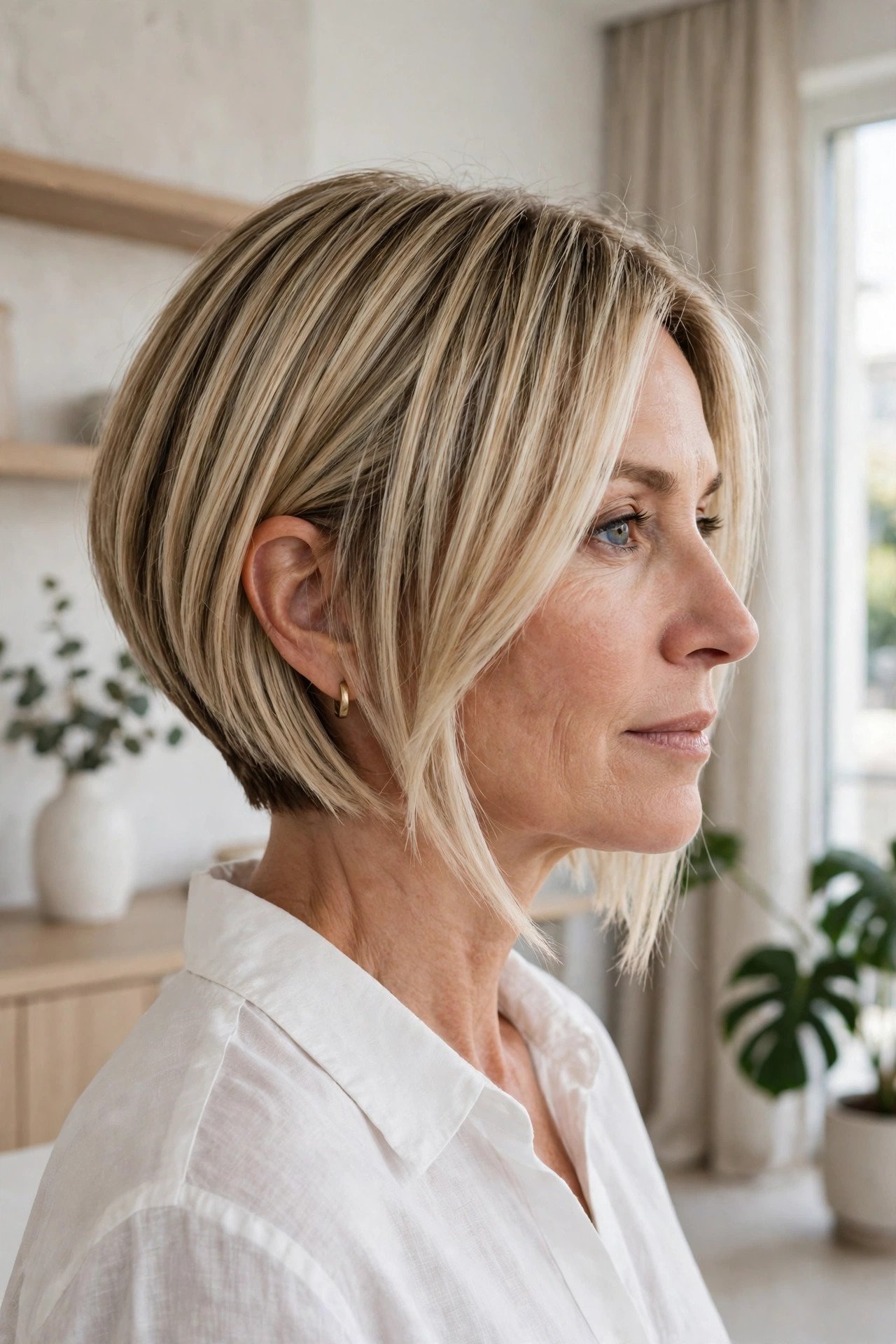
Longer at the front, shorter at the back, and sharper for it.
The angled bob slopes down from the nape to below the chin, which pulls the eye forward and gives the profile a clean diagonal line. It is a strong choice if your hair is fine at the front, because the longer front pieces fake fullness right where you see it most. The back sits stacked just enough to lift, without going into a full wedge.
It is at its best on straight or smooth hair, where the angle can actually be seen.
- ▸Front length: below the chin works best after 40
- ▸Back: softly stacked, never shaved
- ▸Parting: a deep side part sharpens it, a centre part softens it
11. The Italian Bob With Rounded, Bouncy Volume
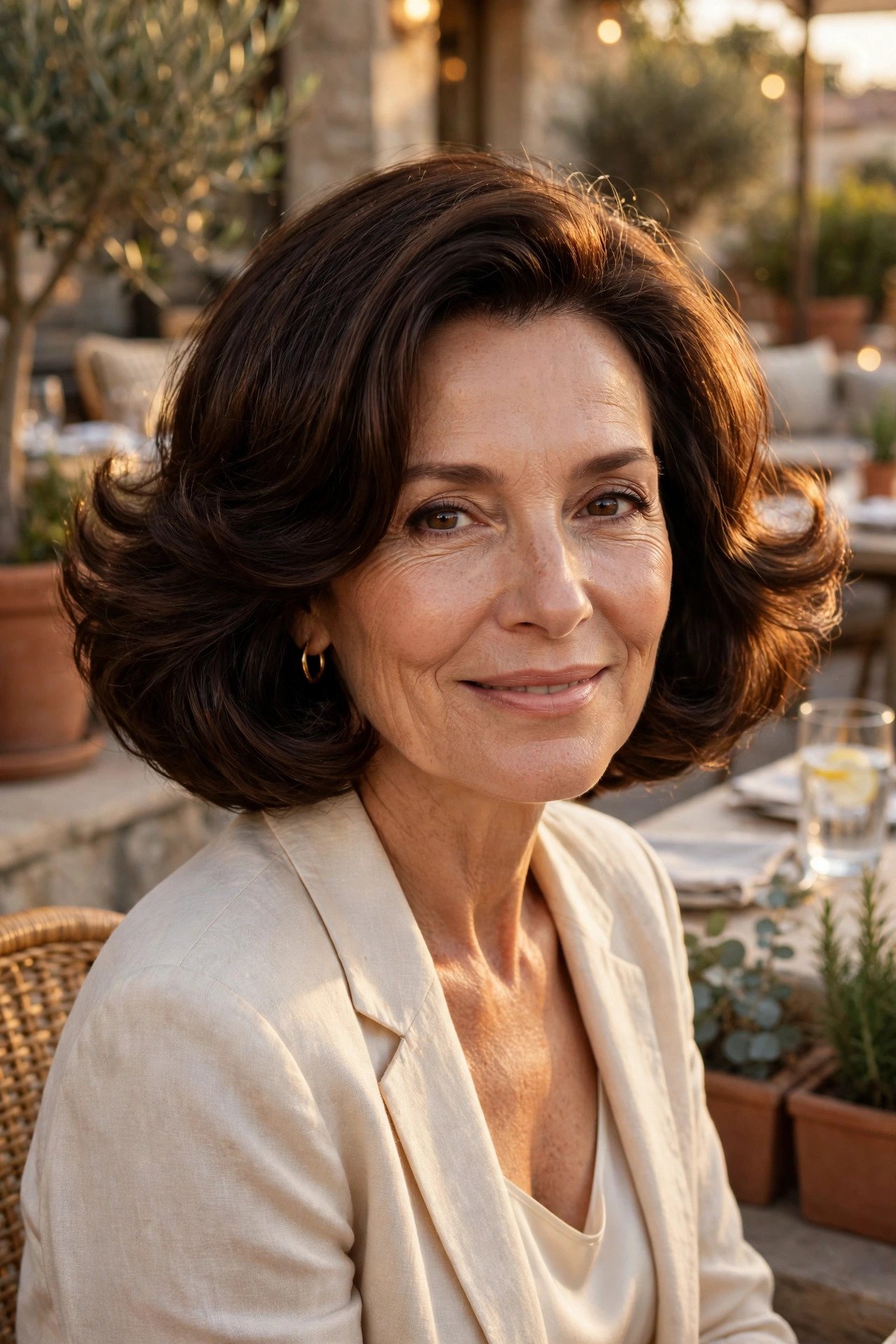
If the French bob is neat, the Italian bob is bouncy.
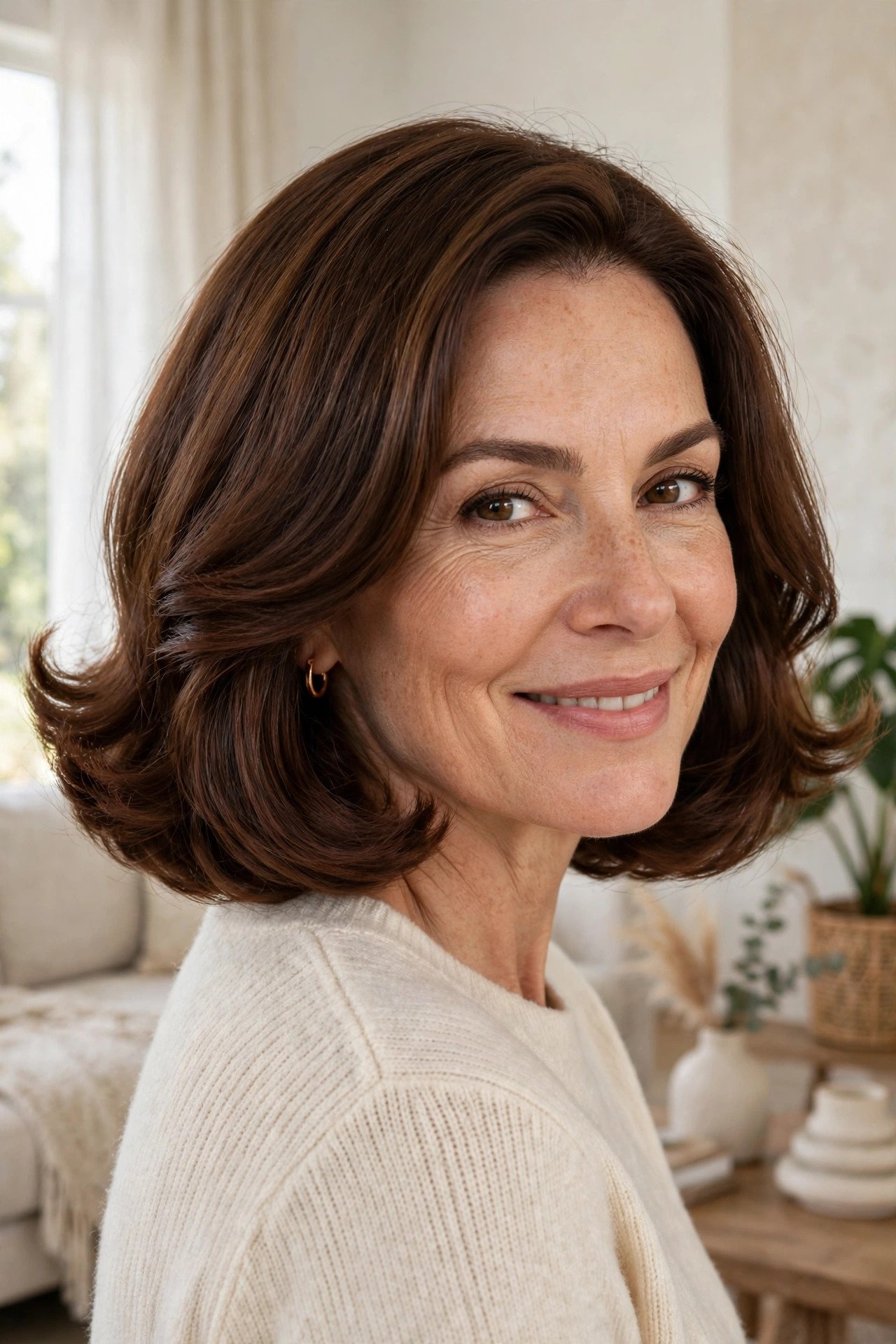
It sits around chin to jaw length like its French cousin, but the ends are fuller, rounder and blown out with air in them. Think volume at the sides instead of a flat curtain of hair. It suits women whose hair has some natural body, and it gives fine hair a wider silhouette that reads glamorous rather than grown out. A round brush and five minutes is the whole routine.
It looks its best in the first month after a cut, so keep the trims regular.
12. The Stacked Bob With a Lifted, Rounded Back

Flat hair at the back is the complaint this cut answers.
The stacked bob builds short, graduated layers at the nape that push the hair up and out, so the back of your head gets a rounded shape instead of a flat sheet. The front can stay longer and softer, which keeps the cut gentle from the front view. It is a favourite for fine, straight hair that refuses to hold any other shape, and it holds up well between appointments.
From the side, the rounded back is the whole point, so check that view in the salon mirror before you leave.
Signs the stacked bob suits you
13. The Wavy Lob With a Soft Middle Part
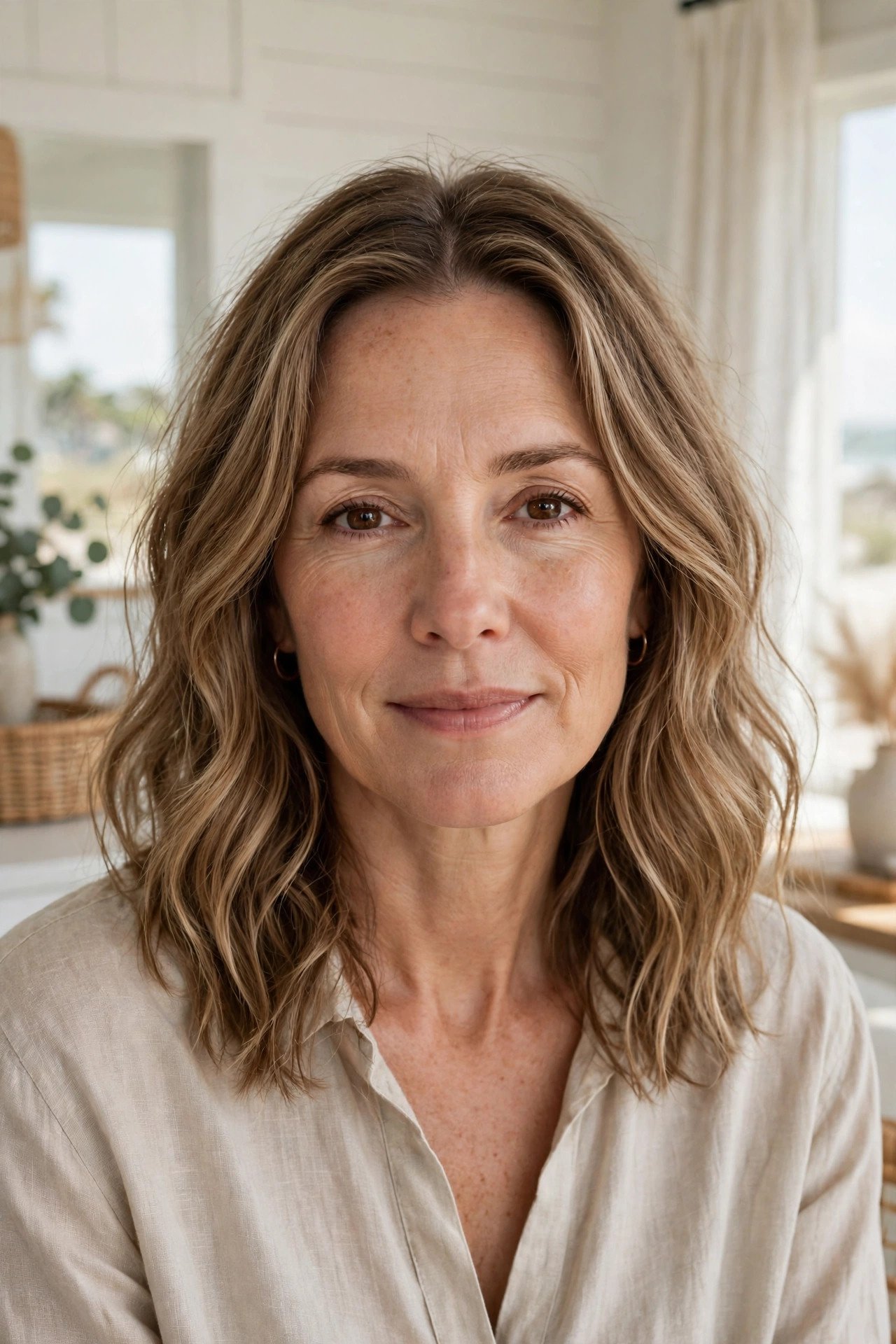
Some cuts fight your wave. This one hires it.
A collarbone length lob with a middle part lets natural waves fall evenly on both sides, which balances the face and looks current without trying hard. The cut needs long, light layers so the wave can move, and ends that are point cut rather than blunt, so they do not stack up into a triangle. Scrunch in a little mousse on damp hair and leave it alone.
A centre part can feel stark for the first few days. Give it a week, or shift it half an inch off centre.
14. The Butterfly Cut With Long, Sweeping Layers
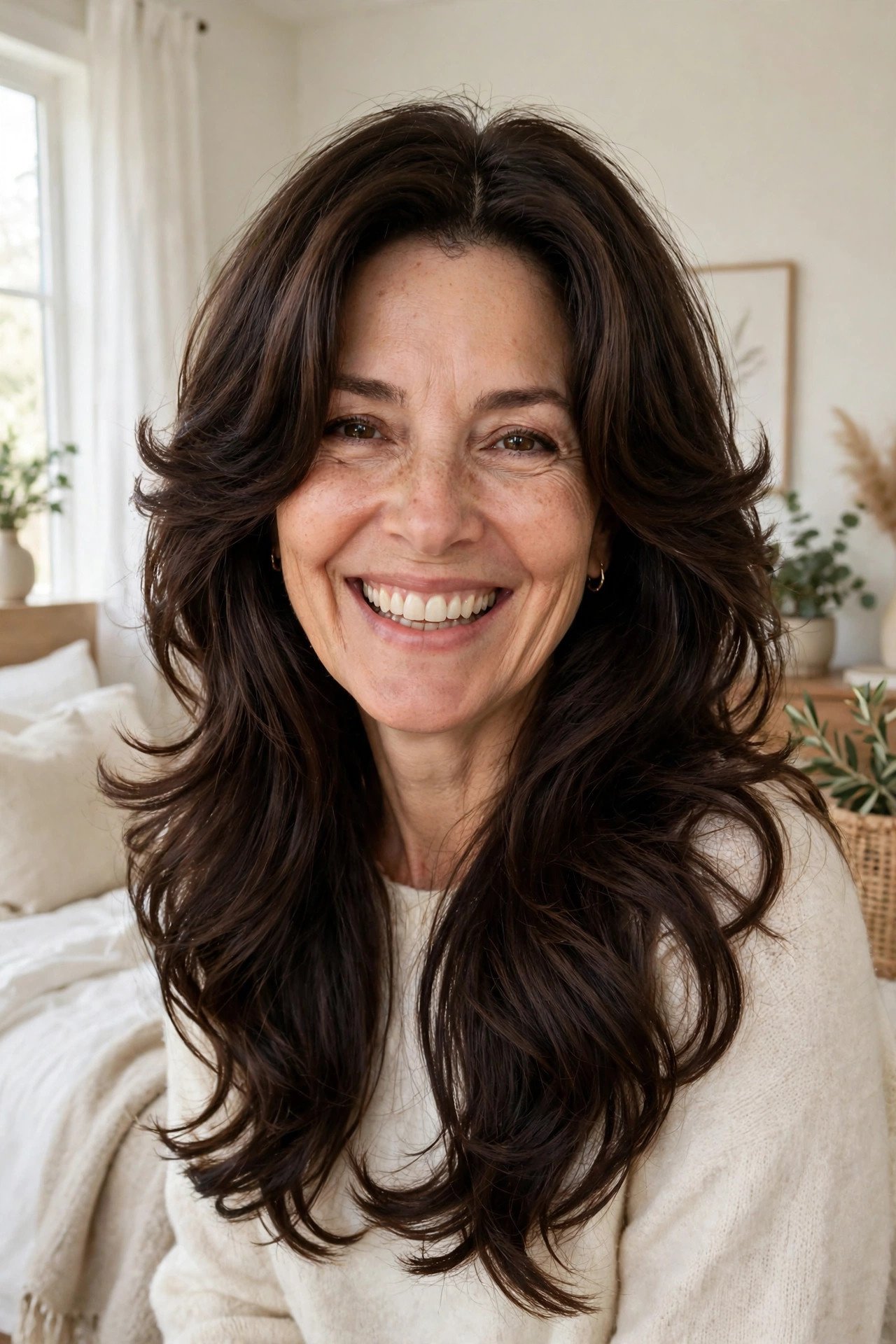
The butterfly cut is how women keep long hair and still get a shape.
Short, sweeping layers frame the face like a curtain, while the back stays long and full. From the front it can look like a bouncy blowout. From the back, your length is still there. It needs hair past the shoulders to work, and it shows best on hair with some wave, or a good blow dry behind it on the days you want the full effect.
It is a kind first step if you are curious about shorter hair but not ready to lose length.
📌 Good To Know
The short front layers are the commitment here. They grow out into face framing within a couple of months, so the shape softens kindly instead of collapsing all at once.
15. Long Layers That Start at the Cheekbones
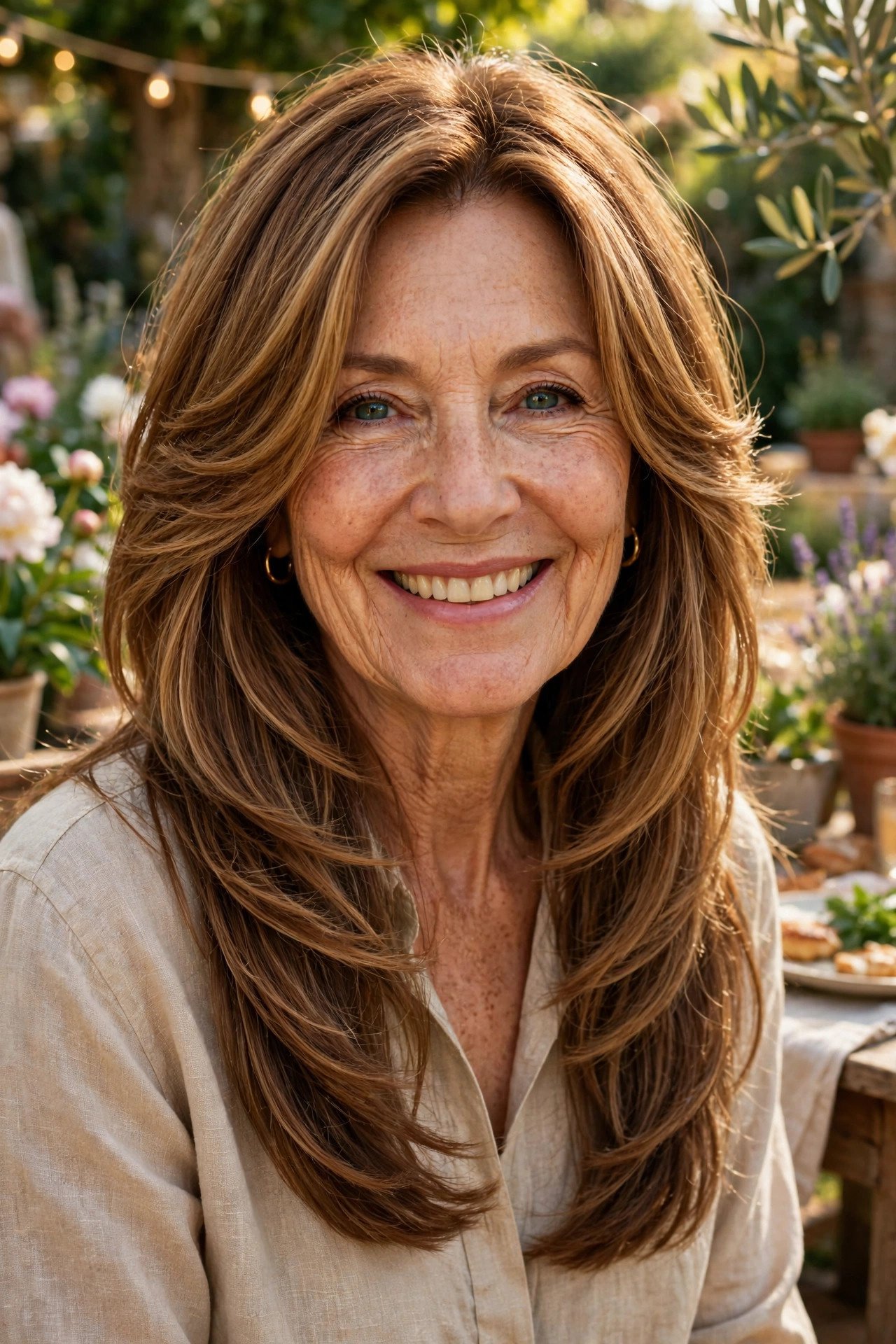
Where the layers start matters more than how many there are.
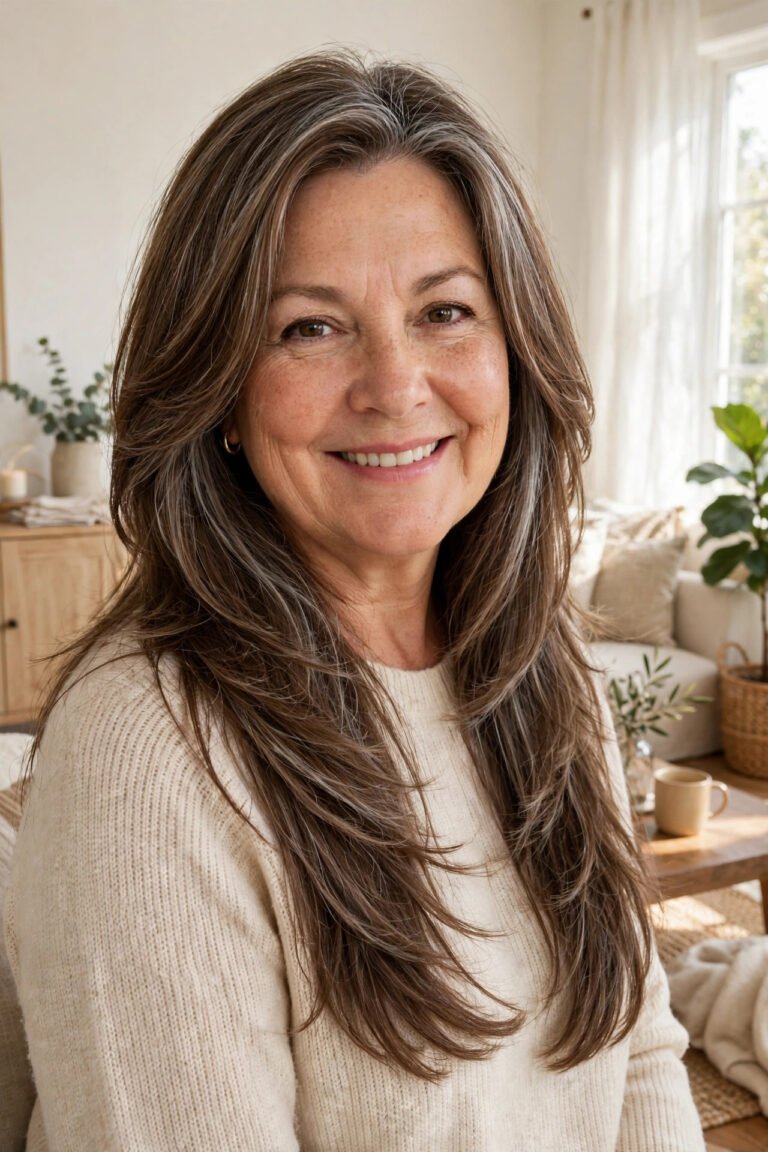
On long hair, layers that begin around the cheekbones put movement where people actually look: beside your eyes and cheeks. The rest of the length stays thick because the layering is concentrated up top. It is a kind cut for women growing out a fringe or a shorter style, since the top layers give the grow out somewhere to blend.
Ask for the back to stay one length at the bottom edge, so the ends keep their weight.
Layers that start at the cheekbones lift the whole face. Layers that start at the ends just thin them out.
16. Glass Hair: Straight, Sleek and Worn at Lob Length
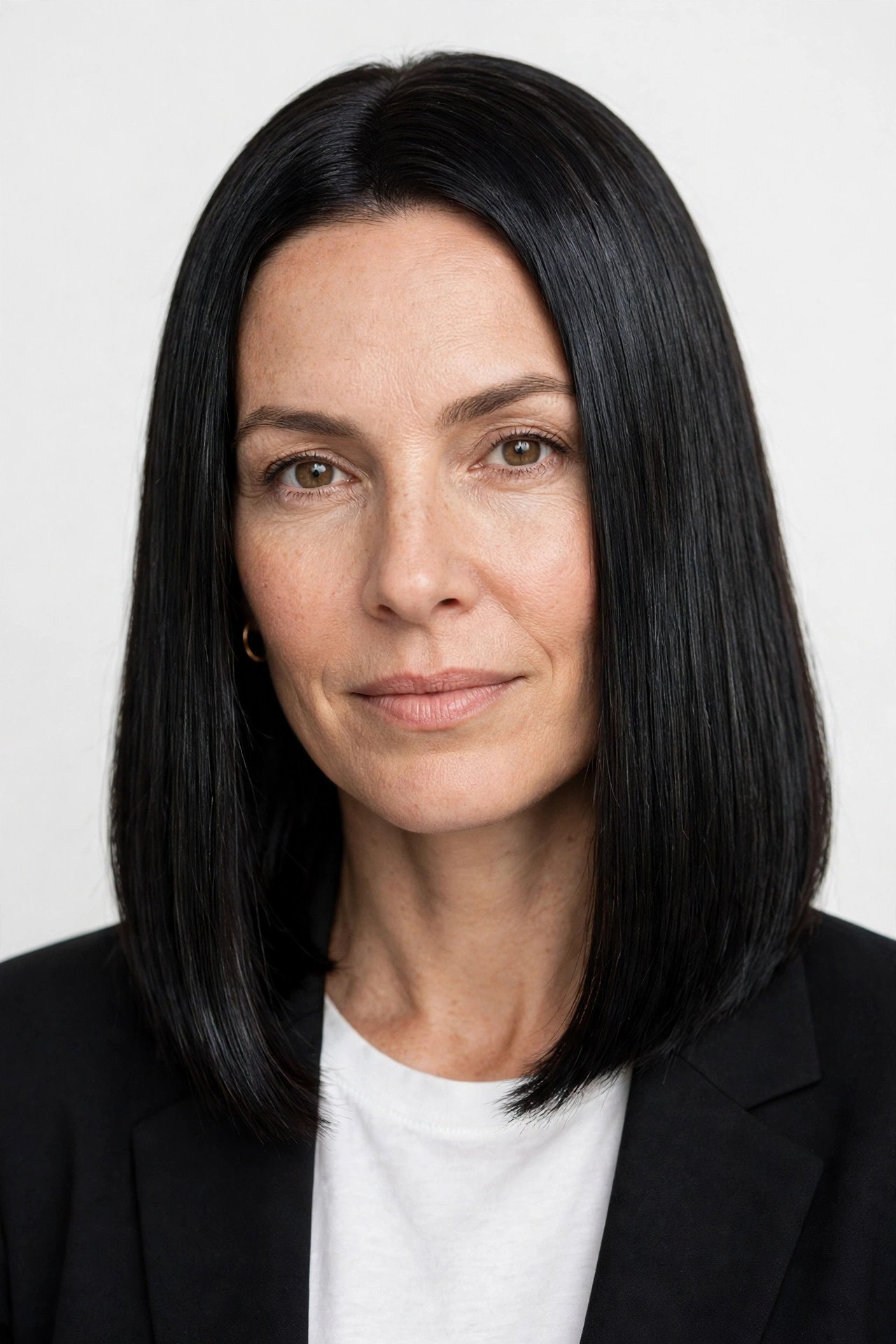
Glass hair is less a cut than a finish, but the cut underneath matters.
It starts with a blunt lob, one length with no layers to poke out, then the hair is dried poker straight and polished until it reflects light like a sheet. On women over 40 it reads sharp and deliberate, the opposite of a grown out trim. It works best on hair that is naturally straight, and on finer hair that goes fluffy the moment layers go in.
Humidity is the honest enemy here. On damp days, this one fights back.
Blow dry in sections, with the nozzle pointing down the hair shaft.
Pass a flat iron once per section, slowly, instead of three fast passes.
Finish with one drop of lightweight serum on the ends only.
17. The Curly Shag With a Short Fringe

Curly hair and a fringe can get along. The cut just has to be planned dry.
This shag layers curly hair so the volume sits up top and around the crown, not at the ends where it turns into a triangle. The fringe is cut longer than you expect, a few curls resting on the forehead, because it will spring up once it dries. Cut curl by curl, the shape settles in and holds for months between appointments.
Bring photos of the shape on curls that match yours, in length and tightness.
Book a stylist who cuts curls dry, in their natural state.
Bring photos of curls like yours, not straight hair.
Letting anyone thin it out with a razor.
Judging the fringe while it is still wet.
18. Bottleneck Bangs With a Midi Cut
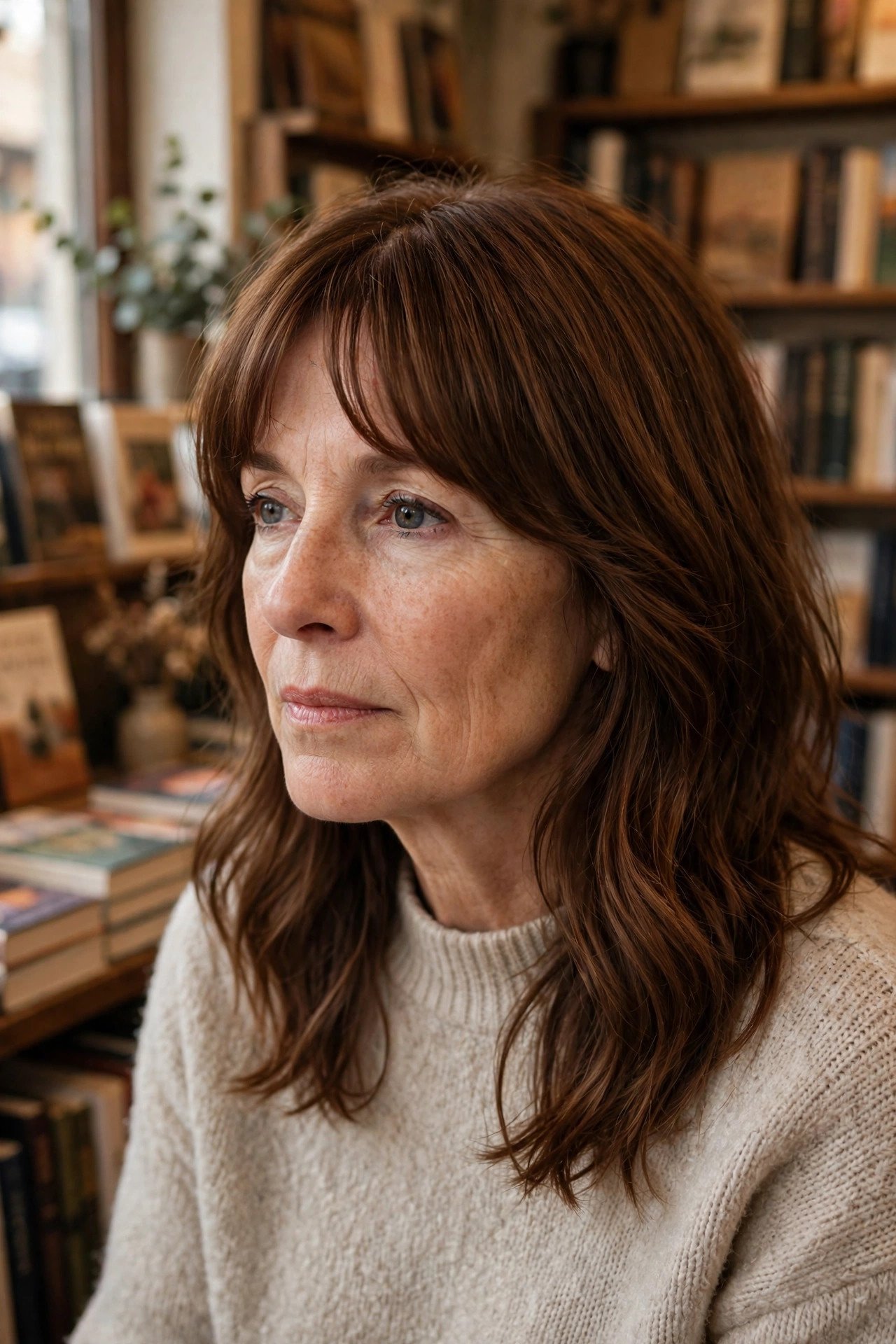
Bottleneck bangs are the in between fringe: narrower at the top, wider at the cheeks.
They start slim at the centre of the forehead and curve out wider as they reach the cheekbones, like the neck of a bottle opening into the cut. With a midi length base, somewhere between the shoulders and the chest, they give long faces balance and round faces a bit of length. Styling is a quick sweep with a round brush, away from the face on both sides.
They are a low risk way to test a fringe, because the centre section is small.
| Bottleneck bangs | Curtain bangs |
|---|---|
| Slim at the centre, wider at the cheeks | An even sweep out on both sides |
| Forehead partly covered | Forehead mostly open |
| Grows out soft and slow | Grows out soft and fast |
19. The Asymmetric Bob With One Tucked Side
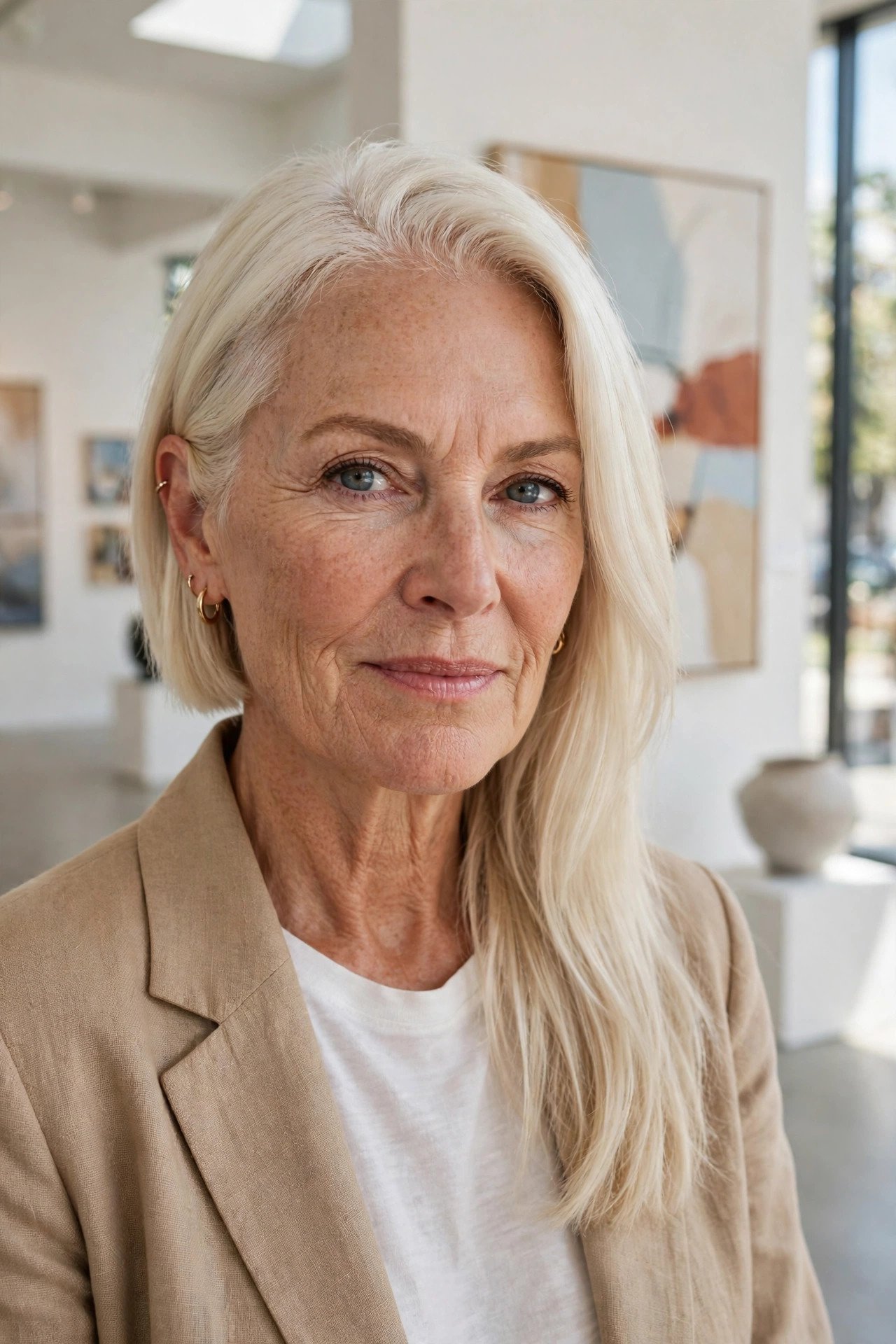
One side longer than the other sounds like a mistake. Cut well, it is a strategy.
The asymmetric bob keeps one side at jaw length and lets the other fall an inch or two longer. The longer side draws the eye across the face, which softens strong features and adds interest to very straight hair. Most women wear the long side flowing and the short side behind the ear, which shows off earrings and a good neckline.
It grows out unevenly by design, so plan on slightly more frequent tidy ups.
A one length bob that sits the same on both sides and reads plain on straight hair.
One longer side sweeping across, the shorter side tucked back, and a profile with a point of view.
20. Loose Waves That Fall Past the Shoulders
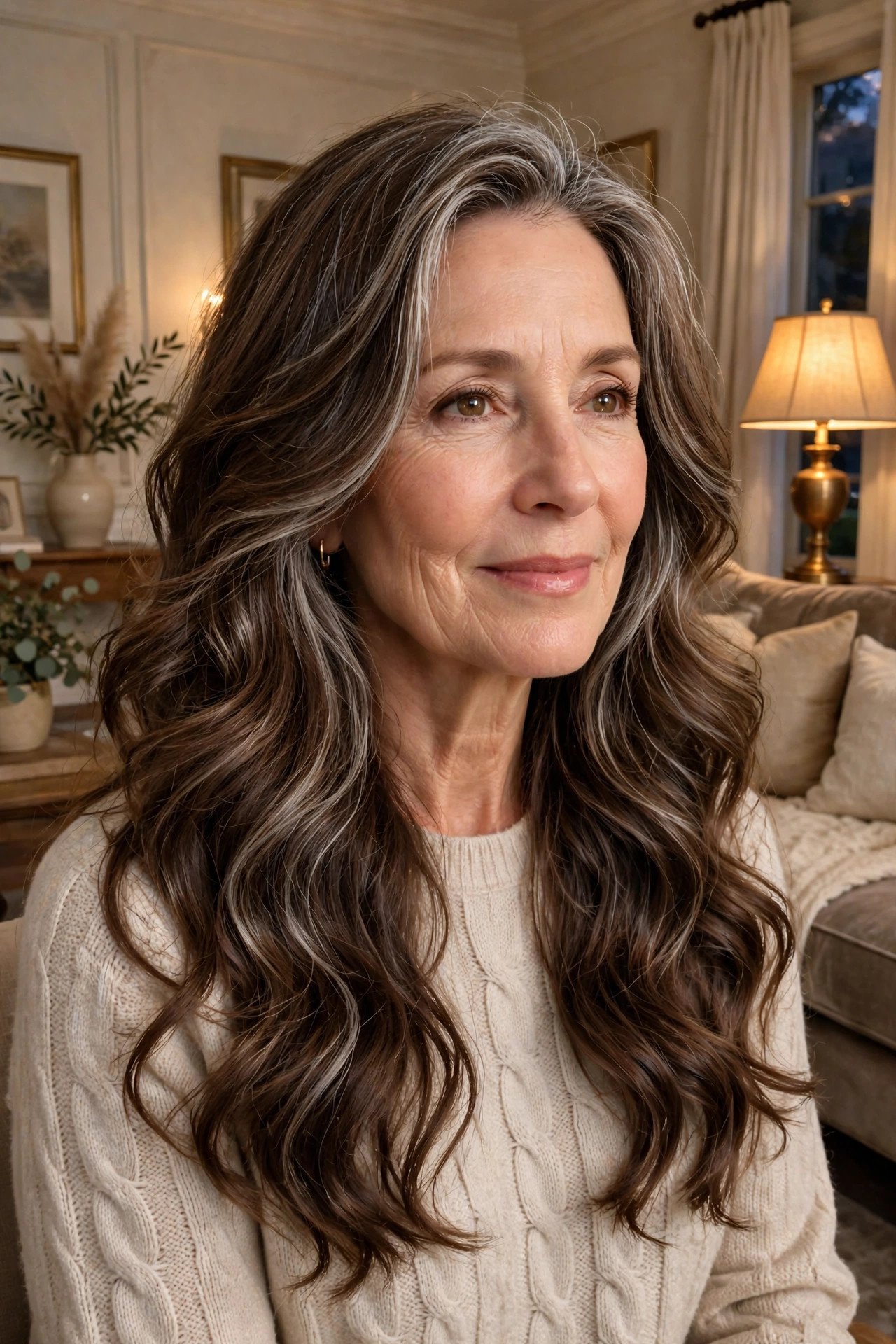
Long hair after 40 does not need to be straightened into submission.
Loose waves past the shoulders, with a few long layers to stop them dragging, look soft and current. The trick is the wave size. Big, brushed out waves read elegant. Tight curls from a small iron can date the whole look in one pass. Wrap large sections around a wide barrel, leave the ends out, then brush through once everything has cooled.
On second day hair, a loose low bun overnight brings most of the wave back.
- ▸Iron: a wide barrel, worked in large sections
- ▸Leave the last inch of the ends out of the iron
- ▸Brush out only once the hair is fully cool
21. The Long Shag With Choppy, Lived In Ends
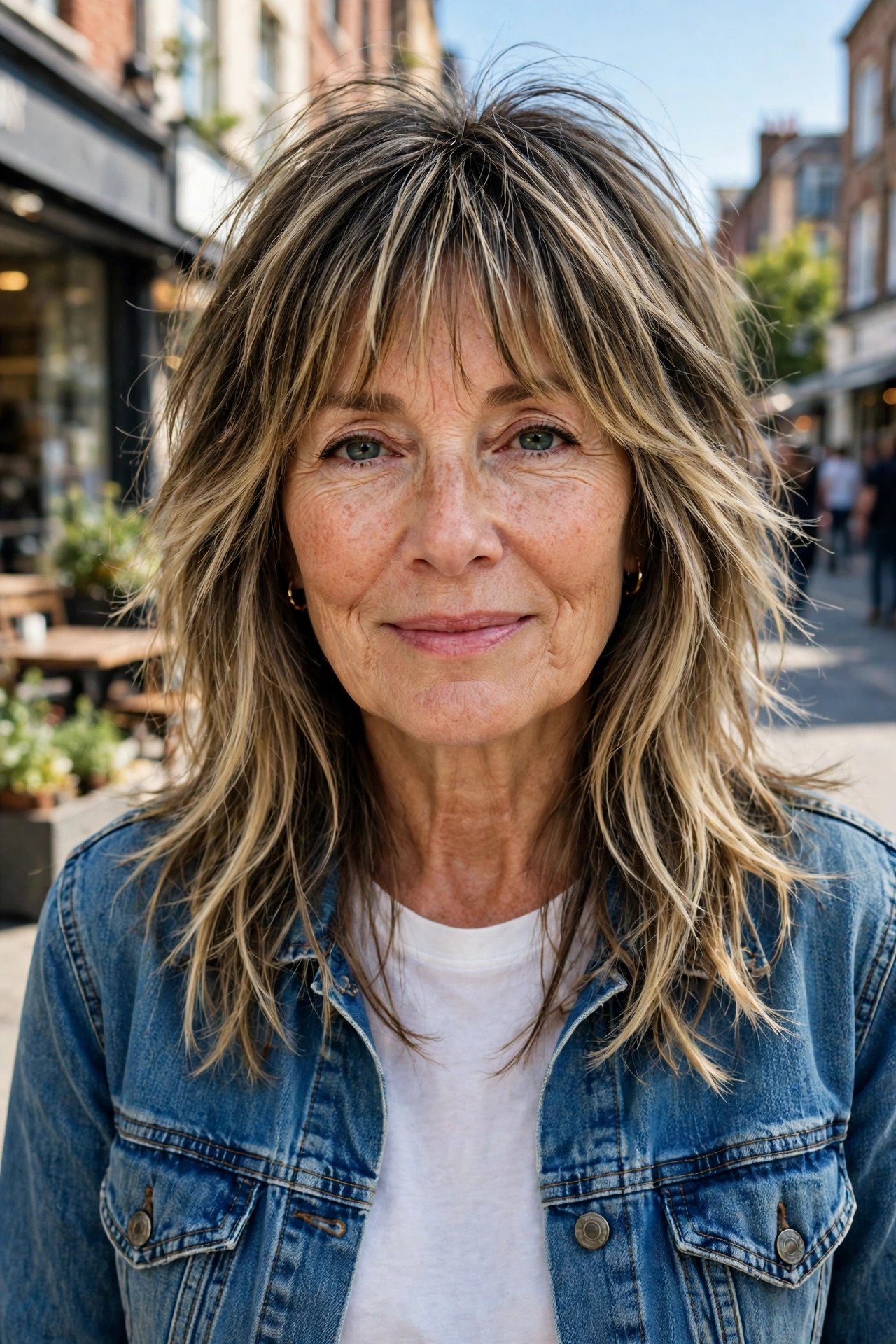
The long shag keeps the length and loses the curtain effect.
High layers and choppy ends break long hair into pieces that move on their own, so it stops hanging in two flat sheets. It suits thick hair best, because the layers remove real weight, and it gives wavy hair a shape it can fall into by itself. Fine hair can wear a gentler version, with the layers kept long so the ends do not disappear.
It is a forgiving cut to grow out, which makes it a good first step away from one length hair.
22. The One Length Long Cut With Blunt Ends
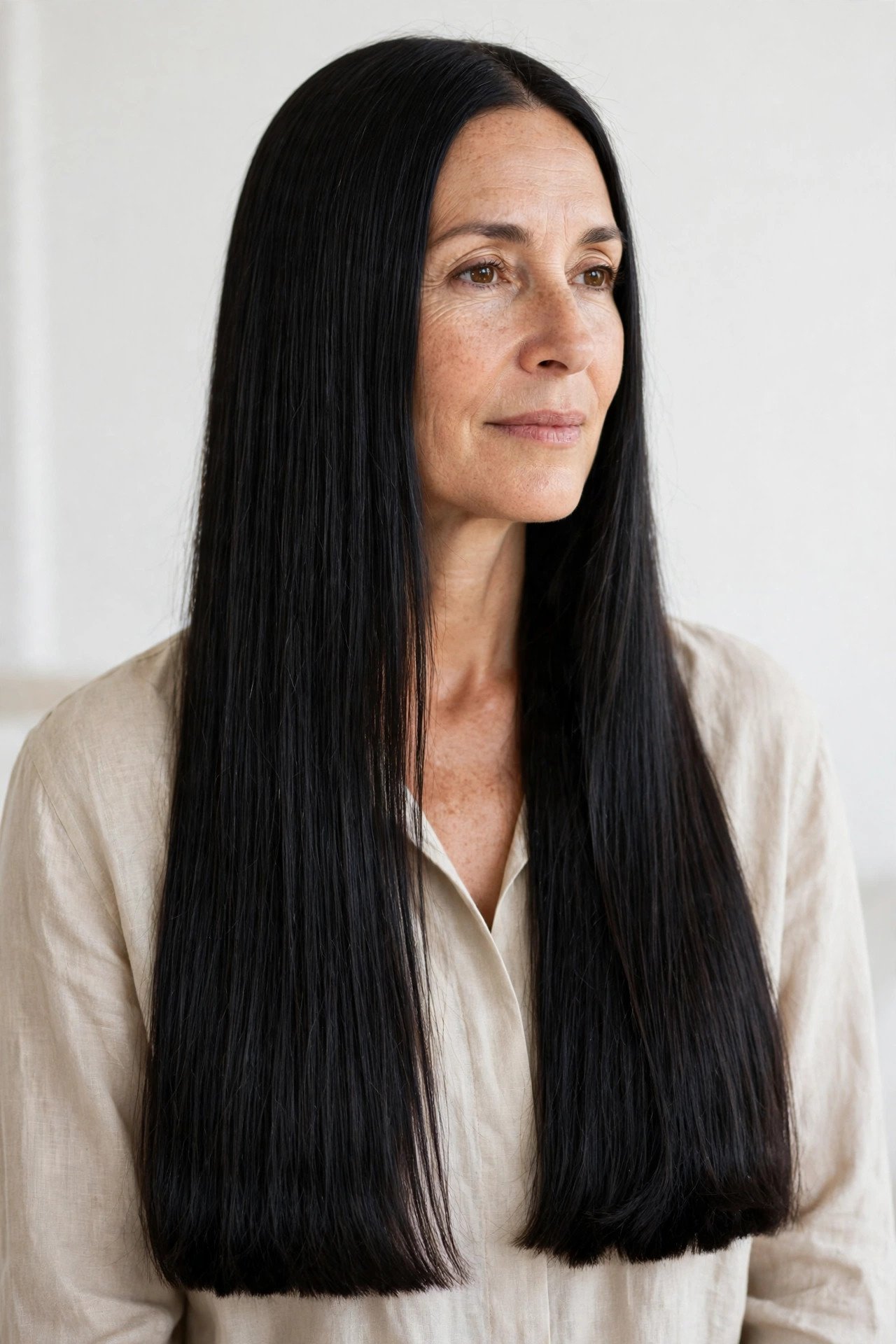
No layers at all is a bold choice on long hair, and on the right hair it pays off.
A one length cut worn long, with the ends trimmed into one straight, blunt line, makes hair look as thick as it can possibly look. Every strand ends in the same place, so nothing fades into wisps. It asks for healthy ends, because damage has nowhere to hide, and it flatters hair that is straight or only slightly wavy.
It is also the easiest long cut to trim at home in an emergency, though the salon line is always cleaner.
The blunt long cut works when
23. The U Shaped Long Cut That Keeps Its Thickness
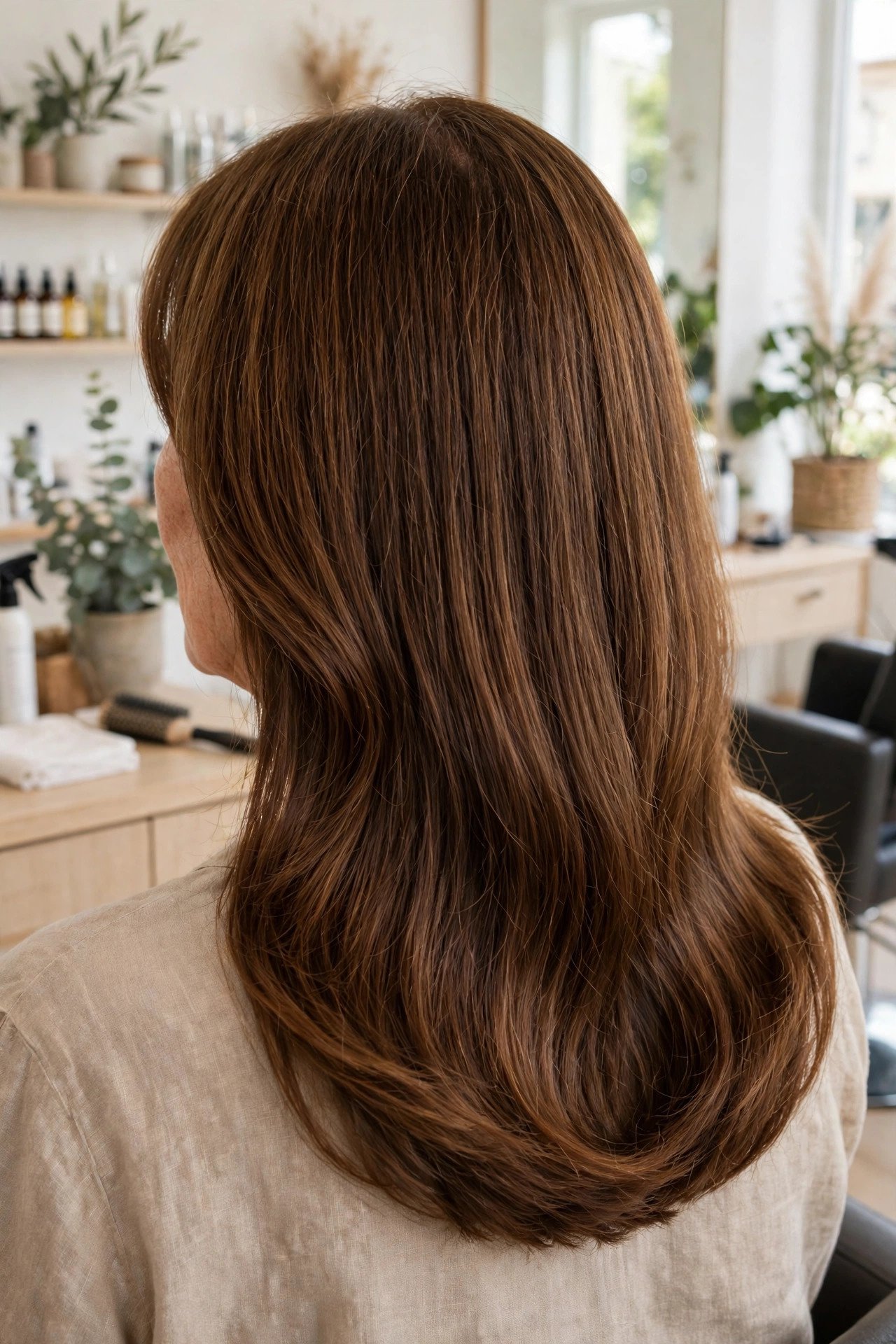
A U shape at the back is the quiet fix for long hair that looks thin from behind.
Instead of cutting straight across, the back edge curves down in a shallow U, longest at the centre. The corners, which are the thinnest part of most long hair, get trimmed away, and the whole back reads thicker. The front can carry light face framing while the back keeps its weight. It is a small change that photographs very well from behind.
Ask for a shallow U. A deep V does the opposite and thins the sides out.
24. The Tapered Crop for Coily Hair
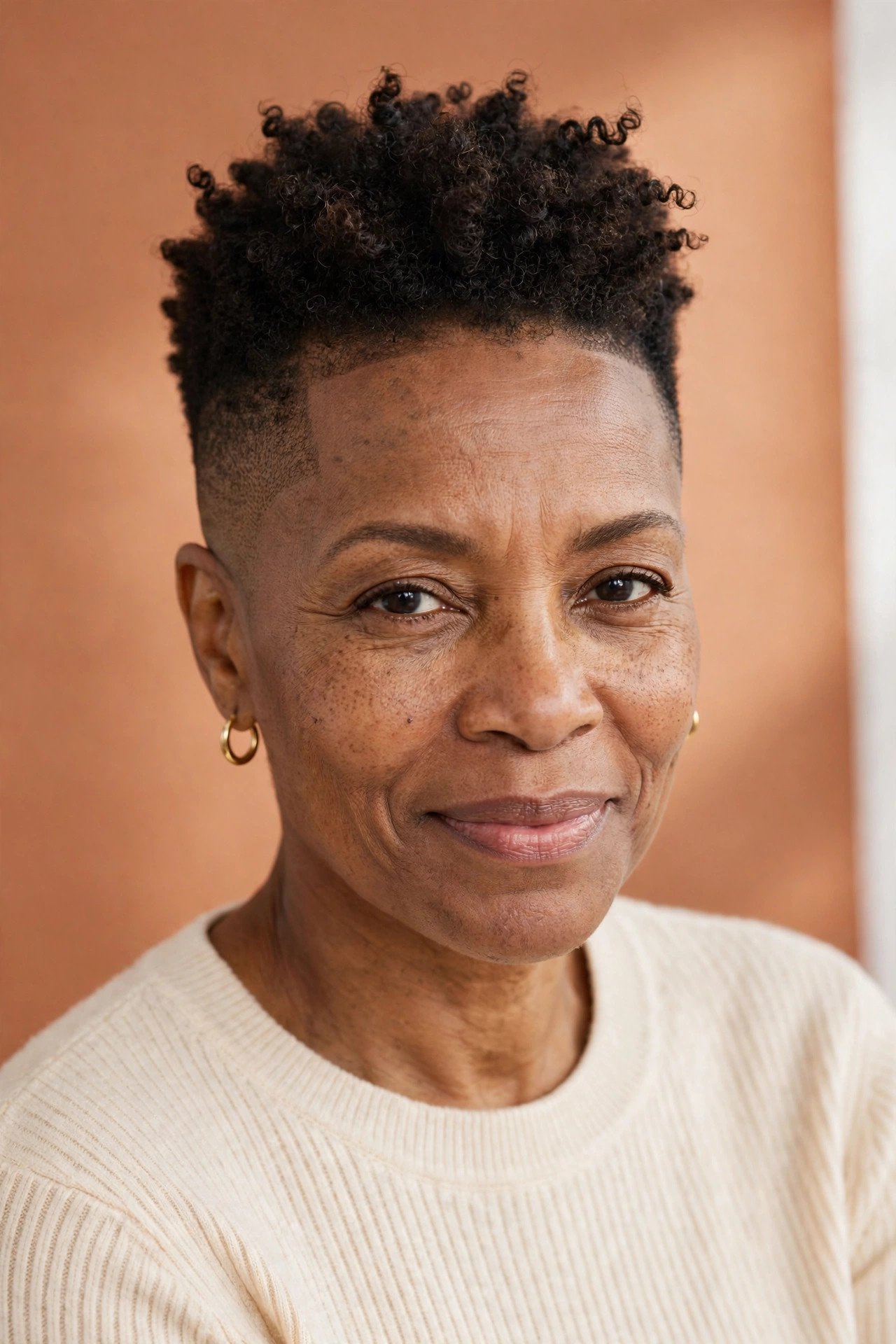
For tight coils, a tapered crop is both a style and a relief.
The sides and back are tapered close while the top keeps its length, so the coils can show their pattern. The shape is clean at the edges and full on top, and the morning routine shrinks to moisturising and a quick pat into place. It also gives fragile edges a rest from pulling, braiding and heat. A sharp, clean hairline at the front keeps the whole cut looking deliberate.
It grows out evenly for weeks, which makes it one of the lowest upkeep short cuts on this list.
💡 Quick Tip
Moisture is the upkeep here, not styling. A light leave in cream worked through the top length keeps coils defined, soft and shiny between wash days.
25. The Silver Bob That Blends Grey on Purpose
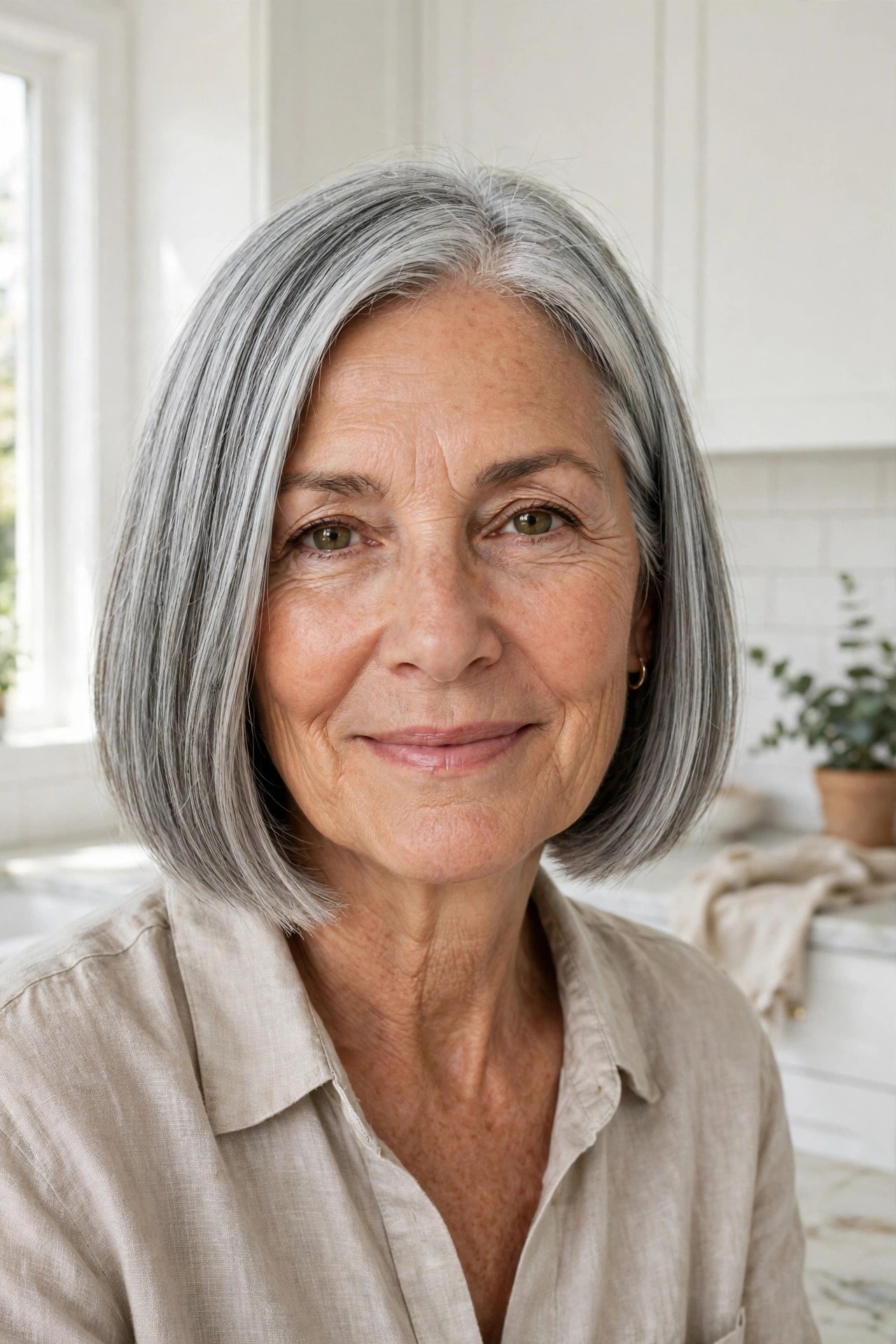
Growing out colour goes much better when the cut helps.
A blunt or softly layered bob is the classic partner for grey blending, because the strong shape carries the eye while the colour changes over. Salt and pepper hair has natural dimension that a good bob shows off, at chin to shoulder length, where the mix of tones reads as shine. Many women add a few face framing highlights during the changeover, then stop colouring for good.
The grow out line is far less obvious in a bob than in long hair, which shortens the awkward phase.
Keep the shape sharp, so the colour story looks chosen.
Use a purple shampoo once a week if brassiness creeps in.
Growing out colour under a shapeless, overdue cut.
Overdoing purple shampoo, which can dull bright silver.
26. A Wispy Fringe Over Long Layers
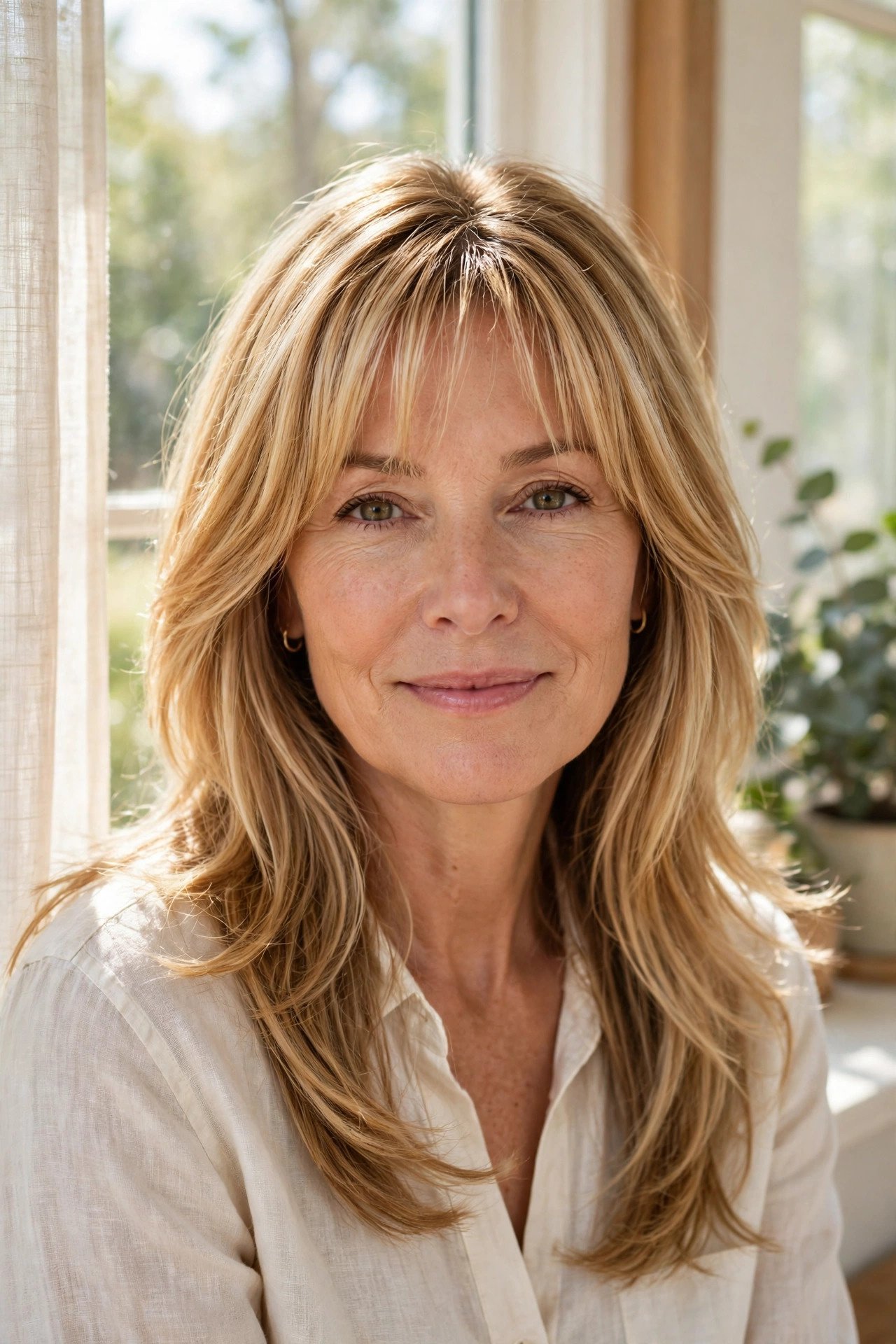
A wispy fringe is the smallest change that makes long hair look new.
It is cut light and see through, with small gaps between the strands, so it softens the forehead without the commitment of a full fringe. Over long layers it balances the length and draws attention up to the eyes. Because it is so light, it also grows out fast and blends away if you change your mind, which is why stylists suggest it to women trying a fringe for the first time.
On fine hair, the wispiness is natural. On thick hair, ask for the fringe thinned at the ends only.
Dry the fringe first, before the rest of your hair.
Brush it side to side as it dries, so it does not split in the middle.
Set it with the cool shot on your dryer, then leave it alone.
27. The Pageboy Bob With a Soft Modern Curve
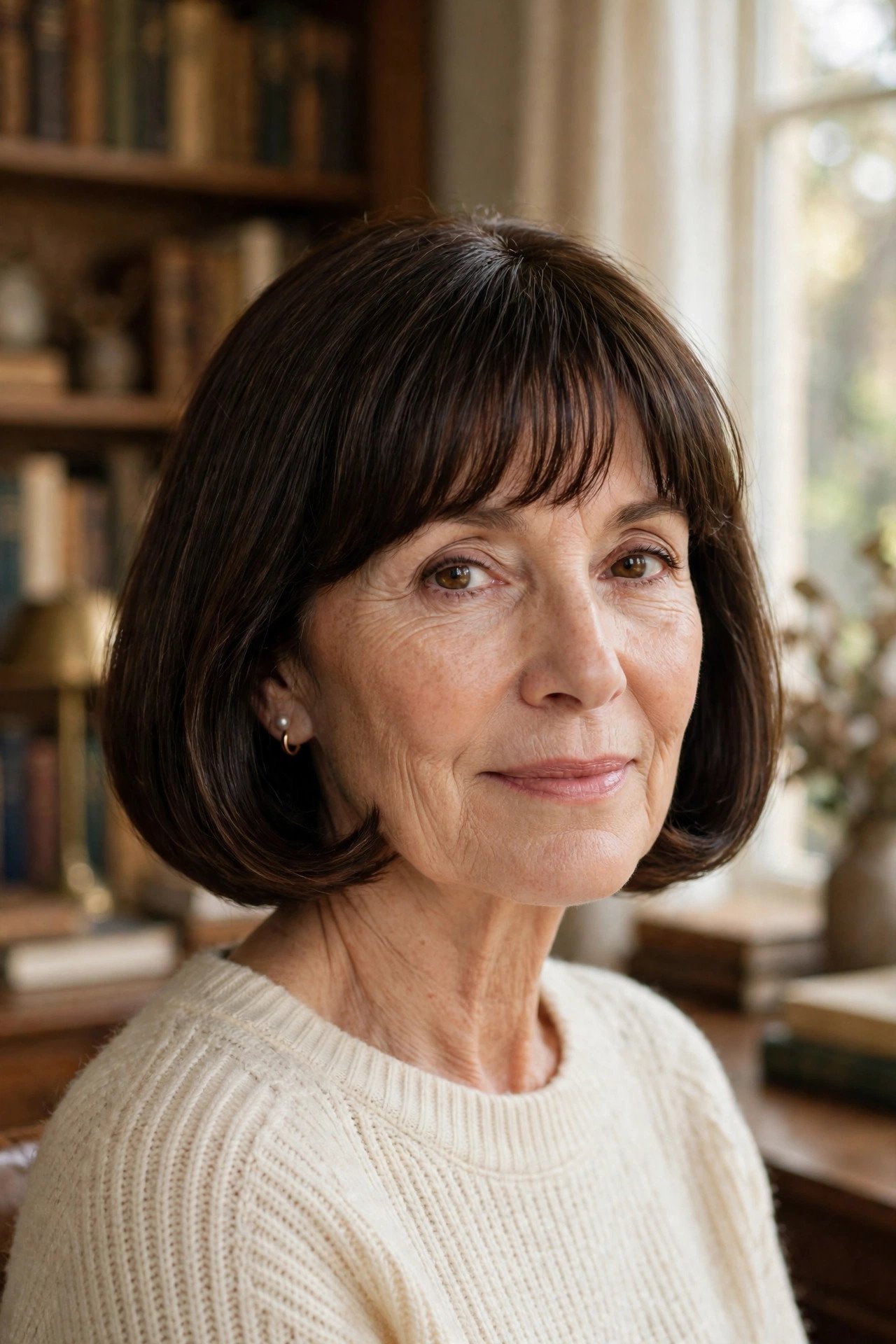
The pageboy has a retro name and a surprisingly modern face.
It is a bob with a smooth, rounded curve that tucks under at the ends, usually worn with a fringe, at jaw length rather than the shorter ear length of older versions. The curve gives fine hair a plump outline and keeps every hair in place, which suits women who like a tidy, finished look with very little daily styling. A quick blow dry under with a round brush sets it.
Skip it if your hair is very curly. The curve needs hair that will bend, not spring.
The pageboy works when the curve stays soft and the length stays modern. Keep it at the jaw, not the ear.
28. The Razored Lob With Airy, Feathered Ends

Razored ends are how a lob loses its heaviness without losing length.
A razor removes tiny slivers from the ends so they feather out instead of landing in one line. The result is a lob that moves when you walk and does not sit like a bell. It is a kind choice for thick hair that feels bulky at collarbone length, and for wavy hair that wants encouragement. On fine hair, ask for a light hand, because razoring can thin ends that are already delicate.
The feathered edge also hides a slightly overdue trim better than any other cut here.
| Razored ends | Blunt ends |
|---|---|
| Feathered and airy at the edge | One solid line at the edge |
| Moves in separate pieces | Swings as one piece |
| Best for thick or wavy hair | Best for fine hair that needs fullness |
29. Blowout Layers With Big, Brushed Out Body
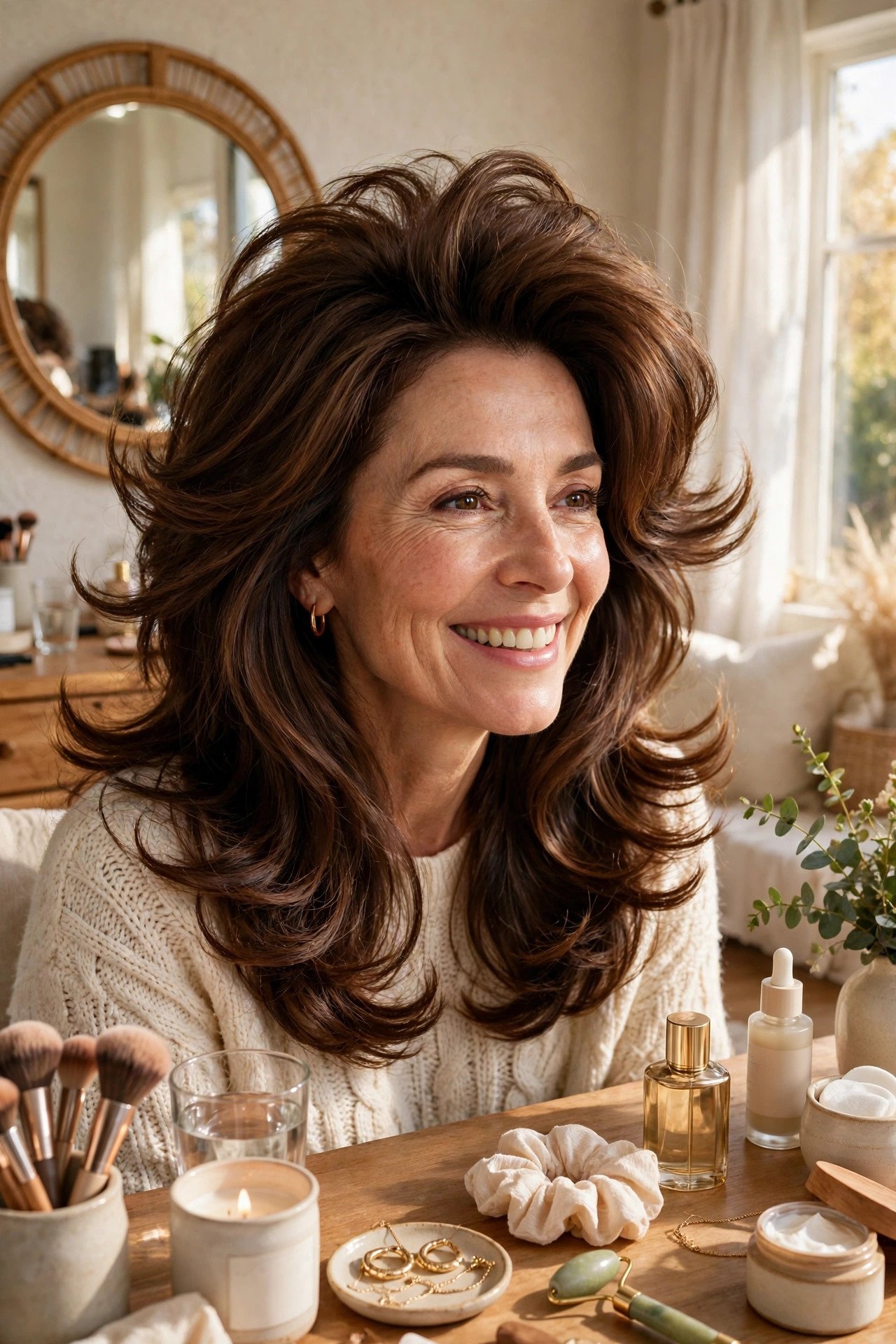
The salon blowout has a cut underneath it, and it is mostly layers.
Long layers cut to flip outward, plus shorter pieces around the face, are what give a blowout its bounce. Without them, even a good blow dry falls flat by lunch. With them, a round brush and ten minutes gets you most of the salon effect at home. This is the cut for women who enjoy styling their hair and want the effort to show at dinner as well as at the mirror.
Ask for the shortest face pieces to land at the cheekbones, where the flip does the most good.
One length hair that dries flat against the head, no matter how long you brush it.
Layers that flip out at the ends, lift at the crown and hold their shape past lunch.
30. The Grown Out Pixie With Soft Edges All Round
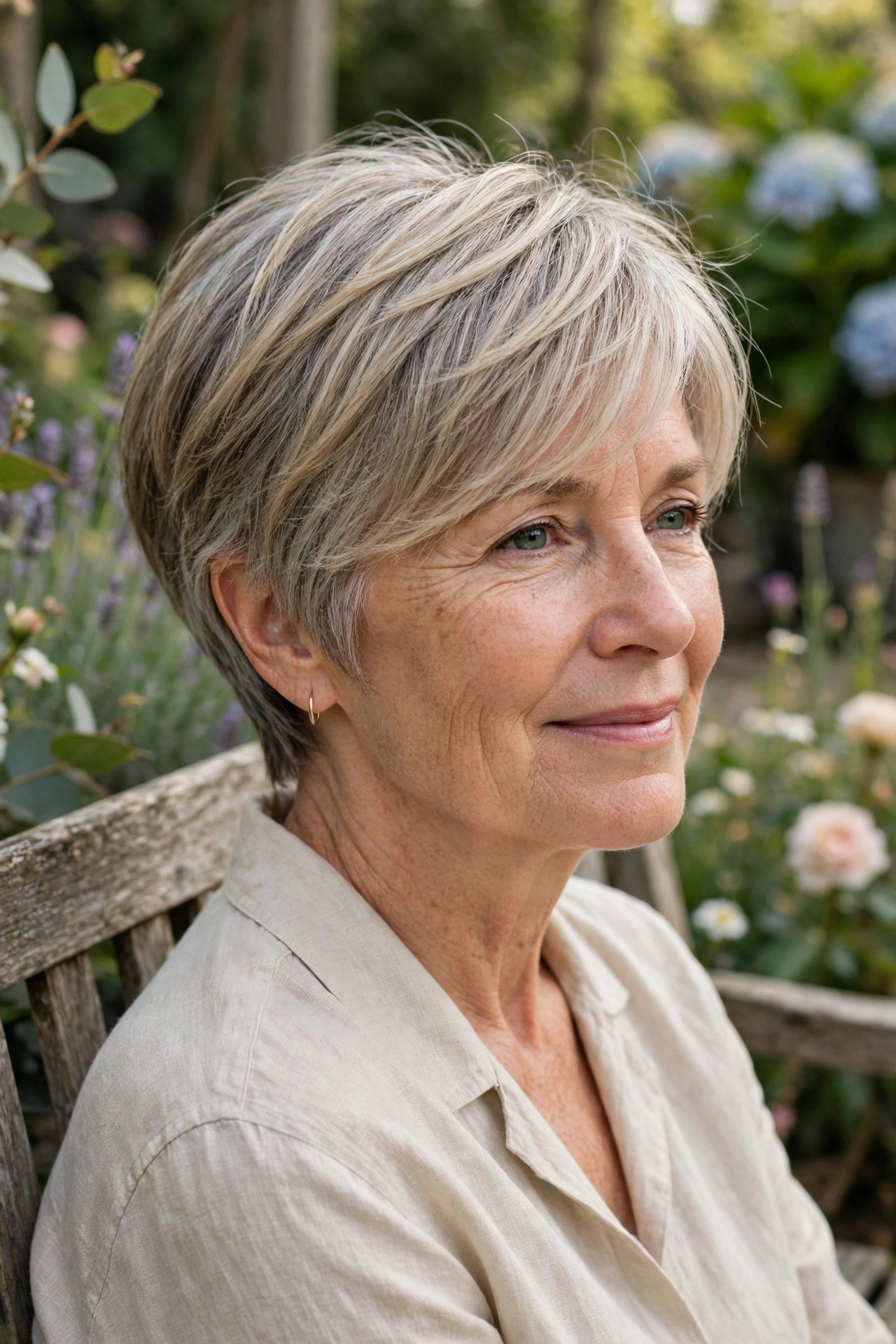
Every pixie reaches the awkward stage. The grown out pixie turns it into a cut of its own.
Instead of fighting the grow out, the stylist shapes it: soft edges around the ears, a longer fringe, and the back cleaned up while the top catches up. The result reads like a short, soft bob in progress, and it saves months of hats and frustration. It also works in reverse, as a gentle first step for women testing short hair before committing to a full pixie.
Two or three shaping appointments carry you from pixie to bob without the messy middle.
Ask your stylist for
Thirty cuts is a lot to take in, so narrow it down the honest way. Pick the length you keep coming back to, then pick the one shape in that length that matches your texture and your mornings.
Save a photo of that cut, plus one backup, and take both to your next appointment. A good stylist will tell you plainly if your hair can do it, and how to adjust the shape if it cannot.
Save this list of the best haircuts for women over 40 to your hair board, and you will walk into the salon with a plan instead of a guess.