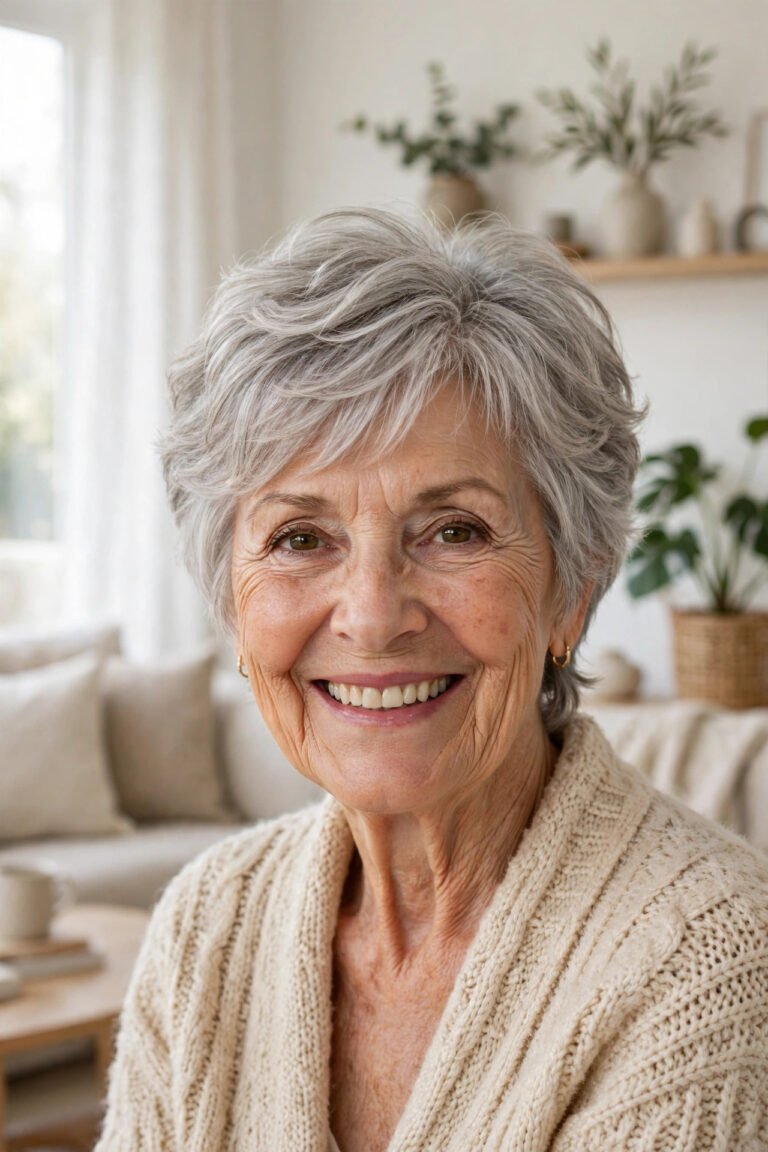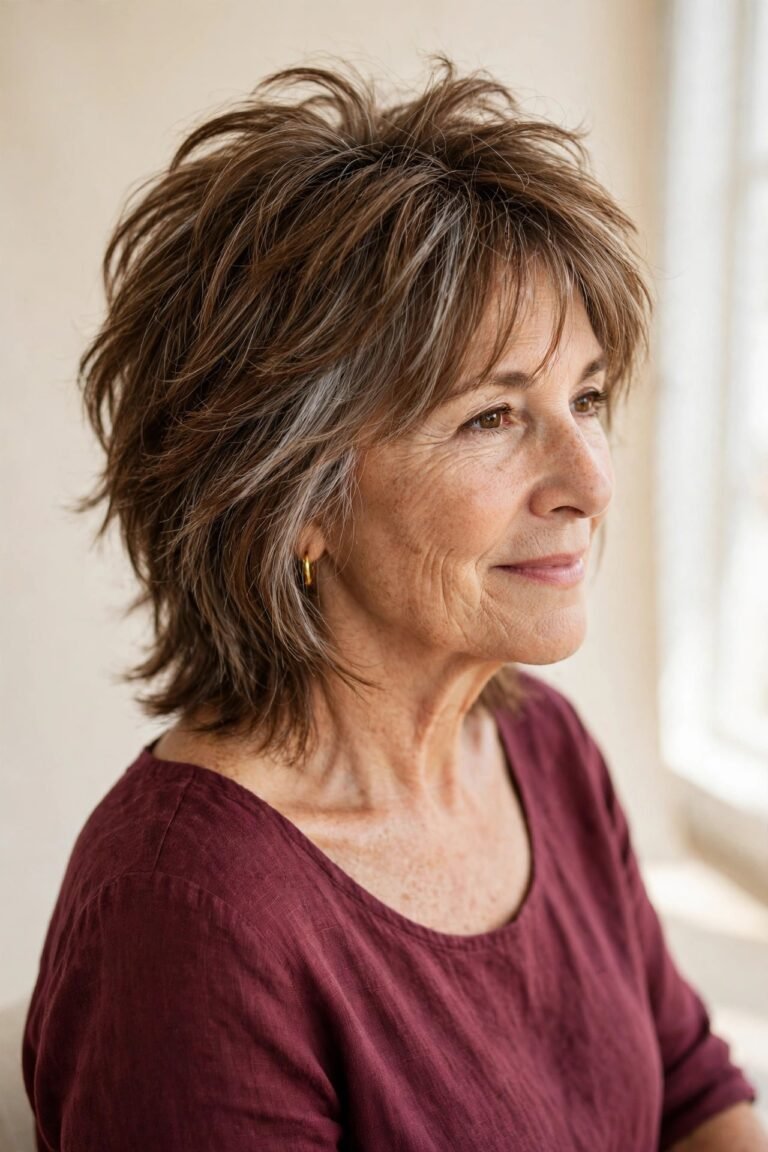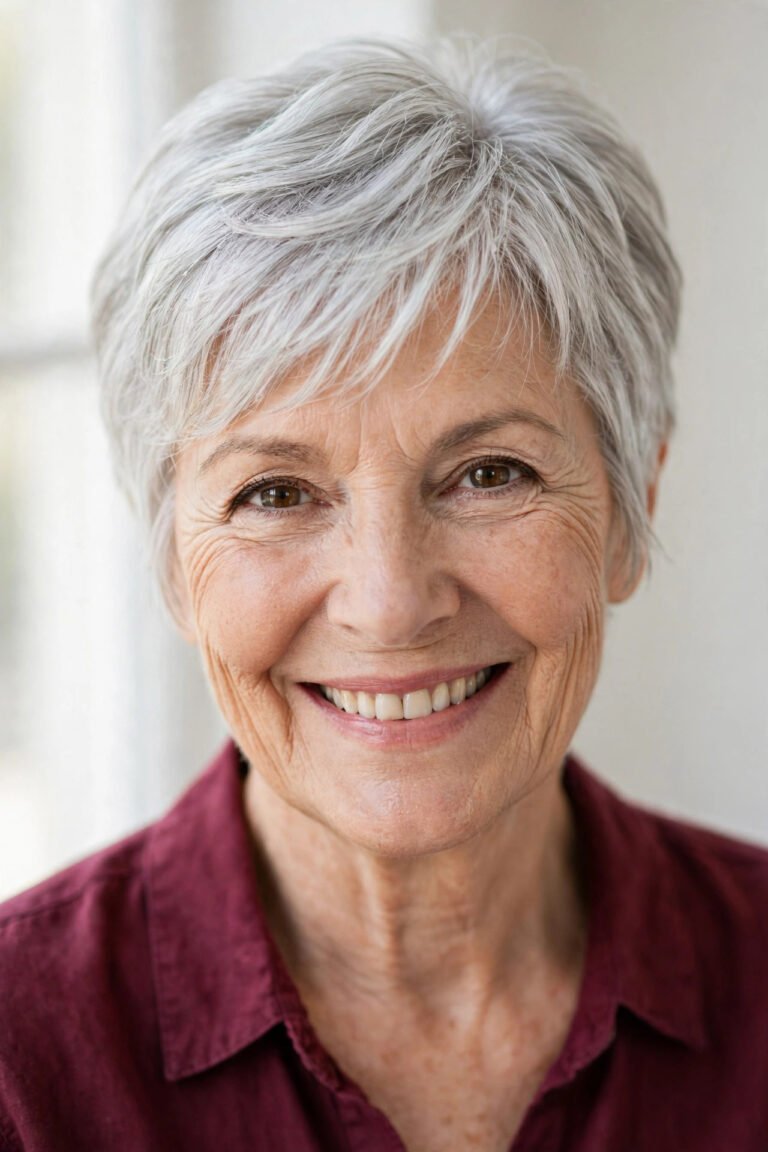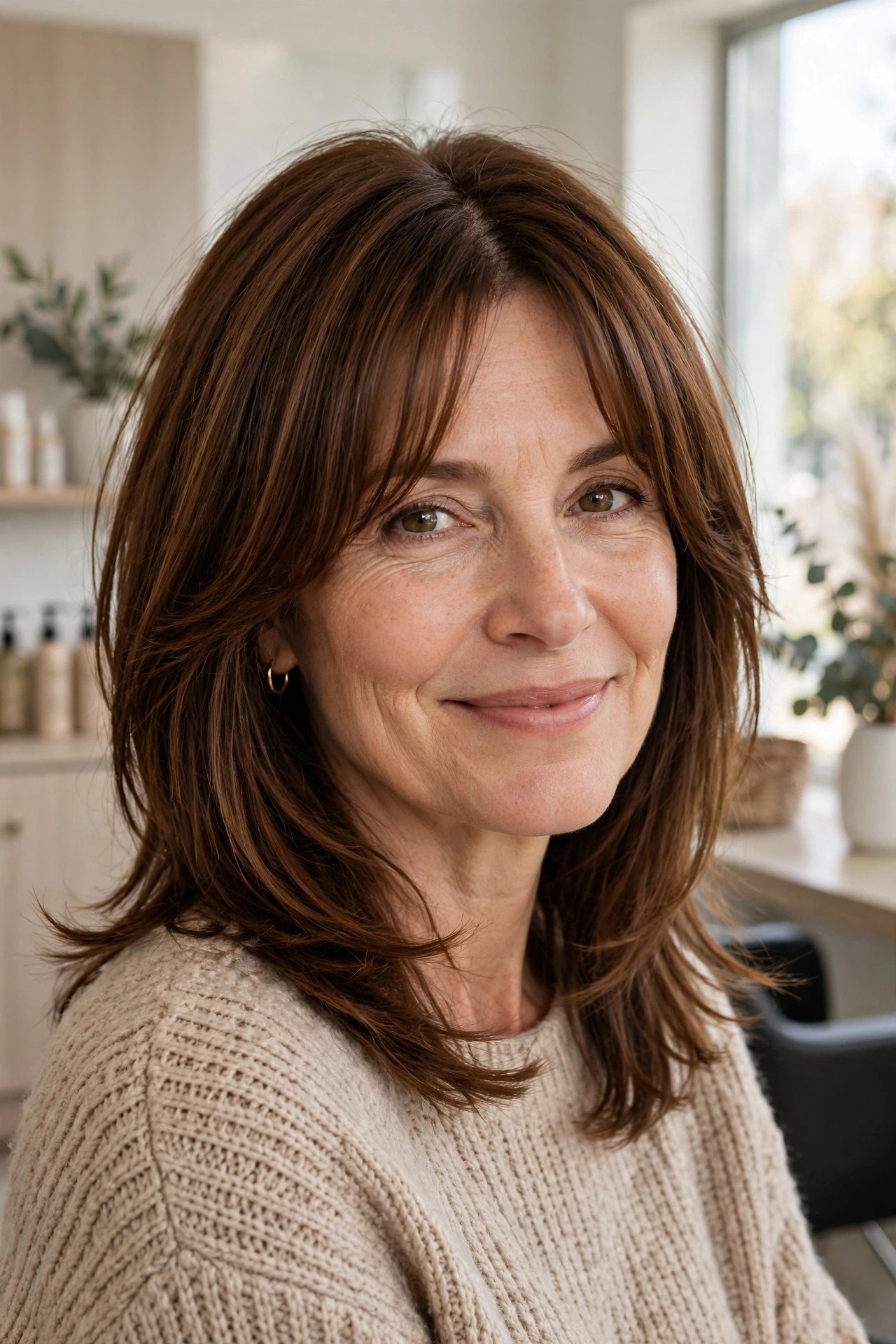
24 Medium Layered Cuts with Bangs for Women Over 40
There is a point in your forties where your hair stops doing what it did at thirty, and the cut that carried you for years starts to look tired. The length is fine. The colour is fine. What is missing is shape around the face.
That is exactly what medium layered cuts with bangs for women over 40 fix. The layers bring back movement through the middle lengths, where hair tends to hang flat. The bangs do the quiet work at the front, softening the forehead, framing your eyes, and making the whole cut look deliberate instead of grown out.
Below are 24 combinations worth taking to your stylist, from soft curtain fringes to blunt, polished ones. Each one notes who it suits, how much upkeep it asks for, and the small styling move that makes it work. Save the ones that match your hair type and bring the photos with you. A good cut is much easier to get when you and your stylist are looking at the same picture.
1. Classic Curtain Bangs with Long Layers
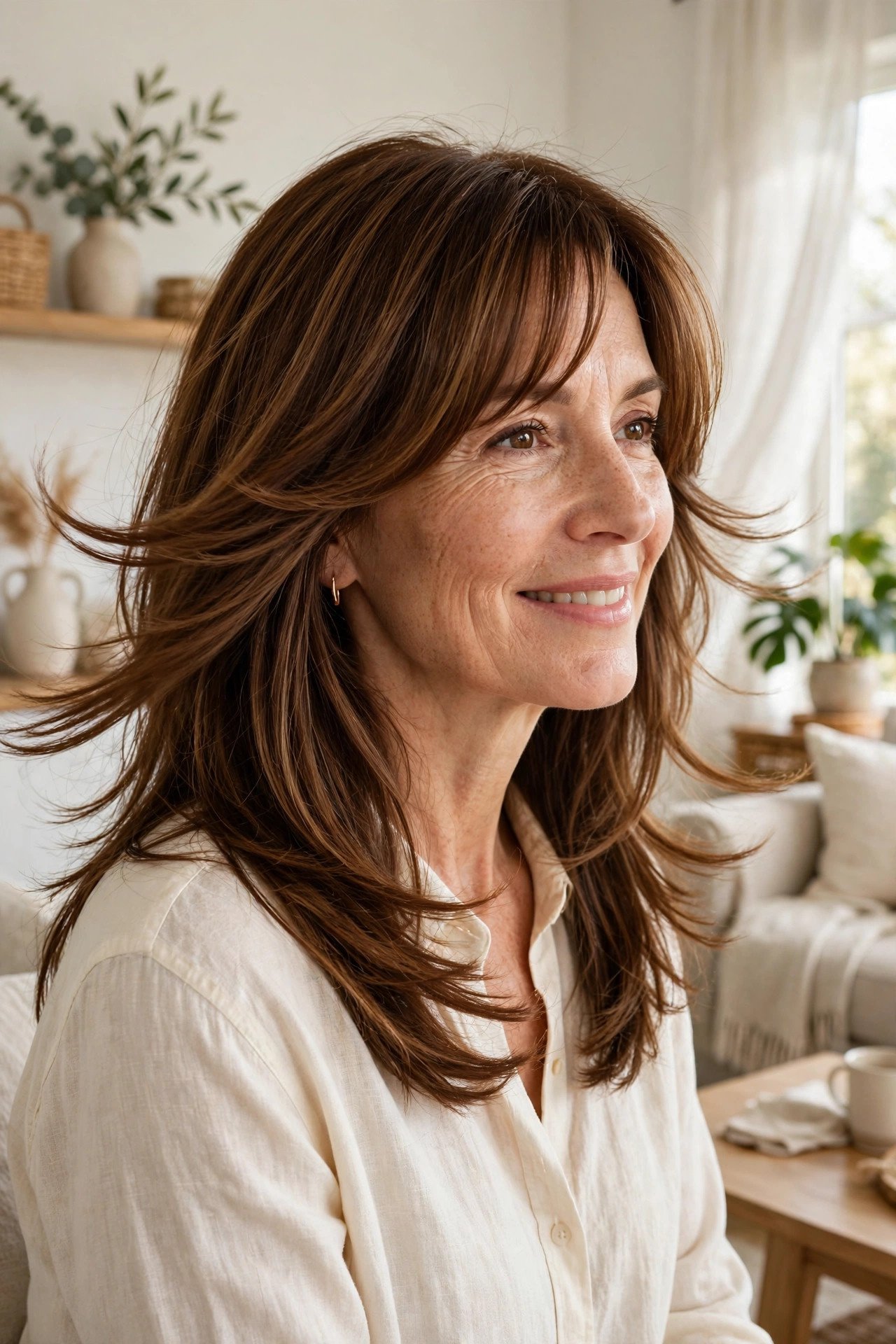
This is the cut most stylists reach for first, and it earns that spot.
Long layers start around the cheekbones and run through to the ends, so the hair moves instead of hanging in one solid sheet. The curtain fringe parts in the middle and sweeps out to each side, which opens up the face and softens the forehead without covering it.
What makes it work:
- Layers begin high enough to lift the front, rather than only thinning the ends
- The fringe is cut longer at the edges, so it blends into the layers
- It grows out kindly, which matters between appointments
2. Blunt Fringe with a Sleek Layered Lob
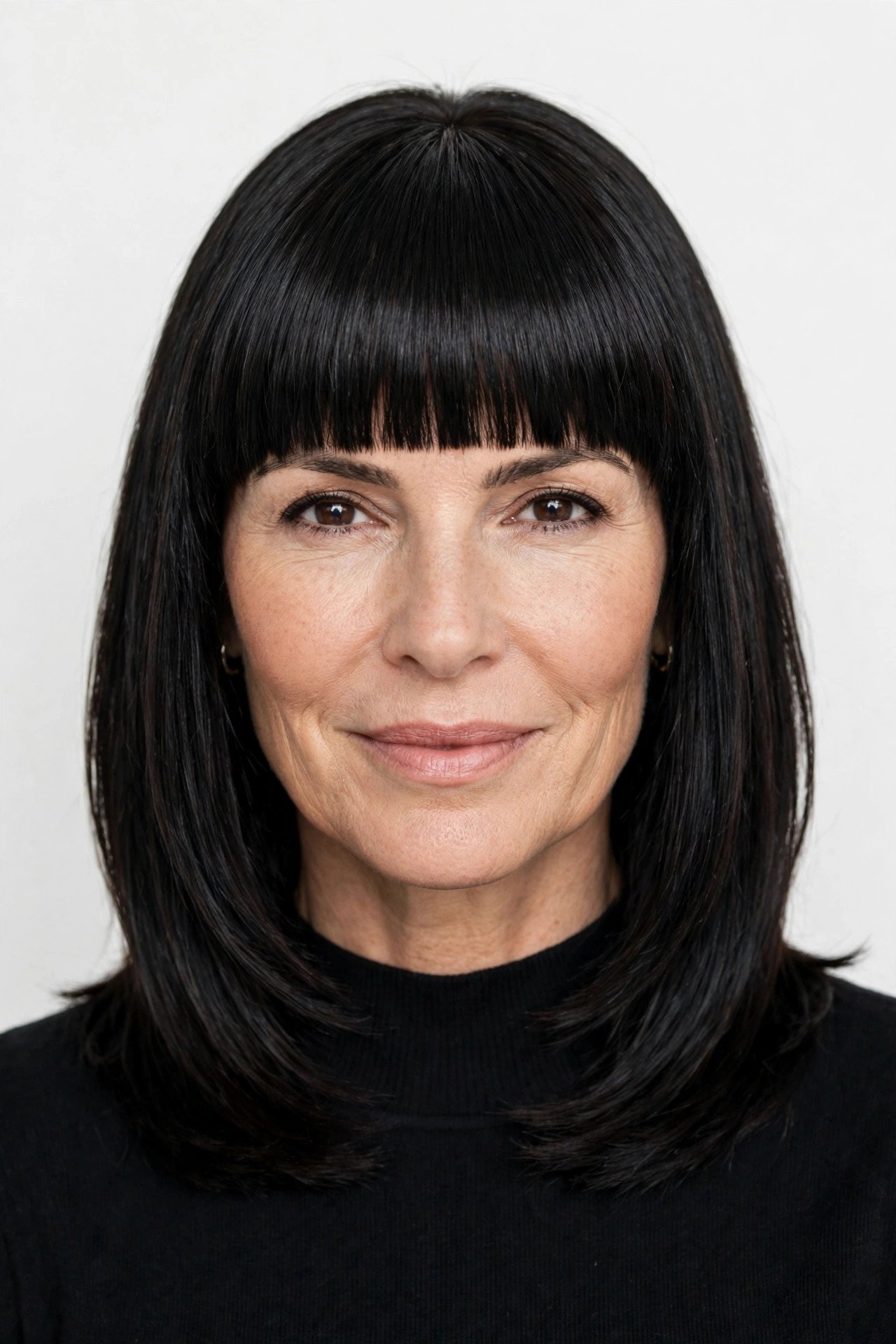
The trouble with a long bob on its own is that it can read plain from the front. A blunt fringe fixes that in one move.
The fringe is cut straight across at brow level and kept full, while the lob sits at the collarbone with only a few long layers through the back. Keeping the layers few and long holds the thickness at the ends, so the shape stays sleek instead of wispy.
It suits oval and longer faces best, and it asks for fringe trims between full cuts to keep that clean line.
💡 Quick Tip
Blow dry the fringe first, before the rest of your hair. Once a blunt fringe dries in the wrong direction, it fights you for the rest of the day.
3. Deep Side-Swept Bangs with Feathered Layers
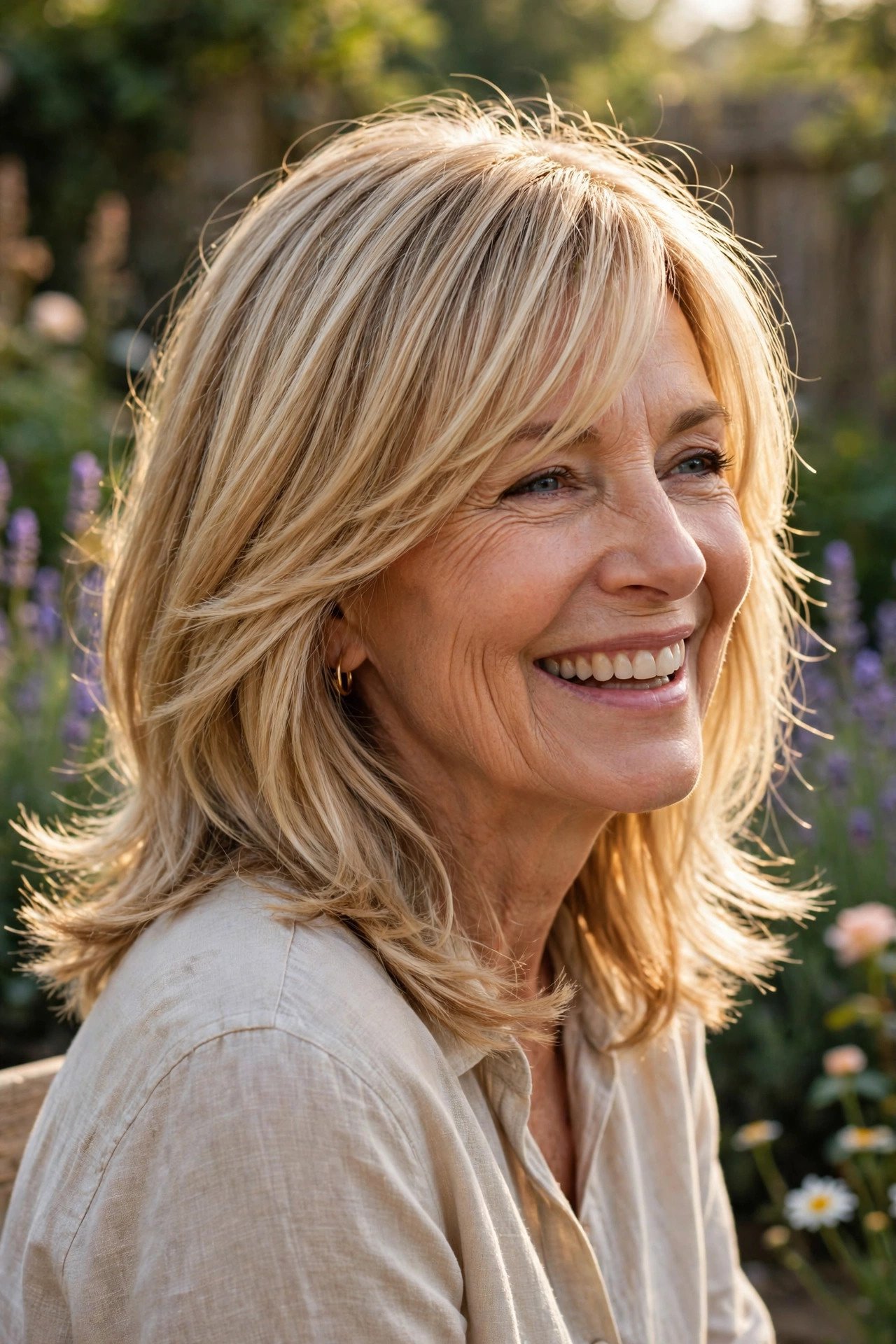
A deep side part changes your whole face shape in about ten seconds.
The fringe is cut long and swept across the forehead, then feathered layers carry that diagonal line down through the lengths. Feathering means the layer ends are softened and flicked, so nothing sits in a hard shelf across the hair.
Strong jawlines and square faces gain the most here, since the diagonal sweep breaks up straight lines and draws the eye upward.
4. Wispy Bangs with Soft Rounded Layers
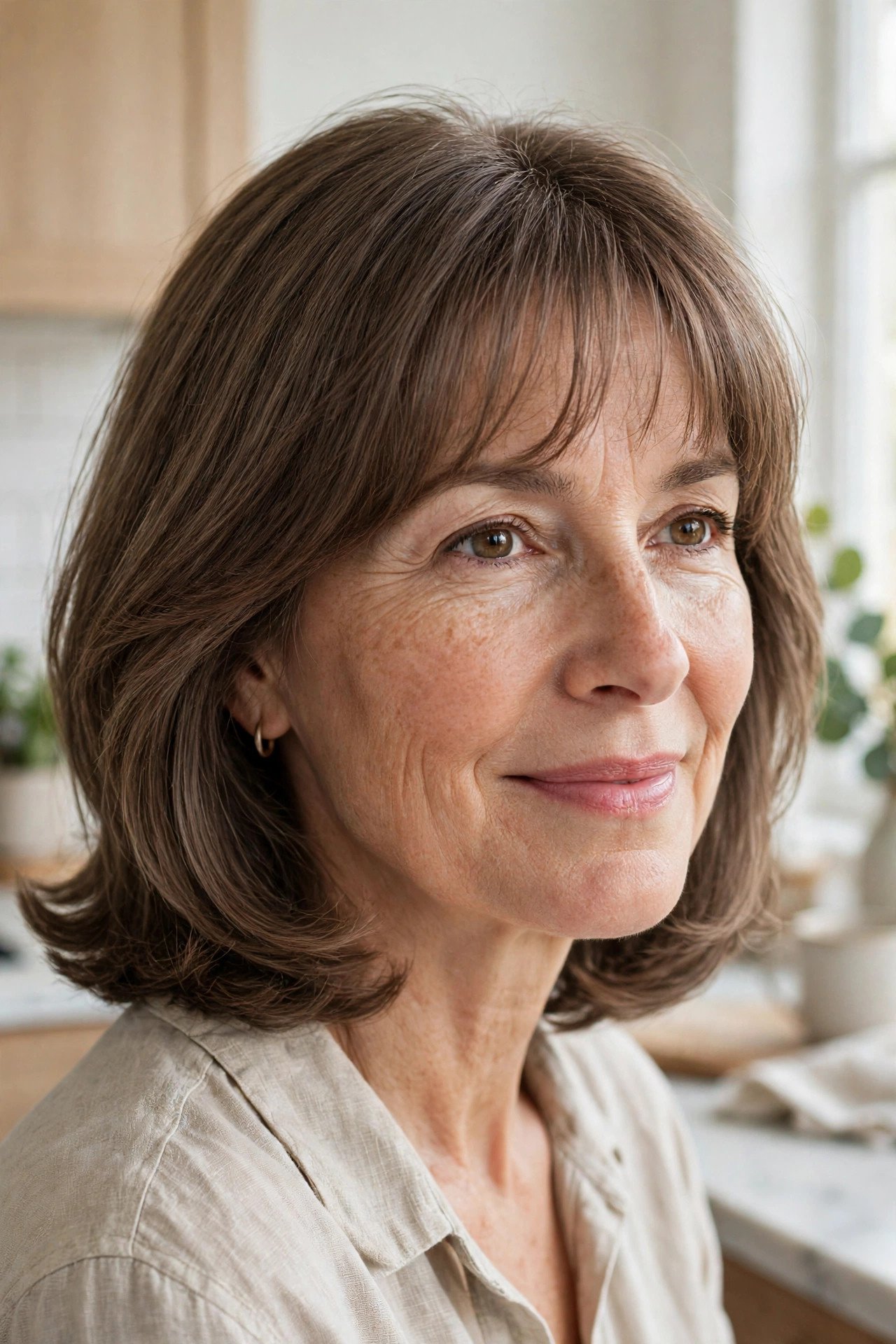
Rule one for a first fringe: start with less hair than you think.
A wispy fringe uses a small section from the front, snipped light so you can still see forehead through it. The layers follow a rounded shape, curving under at the ends rather than flicking out, which keeps the whole cut soft and close to the head.
Women tend to keep this one for years, mostly because it never asks much of them on a weekday morning.
Why women keep this cut
5. Bottleneck Bangs with Shaggy Layers
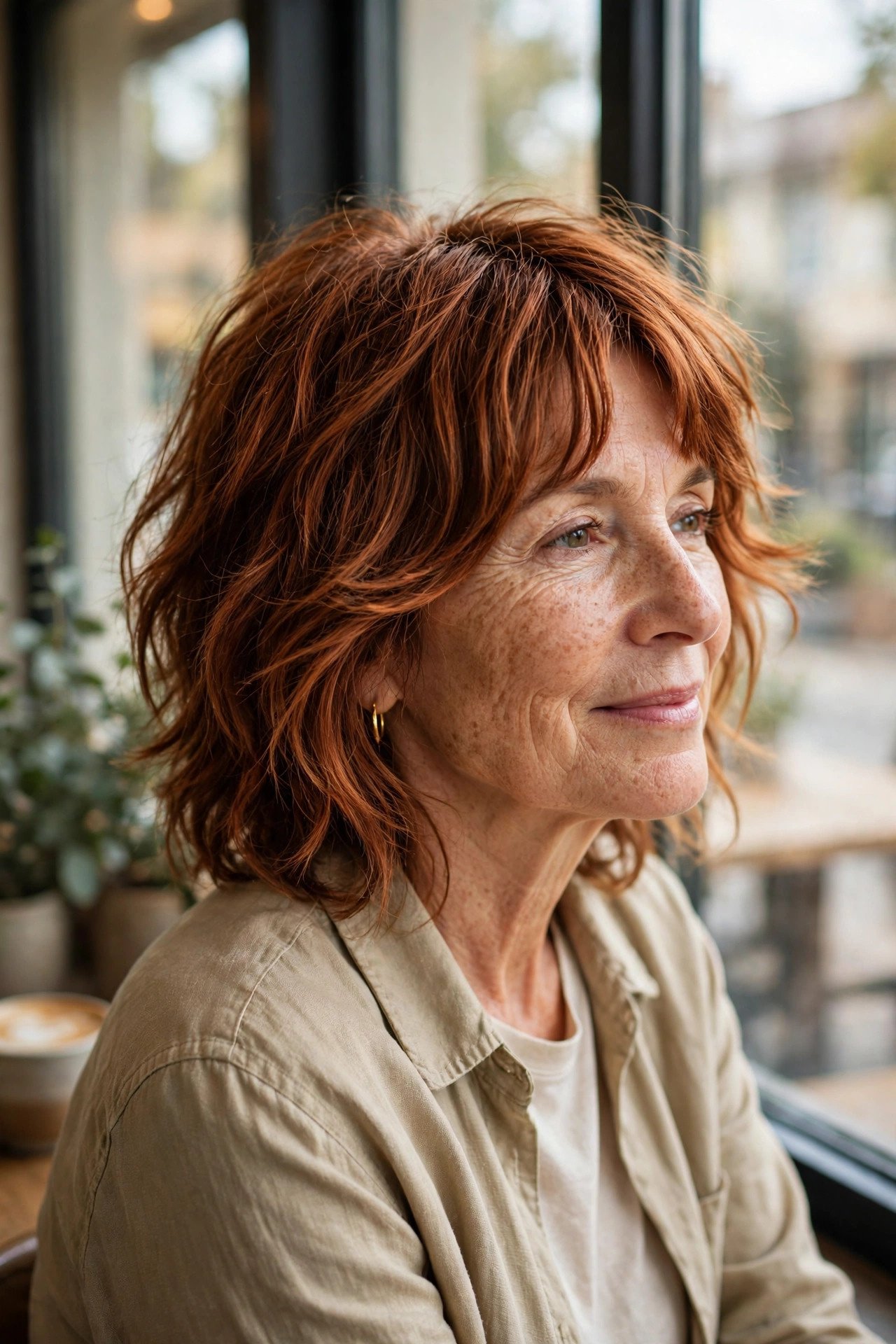
Look at the shape of a bottle neck and you have the idea: narrow at the top, curving wider where it meets your cheekbones.
Bottleneck bangs follow that curve, sitting close at the centre of the forehead and opening out at the sides. Shaggy layers through the lengths match the undone feel, with plenty of texture and movement instead of smooth polish.
It is a strong pick if you wear glasses, since the wider edges of the fringe clear most frames instead of sitting on them.
Keep the fringe narrow at the top and wider at the cheeks.
Work a little texture spray through the roots for the shaggy finish.
Cutting the shaggy layers very short at the crown.
Letting the fringe grow past your cheekbones without a trim.
6. Arched Bangs with Loose Layered Waves
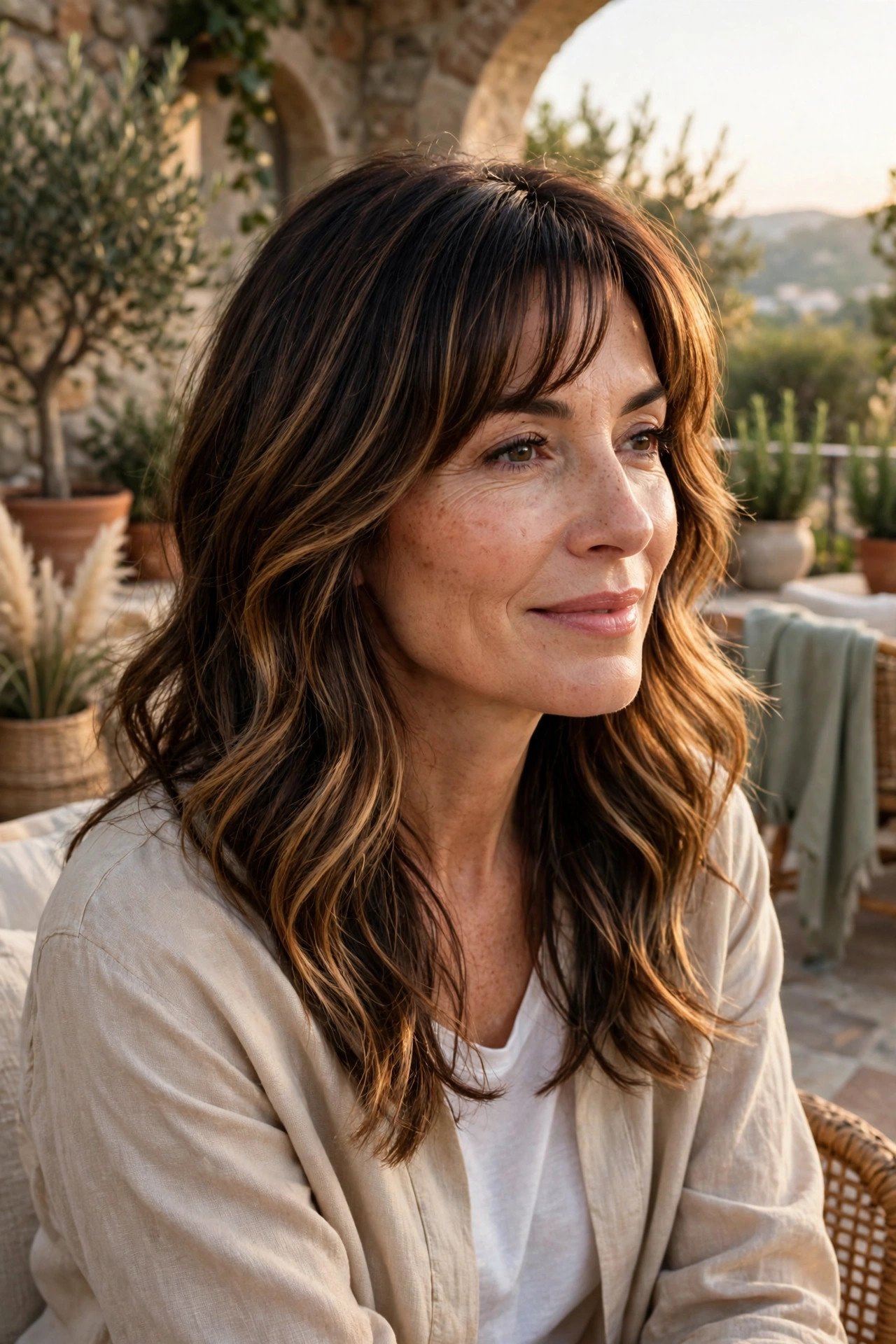
You know that soft fringe in old film stills, the one that curves like a shallow rainbow? That is an arched bang.
It is cut to follow the brow line, shortest in the middle and longer at the outer edges, so it melts into the layers at the sides. Worn with loose waves through the mid lengths, the whole cut reads gentle and a little romantic.
Keep the waves big and brushed out. Tight curls fight the calm shape of the fringe.
Dry the fringe flat, brushing it side to side with a paddle brush so it lies in its curve.
Wrap the mid lengths around a large barrel, always turning away from the face.
Let everything cool, then brush through once and shake the roots with your fingers.
7. Brow-Skimming French Fringe with Butterfly Layers
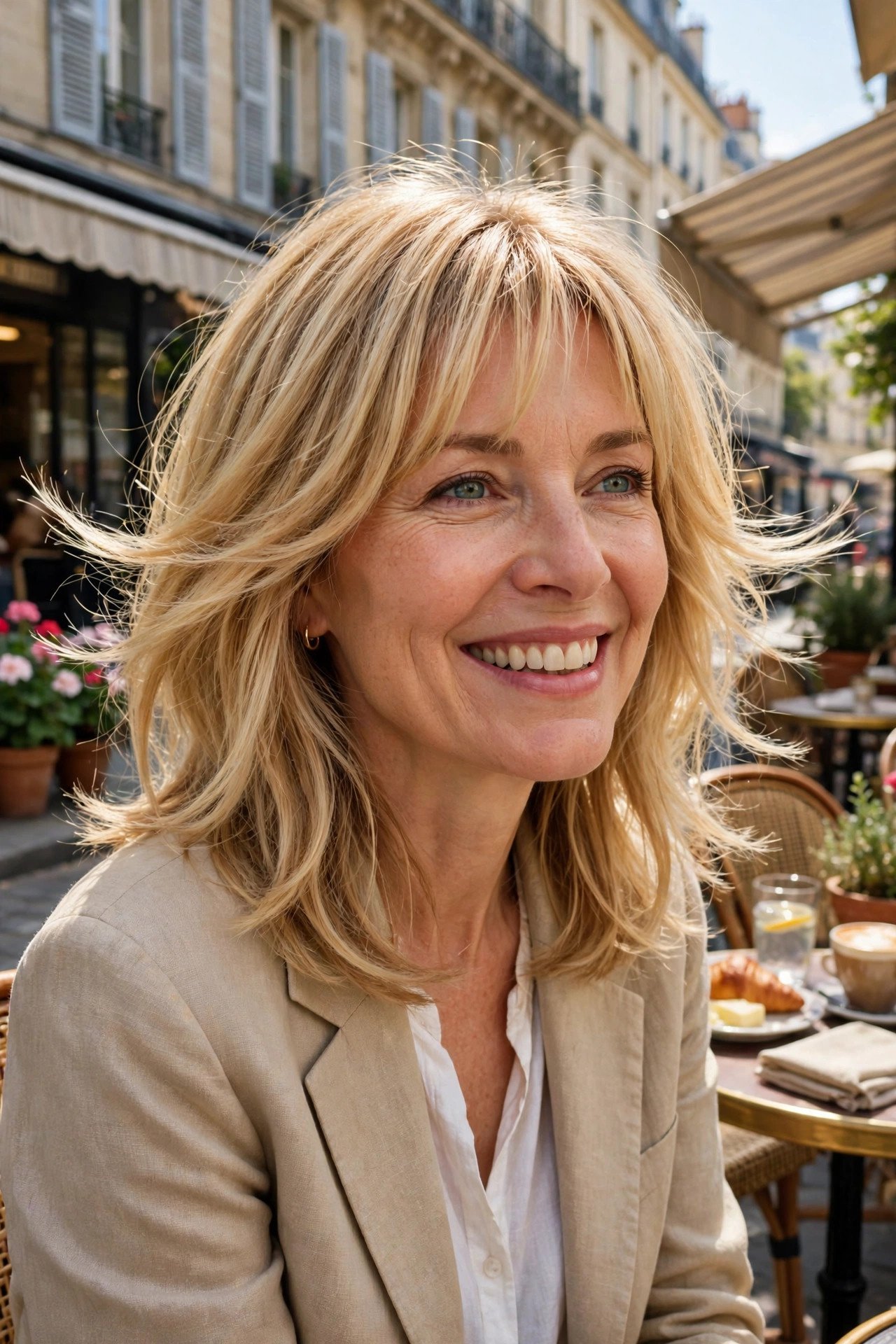
Butterfly layers give you bounce at the front and length at the back, in the same cut.
The layers are cut in two tiers. Shorter pieces frame the face and flick outward, while the longer layers keep your length underneath. The fringe skims the brows and is left a little piecey, never heavy, so the front stays light.
Dry the front layers away from your face with a round brush and the flick appears mostly on its own.
Butterfly layers do the bouncing for you. Keep the fringe light and let the flicked out layers carry the shape.
8. Airy See-Through Bangs with Ghost Layers
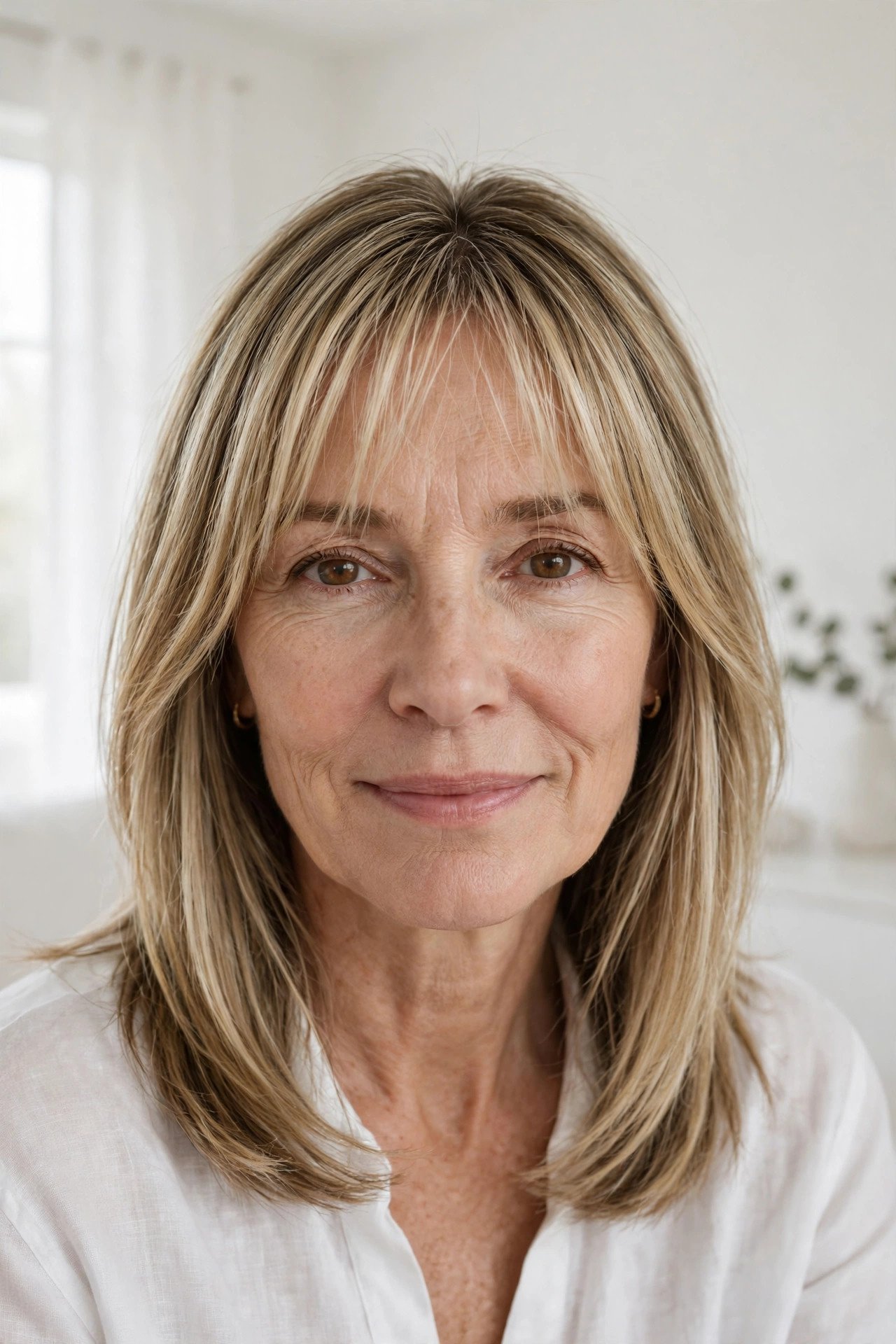
Layers do not have to show. Some of the hardest working ones hide inside the cut.
Ghost layers are cut into the inner sections of the hair, removing weight and adding movement you feel more than you see. On the surface, the hair still reads close to one length. The fringe follows the same idea: a fine, see-through veil across the forehead that you can sweep aside by lunch if it annoys you.
It suits straight, medium to thick hair that needs movement without short pieces on show.
| Ghost Layers | Standard Layers |
|---|---|
| Movement shows, but no short pieces are visible | You can see each step of length in the hair |
| Best on straight, medium to thick hair | Works across most hair types |
| Grows out very softly | Needs reshaping as it grows |
9. Grown-Out Fringe with Waterfall Layers
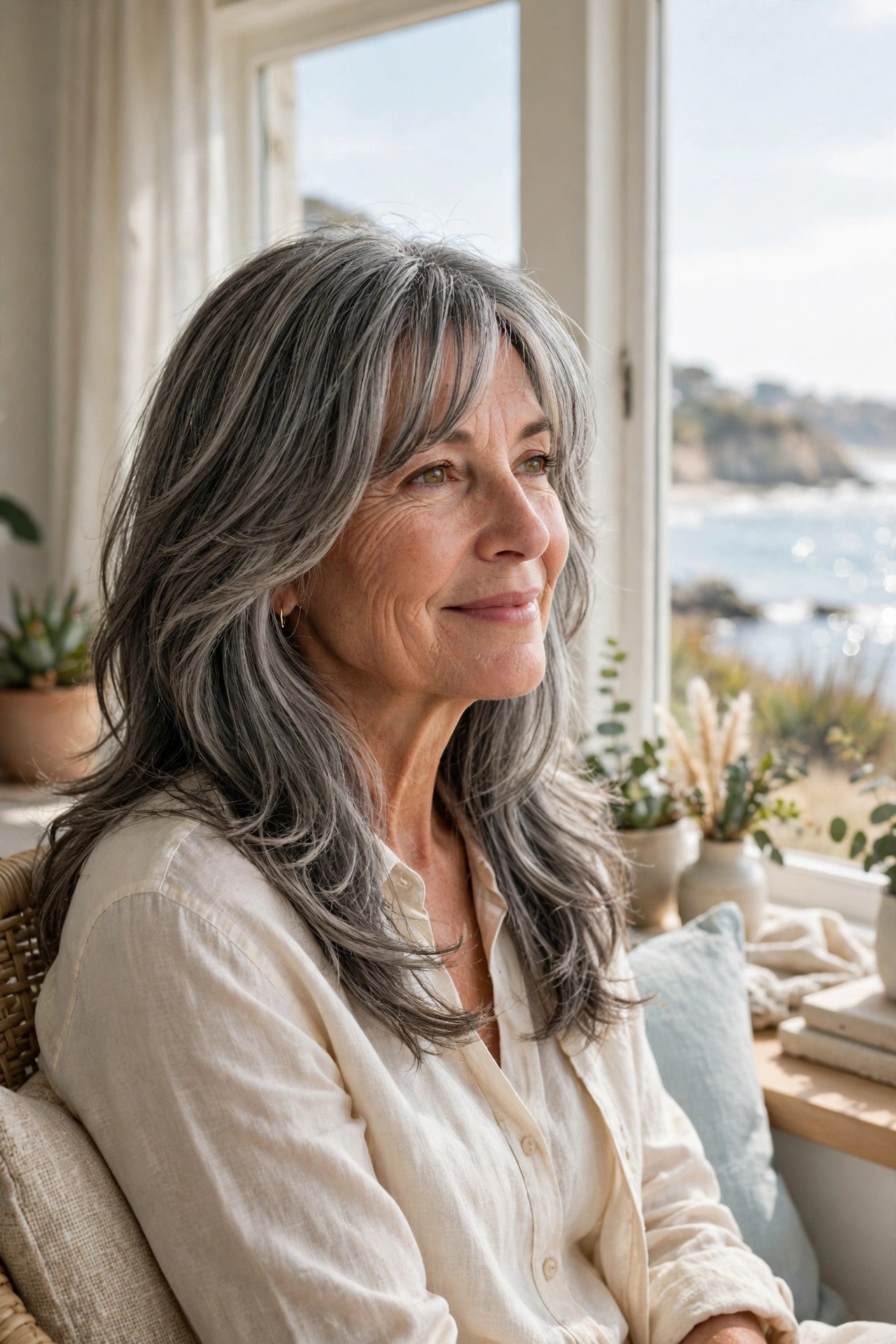
Not ready to commit to a fringe? Start with one that has already grown out.
This fringe sits at cheekbone length or lower and is cut to pour into long layers, like water running downhill. There is no hard line where the fringe ends and the layers begin, so the face framing feels soft from every angle.
Why it works so well:
- It is the safest first step before trying a shorter fringe
- Longer front pieces blend grey and grown out colour kindly
- It carries the lowest upkeep of any fringe on this list
One length hair, with an old fringe grown to chin level and tucked behind the ears. The face has no frame at all.
The long fringe pours into waterfall layers, the face is framed again, and no big chop was needed to get there.
10. Curly Bangs with Layered Curls
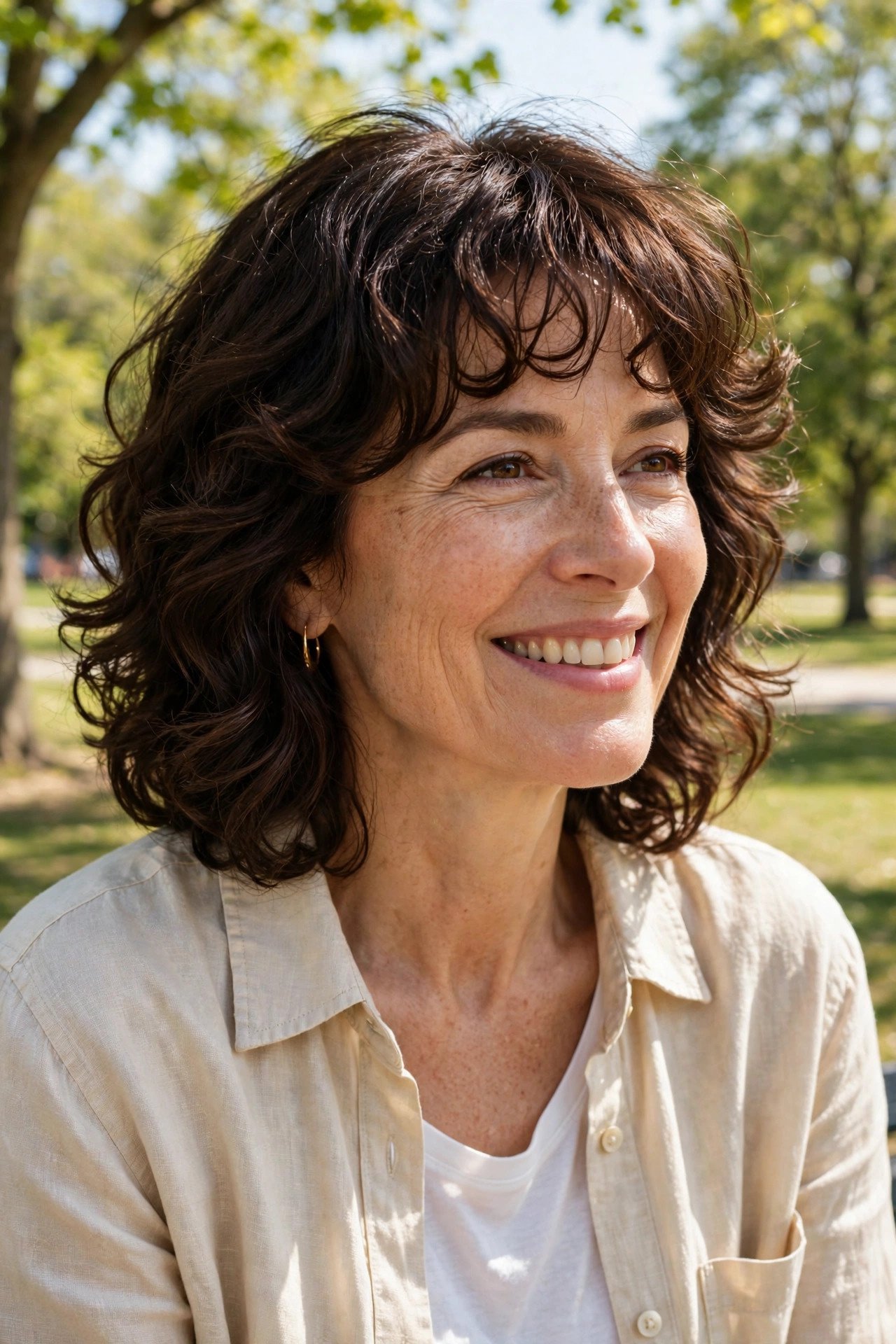
Curly fringe rule: the length you see wet is not the length you get.
Curls spring up as they dry, sometimes by a lot, so a curly fringe should be cut dry, curl by curl, and left longer than the finished shape in your head. Layers matter just as much. Without them, medium curls stack out at the sides and form a triangle.
With them, each curl has room to sit, and the fringe becomes part of the shape instead of a separate shelf sitting on your forehead.
⚠️ Watch Out
Never judge a curly fringe while it is wet. Ask your stylist to cut it dry and leave it longer than the length you want, because shrinkage will take care of the rest.
11. Choppy Fringe with Piecey Layers
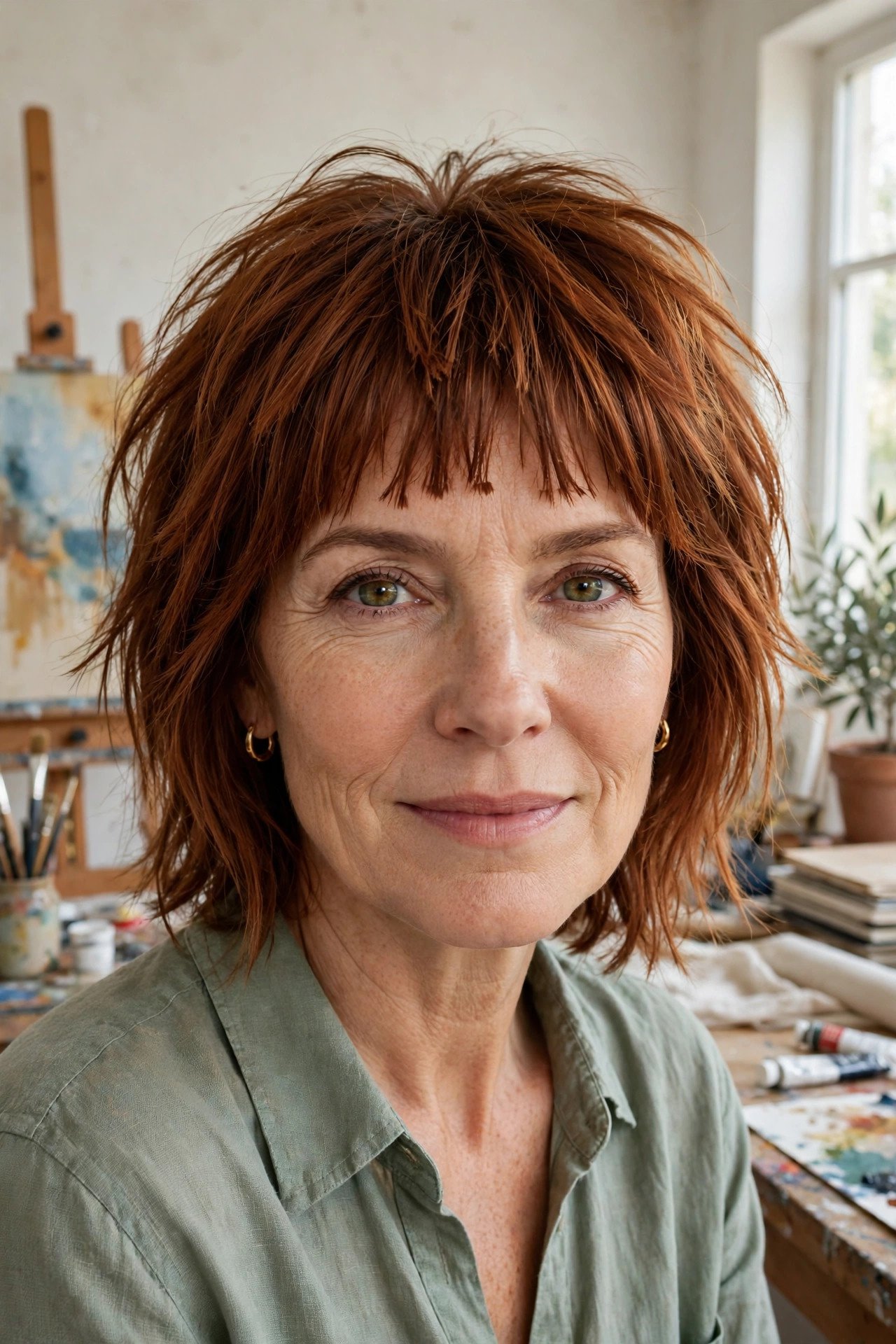
The ends are the whole point here. Nothing is cut in a straight line.
The fringe is point cut into small, uneven pieces, and the layers are separated so you can see a little daylight between them. It reads relaxed and a bit edgy, while the softness of the pieces keeps it kind to your features.
A fingertip of styling paste pinched through the ends is the entire routine on most days.
12. Centre-Parted Bangs with Flipped-Out Ends
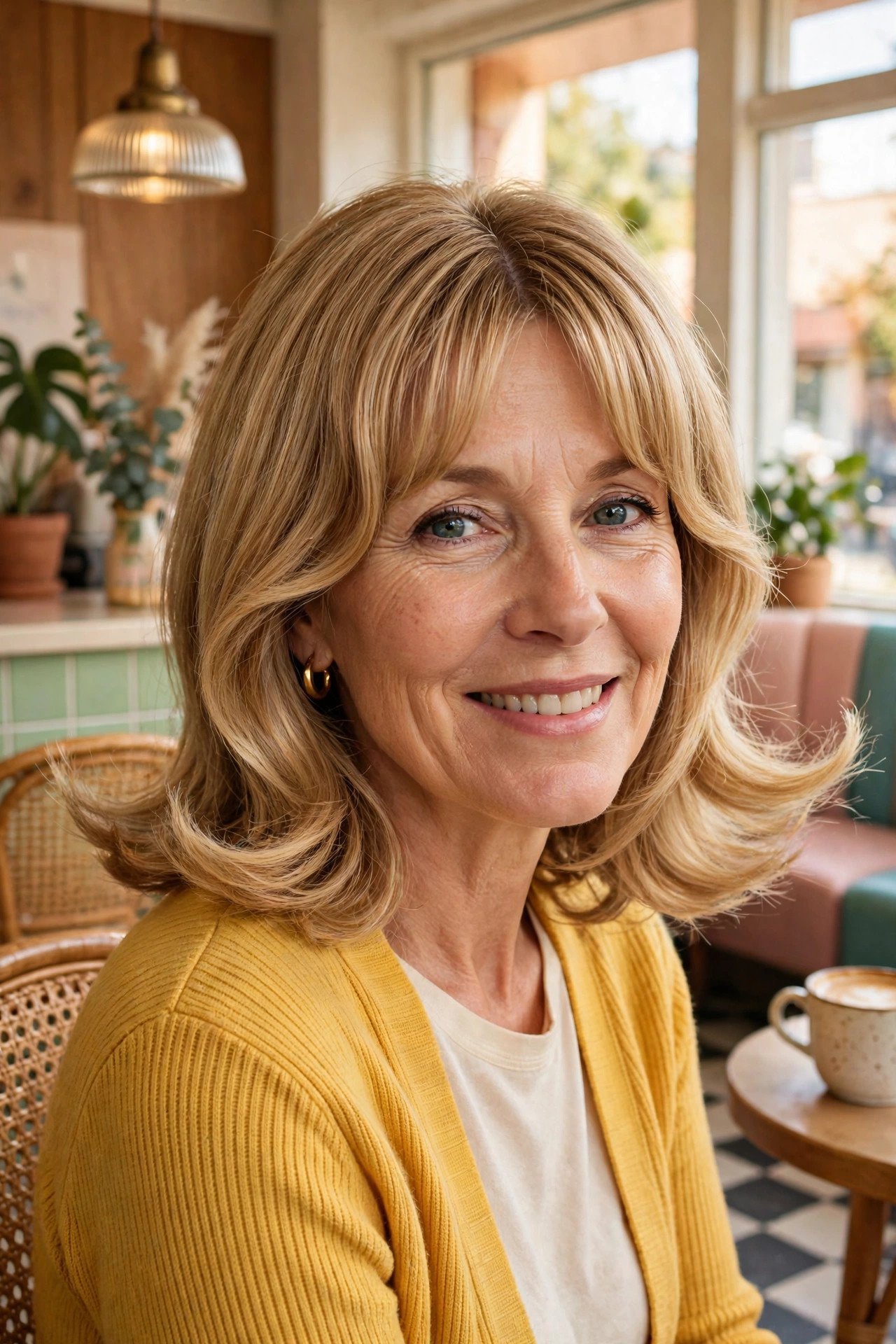
The flick is back. Ends that turn away from the face give medium hair a lift that straight ends cannot.
The fringe parts in the centre and curves down past the cheekbones, and every layer through the lengths is styled to flip outward. The result is wide, open and full of movement, with a nod to the seventies that still reads current.
It flatters round faces well, since the outward flick adds width at the cheekbones and length at the front.
- ▸Blow dry the ends with a round brush, rolling them away from your face
- ▸Set the front sections on large rollers while you do your makeup
- ▸Works with a centre part or one that sits slightly off centre
13. Asymmetric Bangs with Angled Layers
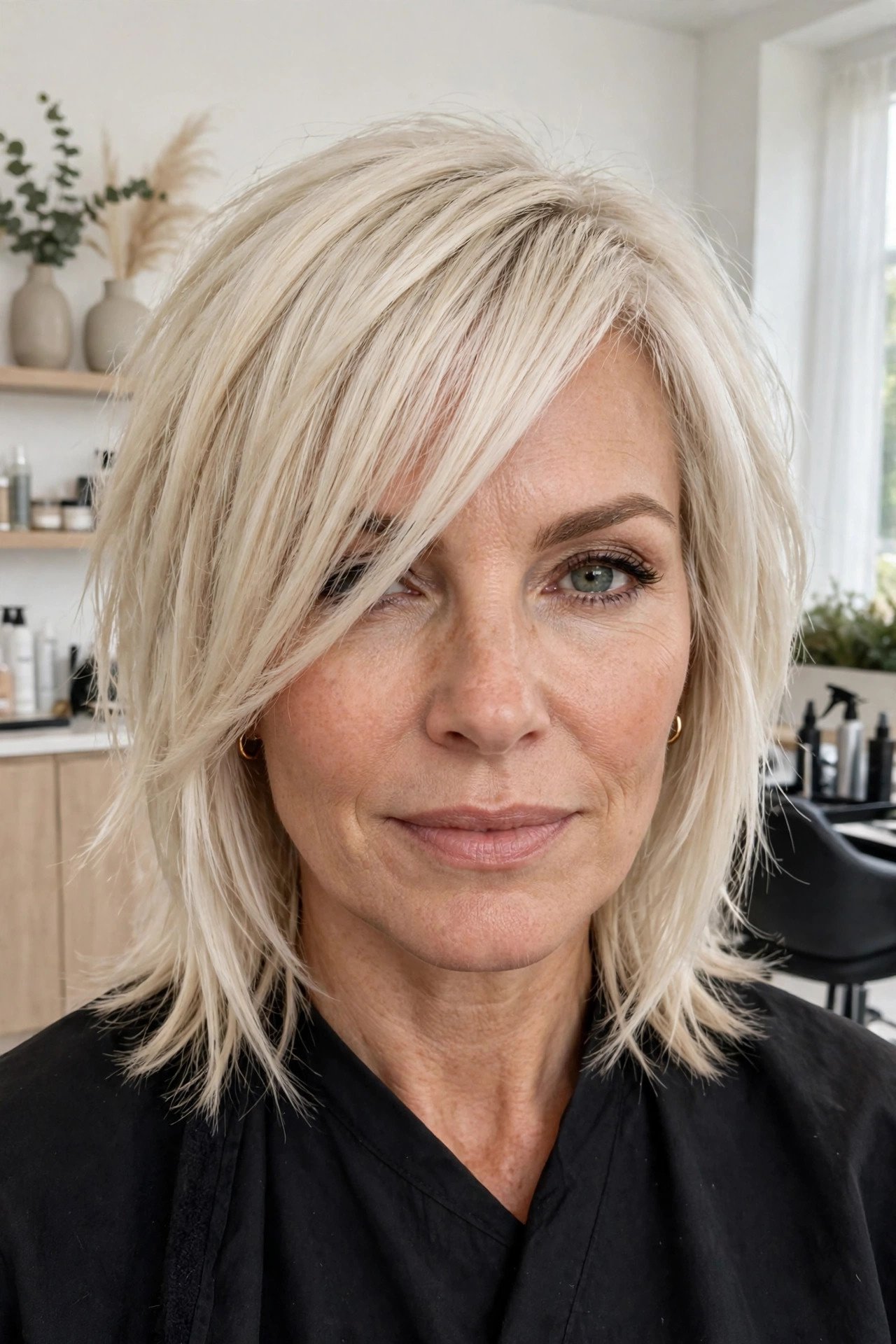
Symmetry is not always your friend. A diagonal fringe draws the eye across the face, and that small shift changes the balance.
One side of the fringe is cut shorter and the other side sweeps long into angled layers that point forward toward the chin. The layers follow the same slant, so the whole front of the cut moves in one direction.
When it grows, it settles into an ordinary side fringe, which makes it a low risk way to try something different.
14. Feathered Bangs with Crown-Volume Layers
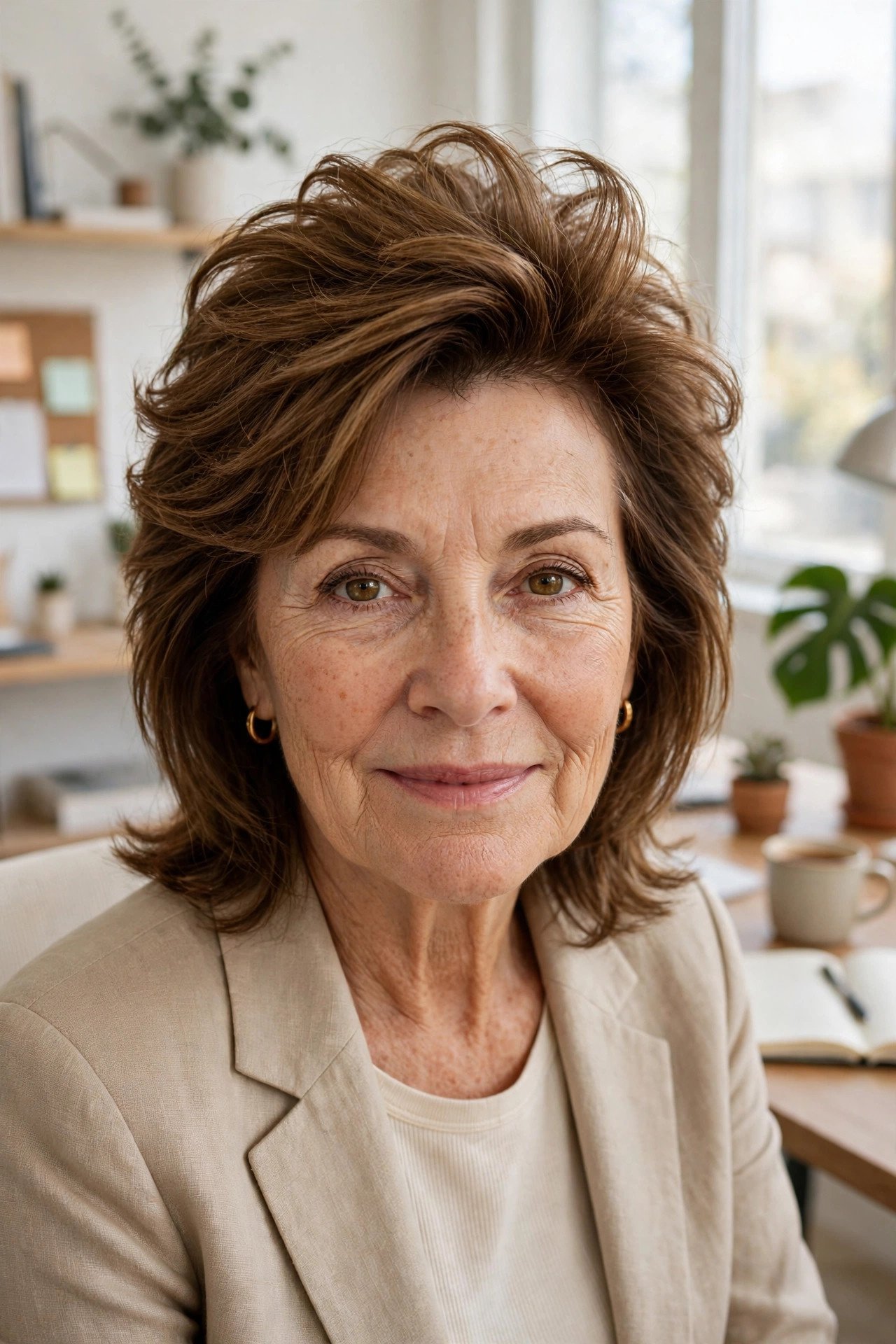
Flat at the crown is the complaint stylists hear most from women over forty.
This cut answers it with shorter layers stacked through the crown, where they can stand up and hold lift, while the sides stay longer and smoother. The fringe is feathered, meaning it is textured and brushed back off the forehead rather than sitting flat on it.
Where the lift comes from:
- Shorter layers stacked only through the crown
- The sides left longer, so the shape stays calm
- The feathered fringe blended up into the top layers
Before you book this cut
15. Long Side Bangs with U-Shaped Layers
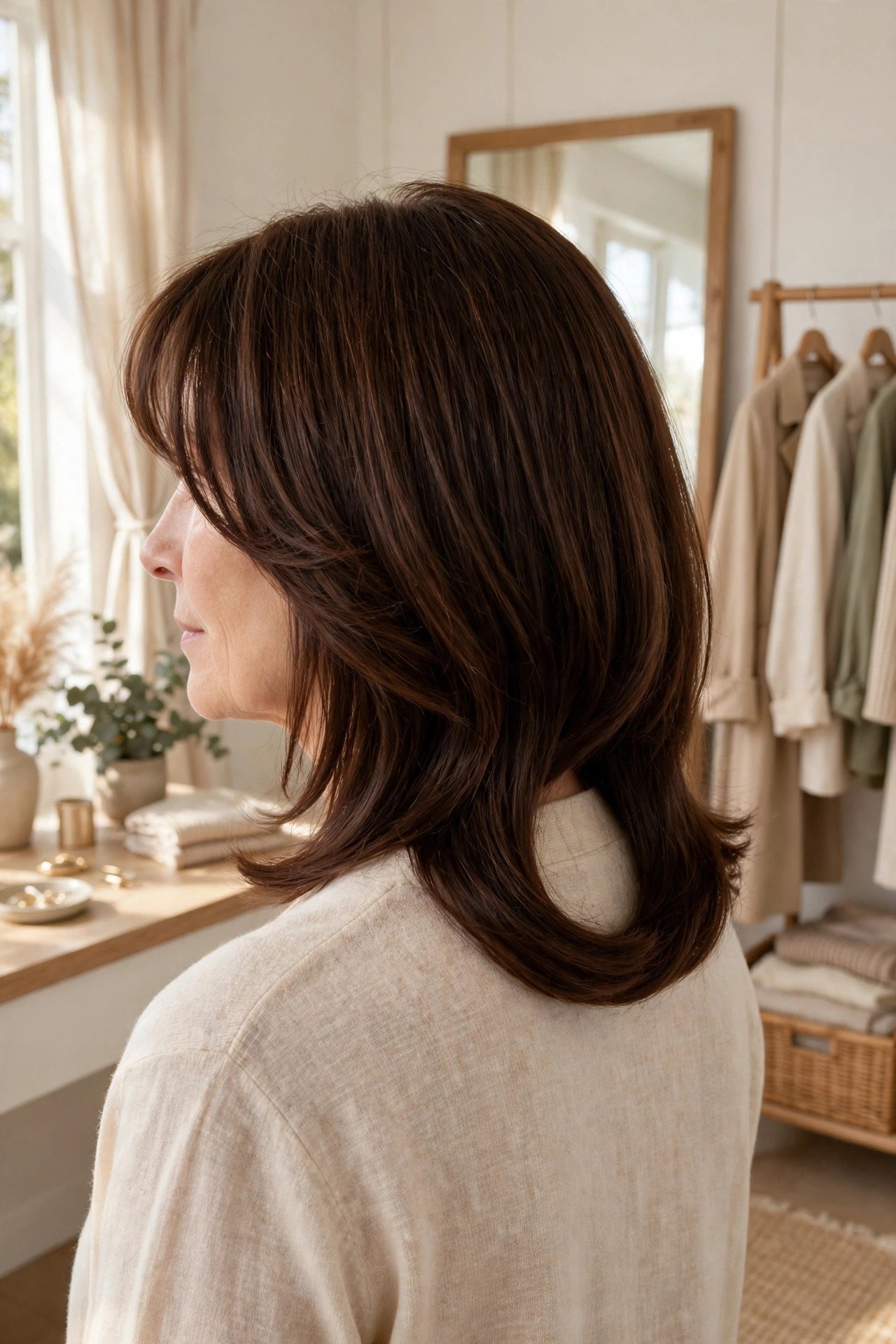
Turn around and the back tells the story: the hemline curves into a soft U instead of running straight across.
Cutting the back in a U keeps the longest length through the middle and leaves the front corners long too, so the side fringe has something to blend into. The long side bang sweeps from a deep part and pours down one side of the face.
Ask to check the back with a hand mirror before you leave the salon. The curve should sit even on both sides.
Keep the front pieces long enough to tuck behind an ear.
Check the U shape in a second mirror at the salon.
Letting the U dip too deep, which thins the sides.
Cutting the side fringe shorter than cheekbone length.
16. Textured Fringe with a Collarbone Layered Bob

A collarbone bob is the length that never argues with a coat collar, a scarf or a necklace.
This version adds a textured fringe, cut with the points of the scissors so the edge stays soft and broken rather than blunt. Layers through the bob stop it sitting like a helmet and give the ends a gentle kick when you move.
It is polished enough for work and loose enough for weekends, which is a rare balance to find in one cut.
Rough dry the hair, but do the fringe first while it is still damp.
Smooth the lengths with a round brush, keeping the brush moving so nothing goes flat.
Bend the ends under once at the bottom, then leave them alone.
17. Full Curtain Bangs with Layers for Thick Hair
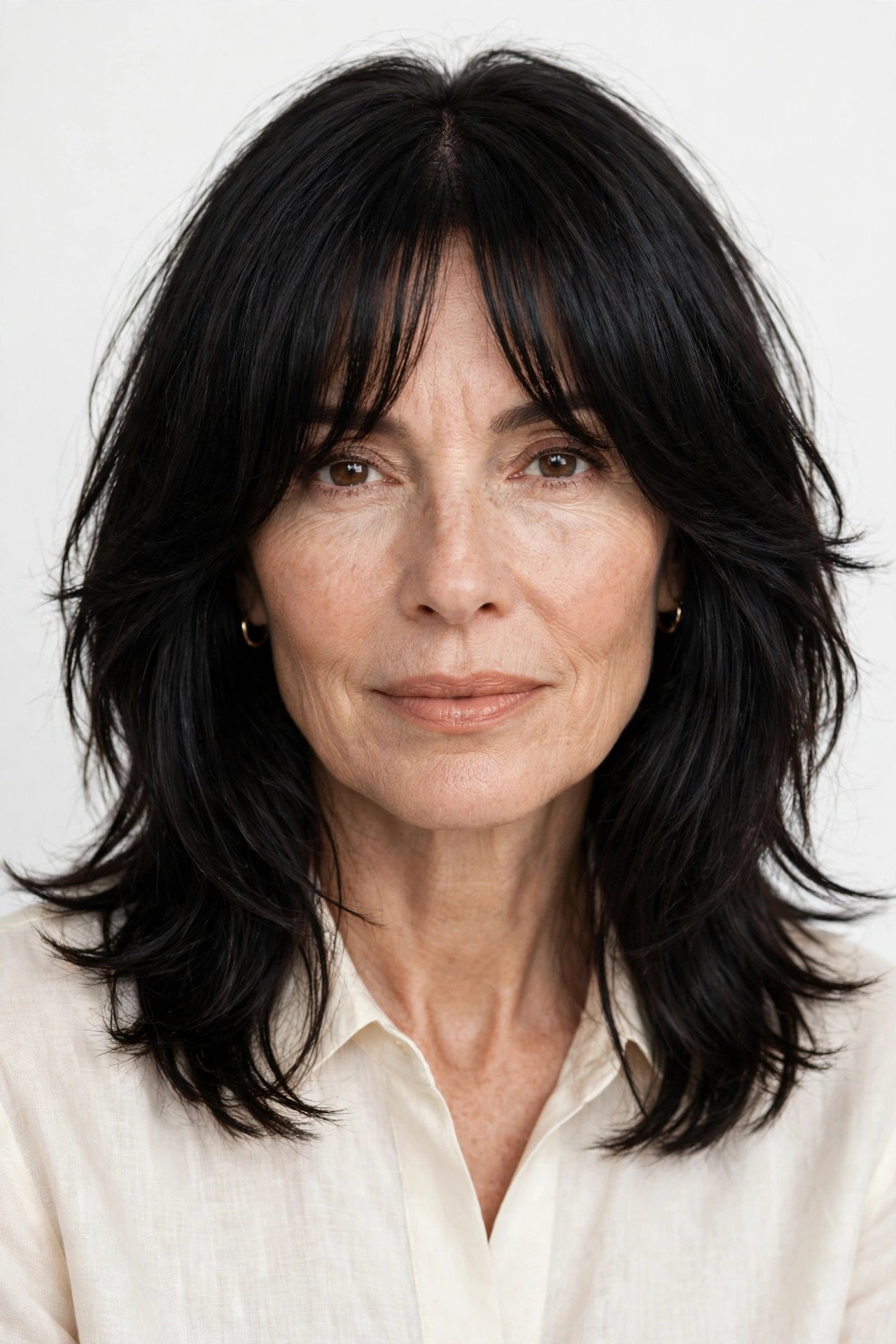
Thick hair with the wrong layers does one thing: it gets wider.
The fix is placement. Layers are taken through the middle lengths and underneath, where the bulk lives, while the surface stays smooth so the shape holds. A full curtain fringe splits the weight at the front, opening the face instead of adding another heavy block of hair above it.
If your ponytail still feels like a rope, ask for weight removal at the back too, not more layers piled on top.
Thick hair does not need more layers. It needs the right weight taken out, in the right places.
18. Birkin Bangs with Loose S-Shaped Layers
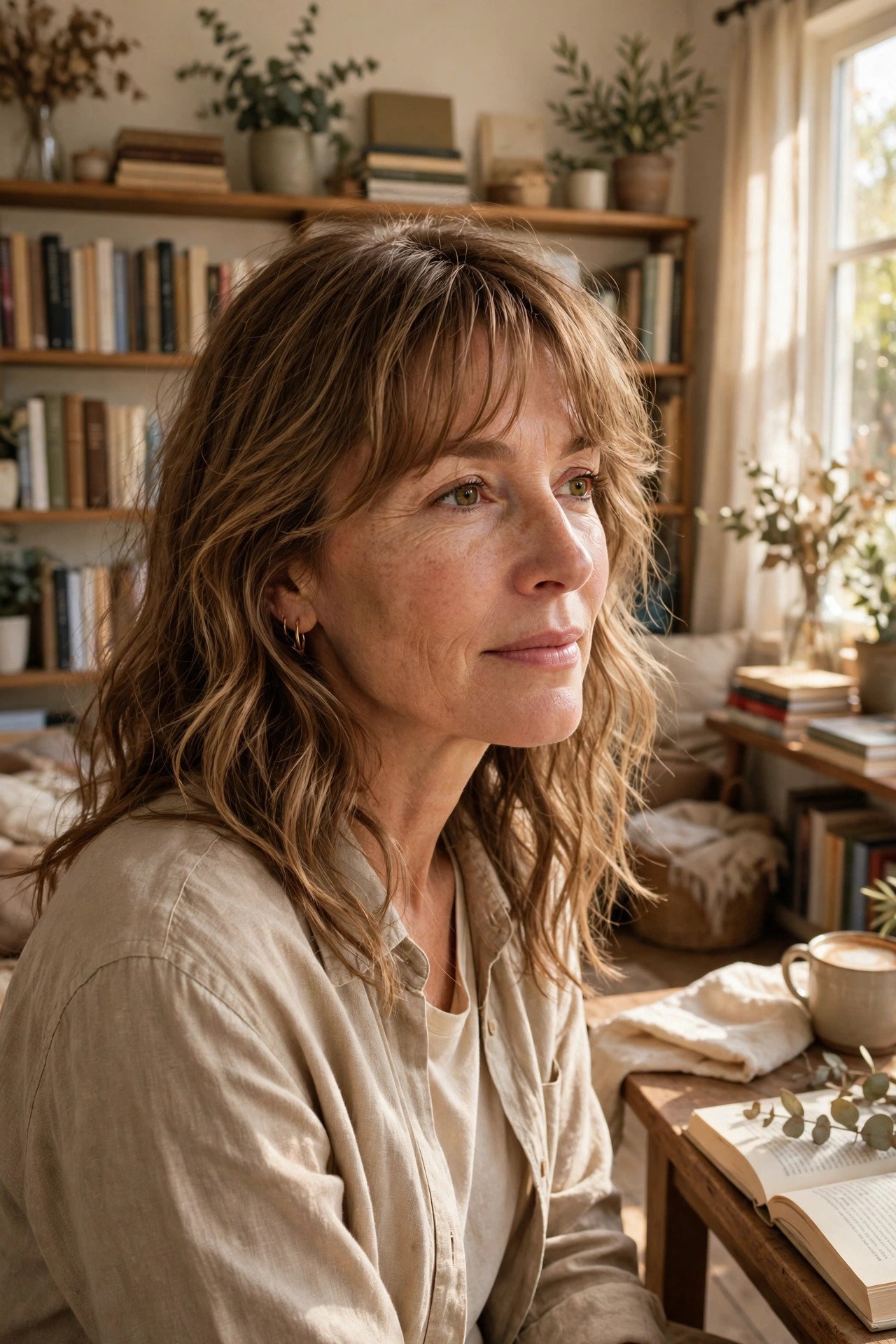
Some fringes look done. This one looks like it simply grew that way.
Birkin bangs skim the brows, sit a little piecey, and part slightly off centre, as if you pushed them into place with your fingers. The layers fall in loose S shapes through the lengths, more wave than curl, which keeps the whole cut undone in a deliberate way.
It suits women who hate a styled look but still want shape around the face.
| Birkin Bangs | Curtain Bangs |
|---|---|
| Skim the brows with a slight part | Part fully and sweep back to the sides |
| Undone and piecey at the edges | Polished and blended into the layers |
| Needs a trim to hold the brow length | Grows out softly for weeks |
19. Soft Blunt Bangs with Bevelled Ends
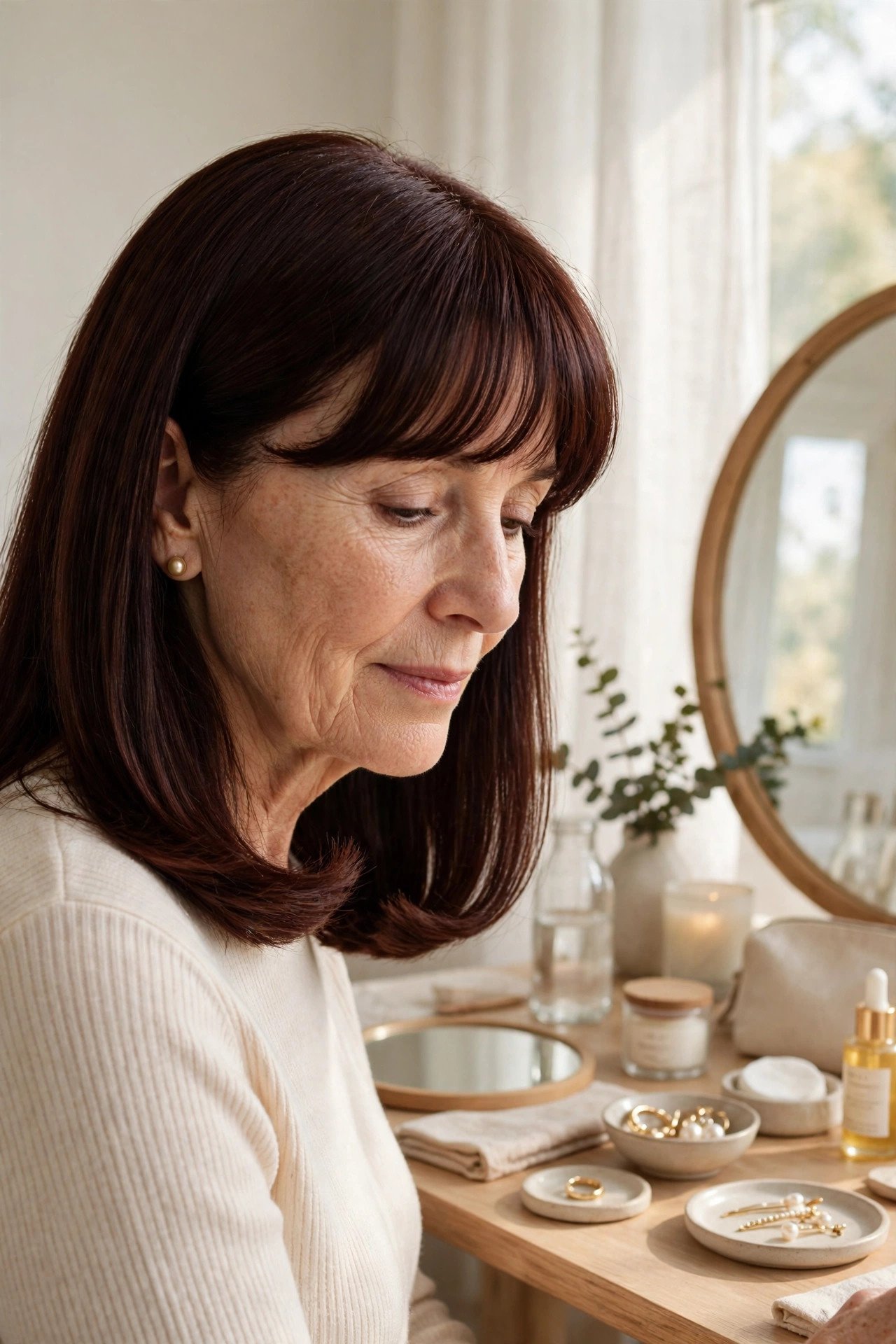
Blunt does not have to mean harsh. The last snip decides everything.
The fringe is cut straight across for that clean, full look, then the very edge is point cut so it lies soft against the skin instead of sitting like a shelf. The lengths are bevelled, curving under at the ends, which keeps straight hair from looking stringy by the afternoon.
It works best on straight to slightly wavy hair that holds a smooth finish.
A blunt fringe cut in one hard line, sitting heavy and flat against the forehead, with straight ends that separate.
The same fringe with its edge point cut, lying soft against the skin, and bevelled ends that curve under in one clean sweep.
20. Side Bangs with Caramel Highlights Through the Layers
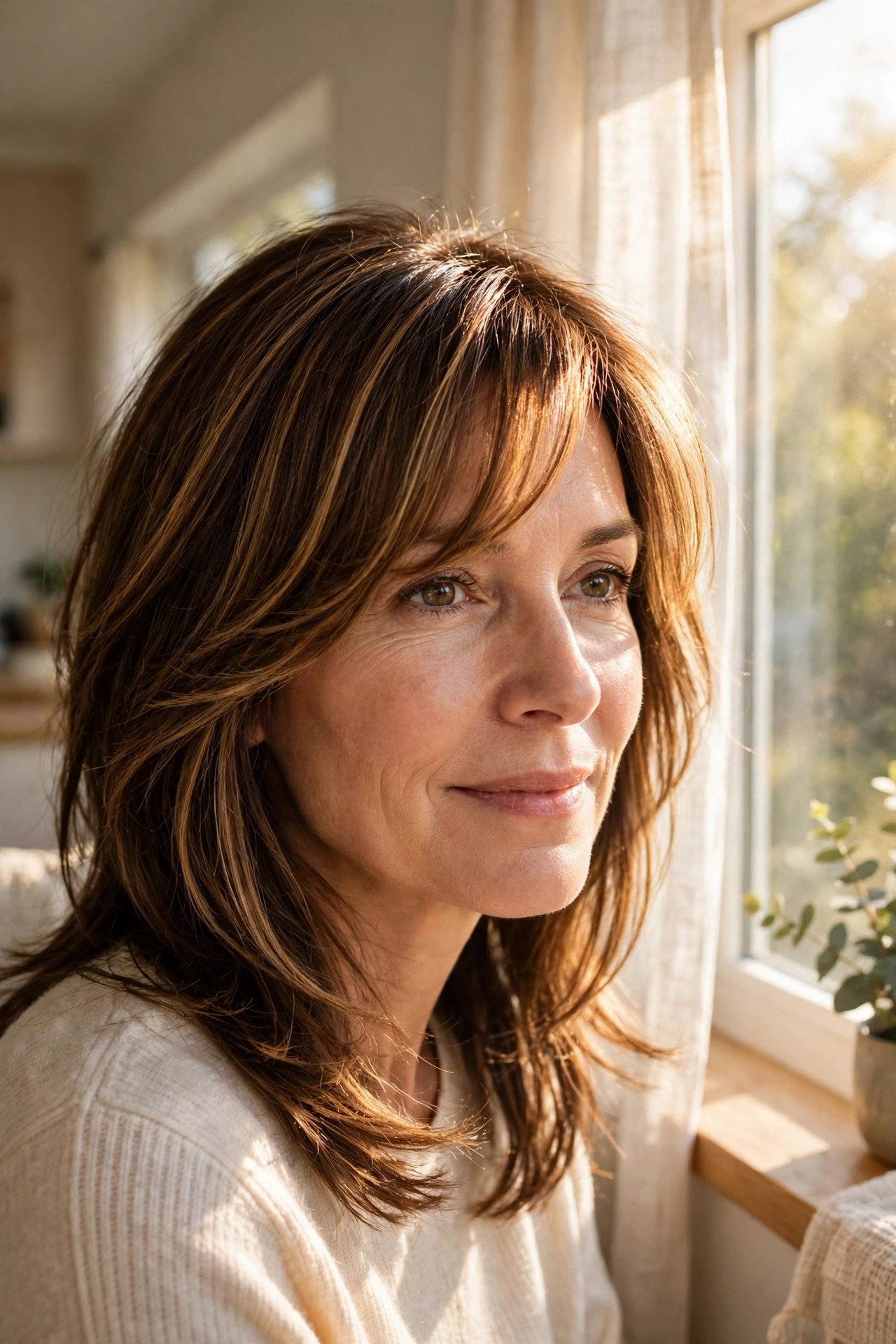
Colour can do half the work of a cut when it is placed where the layers move.
Here, fine caramel highlights are woven through the fringe and the face framing layers, staying a shade or two lighter than your base. Every time the side fringe sweeps or a layer turns, the lighter pieces catch the light, and the cut looks more layered than it really is.
Keep the back darker and the brightness at the front. It is the part you see in the mirror, and the part that lifts your skin.
📌 Good To Know
Ask for the lightest pieces where the fringe meets the layers. That small strip of brightness is what frames your face all day.
21. Bottleneck Bangs with a Bouncy Blowout Finish
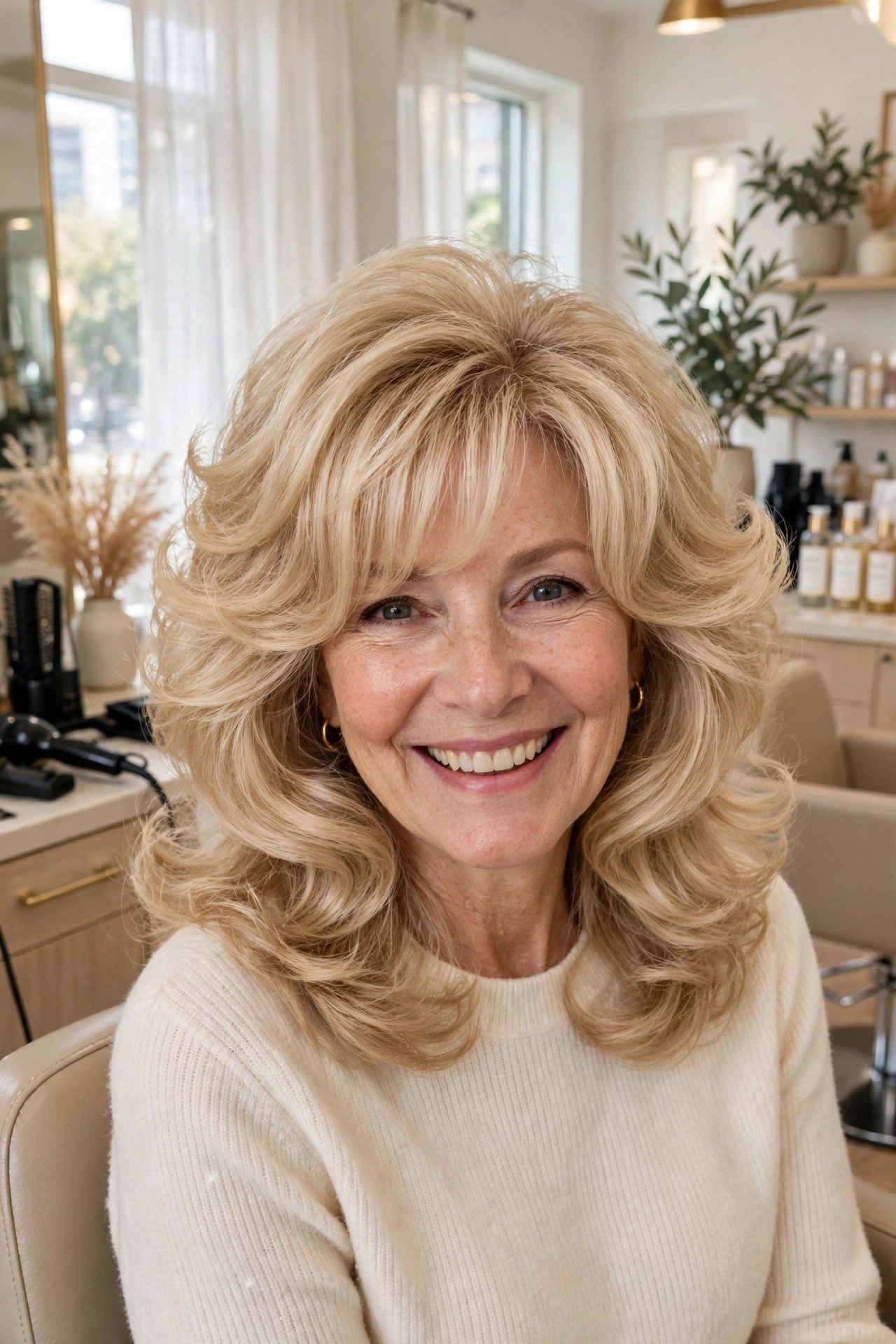
The cut gives you the shape. The blowout gives you the bounce.
With bottleneck bangs, the dryer does most of the styling. The fringe is dried flat and forward first, then the crown layers are lifted with a round brush so the curve of the fringe flows into full, springy lengths.
Small finish notes:
- Set the front section on a large roller while you get dressed
- Cool air at the end helps the lift hold
- Heavy oils pull the bounce down by noon, so keep them on the ends only
22. Wispy Bangs with Layers for Fine Hair
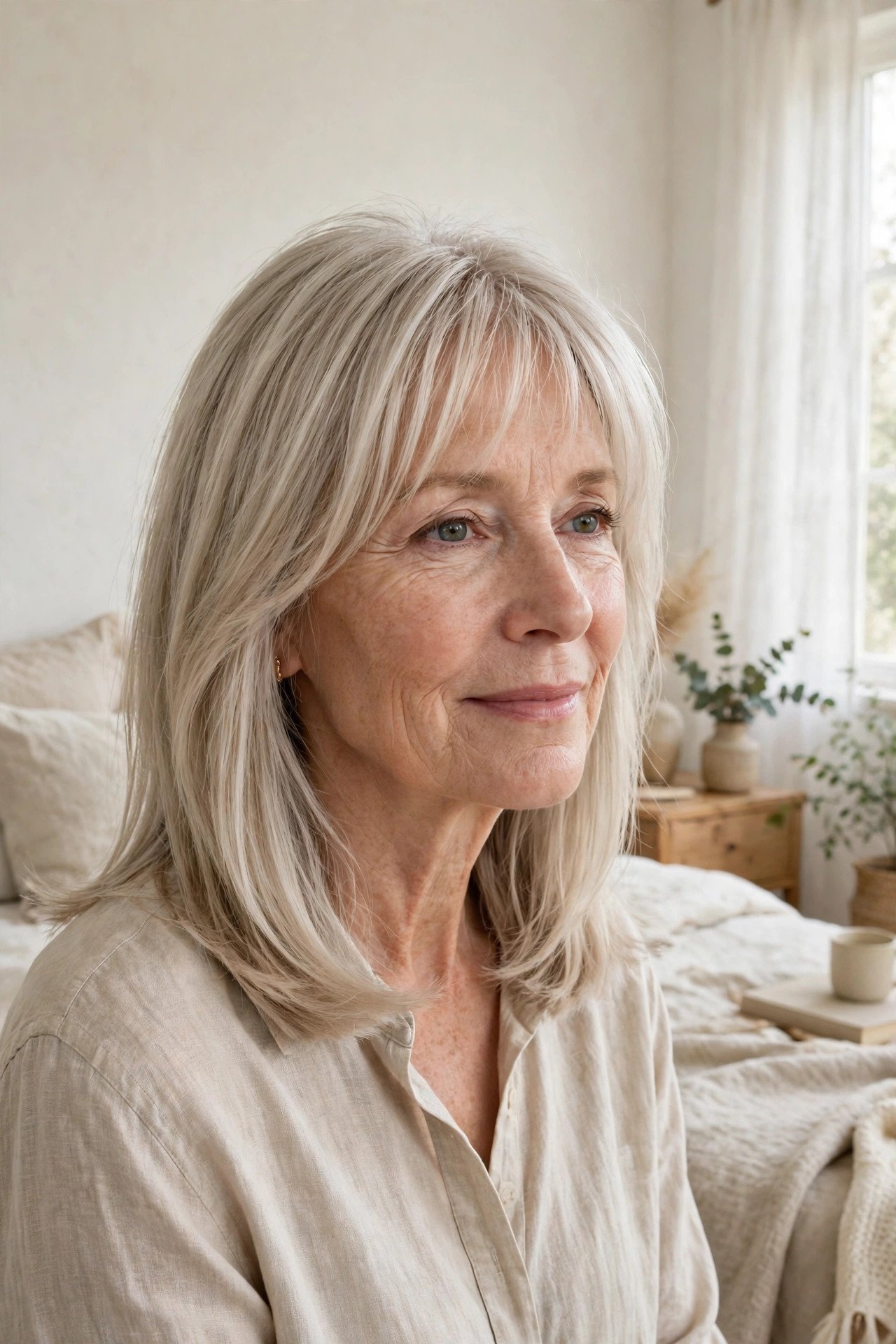
Fine hair and layers have a tricky history. Cut too many and the ends vanish.
The answer is restraint. Layers live only through the top and the front, where they buy movement, while the back and the ends stay blunt and full. The fringe is cut sparse on purpose, a light veil that gives the idea of bangs without spending density you cannot spare.
From the back, your hair still reads thick. From the front, it finally has shape.
How the thickness stays
23. Layered Cut with a Soft Fringe, Worn Wavy
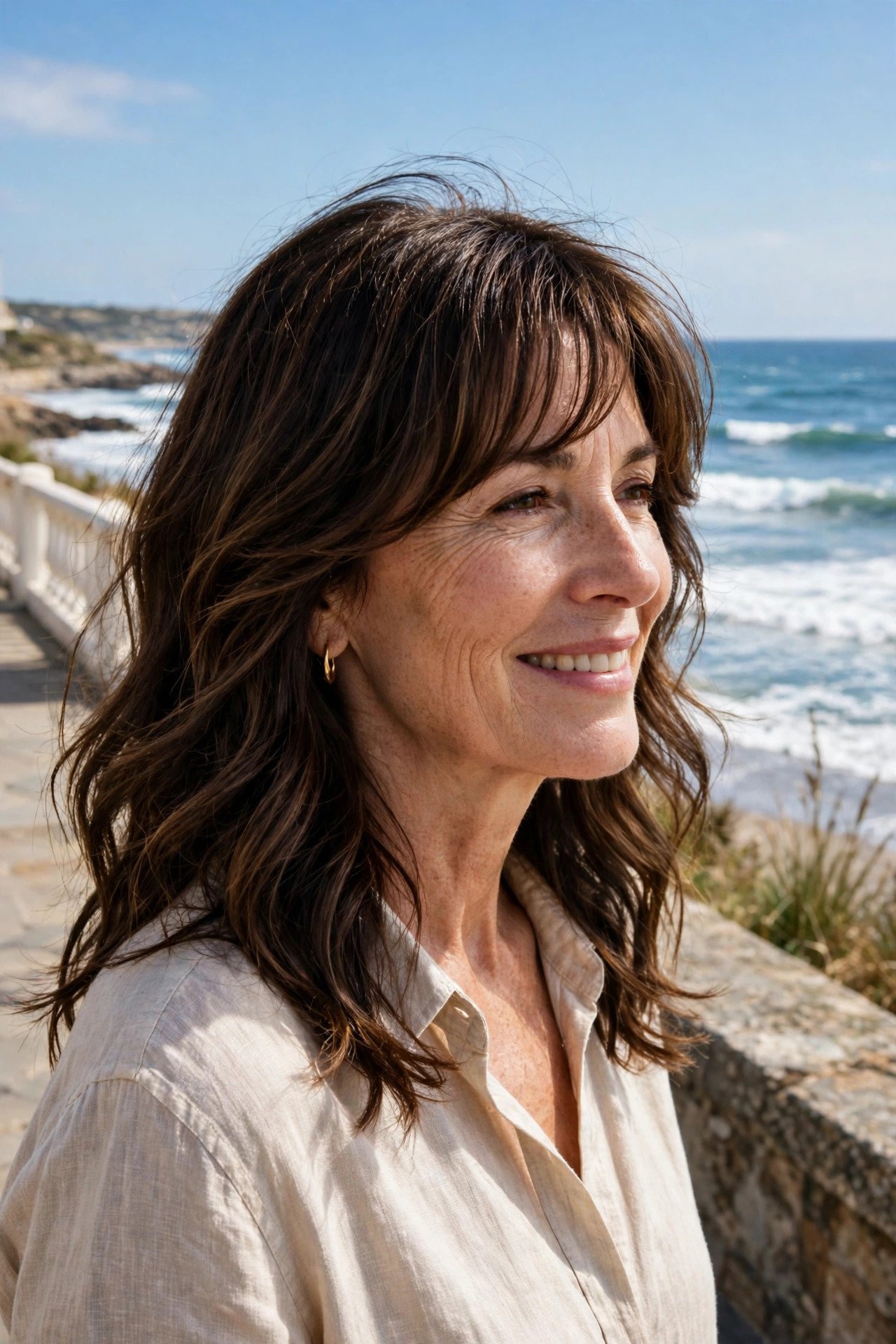
Some mornings call for waves without a single hot tool in sight.
This layered cut is shaped to work with texture instead of against it. Braided damp at night, or twisted into two loose buns, the layers fall into soft waves by morning. The fringe is cut long enough to blend into the wave pattern instead of sitting straight across it.
On straighter days, the same cut blow dries smooth, so you are never locked into one finish.
24. Silver Layers with Soft Curtain Bangs
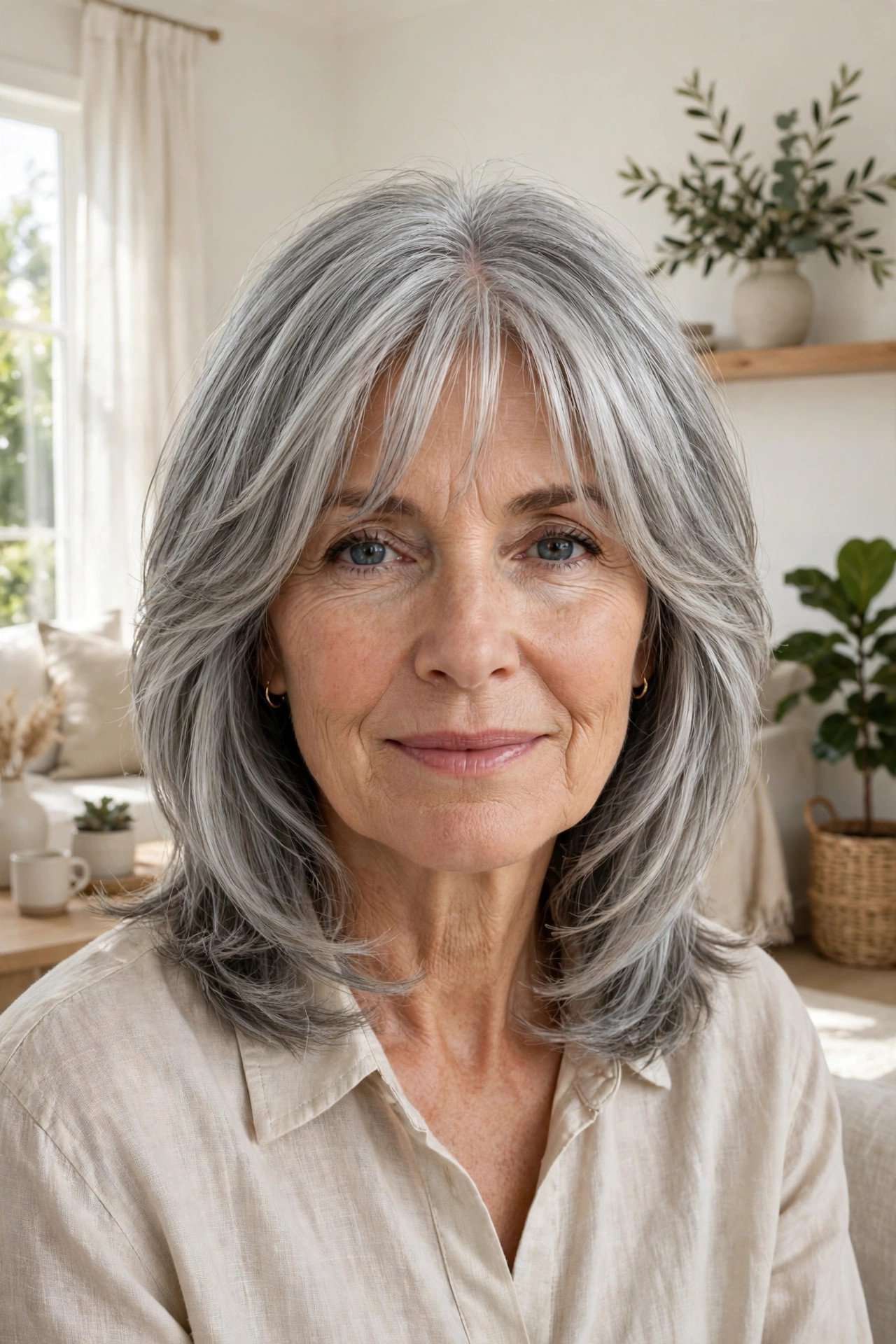
Grey hair has its own texture. Strands often come in coarser and more wiry, and a one length cut lets them do whatever they want.
Layers give silver hair a plan. They line the strands up in a shape, soften the wiry pieces at the surface, and let the natural shine of grey show in bands as the hair moves. A soft curtain fringe blends the hairline, where new growth and older colour often meet.
Moisture matters more than hold for grey hair. A light leave in conditioner on damp ends keeps the layers lying smooth.
- ▸A soft curtain fringe blends a greying hairline better than a blunt one
- ▸A violet toning shampoo once in a while keeps silver tones clear, not yellow
- ▸Layers stop wiry surface strands from poking out at odd angles
Twenty four cuts is a lot of choice, so narrow it down by hair first and face second. Fine hair needs restraint, thick hair needs weight taken out in the right places, and curls need a stylist who cuts them dry. The fringe follows from there.
Medium layered cuts with bangs for women over 40 work because they put the shape back where it shows most: around your face. Save the two or three that match your hair, book the trim, and show your stylist the photos. Seeing the same picture is worth a thousand descriptions.