How to Dye Your Hair at Home: A Step-by-Step Guide to Beautiful Color
Coloring your hair at home has become a genuinely popular choice — and for good reason. Doing it in your own bathroom saves serious money compared to salon visits, fits around your schedule, and puts you in complete control of the result. And because you’re in charge, you can take your time, be meticulous, and get exactly the shade you pictured.
Whether you want to cover gray roots, try a bold new shade, or just refresh your current color, a home dye job is an accessible way to do it. This guide walks you through the whole process, frompicking the right shade to getting a finish that looks professionally done.
You’ll find the full supply list, application techniques for even coverage, and aftercare tips for keeping the color vibrant. If coloring your own hair feels intimidating, you’re not alone — but with the right prep, it’s a very learnable skill. Don’t skip the strand test or the patch test — they’re the two steps that separate a great result from a regrettable one.
Ready to play stylist for the day? Here’s everything you need to color your hair at home — safely, and with results you’ll love. Grab your kit, clear an hour or two, and let’s get into it.
Your Visual Guide: Dyeing Hair at Home in Four Steps
It really is this straightforward. Section your hair carefully for even coverage, then apply the dye with a brush, working from roots to ends. The visual above shows the four key stages — use it as your cheat sheet while you work. Keep the guide handy while you work — checking off each stage as you go keeps things calm and organized.
Gloves keep your hands stain-free. Let the color process with your hair wrapped up so the formula can develop fully — then reveal the finished result: beautifully colored hair with natural-looking dimension. Give the formula its full processing time; rinsing early is one of the most common reasons color looks dull.
Follow these steps in order and even beginners can get beautiful, lasting color — all without leaving the bathroom. Patience at each stage is what separates decent results from great ones.

Why DIY hair dye is having a moment
More people are coloring at home than ever before. A salon visit can easily run into hundreds of dollars, while a box kit delivers a fresh look for a fraction of the price. Convenience is a huge part of the appeal. When a box kit costs a tenth of a salon appointment, it’s easy to see why so many people made the switch and never looked back.
You can do it whenever suits you — no booking weeks ahead, no rearranging your day. And social media has taken the mystery out of it: tutorials from real people walk you through every step, so beginners feel far less intimidated. Evening or weekend, it happens on your terms — and there’s something satisfying about doing it all yourself.
The trend took off a few years ago, but people have stuck with it because the benefits are real. Modern formulas have improved a lot, and taking charge of your own hair transformation has never been easier or more affordable. If you’ve been on the fence, there’s never been a better time to try: formulas are gentler, shade ranges are wider, and help is one search away.
The perks of coloring at home
Doing it yourself comes with some real advantages:
- It costs far less than salon appointments. A single box typically costs less than a tenth of a salon visit.
- You color on your own schedule — no booking ahead.
- Total privacy while you experiment with new shades.
- Work at your own pace without feeling rushed.
- Touch up roots the moment you spot regrowth. No more watching your roots grow out while you wait for an appointment.
- Choose from a huge range of colors at the store.
- No commuting, no parking, no waiting room.
- Mix and customize the formula to suit your needs.
- Reapply as often as your hair needs it.
- Good products with nourishing ingredients are easy to find.
- There’s real satisfaction in mastering a new beauty skill.
- You get your own personal salon experience, at home.
Put together, those perks make home coloring a practical choice for a lot of people. For many people, it’s simply the most sensible option.
What You’ll Need
Having the right supplies on hand makes the whole process easier and safer. Start with a quality color kit in a shade close to what you want. You’ll also need protective gloves, an application brush, and a non-metallic bowl for mixing. A kit one or two shades off your goal is harder to fix than a kit that’s close — when in doubt, choose closer to your current color.
Petroleum jelly along the hairline keeps dye off your skin. Grab old towels you don’t mind staining, hair clips for sectioning, and a timer so you can track processing time properly. A timer matters more than you’d think: over-processing is a one-way trip, so set it and respect it.
Lay everything out before you start — it makes the process smoother and far less stressful. Ten minutes of setup prevents an hour of scrubbing dye off your bathroom.
Essential supplies and tools
You don’t need much, but what you need matters. A good dye kit in your chosen shade, gloves to protect your hands, a bowl and brush for even application, clips to keep sections separate, an old towel for your shoulders, and petroleum jelly for your hairline and ears. Set it all up first and the rest flows. Think of it as mise en place for your hair — everything in its place before you begin.
Your kit, your tools, your protection — arranged and ready before the first drop of dye goes anywhere.
Protecting your skin and clothes

A little prep here saves a lot of cleanup later. Two pairs of gloves give you a backup (or an option for sensitive hands). A towel draped over your shoulders catches drips before they reach your clothes. If your skin reacts easily, look for kits labeled gentle or ammonia-free, and never skip the patch test.
Have your mixed dye, brush, and a fine-tooth comb for neat sectioning within arm’s reach. Keep any aftercare products nearby too, so you’re not hunting for them with dye-covered hands.
Stains are almost entirely preventable with good setup. Protect your workspace, wear something old, and you’ll color with confidence and zero casualties. Dye finds every unprotected surface, so be thorough now and grateful later.
Choosing Your Hair Color
The shade you pick makes all the difference. Look at your natural color and skin tone before you buy anything. As a starting point, warmer complexions tend to suit lighter, golden shades, while cooler tones pair well with deeper bases. Nervous? Try a temporary dye first to experiment safely. Your natural color is your starting point — the box can only take you so far from it in one session, especially without bleach.
Finding the right shade
Start with your natural hair color and skin tone. Warm skin tones glow with golden, copper, or honey shades; cooler complexions suit ash, platinum, or burgundy. A good rule: stay within two shades lighter or darker than your current color for the most natural-looking result. If you’re torn between two shades, pick the slightly darker one; it’s easier to go lighter later than to fix over-lightened hair.
Box dyes print helpful charts showing what to expect on different starting shades — use them. A strand test gives you a real preview, and reviews from people with similar hair are genuinely useful. Pick a color that suits your features and your lifestyle. A quick photo of your hair in daylight helps you compare honestly against the chart.
When in doubt, go slightly darker or closer to your natural shade — it’s easier to adjust from there than to fix a color that’s gone too light. Remember: box color can’t lighten already-colored hair effectively — it works best on virgin or grown-out hair.
Reading the color chart

Color charts take the guesswork out of choosing. Shade books show real hair samples, each swatch representing a specific formula from platinum blonde to deep black. They’re organized by tone and depth so you can compare easily. The numbering system helps too: the first number is depth (how light or dark), the letters after it describe tone (ash, gold, copper).
Hold swatches against your natural hair to picture the change, and check them in natural daylight — indoor lighting lies. Comparing your current shade to your goal also tells you whether you’ll need more than one session. If your hair has multiple tones from old color, the chart can’t predict perfectly — a strand test becomes even more important.
A few minutes with the chart now prevents disappointment later. It’s the simplest way to choose a shade that actually matches what you’re picturing. When the chart and your gut disagree, trust the strand test.
Step-by-Step: The Dye Process
The process itself comes down to three stages. First, apply the color with a brush, working section by section for complete coverage (gloves on, always). Then let it process — wrapping your hair helps the formula develop. Finally, rinse thoroughly with lukewarm water until it runs clear. Work in good light and take your time with each section — rushing this stage is how patches happen.
That’s the whole arc: apply carefully, give it time, rinse well. Each stage matters for even, vibrant color. Set a timer the moment you finish applying, not when you start; sections applied first get a head start otherwise.
Follow the timing on your specific product — that’s where most patchy results come from. If you have very thick or long hair, buy two boxes. Running out halfway is a disaster you can easily avoid.

Prep your hair
Start with unwashed hair — a day or two of natural oils actually protects your scalp during coloring. Brush out every tangle first so you have a smooth canvas for even application. If you just washed your hair, wait a day — freshly washed scalps are more sensitive to dye.
Divide your hair into four sections with clips; it makes the whole job manageable. Smooth petroleum jelly along your hairline, ears, and neck to block stains before they happen. Four sections is the classic method: down the middle, then ear to ear. Clip each one securely.
Drape that old towel over your shoulders. Having everything within reach before you begin saves time and keeps stress low mid-application. Keep a damp cloth nearby for quick cleanups of stray dye on skin — the sooner you wipe, the less it stains.
Mix & apply the dye
Mix the color cream with the developer in a non-metallic bowl, following the package instructions exactly — no improvising here. Measure carefully if your kit requires it; eyeballing ratios leads to unpredictable color.
Stir until the mixture is smooth and lump-free. Gloves on, then start at the roots, where hair resists color most. A tint brush gives you control; work in small sections from front to back. Apply to the roots first, then pull through the lengths for the last 10–15 minutes if you’re refreshing existing color — the ends don’t need the full time.
Saturate each strand generously — skimping is how patches happen. Comb through gently afterward to spread the product evenly and catch any missed spots. Really saturate — dye should feel generous, not skimpy. Thin application is the number one cause of uneven results.
Rinse and condition
Rinse with lukewarm water until it runs completely clear; this usually takes a few minutes. Skip hot water — it opens the cuticle and lets color escape early. Rinse over a sink or in the shower with lukewarm water; keep going until the water is completely clear, even if it takes a while.
Work the kit’s conditioner generously from mid-lengths to ends and leave it for three to five minutes. This seals the cuticle, locks in color, and puts back moisture the coloring process took out. That included conditioner isn’t optional — it’s formulated to close the cuticle after the chemical process. Use all of it.
Tips for First-Time Hair Dyers
First time? Start with a semi-permanent formula that fades gradually over a few weeks. It gives you room to experiment without commitment. Semi-permanent also fades gracefully without a harsh line, so growing it out is painless.
If you can, ask a friend to help with the back sections you can’t see. Pick a shade close to your natural color for a subtle, flattering change. And keep these in mind: A second pair of hands makes the back of your head dramatically easier — bribe a friend with coffee.
- Always do a strand test first to preview the result.
- Set up near good light so you can actually see what you’re doing.
- Protect your clothes with old towels or a dark shirt.
- Petroleum jelly along the hairline stops stains before they start.
- Read the instructions fully before you mix anything.
Rinsing and Aftercare
Rinse with lukewarm water until it runs clear, then apply the included conditioner generously. Wait 48 hours before shampooing so the color can set. After that, switch to sulfate-free products made for colored hair, and deep-condition weekly to keep things vibrant and soft. Those first 48 hours matter: the cuticle is still settling, so treat your hair gently and skip heat styling if you can.
How to rinse properly
Rinsing well is what makes color last: Think of rinsing as part of the coloring itself — it deserves the same care as application.
- Let the full processing time finish before you rinse.
- Lukewarm water — never hot.
- Rinse until the water runs completely clear.
- Skip shampoo right after coloring.
- Apply the included conditioner to seal in the color.
- Gently squeeze out excess water instead of wringing.
- Don’t rub hair roughly with the towel.
- Pat dry with a soft, clean towel.
Best products for colored hair

The right aftercare keeps your color vivid. Sulfate-free shampoo is the big one — it preserves pigment instead of stripping it. A nourishing conditioner puts moisture back after the coloring process. Look for ’color-safe’ or ’for colored hair’ on the label; regular shampoos with sulfates strip color fast.
Leave-in treatments shield against heat styling and environmental damage. A wide-tooth comb detangles gently without snapping fragile, freshly colored strands, and color-depositing masks refresh vibrancy between dye sessions. Heat is color’s enemy, so use a heat protectant every time you style — your shade will thank you.
A natural-bristle brush distributes oils for healthy shine. Line these up on your counter and maintenance becomes an easy routine — good aftercare genuinely extends your color by weeks. A silk pillowcase is a small luxury that reduces friction and helps color last longer too.
Fixing Common Dye Mistakes

Brassy tones are fixable — this is one of the most common issues and it has a straightforward solution. Warm, orange hues that show up after lightening can be toned out effectively with the right products. Don’t panic if you see brassiness — it’s normal, especially after lightening, and it’s very fixable.
Purple shampoo neutralizes yellow undertones for cooler blonde results; the after picture shows smooth, even color with the unwanted warmth gone.
Keep a toning product in your routine between coloring sessions to hold the correction. It’s far cheaper than a salon fix and works beautifully with regular use. Purple shampoo once or twice a week is usually enough; overdoing it can leave a lavender tinge.
When the color comes out uneven or too dark
Mistakes happen — most have simple fixes. Uneven color usually means missed sections, so the real cure is working methodically through every area next time. The good news: almost every home-color mishap has a fix, and most are simple.
If it’s too dark, a clarifying shampoo within the first 48 hours can lift excess pigment. A few extra washes fade things gradually, and a color remover made for this purpose is another option. Act quickly on too-dark color — the sooner you wash, the more pigment you can lift.
Blotchy patches can be spot-treated with a little extra dye. But prevention beats correction: thorough sectioning before you start is everything. For future applications, set a timer per section so every area gets equal processing time.
Fixing brassiness
Brassy orange or yellow tones often appear after coloring, especially on lighter shades. Purple shampoo tackles yellow in blondes; blue shampoo corrects orange in brunettes. If brassiness keeps returning, your water might be the culprit — hard water deposits can warm up blonde tones.
A toning treatment right after coloring knocks brassiness back immediately — use it once or twice a week for maintenance. Wash less often, rinse with cool water, and your shade will hold longer. Cool water for every rinse, not just the first one — it really does help color hold.
Your Final Glow-Up

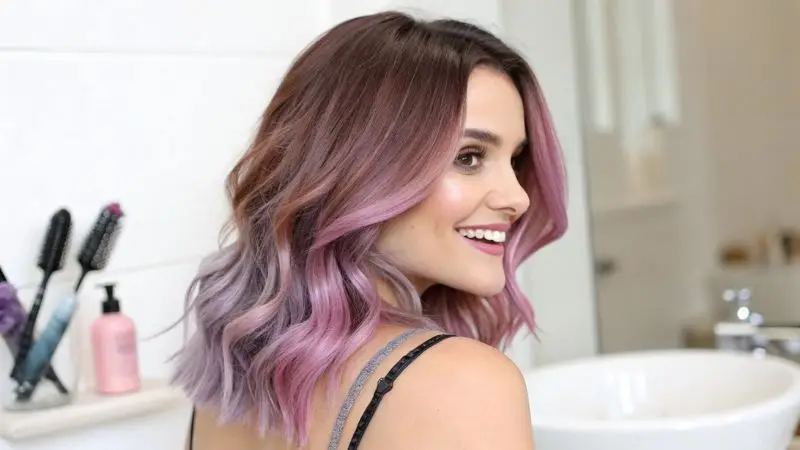
This is what’s possible when home coloring clicks: soft pastel tones melting from lavender to mint, with a dreamy, multi-dimensional finish. Gentle waves show off the color’s vibrancy, each shade glowing against the next. Pastels need light hair underneath, so they usually require pre-lightening — plan for that extra step.
The smooth, silky texture is the real proof — home color can look genuinely salon-quality when the technique is right. The blends are seamless, with no harsh lines or patchy spots. Fantasy colors fade faster than natural shades, so embrace the evolution or keep a color-depositing conditioner handy.
Fantasy shades like these are very achievable outside a salon. With proper technique, adventurous color is well within reach. If you love experimenting, semi-permanent fantasy shades are the low-commitment way to play.
Once you know the method, your hair becomes a canvas. Home dyeing opens up endless ways to play with color and show off your personal style. Document what you used — shade, brand, timing — so you can replicate (or avoid repeating) the result.
Quick recap & pro tips
You now know the full routine. Choose a shade that suits your skin tone and natural color. Always do a patch test first — skipping it isn’t worth the risk of a reaction. Write down your formula if you mixed anything custom; future-you will be grateful.
Section your hair for even coverage. Follow the timing exactly as printed. Rinse with cool water to seal the cuticle. Switch to sulfate-free shampoo to keep the color vivid longer. Cool or lukewarm water for every wash going forward — hot water is the fastest way to fade fresh color.
Plan root touch-ups every six to eight weeks for a consistent look. Your transformation is waiting — enjoy it. Enjoy the compliments — you earned them.