Twisted Low Messy Bun: Easy Step-by-Step Tutorial for an Elegant Updo
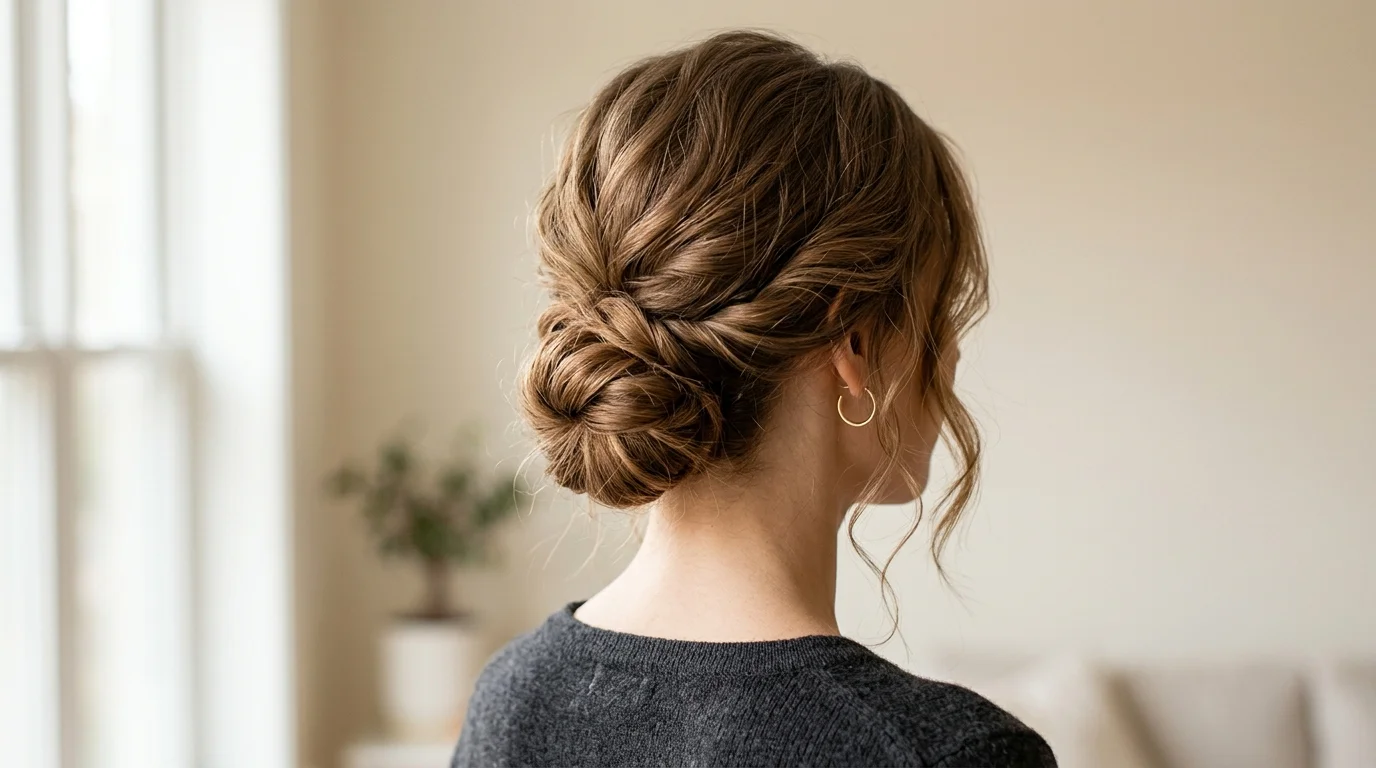
A twisted low messy bun is one of those rare hairstyles that looks like it took an hour, when really it took five minutes. Soft, undone, quietly elegant — it sits low at the nape with relaxed, lived-in texture that flatters almost everyone. It’s the kind of effortless updo that works for the office in the morning and straight out to dinner that evening. Morning-to-evening versatility is rare in updos.
The best part is how forgiving it is. Unlike a sleek chignon or an intricate braid, this low bun is meant to look a little imperfect — a few loose, face-framing pieces and soft volume are exactly what give it that romantic, undone charm. If your hair isn’t cooperating or you’re on day two without a wash, this style actually works better. Day-two hair is a styling advantage here.
This tutorial works beautifully on medium to long hair, and with a couple of small tweaks it suits fine, thick, straight, and wavy textures too. All you need are a few bobby pins, a hair tie, and a couple of minutes. Follow the six simple steps below to master this timeless, elegant hairstyle. A few minutes is all it takes.
Step-by-Step: How to Create a Twisted Low Messy Bun

This easy six-step method turns loose, everyday hair into a soft, textured updo. Work slowly through the twisting steps the first time — once you’ve done it once or twice, the whole thing becomes second nature and takes barely five minutes. Five-minute mastery rewards practice.
Step 1: Prep Your Hair for the Perfect Base
Start with clean, dry hair that has a little natural texture. Freshly washed, super-smooth hair can be slippery and hard to style, so second-day hair is honestly ideal here. If your hair is very clean or fine, mist a little texturizing spray or dry shampoo through the mid-lengths and roots to add grip and body. A quick tousle with your fingers or a loose wave with the curling iron gives the finished bun that soft, effortless feel. Soft, effortless results begin with good prep.
Step 2: Create the Initial Twist
Gather all of your hair loosely at the nape of your neck, as if you’re starting a low ponytail — but don’t reach for the elastic just yet. Instead, split the length into a section and begin twisting it in one direction, rotating from the top near the crown all the way down. Twisting before you secure is the little trick that gives this bun its beautiful rope-like detail and keeps everything feeling soft rather than stiff. Think touchable, not sculpted.
Step 3: Build the Twisted Texture
Keep twisting down the length of your hair while holding a gentle, even tension — firm enough to hold its shape, but never so tight that it pulls at your scalp. As you twist, let a few strands slip free around your face and temples. Those loose, face-framing pieces are what separate a relaxed, modern messy bun from a severe, formal one, so resist the urge to smooth every hair into place. Modern, relaxed results beat severe ones.
Step 4: Secure the Base
Once your twist feels full and holds its shape, wrap a thin, clear elastic around the base at the nape to lock it in. Position it low and close to the neck for that signature low-bun silhouette. This anchor point becomes the foundation your bun wraps around, so make sure it feels secure before you move on — a loose base is the most common reason a bun sags later in the day. Secure foundations prevent afternoon sagging.
Step 5: Refine and Loosen the Twist
Now for the step that makes it look expensive. Gently tug and pull at the outer edges of the twist to loosen it and add width — stylists call this “pancaking. Pancaking is the pro’s secret weapon.” Work outward in small pinches, focusing on the crown to build soft height and volume. This is where a flat twist transforms into a full, textured, undone bun, so take your time and shape it until it looks soft and a little airy. Soft and airy is the target texture.
Step 6: Shape the Final Bun
Wrap the twisted length around the elastic base to form your low bun, coiling it neatly into a rounded shape. Tuck the ends underneath and secure everything with bobby pins that match your hair colour, sliding them in around the perimeter for a firm hold. Do a final check, pull out any pieces that got tucked away by mistake, and finish with a light mist of flexible hairspray to hold the shape without making it crunchy. Flexible hold keeps hair touchable.
Essential Tools and Materials
You don’t need much for this look — most of it is probably already in your bathroom drawer. Bathroom-drawer basics suffice.
- Clear elastic bands (2 to 3)
- Bobby pins that match your hair colour (6 to 8)
- Texturizing spray or sea salt spray (for grip and volume)
- Dry shampoo (especially helpful on clean or fine hair)
- Light-hold, flexible hairspray
- A wide-tooth comb or paddle brush for detangling first
- A curling iron or wand (optional, for soft waves)
- A few hair clips for sectioning (optional)
Which Face Shapes Suit a Twisted Low Messy Bun?
The beauty of this low updo is how universally flattering it is — small adjustments make it work for every face shape. Universally flattering with small tweaks.
- The beauty of this low updo is how universally flattering it is — small adjustments make it work for every face shape.
- Oval faces suit this style effortlessly, since the balanced, low placement complements naturally even proportions. Even proportions suit low placement.
- Round faces look great with a little extra height teased into the crown to gently lengthen the face. A little lift at the crown works wonders for round faces.
- Square faces are softened beautifully by pulling out more face-framing tendrils to blur a stronger jawline. Stronger jawlines soften with tendrils.
- Heart-shaped faces work well with a fuller bun at the nape, which balances a wider forehead. Wider foreheads balance with nape fullness.
- Long or oblong faces should keep the bun low and avoid too much crown height, so the face doesn’t appear longer. Avoiding extra length keeps oblong faces balanced.
- Diamond faces are flattered by soft pieces left loose around the cheekbones. Cheekbone pieces flatter diamond faces.
How to Add and Keep Volume in Your Twisted Low Messy Bun?
Flat, thin, or fine hair can still achieve a full, textured bun with a few simple techniques. Begin with dry shampoo or texturizing spray at the roots before you style — it grips the hair and instantly adds body. Gently backcomb (tease) the crown with a fine-tooth comb to build a soft foundation of volume where you want it most. Simple techniques build impressive volume.
As you twist, avoid pulling the hair too tightly against your head, since tension flattens the roots and shrinks the bun. Once the bun is pinned, use your fingertips to gently stretch and loosen sections for a fuller, rounder shape. Finish with a flexible-hold hairspray rather than a stiff one, so the style keeps its soft movement and doesn’t fall flat as the day goes on Soft movement lasts all day with flexible hold.
How to Make Your Messy Bun Last All Day?
A messy bun should look undone, but it shouldn’t actually fall down. To keep it secure from morning to night, always anchor the base with a well-positioned elastic and cross your bobby pins in an X-shape for extra grip. Morning-to-night security is achievable.
If your hair is heavy or very long, add one or two extra pins deep into the bun where they won’t be seen. A light mist of hairspray at the end locks everything in, and a quick touch-up — tucking a loose pin or pulling a piece back out — is usually all it needs after a long day. Hidden pins do heavy lifting invisibly.
Common Mistakes to Avoid
A few small missteps are usually what stand between a messy bun and a good messy bun. Small differences make good messy buns.
- Starting with hair that’s too clean. Too-clean hair needs texture first. Slippery, freshly washed hair won’t hold — add texture first. Texture first, style second.
- Twisting too tightly. Over-tight twists flatten your volume and look stiff instead of soft.
- Skipping the loosening step. Pancaking the twist is what makes it look full and effortless. That is the pancaking payoff: fullness without stiffness.
- Using mismatched or too few pins. Matching bobby pins disappear; enough of them keep it secure. Enough pins keep everything secure.
- Smoothing away every loose piece. A few face-framing strands are the whole point of a messy bun. Face-framing strands define messy buns.
Easy Ways to Style and Wear It
One of the reasons this hairstyle is so popular is how easily it adapts to any occasion. Any-occasion adaptability drives popularity.
For a wedding or formal event, keep the twist a little neater, add a delicate hair accessory or pearl pins, and curl your face-framing pieces. For the office or everyday wear, keep it soft and simple for a polished, low-maintenance look. On curly or textured hair, embrace the natural volume and twist gently to keep definition. For fine or thin hair, tease the crown and use texturizing spray to fake fullness. You can even add a centre or side part, or leave a few waves out, to change the whole vibe. Changing the vibe is easy with small tweaks.
Frequently Asked Questions
Conclusion
A twisted low messy bun proves that elegant hair doesn’t have to be complicated. With a little texture, a simple rope twist, and a few well-placed pins, you can create a soft, sophisticated updo that carries you effortlessly from a busy morning to an evening out. Practise it once or twice, make it your own with the variations above, and you’ll have a timeless, five-minute hairstyle you’ll reach for again and again. Again and again — that is the true test. Uncomplicated elegance wins every time.
Start with dry shampoo at the roots before styling to create texture and grip. Backcomb gently at the crown using a fine-tooth comb to build foundation volume. Use your fingers to lift sections while blow-drying for natural body. Apply volumizing mousse to damp hair, focusing on the roots rather than the ends. When twisting, avoid pulling too tightly as this flattens the hair against the scalp. Finish with a light mist of flexible hairspray to maintain the style without weighing it down. Foundation volume makes everything easier.