Braids vs Twists: Key Differences, Pros & Cons, and Which Protective Style Is Right for You
Choosing between braids and twists sounds simple — until you’re sitting in the stylist’s chair trying to decide. Both are protective styles, which means they tuck your natural hair away so it can rest, hold onto length, and take a break from daily heat and manipulation. But they differ in real, practical ways: how long the appointment takes, how many weeks the style lasts, what it costs, and how it feels day to day.
The breakdown below lays out those differences plainly — installation time, longevity, maintenance, cost, and which hair types suit each style — so you can pick the one that fits your schedule, your budget, and your hair goals instead of guessing.
Let’s start with a quick side-by-side comparison, then look at each style in detail.
Braids vs Twists: Quick Comparison
| Braids | Twists | |
|---|---|---|
| How they’re made | Three strands woven together | Two strands wrapped around each other |
| Install time | 4–8 hours | 2–5 hours |
| How long they last | 6–8 weeks | 2–6 weeks |
| Typical salon cost | $150–$350+ | $100–$250+ |
| Tension on scalp | Medium to high (knotless is gentler) | Low to medium |
| Best for | Long wear, structured styles | Comfort, quicker appointments |

What Are Braids?
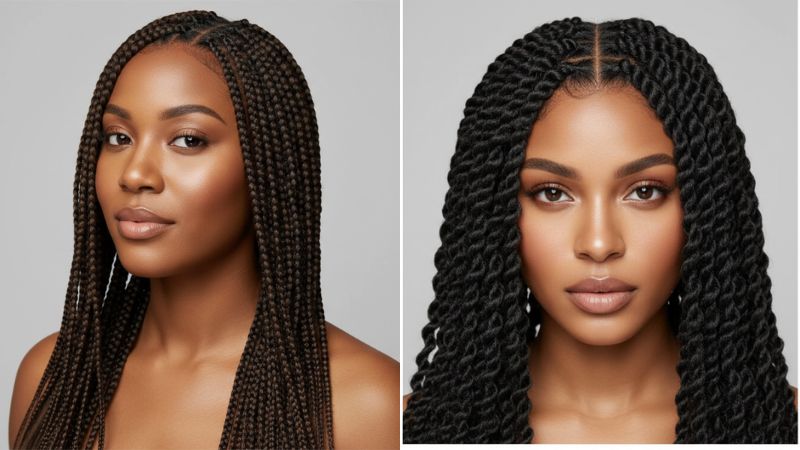
Braids are made by weaving three sections of hair together, usually with added extension hair for length and fullness. It’s precise work — every section has to stay even or the braid looks lumpy — which is why a full head of box braids typically takes four to eight hours in the chair. The payoff is longevity: with proper care, braids stay neat for six to eight weeks, making them one of the longest-lasting protective styles you can get.
Braids have been worn for thousands of years across African cultures, and they remain a staple today. Newer methods like knotless braids — which start with your natural hair instead of a tight knot at the root — have made the style noticeably gentler on edges while keeping the same long wear time.

Key Characteristics of Braids
- Structured, defined pattern — the three-strand weave creates crisp, uniform parts that hold their shape for weeks.
- Longest wear time — six to eight weeks with proper care, the longest-lasting of the common protective styles.
- Higher upfront investment — expect four to eight hours in the chair, with salon prices roughly from $150 to $350 or more depending on size, length, and where you live.
- Works on most hair lengths — from short natural hair with added extensions to long hair worn in jumbo or goddess styles.
What Are Twists?
Twists use just two strands wrapped around each other instead of three. The simpler technique cuts installation time roughly in half — most twist styles take two to five hours. The finish is softer and fuller than braids, with a natural, textured look that many people prefer for everyday wear.
Because there’s no tight three-way weave pulling at the root, twists usually feel lighter and put less tension on the scalp. The trade-off is lifespan: most twists start to look fuzzy after two to four weeks, although chunkier styles like Senegalese or Havana twists can stretch to about six.

Key Things to Know About Twists
- Softer, more natural finish — the two-strand wrap creates fullness and texture rather than crisp definition.
- Faster appointments — typically two to five hours, and the simplest styles can be done at home with a bit of practice.
- Gentler on the scalp — less pulling at the roots, a sensible option if your edges are thinning or sensitive.
- Shorter lifespan — plan on a refresh or reinstall every two to six weeks, depending on twist size and maintenance.
Braids vs Twists: Technique Comparison
The core difference is mechanical: three strands versus two. Braiding demands even tension across three sections for hours, which is skilled, tiring work — that’s exactly why the appointment is longer and the price is higher. Twisting is more forgiving, since the two strands simply coil around each other, so it’s faster to install and easier to learn. That also makes twists the friendlier DIY option if you’d like to try a protective style at home before committing to a salon visit.
Braids vs Twists: Maintenance
Whichever style you choose, the maintenance routine is nearly the same — the difference is how many weeks the style survives it.
Wash every one to two weeks using diluted shampoo applied directly to the scalp, then rinse thoroughly; product buildup causes itching and shortens the style’s life. Sleep in a satin bonnet or scarf every night to control frizz, and lightly oil or moisturize your scalp every few days. Braids will hold up through this routine for six to eight weeks. Twists usually need refreshing or a full reinstall after two to six weeks, depending on the size.
Popular Braided Hairstyles
Braids come in many sizes and installation methods. These are the four you’ll hear about most at the salon:
Here’s what sets each one apart, so you know what you’re asking for:
- Box braids — the classic: square-shaped parts and medium-to-large sections. Extremely versatile for buns, ponytails, and half-up styles.
- Knotless braids — start with your natural hair and feed extensions in gradually, so there’s no tight knot at the root. Kinder to edges; usually costs a little more.
- Cornrows — braided flat against the scalp in straight or curved rows. Quick to install (one to three hours) and great worn under wigs; last two to four weeks.
- Micro braids — tiny, fine braids that move almost like loose hair. Beautiful, but expect six to ten-plus hours in the chair — choose an experienced braider to avoid breakage.

All four protect your natural hair the same way — by keeping it tucked away from daily manipulation. The choice mostly comes down to how much time and money you want to spend upfront, and how many weeks you want the style to last.
Popular Twist Hairstyles
Twists have their own family of styles, ranging from simple natural-hair looks to long, dramatic lengths:
The main options you’ll come across:
- Two-strand twists — done on your own natural hair with no extensions. The simplest protective style there is, and they unravel into a defined twist-out afterward.
- Senegalese twists — sleek twists done with straight extension hair. Neat, lightweight, and among the longest-lasting twists at up to six weeks.
- Havana twists — chunkier and puffier than Senegalese twists, made with fluffy Marley-type hair. Big, soft texture; install takes three to five hours.
- Marley twists — fluffy, natural-looking twists that blend beautifully with kinky and coily textures for an effortless finish.

Twist styles lean softer and more natural-looking than braids, which is exactly why many people prefer them for work and everyday life — they read as texture rather than as a ‘done’ style.
Braids vs Twists by Hair Type
Both styles work on textured hair, but your hair’s thickness and current condition should steer the decision more than anything else.
Fine or thin hair does better with twists or knotless braids — heavy, small braids can pull at the roots and cause breakage on delicate strands. Thick, coarse hair holds either style well and gets the most wear out of traditional braids. If your edges are thinning, avoid small tight braids around the hairline altogether; flat twists or larger, looser twists keep the edges safe. Relaxed hair can wear both styles, but keep any protective style in for shorter stretches — four to six weeks at most — since chemically treated hair is more fragile.
Which One Should You Choose?
There’s no universally better option here — just the better option for your life right now. Use this as your decision checklist:
Braids are the better pick if you want:
- Maximum wear time — a single appointment covering six to eight weeks, ideal if you’re busy, traveling, or just don’t want frequent salon visits.
- Crisp, structured styling — defined parts and sleek buns, ponytails, and updos that stay sharp for weeks.
- A style that survives an active routine — braids handle workouts, swimming, and humidity with noticeably less frizz than twists.
Twists are the better pick if you prefer:
- Comfort first — a lighter feel with less pulling, especially around the edges and the nape of the neck.
- Less time in the chair — in and out within a few hours, and straightforward enough to refresh or redo yourself.
- A softer, natural finish — fullness and texture take priority over sharp definition.
Frequently Asked Questions
The Final Word
Braids and twists both do the core job of a protective style: they keep your natural hair tucked away so it can grow undisturbed. Braids win on longevity and structure; twists win on comfort and gentleness. Match the choice to your schedule, your budget, and what your hair needs right now — not to whatever is trending.
Whichever you pick, the rules for keeping your hair healthy underneath are the same: don’t keep the style in past its lifespan, moisturize your scalp regularly, protect it at night with satin, and never ignore pain at the roots. Follow that, and either style will leave your hair longer and stronger than when you started.